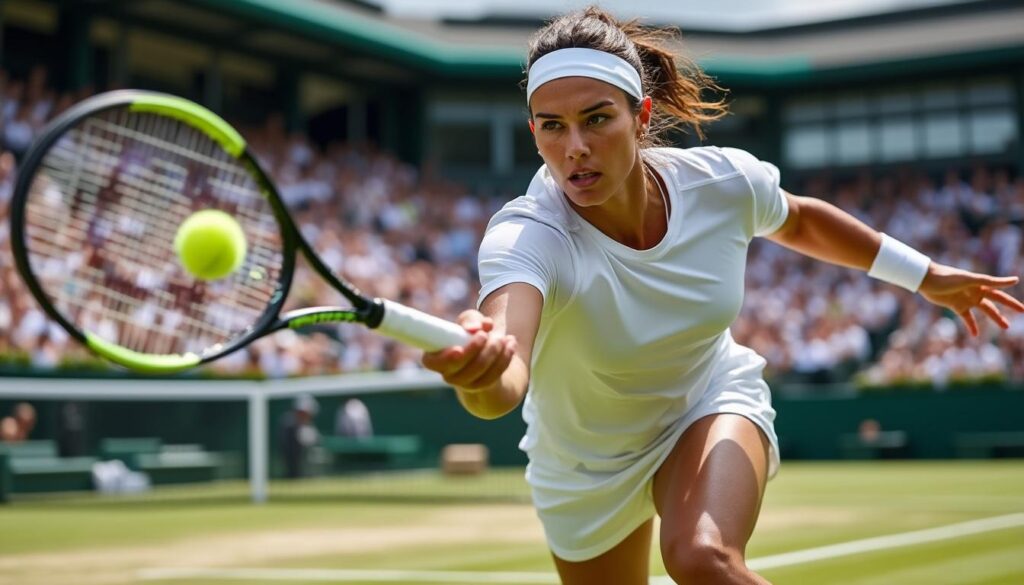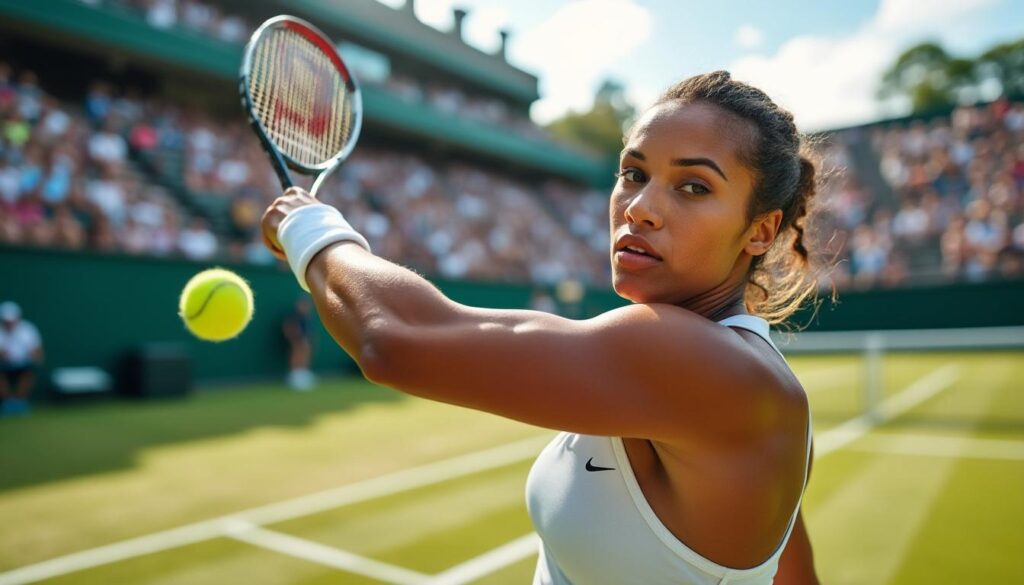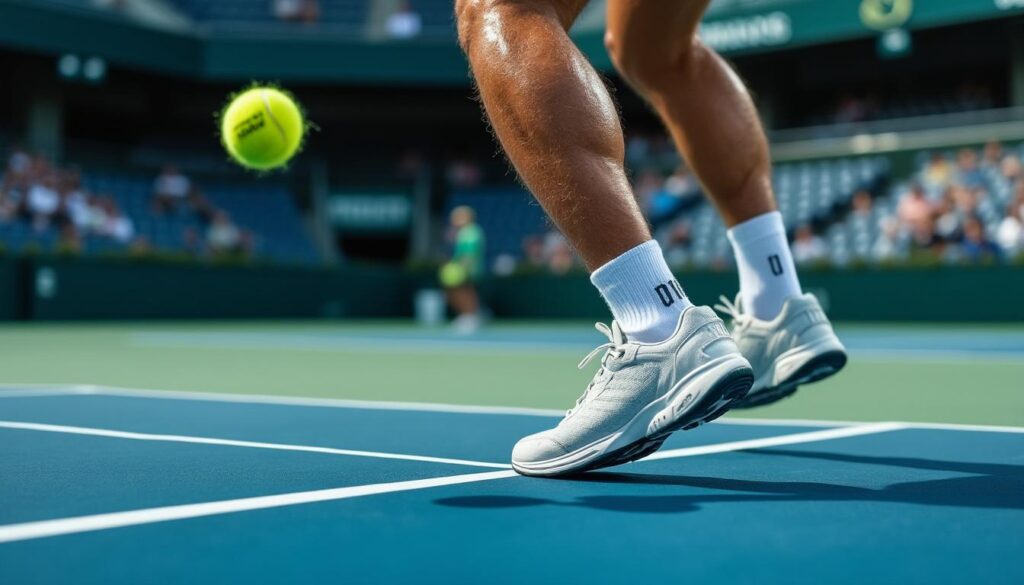
Explosive footwork is the heartbeat of every powerful baseline rally in tennis. The courts of 2025 are witnessing a revolution where players no longer rely solely on raw power or finesse—they dominate through speed, agility, and the explosive snap of their feet propelling every shot. As the game accelerates faster than ever, understanding how to train footwork for explosiveness from the baseline isn’t just a luxury—it’s a necessity for survival and success at every level. The focus for November 20, 2025, intensifies around drills and conditioning programs designed to unlock that dynamic burst off the ground that transforms steady play into game-changing moments.
Footwork training merges precision, speed, and power to build a foundation that tennis players rely on during harrowing baseline exchanges. This training isn’t about flashy movements, but raw functionality—moving sharp, fast, and with intent. Whether it’s cutting sharply around an opponent’s inside-out forehand or exploding forward to crush the ball after a deep backhand, explosive footwork sets champions apart by reducing reaction time and increasing control. Conditioning routines now emphasize maintaining balance through aggressive pivoting and quick directional changes while conserving energy to power through those marathon rallies.
Integrating explosive footwork drills into tennis practice has evolved with innovative tools and solo training techniques now in widespread use. Technologies like interactive light pods add reactive pressure, pushing athletes to sharpen split-second decisions on court positioning. But even with the latest advancements, foundational drills such as cone chains and stop-cut acceleration remain instrumental in building muscle memory, strength, and agility that transform baseline play. These drills recreate the chaotic energy of match points and develop the explosive start-stop movements that are the hallmark of elite players.
Train smart, train bold. The journey to becoming a baseline powerhouse demands a blend of consistent footwork conditioning, mental focus, and a hunger to push boundaries. As this November advances, competitive players and dedicated enthusiasts alike are zeroing in on refining those explosive steps to dominate baseline exchanges by combining endurance, power, and sharp reflexes like never before.
In brief:
- Explosive baseline footwork is critical for rapid court coverage and sharp shot execution.
- Simple yet powerful drills like cone chain runs and stop-cut accelerations remain cornerstones for agility and speed development.
- Solo training techniques equipped with minimal gear allow focused work on acceleration, balance, and reaction time.
- Technology-enhanced drills with reactive light pods push decision-making speed to match real-game conditions.
- Consistent conditioning and mental grit fuel the explosive power that turns baseline play into domination.
Unlocking Explosiveness from the Baseline with Precision Footwork
Explosiveness in tennis is all about the ability to generate power in a fraction of a second after sensing the ball’s trajectory and opponent’s movement. From the baseline, this translates to razor-sharp footwork that allows players to pivot, sprint, and be ready to strike without losing balance or control. In 2025, training drills have become more specialized, honing in on twitch reactions and precise body mechanics that translate into court dominance.
The first layer is mastering foot positioning and balance. Successful baseline players keep a low center of gravity to maximize power and stability in their shots. This involves performing drills like the cone chain, where players weave through tightly spaced cones using short, explosive steps. This drill focuses on quick planting of the foot outside, snapping the body inside to simulate cut moves around an opponent’s shot—critical for maintaining momentum and stamina through long rallies.
Next up is the stop-cut acceleration: sprinting to a point, abruptly braking, executing an aggressively sharp cut, then immediately exploding to continue movement. This drill is a powerhouse for building not only explosiveness but also control under rapid deceleration, mimicking real-match predicaments where players must quickly change direction without losing composure or court position.
- Maintain a compact stance to avoid wasted movement.
- Engage core muscles during rapid foot transitions for tighter control.
- Use sticky footwear for optimal grip allowing sharper cuts.
- Repeat drills on both sides to balance agility evenly.
- Track progress through timed circuits and fatigue resistance.
| Drill | Focus | Benefits |
|---|---|---|
| Cone Chain | Agility, balance, foot placement | Improves weaving ability, dynamic stability |
| Stop-Cut Acceleration | Explosive acceleration, body control | Builds power for directional change under speed |
| Ladder Drills (optional) | Coordination, rhythm | Enhances foot speed and neural timing |
Players committed to explosive baseline footwork complement these drills with strength and conditioning exercises targeting hip strength and ankle stability. These elements are fundamental to generate the propulsive power players like Nick Kyrgios or Iga Świątek display in epic baseline duels, enabling them to unleash a barrage of groundstrokes with unmatched force and precision.
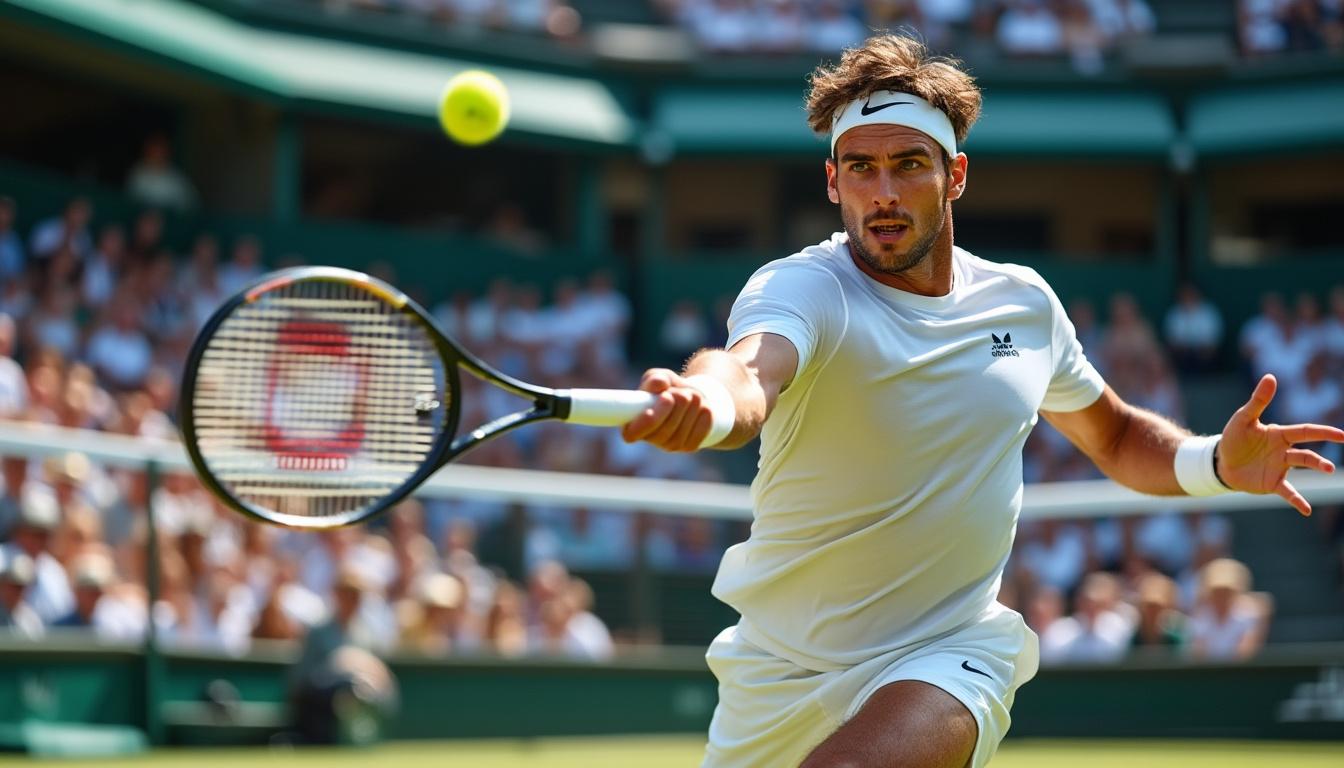
Solo Footwork Training: Building Explosiveness Without the Crowd
By 2025, solo training has emerged as an indispensable approach for players looking to sharpen footwork explosiveness from the baseline. With or without a coach, training sessions focused on solo drills emphasize high-repetition, low-equipment workouts that target speed, agility, and balance—all essential for dominating baseline rallies.
To replicate the complexity of match conditions, players use simple gear: cones, resistance bands, tennis balls, and walls or fences to create movement patterns that challenge acceleration and deceleration. For instance, the cut-and-go drill requires players to plant firmly, change direction at various angles (such as 45° or tighter cuts), then burst explosively into the next move. This builds responsiveness to the unpredictable bounce and spin common in top-level baseline exchanges.
Resistance band drills add a layer of intensity, forcing athletes to fight against anchored tension while simulating the chaos of court traffic and rapid engagements with the ball. A popular variation is band drag runs, where players shuffle and plant aggressively before powering off, training the muscles responsible for sudden directional sprints and sustained explosiveness.
- Design cuts that mimic opponent shot patterns observed in match play.
- Increase resistance progressively to boost power output.
- Incorporate single-leg balance exercises to refine stability during lunges.
- Use timer apps or light-based reactive tools for speed benchmarks.
- Prioritize recovery to avoid overuse injuries during intensive solo work.
| Solo Drill | Equipment | Training Focus |
|---|---|---|
| Cut-and-Go Drill | Cones | Directional explosiveness and reactive speed |
| Band Drag Runs | Resistance band, anchor | Strength under tension, acceleration |
| One-Leg Jump Stop | None | Balance and joint stability |
These solo-training modalities empower players to control every aspect of their footwork development, testing their limits at home or on empty courts with nothing more than a well-structured plan and sheer determination. By focusing on movement patterns seen in elite match play, athletes ensure their improvements transfer seamlessly from practice to pressure-filled tournaments.
Agility and Speed: The Power Couple Driving Baseline Dominance
Speed and agility form a dynamic duo that turbocharges baseline tennis in 2025. Agility is the capacity to rapidly shift directions while maintaining control, whereas speed is the raw chase to the ball itself. Combining these skills creates a player who covers the court not only quickly but smartly, ready to strike from optimal positions.
Advanced tennis players increasingly incorporate agility ladders, cone drills, and reactive light pods into their footwork training routines to sharpen both foot speed and brain speed. One high-impact exercise is the reactive directional drill, where players must instantly react to randomized cues, tap targets, and quickly re-center before doing it all again. This trains neural pathways that enhance on-court decision-making just as much as physical responsiveness.
- Improve base speed with interval sprint training and resistance runs.
- Master quick foot placement guided by rhythmic ladder drills.
- Use visual reaction training to reduce response time in unpredictable rallies.
- Combine agility drills with tennis stroke sequences for holistic training.
- Track improvements using wearable tech with real-time feedback.
| Training Element | Example Drill | Key Benefit |
|---|---|---|
| Speed | Interval sprints with resistance parachutes | Boosts maximum velocity and acceleration |
| Agility | Reactive light pod drills | Enhances reaction time and movement precision |
| Coordination | Ladder footwork patterns | Develops rhythm and balance under fatigue |
When speed and agility fuse seamlessly, players execute baseline exchanges at an unprecedented tempo. This creates pressure that forces opponents into rushed shots and unforced errors, shifting the momentum firmly in favor of the explosive footwork masters.
Conditioning Essentials for Sustained Explosiveness and Endurance
Powerful footwork isn’t just about bursts of speed—it’s a blend of endurance, strength, and resilience. Tennis matches in today’s era demand athletes maintain a high tempo deep into the final sets. Effective conditioning prepares the body to sustain explosive movements from the baseline without fatigue compromising technique.
Key conditioning elements for explosive footwork training include:
- Hip and core strengthening to generate rotational power and maintain balance during rapid direction changes.
- Lower limb stability focusing on ankle strength and joint integrity to withstand repetitive stress and prevent injuries.
- Cardiovascular endurance to fuel long rallies and tournaments with consistent foot quickness across multiple days.
- Neuromuscular control that ensures smooth coordination between brain, nerves, and muscles to enable precise movements under pressure.
- Recovery strategies such as targeted stretching, hydration, and low-impact mobility work to optimize training gains.
| Conditioning Element | Exercise Examples | Benefits |
|---|---|---|
| Hip & Core Strength | Medicine ball throws, Russian twists | Boosts power transfer and balance |
| Lower Limb Stability | Single-leg balance drills, calf raises | Prevents injuries, improves agility |
| Cardiovascular Endurance | Interval running, cycling | Maintains footwork speed late in matches |
| Neuromuscular Control | Proprioceptive training, balance boards | Enhances movement precision |
| Recovery | Stretching, foam rolling | Reduces injury risk, improves flexibility |
Implementing a holistic conditioning plan ensures players are not caught flat-footed after extended baseline duels. The combination of targeted strength and stamina training solidifies explosive footwork as a sustainable weapon that wears down opponents across intense matches.
Game-Day Strategies to Harness Explosive Baseline Footwork
Preparation off court culminates in execution on court, and understanding how to translate explosive footwork into competitive dominance is key. On match day, players must blend the mechanics of footwork drills with tactical awareness and mental sharpness to control baseline rallies strategically.
Key strategies include:
- Anticipation practice: Study opponent tendencies to anticipate shots allowing feet to move before the ball is struck.
- Controlled aggression: Use explosive footwork to dictate points but maintain balance and calm to avoid unforced errors.
- Recovery emphasis: After every shot, reset foot placement quickly to prepare for the next opponent move.
- Pattern recognition: Train footwork drills that mimic common rallies to build habitual movement responses.
- Mental focus: Maintain a high level of concentration to use explosiveness as a tool, not just a physical feature.
| Match Strategy | Benefit |
|---|---|
| Anticipation practice | Improves court coverage and reaction speed |
| Controlled aggression | Enhances point control while reducing errors |
| Quick recovery | Maintains readiness for follow-up shots |
| Pattern recognition | Builds muscle memory under pressure |
| Mental focus | Optimizes physical and tactical execution |
Translating footwork drills from practice into competitive edge requires players to trust their training, stay composed during fast baseline exchanges and let their feet dictate the rhythm and power of their tennis game. As the season moves deeper into 2025, every explosive step taken from the baseline marks a potential difference-maker in match momentum and tournament success.
How often should footwork training be incorporated into a tennis routine?
Footwork training is most effective when practiced at least 3-4 times a week with attention to volume and intensity. Integrating both short, sharp sessions and longer endurance footwork drills balances explosiveness and stamina.
Can solo drills replicate the intensity of match play footwork?
Yes. Solo drills designed with reactive elements, such as changes in direction and resistance bands, simulate the unpredictable nature of match movements. Additionally, timed routines help build pressure tolerance similar to real matches.
What equipment is ideal for baseline footwork training?
Minimalist gear like cones, resistance bands, a tennis ball, agility ladders, and reactive light pods are highly effective. These tools allow focused development of acceleration, deceleration, and reactive foot speed without the need for a full team or court.
How important is recovery for maintaining explosive footwork?
Recovery is critical. Explosive movements put strain on joints and muscles. Incorporating stretching, hydration, and low-impact mobility work helps prevent injuries and sustain high levels of performance over tournament schedules.
Is footwork training beneficial for players of all skill levels?
Absolutely. Whether beginner or professional, focused footwork drills improve court coverage, shot timing, and injury prevention. Beginners gain control and coordination, while advanced players refine speed, power, and tactical footwork execution.