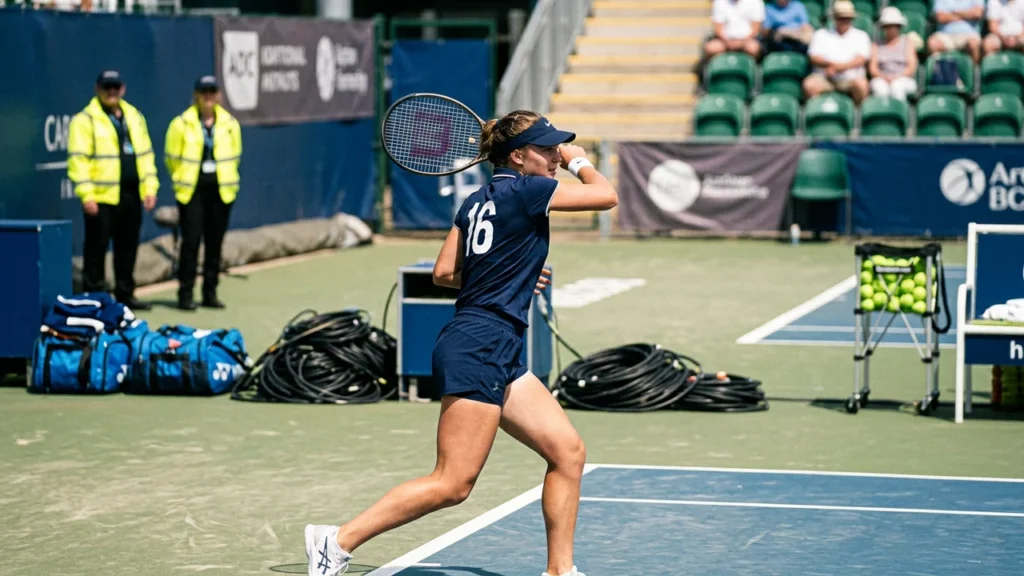
Johanna Konta has called for the Big Three, Roger Federer, Rafael Nadal, and Novak Djokovic, to receive a separate collective induction in recognition of their impact on tennis, stating, "What was unbelievable, it wasn’t just their individual careers."
Her remarks raise questions about how the sport’s governing bodies might value such a unique proposal. A group induction would break with the Hall of Fame’s traditional model, which monetizes individual career achievements through exclusive ceremonies, sponsorships, and memorabilia sales.
Bundling three of the sport’s most marketable legends into one event could reshape the economics of tennis legacy celebrations.
Each member of the Big Three carries immense commercial pull. Federer, Nadal, and Djokovic have commanded lucrative endorsement portfolios and appearance fees, while individual Hall of Fame ceremonies typically attract global broadcast rights and high-value sponsors. A joint induction would centralize those revenue streams and could attract bidders seeking a one-time, super-premium event. If such a collective celebration were greenlit, the Hall of Fame’s broadcast packages and VIP hospitality deals would likely reach unprecedented levels.
Financial Implications of a Joint Big Three Induction
Separate Hall of Fame ceremonies traditionally create multiple cycles of ticket sales, merchandise launches, and licensing agreements. A collective induction, by contrast, would concentrate those commercial opportunities into a single, potentially record-setting financial transaction.
Event organizers would face questions over the distribution of contractually guaranteed appearance fees, image rights, and profit shares among three distinct superstar brands.
The economic calculus for such an induction would differ markedly from standard practice:
- Exclusive sponsorship rights would command a significant premium, with global brands likely to enter bidding wars for event visibility.
- Merchandise sales, always a major revenue driver, would be amplified by the rare opportunity to market combined Big Three memorabilia.
- Hospitality and VIP packages, often tiered by player association, could see their value doubled or tripled in a one-off combined event.
- The Hall of Fame’s long-term licensing agreements for image and highlight rights would need to be renegotiated, with agents for Federer, Nadal, and Djokovic each seeking maximum leverage.
Konta’s argument that “what was unbelievable, it wasn’t just their individual careers” identifies the issue for event planners. The collective value of the Big Three’s era may exceed the sum of its parts. Each player’s career would justify a high-value solo induction, but their shared narrative, rivalries, Grand Slam finals, and concurrent dominance offer rights holders and sponsors a singular commercial story.
David Nalbandian provides a contrast. Despite notable achievements and marketability, he has not approached the financial or historic impact of the Big Three. Nalbandian reached a Wimbledon final, multiple Slam semifinals, and won the 2005 Tennis Masters Cup, but retired without a Grand Slam title or the global, multi-year sponsorship deals seen by Federer, Nadal, or Djokovic.
The Hall of Fame’s financial model hinges on maximizing each legend’s individual brand. Moving to a group induction would prompt renegotiations with broadcasters, sponsors, and memorabilia partners, who typically plan multi-year campaigns around solo legends.
The immediate upside of a singular, globally hyped event could be enormous, though it would forgo the recurring revenue generated by three separate ceremonies.
Konta’s call concerns more than tennis tradition. It would require contract structuring and event valuation at the highest tier of the sport, with the Hall of Fame, player representatives, and sponsors needing to align on a collective deal.