

When it comes to tennis, the backhand stroke stands as one of the most mesmerizing shots on the court, often delivering moments that define matches. Whether it’s a sleek one-handed slice cutting through the air or a thunderous two-handed topspin rally breaker, the backhand carries an allure that has captivated fans and players alike across decades. Players like Stan Wawrinka, Roger Federer, and Novak Djokovic have all wielded deadly backhands that turned defense into spectacular offense. Yet behind this beauty lies a complex technique, a dance of grip, footwork, and body rotation. For beginners and avid enthusiasts searching for that edge, mastering the nuances of both one-handed and two-handed backhands is essential to elevate your game and enjoy the thrilling sport of tennis to its fullest.
From the choice of racquet brands like Wilson, Babolat, and Yonex, known for their precision engineering to the understanding of stances and grips, this guide dives deep into the mechanics and artistry of the backhand stroke. The landscape of tennis in 2025 continues evolving, and so does the style and strategy behind every backhand hit on courts worldwide. This comprehensive exploration not only breaks down the technical steps but also injects emotional storytelling and actionable tips to make every shot count. Prepare to immerse yourself in an engaging learning experience, one that is both practical and inspiring, aimed at enriching your tennis journey with clarity and confidence.
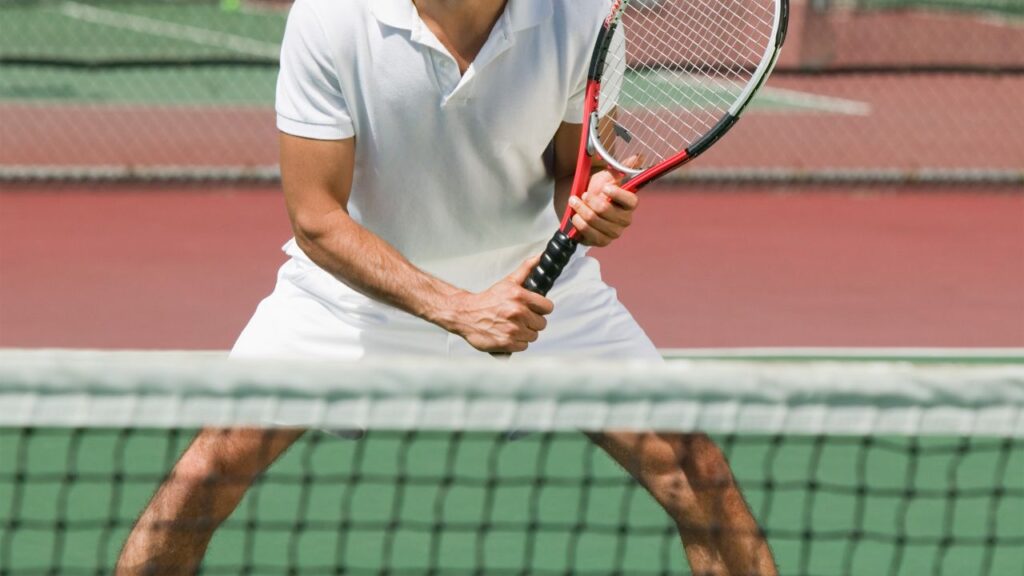
Mastering the Two-Handed Backhand Technique for Consistent Power and Control
The two-handed backhand has soared in popularity among tennis players of all levels, revered for its blend of power, accuracy, and stability. This stroke leverages the cooperation of both arms, which means less strain on a single hand and increased control during rapid exchanges. As one of tennis’s foundational shots, particularly favored by modern players due to its adaptability, the two-handed backhand invites a systematic approach to mastery.
To understand the two-handed backhand, let’s unfold the critical elements starting with the grip. The dominant hand (right hand for a right-hander) adopts a Continental grip, which resembles shaking hands with the racquet. Your index finger’s base knuckle should rest between bevels 1 and 2 on the racquet handle, a position that stabilizes the racket face. Meanwhile, the non-dominant hand takes the upper part of the grip, using a Semi-Western or Eastern forehand grip to drive the shot effectively. This dual-handed grip ensures that the top hand primarily accelerates the racquet head through the ball, infusing both force and precision.
Feet positioning is not just a side note but a pillar of a successful backhand. The three principal stances — neutral, open, and semi-open — serve different tactical needs. The neutral stance, where the front foot aligns ahead of the back foot, allows the body’s rotation energy to be harnessed fully. Open stance, often used in defensive play, aligns feet parallel to the baseline, granting quick lateral movement and reach. Lastly, the semi-open stance provides a middle ground, helping players transition from defense to offense seamlessly. Novak Djokovic exemplifies the potency of an open stance backhand, especially when chasing wide balls.
- Key Steps in Two-Handed Backhand Execution:
- Adjust grips properly for dominant and non-dominant hands
- Choose the stance that fits your shot situation (neutral, open, or semi-open)
- Initiate a strong shoulder and hip rotation; imagine your belt buckle turning sideways
- Drop the racquet back with the racket face tilted slightly upward
- Push off explosively with your back foot as you swing forward
- Make contact with the ball in front of your body at waist height
- Follow through with the racquet finishing over the opposite shoulder
- Adjust grips properly for dominant and non-dominant hands
- Choose the stance that fits your shot situation (neutral, open, or semi-open)
- Initiate a strong shoulder and hip rotation; imagine your belt buckle turning sideways
- Drop the racquet back with the racket face tilted slightly upward
- Push off explosively with your back foot as you swing forward
- Make contact with the ball in front of your body at waist height
- Follow through with the racquet finishing over the opposite shoulder
Each component in this list complements the others, building a fluid yet controlled stroke capable of punishing opponents or setting up strategic plays. Brands like Prince, Head, and Tecnifibre have developed racquets tailored specifically for two-handed backhand players, focusing on balance and maneuverability, crucial for executing these demanding mechanics flawlessly.
| Aspect | Details | Impact on Shot |
|---|---|---|
| Grip (Dominant Hand) | Continental grip, knuckle between bevels #1 and #2 | Stabilizes racket face, crucial for consistent contact |
| Grip (Non-Dominant Hand) | Semi-Western or Eastern forehand grip | Generates power, controls racket speed and angle |
| Stance | Neutral, Open, Semi-Open | Determines readiness, power generation, and reach |
| Footwork | Split step with knees bent, controlled weight transfer | Allows balance, explosive movement into the ball |
| Contact Point | In front of body, waist-height | Maximizes power and accuracy |
| Follow Through | Racquet finishes over opposite shoulder | Completes stroke execution and helps recovering |
With commitment to practice, integrating these stages into your backhand can transform your baseline rallies and offense. For an added boost, explore targeted fitness drills via improve tennis fitness exercises to increase your power and agility on court.
The subtle art of the two-handed backhand is not just in technique but in timing and rhythm—elements every serious competitor hones relentlessly.
Unlocking the Elegance: One-Handed Backhand Tips to Elevate Your Game
Rare, elegant, and electric—the one-handed backhand remains an iconic shot treasured for its fluidity and versatility. Although it’s less ubiquitous than its two-handed cousin, players like Roger Federer and Stefanos Tsitsipas have kept the one-hander in the spotlight, showcasing its potential as a match-winning weapon. In 2025, the resurgence of the one-handed backhand brings renewed interest in learning this sophisticated technique.
At the heart of this stroke lies the grip. The most common choice is the Eastern backhand grip, placing the base knuckle of the index finger squarely on bevel #1 of the racket. This grip facilitates a beautiful blend of flat and topspin shots, vital for control and maneuverability. Advanced players sometimes use the Extreme Eastern or Continental grips to enhance shot variety, including slices and drop shots.
The footwork and stance for a successful one-handed backhand demands precision. Similar to the two-hander, the neutral stance offers the best foundation to generate power, positioning the body sideways relative to the net. The open stance is often a refuge in defensive situations, especially for high balls that sit above shoulder height, a scenario tricky for one-handers to tackle with heavy topspin. Mastery of the semi-open stance helps players react to fast-paced shots, setting a transition for neutral or offensive returns.
- Essential Steps for a Winning One-Handed Backhand:
- Secure the eastern backhand grip or other preferred variation
- Assume an ideal stance—mostly neutral for power, open for defense
- Initiate weight transfer and shoulder turn, coiling your upper body
- Drop the racket gracefully behind you with a straight hitting arm
- Step into the shot with your front foot
- Swing forward maintaining arm-racket unity to meet the ball in front
- Follow through with a fluid upward motion, finishing high
- Let your non-hitting arm extend backward to aid rotation and balance
- Secure the eastern backhand grip or other preferred variation
- Assume an ideal stance—mostly neutral for power, open for defense
- Initiate weight transfer and shoulder turn, coiling your upper body
- Drop the racket gracefully behind you with a straight hitting arm
- Step into the shot with your front foot
- Swing forward maintaining arm-racket unity to meet the ball in front
- Follow through with a fluid upward motion, finishing high
- Let your non-hitting arm extend backward to aid rotation and balance
Brands like Dunlop, Volkl, and Babolat design racquets tailored for one-handed backhand players, helping enhance swing speed and control through lightweight frames and balanced swing weights. Choosing the right equipment intertwined with technique can uplift your backhand stroke dramatically.
| Element | Description | Effect on Shot |
|---|---|---|
| Grip | Eastern backhand grip primarily, alternatives include Continental and Extreme Eastern | Allows fluid combination of topspin and flat shot variations |
| Stance | Neutral, Open, Semi-Open depending on situation | Affine body rotation, accommodates defense or offense |
| Arm Position | Hitting arm straight during swing; non-hitting arm helps rotation | Improves power transfer and balance |
| Contact Point | In front of the body, aligned with waist height | Maximizes control and timing |
| Follow Through | Diagonal and upward, racket finishes over shoulder | Generates topspin and ensures fluid shot completion |
Mastering this stroke takes patience and dedication, but the reward is a shot that emanates style and deadly precision. Players eager to enhance their footwork to support this technique can discover tailored strategies and drills at master footwork court pro. Proper foot positioning cultivates the balance necessary for perfecting the one-hander.
The palpable satisfaction of a well-executed one-handed backhand—whether launching an angled winner or slicing an opponent off balance—makes every struggle in training worthwhile.
Slice Backhand: Tactical Edge through Variety and Control
When the ball-header feels unplayable with conventional topspin strokes, or when rhythm disruption becomes strategic poison, the slice backhand emerges as a masterstroke. Unlike the topspin-heavy strokes of many two-handed and one-handed backhands, the slice imparts backspin, causing the ball to skid low and frustrate aggressive foes. This trick shot has been a staple throughout tennis history, offering players like Andy Murray and Richard Gasquet a reliable tactical weapon.
The slice backhand typically uses a Continental grip, a versatile hold that allows smooth wrist action to create the necessary undercut. The preparation mirrors the steps of a one-handed backhand, but the racquet is swung with a descending motion, brushing beneath the ball to generate the characteristic backspin. This spin keeps the ball lower to the court and demands opponents to lift the ball, opening up the next shot opportunities.
Footwork remains integral in the slice technique. Players employ predominantly closed or neutral stances to ensure solid positioning, setting weight on the back foot before transferring forward into the shot. A steady head and eyes locked on the ball ensure precision in contact and angle of impact.
- Steps to Hone Your Slice Backhand:
- Adopt the Continental grip for maximum control
- Set up with a closed or neutral stance
- Coil your upper body keeping the racket tip elevated behind your back
- Step forward with your front foot and begin transferring weight
- Swing the racquet downward, brushing under the ball
- Make contact slightly in front at waist height
- Follow through with the racquet moving upward, finishing with strings facing the sky
- Extend your non-hitting arm behind you to help control rotation and balance
- Adopt the Continental grip for maximum control
- Set up with a closed or neutral stance
- Coil your upper body keeping the racket tip elevated behind your back
- Step forward with your front foot and begin transferring weight
- Swing the racquet downward, brushing under the ball
- Make contact slightly in front at waist height
- Follow through with the racquet moving upward, finishing with strings facing the sky
- Extend your non-hitting arm behind you to help control rotation and balance
| Aspect | Technical Detail | Effect |
|---|---|---|
| Grip | Continental grip | Generates necessary backspin and angle control |
| Stance | Closed or Neutral | Ensures strong base and shot stability |
| Backswing | Racquet taken high behind the head forming an “L” shape with the arm | Prepares for a clean slice angle |
| Swing Path | Downward brushing motion under the ball | Creates backspin to disrupt opponent rhythm |
| Contact Point | Waist height, slightly ahead of body | Maximizes control and consistent slice depth |
| Follow Through | Racket strings facing sky, arm extended forward and up | Ensures smooth deceleration and recovery readiness |
In addition to technique, choosing the optimal racquet is paramount when executing slices. Yonex and Dunlop have crafted models with enhanced spin-friendly string beds and lighter frames that allow quick wrist manipulation without sacrificing control. Exploring a fusion of technique and equipment will empower your slice backhand to become a feared asset. For more on how players rise to prominence with unique styles, check out upcoming tennis players dominate next insights.
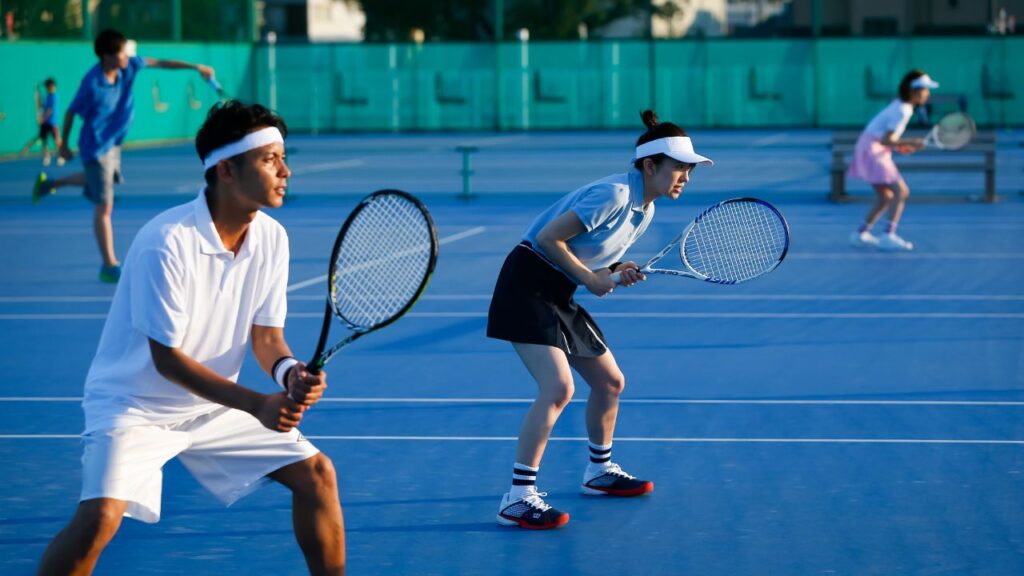
Choosing the Right Backhand Grip and Footwork for Maximum Impact
The backhand’s effectiveness hinges heavily on two pillars: the right grip and the perfect footwork. Every shot demands a tailored interaction between how the racket is held and how the body moves. Understanding these intricacies sets apart the casual player from the relentless competitor.
Grip variations abound, and comfort is key. Wilson and Head are known for producing detailed grip guides and ergonomic handles that let players experiment and refine their hold. Generally, the two-handed backhand relies extensively on the Continental grip for the bottom hand and an Eastern or Semi-Western grip for the top hand. Conversely, the one-handed backhand experiments with Eastern, Continental, and Western grips depending on the style desired.
The footwork strategy involves a triad of stances that serve multiple tactical purposes:
- Neutral stance – ideal for balanced power shots, where the feet are aligned front to back.
- Open stance – adopted mostly in defensive scenarios where lateral quickness is paramount.
- Semi-open stance – effective for transitioning from defensive to offensive shots when reaction time is minimal.
It is critical to integrate the fundamental recovery techniques after extensive rallies to ensure your body can execute these footwork methods efficiently throughout the match. The harmonization of grip and footwork can be the difference between a missed shot and a roaring winner, exemplified on courts from club level to the ATP.
| Grip Type | Preferred Backhand Style | Key Benefits |
|---|---|---|
| Continental | Slice & Two-handed bottom hand | Versatile, aids in spin and quick grip changes |
| Eastern Backhand | One-handed backhand | Good for flat and topspin shots, versatile |
| Semi-Western | Two-handed backhand top hand | Enhances topspin, power, and control |
| Western | One-handed backhand aggressive topspin | Maximizes spin potential but reduces slice effectiveness |
Footwork drills are an absolute must to transform theoretical knowledge into instinctive play. By dedicating time daily to rigorous footwork practice, you build the grounding necessary for consistently sharp backhand shots. Don’t miss out on master footwork court pro if you want comprehensive drills and expert guidance.
Essential Drills and Training Tips to Strengthen Your Backhand in 2025
Even the most technically sound strokes falter without consistent practice and conditioning. Backhand training is multifaceted, requiring a confluence of muscle memory, footwork, precision, and power development. In 2025, integrating smart training regimens and recovery plans ensures you maintain peak performance and reduce injury risks.
Consider these vital drills and tips to sharpen and safeguard your backhand:
- Shadow Swings: Practice smooth, fluid backhand swings with your racquet offline, emphasizing grip, swing path, and shoulder rotation without the stress of ball contact.
- Target Hitting: Mark targets on the court and strive to direct your backhand precisely, improving accuracy and court awareness.
- Resistance Band Exercises: Strengthen the shoulder girdle and arms, vital for both one-handed and two-handed strokes.
- Footwork Drills: Ladder drills and cone movement exercises to enhance court coverage and explosive positioning before striking.
- Video Analysis: Record your strokes to review and adjust technique with a coach or independently.
- Injury Prevention and Recovery: Prioritize stretching and incorporate recovery protocols like those detailed in Tennis Recovery Master Rest to stay in the game longer.
Racquet choices matter immensely in training—brands like Adidas and Nike continually innovate with gear designed to optimize swing control and comfort during intensive sessions. Choosing the appropriate string tension and grip sizing tailored to your style will prevent fatigue and bolster your stroke consistency.
| Training Focus | Purpose | Tools/Methods |
|---|---|---|
| Grip and Swing Technique | Solidify fundamentals and smooth motion | Shadow swings, video playback |
| Accuracy and Consistency | Precise court placement under pressure | Target practice, rally drills |
| Strength and Conditioning | Enhance power and endurance | Resistance bands, core strengthening exercises |
| Agility and Footwork | Improved movement and positioning | Speed ladder, cone drills |
| Recovery and Injury Prevention | Maintain physical health and longevity | Stretching routines, rest protocols |
For a competitive edge in upcoming tournaments and fresh inspirations, follow updates on rising stars and latest rankings at Tennis Rankings 2025 Surprise Leaders. The tennis world in 2025 waits for those who prepare diligently and execute with passion.
FAQ: Common Questions About Tennis Backhand Technique
- Q: Should beginners focus more on one-handed or two-handed backhands?
A: Beginners often find the two-handed backhand easier for developing power and control early on. However, experimenting with both can help determine personal comfort and style preference. - Q: Which grip is best for generating topspin on the backhand?
A: For two-handed backhands, the Semi-Western grip on the top hand excels at creating topspin. One-handed players usually rely on the Eastern or Western backhand grips. - Q: How important is footwork in executing a solid backhand?
A: Footwork is critical; proper stance and weight transfer enable efficient power generation and shot accuracy. - Q: Can slice backhands be effective during fast rallies?
A: Yes, using slice backhands strategically to disrupt rhythm and vary shot pace can turn the tide in long exchanges. - Q: Are special racquets needed for one-handed versus two-handed backhands?
A: While general tennis racquets can accommodate both styles, specialized models from brands like Head and Wilson cater to the distinct demands of each technique, enhancing performance.
To dive deeper into tennis mastery and stay ahead of the curve, visit TennisGuide.net regularly for the latest tips, player stories, and equipment reviews.