

A tennis serve isn’t just the point’s opener—it’s the thunderbolt that sets the tone for victory. Precision fused with raw power turns a simple ball toss into a relentless weapon, sending opponents scrambling before the rally even begins. But crafting that killer serve requires more than brute strength or fancy wrist flicks; it demands a deep dive into biomechanics and relentless practice. From mastering the ideal stance and grip to unlocking the secrets hidden in every joint rotation, players tapping into the anatomy of a flawless serve gain an unstoppable edge. Cutting-edge insights from pros and coaches reveal how small tweaks in body alignment, weight transfer, and muscle activation translate into explosive racquet speed and pinpoint accuracy. Alongside science, the true magic happens in repetition—countless serves practiced till muscle memory etches every move into the player’s DNA, ensuring consistency under pressure. For aficionados wielding Wilson, Babolat, Head, or Yonex equipement, or those sporting Nike and Adidas gear to court, integrating biomechanical mastery with smart drills catapults their serve from average to killer. In a game defined by split-second margins, these strategies unlock the pathway to dominance, powering players from beginner jitters to tournament triumphs.
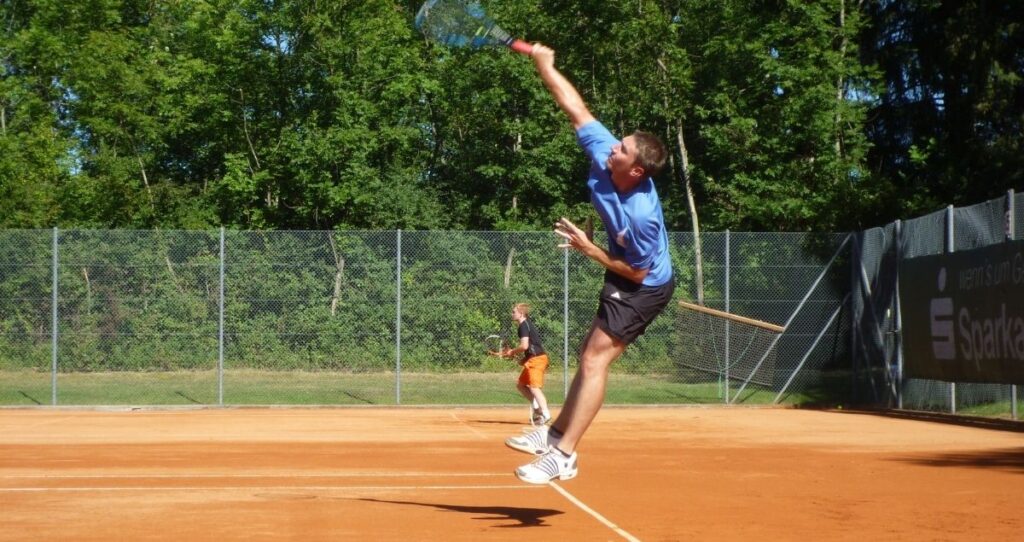
Unlocking the Biomechanics of a Powerful Tennis Serve for Maximum Impact
At the heart of every lethal tennis serve lies a marriage of physics and human physiology. Biomechanics dissects each motion—how limbs, joints, and muscles coordinate—to create an efficient energy transfer from the feet all the way to the racquet. This nuanced interplay between body segments defines serve speed, control, and injury prevention, making it a cornerstone for players chasing supremacy.
Key Components of Effective Serve Mechanics
- Stance and Base Stability: Balanced footing with a shoulder-width stance where the front foot points toward the net post provides foundational stability. This position allows for optimal weight shift—a critical momentum driver.
- Grip Precision: The Continental grip serves as the biomechanical gold standard, letting players unleash maximum racket head speed and spin capability with full wrist mobility.
- Fluid Kinetic Chain: Energy initiates in the lower body, flowing through torso rotation and culminating in the arm and wrist snap for explosive ball launch velocity.
- Toss Consistency: An accurate ball toss sets up the entire serve; its height and placement must allow maximum reach and optimal strike point to engage all body segments effectively.
- Follow-Through Technique: A complete follow-through ensures smooth deceleration of the arm, reducing injury risk while maintaining shot control.
Understanding these elements isn’t theoretical fluff; it translates directly into competitive advantages. For example, integrating core rotational torque—a twist generated from the hips and torso—can propel the racquet head speed past 120 mph in professional serves. Players who neglect lower-body contribution rely exclusively on arm strength, often limiting serve power and risking shoulder wear.
Scientific Insights into Serve Kinetics and Injury Prevention
Studies have spotlighted the shoulder’s role, showcasing how glenohumeral joint rotation during the “trophy position” maximizes torque but also demands precise timing and muscle coordination to avoid overuse injuries. Injuries involving the rotator cuff or tendons commonly afflict players who over-rotate or produce abrupt deceleration during the serve. Prolonged fatigue cycles during tournaments cause shifts in biomechanics, leading to reduced range of motion and serve velocity dip, emphasizing the need for balanced training programs that build endurance as well as strength.
Table: Biomechanical Metrics of Pro Tennis Serves
| Component | Action | Impact on Performance | Injury Risk |
|---|---|---|---|
| Lower Limb Drive | Push-off from legs and ground reaction forces | Generates 40% of serve power | Low if properly conditioned |
| Trunk Rotation | Twisting motion transferring energy upwards | Enhances velocity and racquet head speed | Moderate if abrupt or unconditioned |
| Shoulder External Rotation | Maximizes arm cocking during cocking phase | Key for ball speed and spin | High if repetitive without rest |
| Wrist Snap | Final acceleration of racquet before contact | Increases spin and control | Minimal with proper technique |
Every player, whether wielding a Prince racquet or a Volkl weapon, benefits from dissecting these metrics within an individualized training program. Understanding how to harness power without sacrificing longevity separates perpetual competitors from one-hit wonders.
Mastering the Art of Repetition: Training Strategies to Build a Reliable and Devastating Serve
Raw mechanics produce the blueprint, but nothing beats relentless repetition in carving a killer serve. Like the greatest forehands and backhands hammered into muscle memory, the serve demands structured, strategic drills that reinforce consistency, accuracy, and adaptability under pressure.
Effective Repetition Methods to Elevate Serve Performance
- Progressive Load Practice: Start with high-volume, slow-motion serves focusing on stance and toss accuracy, gradually introducing speed and spin elements as precision solidifies.
- Target Drills: Use cone markers and quadrants in the service box to enhance placing confidence, reinforcing patterns that disrupt opponent rhythm.
- Game Simulation Exercises: Incorporate stress drills simulating match pressure—10-point games, tiebreakers—to train serve execution when it counts.
- Video Feedback Sessions: Leveraging playback technology to break down serve motion frame-by-frame provides instant biomechanical cues for corrections.
- Recovery and Overuse Management: Schedule rest days and cross-training to prevent common tennis serve injuries, allowing muscles and tendons to repair.
Integrating this regimen with world-class equipment—whether sporting Dunlop strings optimized for serve spin, or balancing footing with Adidas court shoes engineered for explosive lateral movement—creates the full performance ecosystem. Moreover, repeating serves while listening to the ball’s distinct pop off the strings guides the player’s feedback loop, making subtle technique adjustments possible in real-time.
Table: Weekly Serve Repetition Plan for Intermediate Players
| Day | Focus | Volume | Equipment |
|---|---|---|---|
| Monday | Slow motion and toss accuracy | 100 serves | Wilson racquet, Nike shoes |
| Wednesday | Spin and power development | 80 serves | Babolat racquet, Asics shoes |
| Friday | Game scenario drills | 50 serves under pressure | Head racquet, Yonex shoes |
| Sunday | Video feedback and biomechanics review | 30 serves | Prince racquet, Adidas shoes |
Consistent engagement cultivates the neurological pathways responsible for automatic, unconscious skill production. That’s where the serve transforms from a forced action into a reliable weapon that strikes fear into every opponent’s heart. Players exploring additional resources on professional serve tips will find strategies to integrate into training plans and extend their serving arsenal beyond the basic flat first serve.
Perfecting Your Serve Stance and Grip: Foundation for Biomechanical Efficiency
Every explosive serve begins at the feet and fingertips. A robust stance combined with a versatile grip lays the groundwork for both power generation and injury prevention. This section scrutinizes the hows and whys of stance and grip, the unsung heroes behind the most devastating kicks off the game.
Optimal Stance Alignment to Maximize Stability and Power
Players must position feet shoulder-width apart, with the front foot angled toward the net post and the rear foot either parallel or slightly inward. This alignment generates balance, allowing a fluid weight transfer that builds momentum through kinetic chaining. Disruptions in stance cause uneven weight shift, diminishing serve velocity and increasing instability—prime conditions for double faults and missed serves.
The Continental Grip: Essential for Flexibility and Spin Mechanics
Adopt the Continental grip as the biomechanical benchmark. The “handshake” hold places the base knuckle of the index finger on the racquet’s second bevel, affording a high range of motion. This grip supports spin serves—the slice and kick variety—and enables powerful flat serves with controlled wrist pronation. Top players equipped with Prince and Wilson rackets often credit their mastery of the Continental grip as a pivotal serve evolution point.
- Common mistakes to avoid: gripping too tightly or shifting to an Eastern grip reduces wrist fluidity and spin potential.
- Pro tip: train grip familiarity off-court to develop instinctive handling during intense match moments.
Proper footwear compounds stance effectiveness; players favoring durable Adidas or Asics sneakers gain superior traction, fortifying the base during explosive leg drive. This interconnected system between feet and hand effort transforms serve mechanics into a symphony of motion.
| Stance Element | Biomechanical Role | Common Errors | Correction Tips |
|---|---|---|---|
| Front foot angle | Directs momentum toward service box | Angles too flat or inward cause imbalance | Align toward net post with slight toe-out |
| Rear foot position | Stability and balance | Too far back causes over-rotation | Keep parallel or slight inward angle |
| Grip pressure | Controls wrist movement and spin | Too tight restricts wrist snap | Maintain relaxed hold with firm racket control |
| Weight distribution | Enables smooth weight shift | Leaning forward prematurely slows motion | Keep weight balanced until ball contact |
Utilizing Spin and Serve Variations to Outsmart Opponents and Elevate Your Game
The serve is as much a chess move as a cannon blast. While power intimidates, variation controls. Mixing flat, slice, and kick serves—a combo of speed, spin, and placement—forces opponents into defensive scrambles, sapping their confidence and creating openings for winners.
Exploring The Three Primary Serve Types and Their Biomechanical Nuances
- Flat Serve: Characterized by maximum racquet speed with minimal spin, this serve demands explosive wrist and shoulder action. Ideal for aces and service winners but requires perfect timing to avoid faults.
- Slice Serve: Employs side-spin generated by racket face angle and wrist snap. It curves away from the opponent’s reach, opening angles and pulling them off the court.
- Kick Serve: Uses topspin to create high bounce, complicating return timing. Heavily reliant on wrist supination and a strong upward racket path following ball contact.
Biochemically, these serves hinge on slight variations in racket head speed, arm pronation, and swing path. Each demands dedicated training to perfect the subtle shifts in body mechanics, all while maintaining balance and energy flow.
| Serve Type | Biomechanical Focus | Typical Use | Effect on Opponent |
|---|---|---|---|
| Flat | Maximum racket head speed, shoulder external rotation | First serve to win points quickly | Overpower, induce errors |
| Slice | Side spin wrist snap, racket face angle | Pull opponent wide, set up next shot | Displacement, weak return |
| Kick | Topspin, upward swing path, wrist supination | Use on second serve to minimize double faults | High bounce, disrupt rhythm |
Volkl and Dunlop users often leverage the enhanced string technology of their racquets to maximize spin potential. Additionally, strategic placement using targets during practice helps players develop the precision needed to exploit these serves effectively. Learning to execute each serve with confidence corresponds with tennis fundamentals well explained in techniques and tactics guides.
Essential Conditioning and Recovery Practices to Sustain Serve Power and Longevity
Powerful serves are born from conditioned bodies and minds primed for repetitive explosive effort. Ignoring conditioning and recovery sets a stage for plateaued development and chronic injuries, common pitfalls even for seasoned athletes.
Physical Conditioning Programs Tailored for Serve Enhancement
- Strength Training: Focus on core, legs, shoulder stabilizers, and forearm muscles to support explosive serve motions.
- Flexibility and Mobility: Exercises targeting the shoulder joint, thoracic spine, and hips ensure wide ranges of motion and reduce strain.
- Endurance Workouts: Simulate match fatigue to maintain serve speed late into matches, crucial during grueling tournament encounters.
- Neuromuscular Training: Drills combining balance and coordination improve body control over complex serve motions.
Players investing time in these domains benefit from prolonged peak serving velocity and decreased injury downtime. Brands like Nike and Adidas produce apparel and shoes designed to optimize athletic motion and comfort, adding another layer of performance enhancement.
Recovery Techniques Emphasizing Serve-Related Muscle Groups
- Soft Tissue Massage and Foam Rolling: Helps alleviate muscle tightness around the shoulder and leg muscles.
- Dynamic Stretching: Loosens joints pre-session to maximize range of motion.
- Cold Therapy and Compression: Reduces inflammation post-training.
- Sleep and Nutrition: Prioritize rest and fuel muscle repair using anti-inflammatory foods.
| Conditioning Component | Serve Benefit | Example Exercise | Recovery Strategy |
|---|---|---|---|
| Core Strength | Enhances trunk rotation power | Medicine ball rotational throws | Foam rolling and targeted massage |
| Leg Drive | Improves lower body explosiveness | Squats and plyometric jumps | Cold compress after workouts |
| Shoulder Mobility | Increases rotation range and injury prevention | Dynamic band stretches | Ice therapy and rest |
| Neuromuscular Control | Refines timing and coordination | Balance board drills | Adequate sleep and nutrition |
Maintenance of peak serve performance through conditioning dovetails with strategic play guides found at winning singles tennis strategies and recovery advice from seasoned pros, reinforcing the holistic approach needed on today’s high-intensity courts.
Frequently Asked Questions About Developing a Killer Tennis Serve
- Q: How important is the ball toss for serve consistency?
A: The toss is crucial—it sets the entire serve motion in motion. A consistent, well-placed toss enables optimal body alignment and impact timing, reducing faults and increasing power. - Q: Can beginners realistically develop a powerful serve?
A: Absolutely. Through focused technique practice using proper grips, stances, and repetition strategies, even beginners can build a formidable serve over time. Starting with fundamentals is key, as outlined in the tennis beginners guide. - Q: What role does fatigue play in the quality of a serve during matches?
A: Fatigue can cause biomechanical breakdowns, lowering serve velocity and increasing injury risk. Conditioning and proper recovery techniques help maintain serve quality throughout competition. - Q: How do different racquet brands affect serve performance?
A: Brands like Wilson, Babolat, and Head engineer racquets with unique string tensions and balance that influence spin potential and power. Choosing the right equipment complements biomechanical technique for optimized serve acceleration. - Q: Is variation in serve types necessary?
A: Varying serve types disrupts opponents’ rhythm and enhances strategic play. Mastering flat, slice, and kick serves builds unpredictability, often key in competitive matches.