Iga Swiatek’s Grand Slam record is entering rare territory. Her latest Wimbledon performance adds another layer to a career built on stability and adaptability. By dismantling former finalist Karolina Pliskova 6-1, 6-3 in just 69 minutes. Swiatek not only advanced to the third round but also became only the third woman in the Open era to reach that stage at 26 consecutive Grand Slam events. Martina Navratilova (35) and Conchita Martinez (30) are the only others to achieve such a feat, highlighting a level of dependability that stands out even among the sport’s elite.
Numbers from Swiatek’s second-round win over Pliskova reveal a tactical shift and a psychological reset from her opening match. Against Taylor Townsend in round one. Swiatek struggled for rhythm, racking up 16 unforced errors in a second set she dropped 2-6 before ultimately prevailing 6-1, 2-6, 6-3. The Polish world number three described that Centre Court debut as “really emotional,” with the pressure of defending her title visible in both her demeanor and her stats.
Contrast that with her next match. Swiatek’s 6-1 opening set against Pliskova was all about efficiency: repeated service breaks, a high first-serve percentage, and a low unforced error count. She played with technical precision and mental clarity. “I was consistent and I had a good level of focus, so I’m really happy with my performance,” Swiatek said. The numbers back her up. She dictated from the baseline, made “good decisions” in key moments, and managed risk without losing her edge.
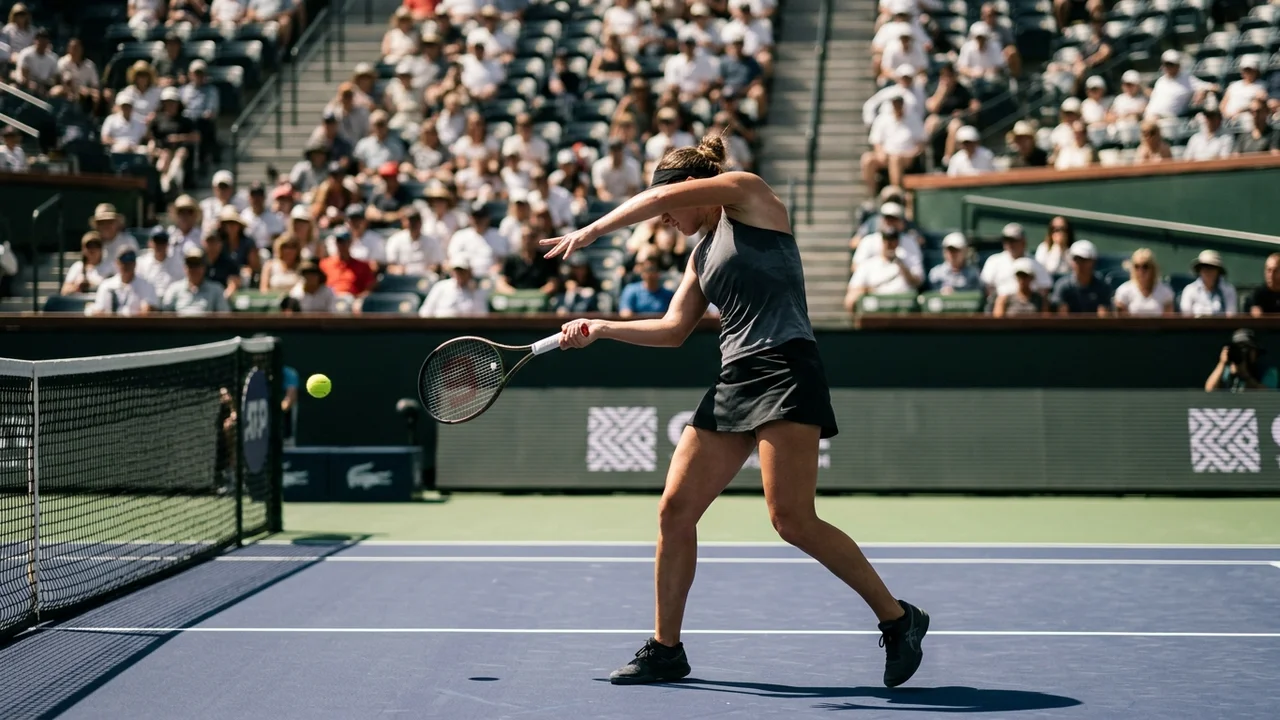
A side-by-side look at her two matches tells the story:
| Match | Sets Played | Unforced Errors | Games Lost | Duration |
|---|---|---|---|---|
| vs Townsend | 3 | 16 (2nd set) | 11 | N/A |
| vs Pliskova | 2 | Low (aggregate) | 4 | 69 mins |
Against Pliskova, a player known for her serve and flat groundstrokes. Swiatek’s tactical variety stood out. She refused to let Pliskova dictate with first-strike tennis. Instead. Swiatek absorbed pace, redirected balls deep into the corners, and forced errors. Her own serve held up under pressure, and her return positioning kept Pliskova on the back foot, neutralizing one of the Czech’s biggest weapons.
Surviving a test of patience and resilience against Townsend, then executing a clinical, low-error game plan versus Pliskova. Swiatek showed her growth as a problem-solver on grass. Grass has long been considered her least comfortable surface. Yet her Wimbledon title last year and this year’s strong start suggest she’s closing the gap that once separated her from other multi-slam champions.
Swiatek’s Grand Slam streak puts her in rare company. Reaching the third round at 26 consecutive majors isn’t about favorable draws or seeding. It’s the result of consistently high performance: strong first-serve numbers, low double-fault rates, high break-point conversion, and a defensive baseline game that works on every surface. Only Navratilova and Martinez have longer such streaks in the women’s game, and both are remembered for their week-to-week reliability and adaptability.
Mental strength is just as much a part of Swiatek’s success. After beating Pliskova, she spoke about learning to compartmentalize the emotional toll of expectations, treating high-stakes matches as “another day in the office” when necessary. That mindset shift shows up in her reduced unforced errors and sharper decision-making, proof that her psychological game is evolving alongside her tactics.
Nine third-round appearances separate Swiatek from Conchita Martinez’s all-time mark. With the numbers she’s posting at tennis’s most demanding events, that target is suddenly within reach.