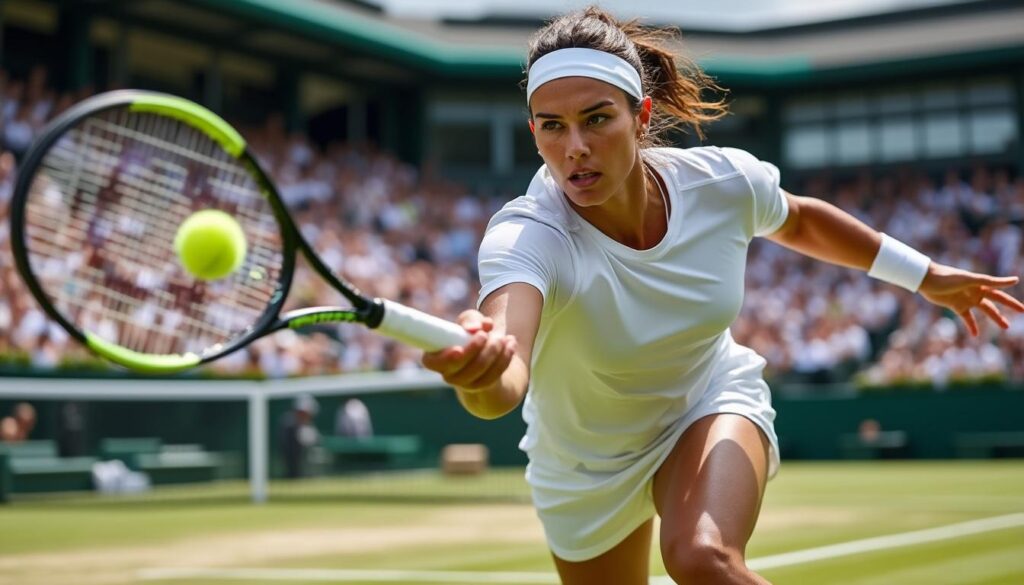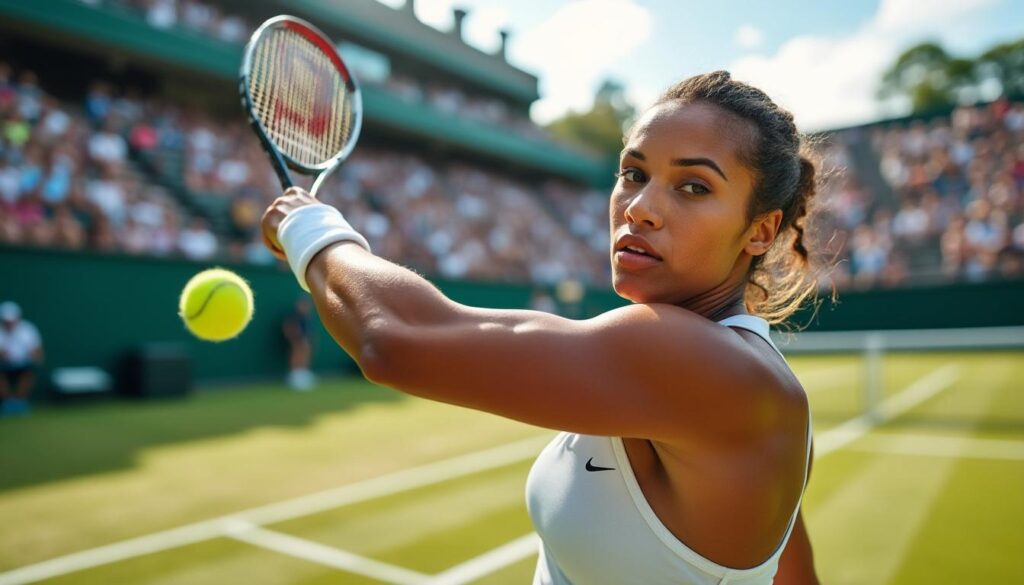
Ready to up your tennis game? Mastering forehand techniques can transform your play. Imagine hitting with precision and power, making your opponents scramble. This guide dives into the essentials, offering clear steps and drills. Whether you’re a casual player or aiming for competitive edge, let’s perfect that forehand. Unleash your potential on the court today.
Sommaire
ToggleUnderstanding the fundamentals of a forehand
Mastering the forehand begins with the proper grip and stance. Position your body side-on, ensuring a firm grip on the racquet. Balance dictates your footwork, allowing swift movement and control. Understanding these elements lays a strong foundation for enhancing your tennis skills.
The basic grip and stance
Achieving a solid forehand begins with mastering the basic grip and stance. These elements provide the foundation for effective and powerful strokes. Start with the eastern grip for versatility. Stand with feet shoulder-width apart. Bend knees slightly for balance.
- Use an eastern grip for control
- Position feet shoulder-width apart
- Bend knees slightly for stability
- Keep weight balanced on balls of feet
Body positioning and footwork
Mastering your body positioning and footwork enhances your forehand accuracy. Position your body well to execute powerful shots. Here’s how:
- Stand side-on to the net.
- Keep feet shoulder-width apart.
- Transfer weight from back foot to front.
- Stay light on your toes.
- Rotate hips and shoulders smoothly.
Mastering forehand techniques
To master forehand techniques, focus on a fluid backswing, ensuring your racquet drops below the ball. Execute a full follow-through for control. Generate topspin by brushing up the ball, enhancing power and precision. Maintain balance through proper footwork and weight transfer. Practise consistently to refine these essential elements, transforming your forehand into a formidable weapon.
The backswing and follow-through
- Keep the racket low and relaxed during the backswing.
- Ensure a smooth transition from backswing to follow-through.
- Finish with the racket over the shoulder for balance.
A consistent backswing and follow-through enhance your forehand’s accuracy and power. Focus on maintaining fluid movements for optimal results.
Generating topspin and power
To generate topspin, brush up the ball with a low-to-high swing. Start with your racket below the ball, ensuring a smooth arc. For more power, transfer your body weight from your back foot to your front foot during contact. Engage your core muscles for added strength and stability. Practice these techniques consistently to enhance your forehand’s effectiveness on the court.
Drills to improve your forehand
| Drill | Objective |
|---|---|
| Shadow Swings | Enhance footwork and form |
| Wall Rally | Improve timing and control |
| Target Practice | Focus on accuracy |
| Partner Rallies | Simulate match scenarios |
Solo drills for technique refinement
Practising solo drills enhances your forehand techniques. Start with shadow swings to perfect your form without the ball. Focus on your grip and stance, ensuring consistency in each swing. Use a ball machine to simulate real match conditions, enabling you to refine your topspin and power. Incorporate wall drills to improve timing and footwork, crucial elements in executing effective forehands.
Partner drills for real-game scenarios
Practise rallying with a partner, focusing on forehand techniques under pressure. Alternate between cross-court and down-the-line shots. Simulate match scenarios by introducing varied pace and spin. This enhances reflexes, timing, and strategic positioning, crucial for real-game improvement.
Common mistakes and how to avoid them
- Avoid a weak grip by ensuring a firm hold; this improves control.
- Position your body correctly to maintain balance and stability.
- Practise timing to avoid hitting too early or too late.
- Ensure your footwork allows for swift, effective movement across the court.
Incorrect grip adjustments
Improper grip adjustments often lead to mishits. Ensure you maintain the Eastern grip for a balanced forehand. Avoid turning your wrist excessively, as it disrupts control. Keep the knuckle on the third bevel to stabilise your shots. Always check your hand position before each rally. Correct grip ensures consistency and enhances power.
Poor timing and positioning
Poor timing and positioning lead to mishits and lost points. Align your body with the ball’s path to ensure accurate contact. Anticipate the ball’s trajectory early, using small steps for adjustments. Maintain a low centre of gravity for better stability. Focus on the ball’s bounce and prepare your racket early. Proper footwork enhances balance, allowing you to execute powerful forehand techniques. Practice timing drills to synchronise your movements with the ball’s speed and direction.
Tips for effective practice
Craft a structured practice schedule to enhance your forehand, ensuring consistency and focus. Allocate specific days for technique, power, and footwork, integrating rest periods to prevent fatigue. Utilise visual aids like video analysis for instant feedback, pinpointing areas needing improvement. Regularly review and adjust your plan, maintaining motivation and tracking progress effectively.
Creating a practice schedule
Design a practice schedule that balances technique, endurance, and rest. Allocate specific days for forehand drills and alternate with footwork exercises. Dedicate time for visualisation techniques to enhance mental agility. Ensure you review and adjust the schedule regularly for optimal progress.
Using visual aids and feedback
Visual aids and feedback play a crucial role in refining your forehand techniques. Use video analysis to scrutinise your form, highlighting areas for improvement. Incorporate slow-motion replay to understand your swing mechanics. Feedback from a coach or peer provides insights into your stance and grip. This dual approach ensures a comprehensive understanding of your technique, leading to better performance on the court.
| Tool | Purpose |
|---|---|
| Video Analysis | Review form and identify errors |
| Slow-Motion Replay | Examine swing mechanics |
| Coach Feedback | Gain insights on stance and grip |
Questions and Answers
How can I improve my forehand grip and stance?
Adopt a semi-western grip for versatility. Stand with feet shoulder-width apart, knees slightly bent. This ensures balance and readiness.
What’s the best way to generate more topspin on my forehand?
Brush up the back of the ball using a low to high swing path. Ensure a relaxed wrist for better racket head acceleration.
How do I correct poor timing in my forehand?
Practice hitting with a partner. Focus on the ball’s bounce and prepare early. Anticipation and quick footwork are key.
What drills can help refine my forehand technique solo?
Wall drills improve precision. Hit against a wall, focusing on consistent contact. Use targets to enhance accuracy.