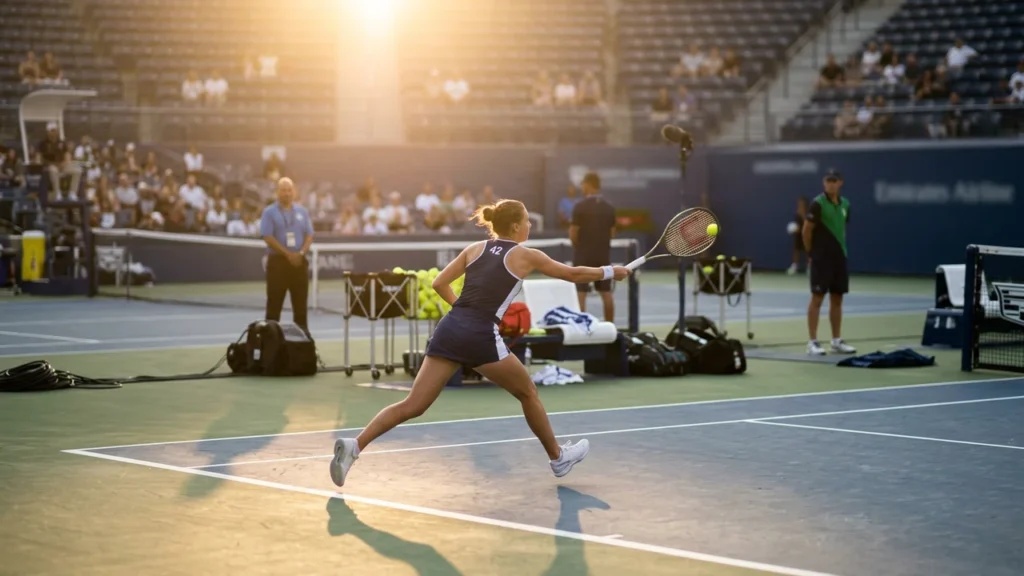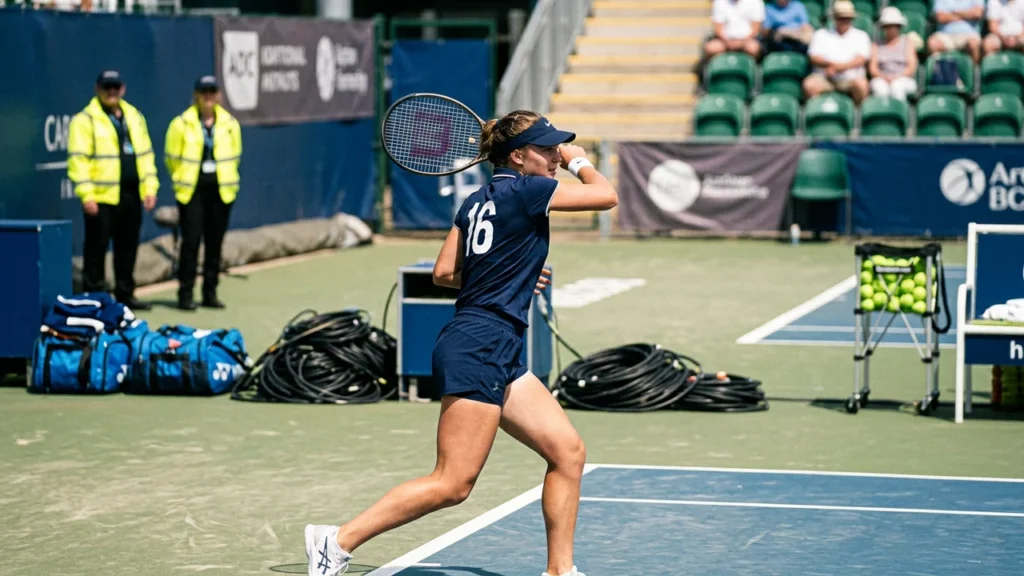
In a dazzling display of power, precision, and sheer determination, Elena Rybakina triumphed over Iga Swiatek in one of the most electrifying finals Indian Wells has witnessed in recent years. This WTA 1000 championship clash not only showcased high-caliber tennis but also revealed the evolving dynamics at the pinnacle of the sport. Rybakina, the reigning Wimbledon champion, delivered an emphatic performance that disrupted Swiatek’s bid to defend her title, underlining her ascent in the tennis world with a seismic statement. Against the backdrop of fiery rallies, intense baseline battles, and unyielding mental fortitude, the match embodied the thrilling essence that draws vast audiences into the sport.
Swiatek, who entered the competition playing magnificent tennis earlier in the season—including a title streak at the Qatar Open and a strong showing in Dubai—faced formidable resistance from Rybakina. The Kazakh athlete’s aggressive style and towering serves challenged Swiatek’s dominance, culminating in a 6-2, 6-2 victory in the semifinal round that reverberated throughout the tennis community. This victory was a landmark achievement, marking Rybakina as only the second woman after Lindsay Davenport to defeat a reigning World No. 1 at both the Australian Open and Indian Wells within the same year, a feat highlighting her consistent rise and fearless gameplay.
The Indian Wells final was set up to be a riveting rematch against World No. 2 Aryna Sabalenka, a rivalry steeped in tension and history following their marathon three-set battle at the Australian Open earlier in the year. All eyes turned to the championship battle to see whether Rybakina, despite trailing in their head-to-head confrontations, could leverage her momentum and tactical growth to capture this prestigious title. This event not only spotlighted individual excellence but also illuminated tennis as a captivating narrative of resilience, rivalry, and raw physicality—a sport where every point is a pulse-pounding drama.
Decoding Rybakina’s Triumph Over Swiatek: Power and Precision on Center Court
Elena Rybakina’s commanding win against Iga Swiatek was more than a mere upset—it was a lesson in mastering the art of aggression and controlled power on the tennis court. Right from the outset at Indian Wells, Rybakina set a blistering pace with an early break in the first set that sent a clear message: she was here to dictate terms. Backed by a serve that found its mark 61% of the time, winning 82% of her first serve points, Rybakina maintained relentless pressure on Swiatek.
Her tactical approach blended raw power with clinical execution. By mixing potent baseline drives with deft net forays, she exploited the cracks in Swiatek’s defense, compelling errors and capitalizing on break points with an impeccable 5-for-5 conversion rate. The match statistics illustrate a striking disparity:
| Statistic | Rybakina | Swiatek |
|---|---|---|
| First Serve Percentage | 61% | — |
| First Serve Points Won | 82% (28/34) | — |
| Break Point Conversion | 5/5 | — |
| Winners | 18 | 9 |
| Unforced Errors | 12 | 17 |
Here are the core factors that spearheaded Rybakina’s exceptional performance:
- Relentless serve: The foundation of her game was a powerful and consistent serve that kept Swiatek on the back foot.
- Aggressive baseline play: Pushing Swiatek constantly with deep, hard shots that commanded the rallies.
- Sharp mental focus: Staying composed under pressure, especially during crucial break points.
- Adaptability: Switching tactics swiftly when Swiatek tried to regain control.
- Physical endurance: Maintaining intensity through the hour and sixteen-minute match despite the intense competition.
Rybakina reflected on the battle, acknowledging Swiatek’s toughness as an opponent but emphasizing her own moments of brilliance: “When I play at my highest level, I feel like I can beat anyone.” This insight speaks volumes about the mental and technical evolution of a champion in the making. The victory over a world No. 1, especially someone as formidable as Swiatek, is a testament to Rybakina’s growing stature in professional tennis.
The Intense Rivalry: Rybakina vs. Swiatek and the Stakes at Indian Wells
The 2025 Indian Wells final was not just a championship match; it represented a fierce rivalry deeply rooted in recent tennis history. Elena Rybakina and Iga Swiatek have clashed multiple times, weaving a competitive saga marked by tight contests and evolving tactics.
Rybakina’s second win over Swiatek in 2025—following a straight-sets victory at the Australian Open earlier that year—put her in elite company. She became only the second woman after Lindsay Davenport in 2000 capable of beating a reigning World No. 1 at both the Australian Open and the prestigious Indian Wells tournament within a single season. This feat underscores Rybakina’s immense capacity to challenge the sport’s best and rewrite prevailing narratives.
Several key points highlight this rivalry’s intensity and what it means to the sport:
- Contrasting playing styles: Swiatek’s fluid baseline consistency clashes with Rybakina’s powerful serves and aggressive shotmaking, creating thrilling tactical battles.
- Mental resilience: Both athletes have shown remarkable ability to recover from setbacks in matches, often extending duels into full three-setters.
- Implications for rankings: Victories in such high-profile clashes resonate profoundly, affecting the live rankings and tournament seedings.
- Growing fan engagement: This contest is appealing tennis devotees and newcomers alike, showcasing the emotional drama tennis thrives on.
- Career-defining moments: Each match carves out chapters that define legacies of both athletes.
Rybakina’s pre-final reflections underscore her ambition and self-awareness facing a formidable opponent in Aryna Sabalenka, World No. 2, who stands in the championship path. Having lost all four head-to-head battles but noting their close scorelines, she’s focused on sharpening clutch moments, especially on serve, aiming to turn the tide in future encounters. These narratives add rich texture to the championship atmosphere, making Indian Wells a stage not just for skill but raw, compelling human drama.

Understanding the Indian Wells Championship Context and Its Prestige in Tennis
Indian Wells, often lauded as the “fifth Grand Slam,” holds unparalleled significance in the tennis calendar. The BNP Paribas Open draws the sport’s elite talent, combining high-stakes competition with a festive atmosphere in California’s desert oasis. Winning here extends beyond lifting a trophy; it symbolizes reaching a pinnacle beneath the Grand Slam stage and can shape an athlete’s career trajectory profoundly.
Key reasons underpinning Indian Wells’ prestige in 2025 include:
- Rich history and elite competition: Since its inception, the tournament has drawn the world’s top athletes, producing memorable moments and fierce rivalries.
- Unique environment: The Californian setting, with its expansive stadium and vibrant fan presence, creates a special energy that enhances player performance.
- Challenging conditions: The desert heat and slow hard courts test players’ physical and mental stamina, making victory a mark of true resilience.
- Impact on rankings and momentum: Earning a WTA 1000 title offers critical ranking points, easing pathways into Grand Slams and year-end championships.
- Global media spotlight: Indian Wells draws extensive broadcast coverage, growing tennis’s fanbase worldwide.
Reflecting on the Indian Wells atmosphere explains why it creates some of the most exhilarating moments in tennis, like Rybakina’s recent triumph. The arduous path through draws laden with formidable competitors means coming out on top demands technical prowess, adaptability, and peak conditioning.
| Feature | Importance to Players | Impact on Fans and Media |
|---|---|---|
| Competition Level | Highest outside Grand Slams | Attracts top viewership |
| Playing Conditions | Challenging for endurance | Creates dramatic narratives |
| Prize & Ranking Points | Major career boost | Highlights key athletes |
How Elite Athleticism and Sportswear Technology Play a Role in Modern Tennis Success
The modern tennis arena is a battlefield where supreme athleticism meets cutting-edge sportswear technology. Elena Rybakina’s victory can be partly attributed to the synthesis of physical conditioning and advanced gear designed to optimize every aspect of performance. This convergence is lighting the path for athletes seeking to push human limits and redefine competitive excellence.
Athletic prowess in tennis today involves multifaceted development:
- Explosive power: Serving as a weapon of choice, delivering aces and controlling points.
- Agility and footwork: Swift movement to get into optimal strike positions, countering opponents’ shots.
- Endurance: Sustaining peak effort over demanding matches with mental and physical precision.
- Recovery protocols: Injury prevention and rapid recovery—crucial in a punishing season.
- Strategic intelligence: Reading opponents and adjusting tactics mid-match.
Sportswear technology elevates this natural athleticism by enhancing comfort, support, and performance. Innovations seen on courts like Indian Wells include moisture-wicking fabrics, lightweight yet durable materials, and biomechanical design optimized for the dynamic demands of tennis.
| Sportswear Aspect | Benefit for Athlete | Performance Impact |
|---|---|---|
| Moisture Management | Keeps players dry and comfortable | Maintains focus and reduces fatigue |
| Lightweight Materials | Allows rapid movement and better agility | Enhances speed and responsiveness |
| Ergonomic Fit | Reduces injury risk and supports joints | Improves stability and endurance |
When champions like Rybakina harness these elements, the result is a commanding presence on court capable of stunning victories. The blend of athletic training and sportswear technology underscores why tennis continues to captivate audiences worldwide — a sport that is as much about human spirit and innovation as the rallies and scores.
Crucial Takeaways from the Indian Wells Final and What It Means for Tennis Fans
The 2025 Indian Wells final between Elena Rybakina and Iga Swiatek is a rich case study illuminating the thrilling allure of tennis and the sport’s evolving narrative. It showcases how resilience, strategy, and athletic excellence entwine to create unforgettable moments. For both newcomers to tennis and seasoned aficionados, the match carried multiple lessons and inspirations.
Highlights and insights fans can take from the encounter include:
- Unpredictability of competition: Even dominant champions face formidable challenges, emphasizing why watching tennis is never routine.
- Importance of mental toughness: Games hinge on key points where focus and confidence tip the scales.
- Role of innovation: Whether in training, equipment, or tactics, ongoing progress defines the sport.
- Sportsmanship and respect: Fierce competitors still honor their opponents, enriching tennis culture.
- Female athletes’ empowering journeys: The prominence of women like Rybakina and Swiatek inspires broader interest and participation in tennis worldwide.
The ongoing saga of Rybakina’s rise and Swiatek’s fightback will continue to fuel headlines, debates, and passionate discussions about tennis’s future. These moments captivate because they reflect a fundamental truth: tennis is not just a game of shots and points but a powerful narrative of human endeavor, athletic achievement, and the pure thrill of competition.
Frequently Asked Questions About Rybakina’s Indian Wells Victory
| Question | Answer |
|---|---|
| What was the final score of Rybakina vs Swiatek in the Indian Wells semifinal? | Elena Rybakina won 6-2, 6-2. |
| Who will Rybakina face in the Indian Wells final? | She will face Aryna Sabalenka, World No. 2. |
| Has Rybakina beaten a reigning World No. 1 multiple times this season? | Yes, she defeated Swiatek both at the Australian Open and Indian Wells in 2025. |
| What physical challenge was Swiatek managing during the tournament? | Swiatek was managing a rib issue sustained earlier but planned to continue competing, including heading to Miami Open. |
| What makes Indian Wells a prestigious tournament in tennis? | Indian Wells is considered a “fifth Grand Slam” because of its competitive field, ranking points, and cultural significance in the tennis calendar. |