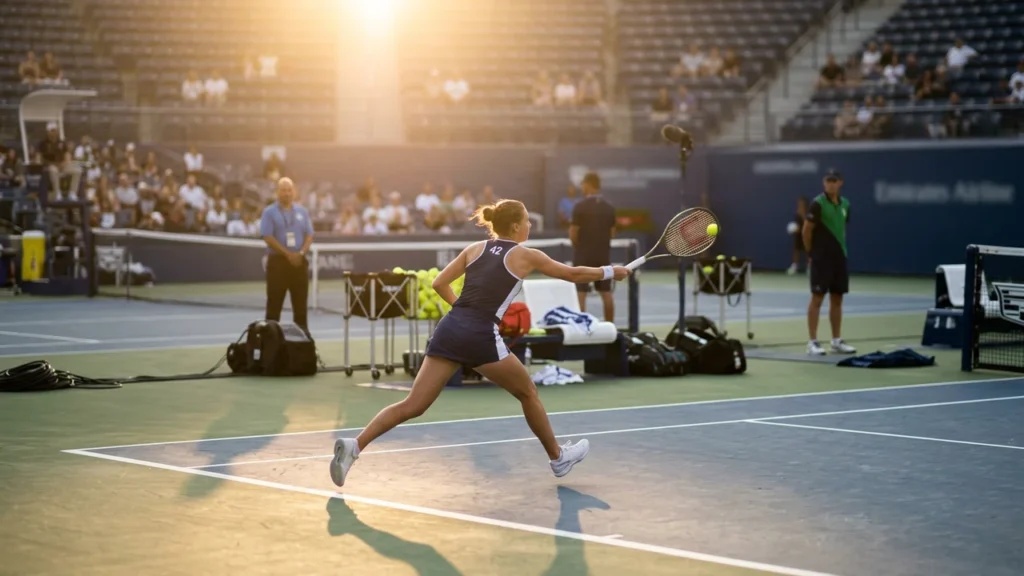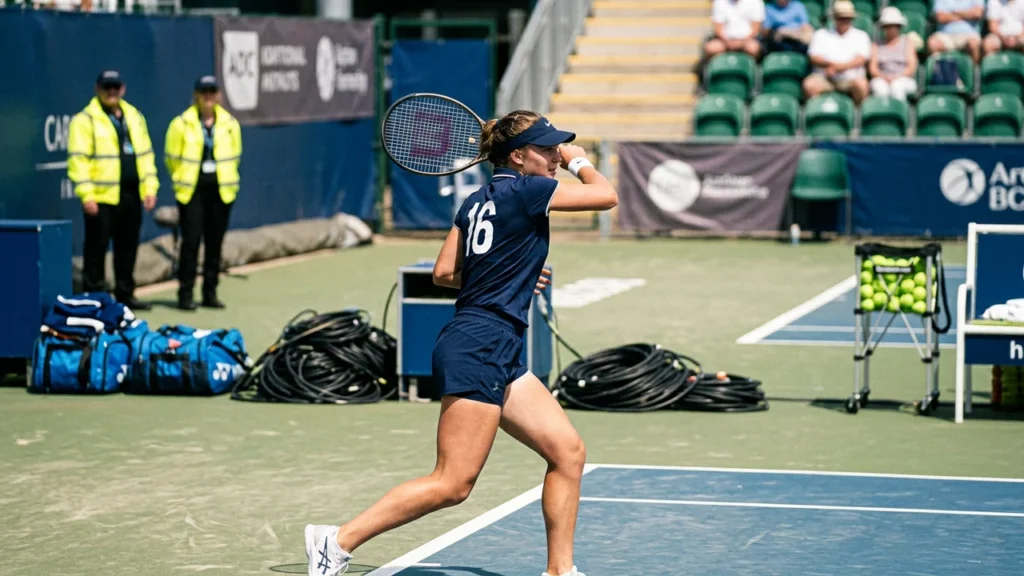
Elena Rybakina is gearing up for a stirring comeback at the grass courts where she once crowned herself queen. The Kazakh sensation, whose precocious serve and explosive power earned her the Wimbledon title in 2022, finds herself fueled by the bitter sting of a recent defeat to Barbora Krejcikova. Their riveting encounter in 2024 saw Rybakina fall in three sets, sparking a fierce determination to reclaim her dominance on the fast, unpredictable grass surface. The tale of these two formidable athletes intertwines passion, resilience, and tactical prowess, setting the stage for an electrifying showdown steeped in history and high stakes.
Rybakina’s journey has never been without its challenges. Transitioning from the slow, grinding rallies on clay to the rapid pace and low bounce of grass courts demands a different arsenal of skills. The adaptability required is immense, often testing even the most gifted. Yet, Rybakina’s game, built on an imposing serve and aggressive strokes, is tailor-made for grass. Despite this, the adjustment period frequently costs her precious momentum early in tournaments.
Conversely, Krejcikova, the resilient Czech player known for her craftiness and fight, has proven a thorn in Rybakina’s side. Their recent matches reflect a complex rivalry where strategy, endurance, and mental grit decide the victor. As Rybakina eyes redemption, the rivalry’s narrative deepens, promising fans pulsating tennis drama.
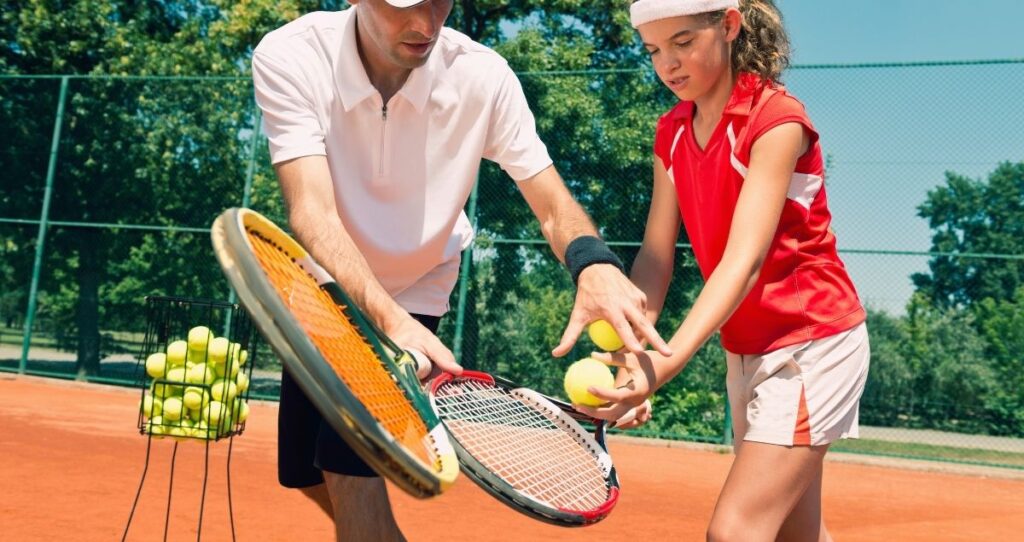
Exploring the Tactical Shift: How Elena Rybakina Adapts from Clay to Grass Courts
The leap from clay to grass is no mere change of scenery; it demands a radical alteration in play style and mindset. For Elena Rybakina, mastering this transition underpins her ability to perform at the highest level during the grass-court swing of the tennis calendar. Clay courts slow down rallies, favoring patience and heavy topspin, whereas grass courts prize speed, sharp angles, and crisp serves.
Rybakina’s tall stature and powerful serve create a significant advantage on grass, where the ball zips low and fast. Yet, as she divulged after matches at the Berlin Open, adapting movement is crucial. Grass courts forbid sliding, a common clay technique, insisting players to develop a more controlled, balanced footwork.
Key adjustments Rybakina makes on grass include:
- Approaching the net more aggressively to capitalize on short balls and finish points quickly.
- Refining the timing of her serve to exploit the low bounce, increasing her ace and unreturnable serve frequency.
- Enhancing reaction speed through quicker lateral movement and explosive sprints.
- Modifying racket string tension and selecting precision racquets, often from brands like Wilson or Head, to suit the quicker surface.
- Adjusting shot selection by aiming flatter, more penetrating groundstrokes to keep opponents on the defensive.
These tactical shifts are not instantaneous. They require hours of court time, physical conditioning, and mental focus. The grass season’s compressed schedule following the French Open compounds this challenge, giving players limited time to recalibrate.
In 2024 and 2025, Rybakina’s acceptance of this demanding switch has been evident in her tournament choices, including preparing at events like Stuttgart and Strasbourg, where she honed her grass court techniques while balancing clay form. Despite her power and precision, a fine-tuned balance between offense and defense remains crucial on grass for success.
Table: Rybakina’s Surface Adaptation Strategy Summary
| Aspect | Clay Courts | Grass Courts |
|---|---|---|
| Movement | Sliding, longer rallies, slower pace | No sliding, sharper, faster footwork |
| Serve | Consistent with bounce, strategic placement | Power serve, low bounce, aces critical |
| Shot Selection | Heavy topspin, patient setups | Flat, penetrating shots, aggressive point finish |
| Racket Choices | Standard tension, spin-focused | Higher tension, precision brands like Wilson, Head, Babolat |
| Net Play | Occasional approach | Frequent net charging to shorten points |
Unearthing the Rivalry: Rybakina vs. Krejcikova on Grass Courts
The Rybakina-Krejcikova rivalry embodies the thrilling unpredictability of tennis dynamics on grass courts. Their head-to-head clashes showcase contrasting styles — Rybakina’s raw power and serve versus Krejcikova’s deft touch, consistency, and strategic resilience. This clash is more than just points; it’s a mental chess game with each player probing weaknesses while masking vulnerabilities.
Their pivotal 2024 Wimbledon match is a case study in drama and skill. Krejcikova managed a stunning comeback after dropping the first set, prevailing 3-6, 6-3, 6-4. Despite Rybakina’s expected dominance powered by the world’s most fearsome serve, Krejcikova’s ability to adapt and neutralize Rybakina’s strengths shifted momentum.
Factors influencing their grass court battles include:
- Krejcikova’s superior court coverage and net play to counter Rybakina’s flat, hard-hitting groundstrokes.
- Rybakina’s serving prowess pressing Krejcikova to stay alert and avoid free points.
- Psychological pressure of defending or dethroning a Wimbledon champion.
- Rybakina’s occasional struggles to find rhythm early on grass, giving Krejcikova crucial opportunities.
- The physical and mental toll of long rallies affecting stamina and shot execution near match end.
This rivalry is a compelling storyline that highlights tennis’s blend of athleticism, skill, and mental warfare. Both players wear sponsorships from brands like Nike, Adidas, and Asics, adding a professional sheen to their on-court battles with gear designed for optimal performance under pressure.
Table: Rybakina vs Krejcikova Head-to-Head on Grass (2024–2025)
| Date | Tournament | Round | Winner | Score |
|---|---|---|---|---|
| July 2024 | Wimbledon | Quarterfinals | Barbora Krejcikova | 3-6, 6-3, 6-4 |
| June 2025 | Berlin Open | Semifinals | Elena Rybakina | 6-4, 7-5 |
Rybakina’s Quest for Redemption: Training, Equipment and Mental Game
Revenge on the tennis court is more than a catchy phrase; it’s a declared mission that reshapes a player’s approach to training, mindset, and gear. For Rybakina, reclaiming supremacy over Krejcikova means doubling down on every facet that influences performance, from physical conditioning to the razor-sharp focus required under Wimbledon’s glaring lights.
Her training regimen is a masterpiece of precision involving:
- Targeted drills to sharpen serve consistency and placement, incorporating technology from equipment brands like Babolat and Yonex.
- Enhanced explosive movement workouts emphasizing quick footwork and balance crucial for grass court responsiveness.
- Mental conditioning sessions to build resilience, patience, and adaptability during intense rallies and pressure points.
- Video analysis of Krejcikova’s patterns, weaknesses, and shot choices offering Rybakina tactical insights.
- Recovery protocols involving physiotherapy and sports science techniques to maintain peak physical health throughout grueling tournaments.
The role of equipment cannot be overstated. Rybakina’s collaboration with brands like Wilson and Head provides her racquets with the ideal blend of power and control. Apparel sponsors including Nike, Adidas, Under Armour, and Puma support her with lightweight, breathable fabrics that enable maximum agility and comfort. These technological partnerships empower her to translate training gains into on-court excellence.
Table: Rybakina’s Performance Enhancement Focus Areas
| Focus Area | Details | Associated Brands |
|---|---|---|
| Serve Improvement | Precision placement, power drills, serve speed measurement | Wilson, Babolat |
| Footwork and Agility | Explosive lateral drills, reaction time training | Asics, Yonex |
| Mental Toughness | Visualization, pressure simulation exercises | Nike, Under Armour |
| Recovery | Sports massage, cryotherapy, hydration strategies | Adidas, Puma |
Her mental game, often overlooked by casual fans, is a fortress developed meticulously over countless matches. The ability to rebound after losing a set, maintain aggressive confidence, and emotionally detach from errors are vital traits fueling her drive for redemption against Krejcikova.
Grass Court Legends and Lessons: Rybakina in Historical Context
To truly appreciate Rybakina’s quest for revenge and mastery over grass, one must look to the legends who paved the way with inspiring performances on this iconic surface. From Martina Navratilova’s unparalleled net play to Roger Federer’s fluid grace, grass court tennis rewards a fusion of physicality, intelligence, and adaptability.
Rybakina’s 2022 victory at Wimbledon positioned her among an elite club of grass-court champions, yet it also exposed the relentless challenge to maintain such status. Each reigning champion is pursued by hungry contenders armed with new tactics, data analytics, and relentless hustle.
Key takeaways from grass court legends to Rybakina’s rivalry include:
- Master the serve: Legends emphasize the serve as the foundation for dominance on grass.
- Net play is crucial: Controlling the net often decides the outcome on fast surfaces.
- Adaptability wins matches: Ability to shift tactics mid-game is a hallmark of champions.
- Physical endurance and sharp reflexes are essential amid grass’s slippery challenges.
- The psychological edge to stay composed under pressure separates greatness from good.
Rybakina’s journey mirrors these lessons, striving for improvements in serve variety, net approaches, and strategic flexibility to counter Krejcikova’s craftiness. This interplay not only captivates tennis fans but adds chapters to the evolving history of grass court tennis.
Table: Legendary Grass Court Champions and Their Signature Traits
| Player | Era | Signature Trait | Wimbledon Titles |
|---|---|---|---|
| Martina Navratilova | 1970s-1990s | Net dominance, serve-and-volley | 9 |
| Roger Federer | 2000s-2010s | Fluent movement, versatile shotmaking | 8 |
| Serena Williams | 2000s-2010s | Power serve, aggressive baseline | 7 |
| Elena Rybakina | 2020s-Present | Power serve, aggressive attacking | 1 (2022) |