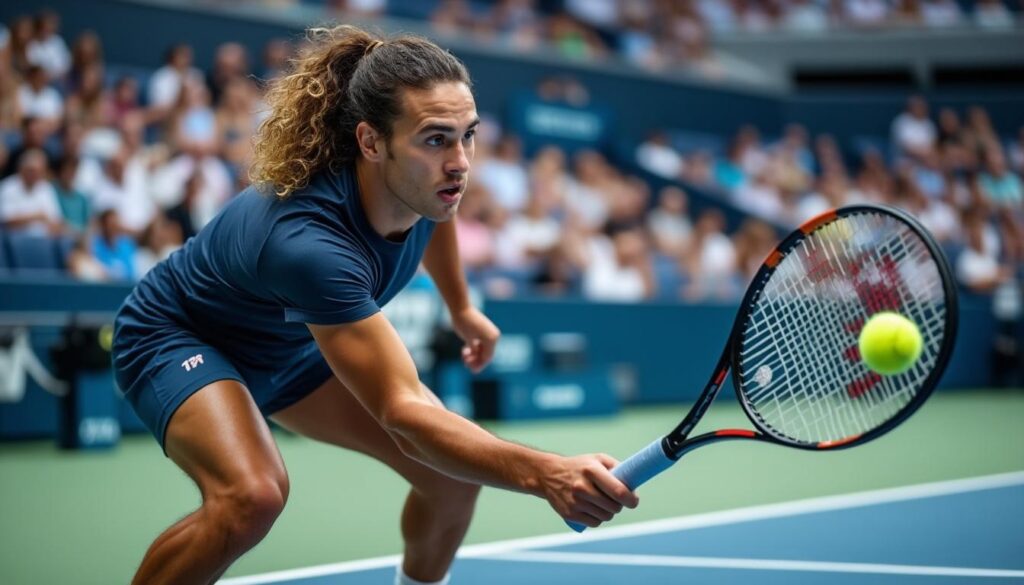
In the world of professional tennis, the off-season is far from a period of idleness. It transforms into a meticulously planned phase of strength and conditioning, where the sport’s top athletes engage in specific exercises aimed at enhancing their physical prowess, preventing injuries, and setting the stage for peak performance during the competitive season. From the powerful serves to the lightning-fast court coverage witnessed in tournaments, behind every moment lies a foundation built on intelligent off-season training regimes blending science, technology, and expert coaching.
This discussion unfolds the compelling reasons behind off-season conditioning, delves into key exercises favored by tennis pros, and reveals how modern sports technology and tailored programs support their rigorous preparation. We explore core flexibility, injury prevention strategies, interval training intensity, and multi-directional agility — all essential elements when crafting a fitness blueprint. Plus, discover insights from leading tennis strength and conditioning experts and practical guidance designed to inspire players at all levels.
Overview of Topics Covered:
- The critical importance of off-season conditioning for tennis players
- Comprehensive strength and flexibility exercises essential for tennis pros
- Effective injury prevention strategies with focus on common tennis injuries
- Designing targeted training blocks and integrating modern fitness technology
- The mental and nutritional aspects complementing physical off-season training
Key Takeaways:
- Maintaining a training regime during the off-season is crucial to continual tennis success.
- Integrating strength, flexibility, interval running, and multi-directional exercises builds endurance and power.
- Understanding and preventing common injuries like rotator cuff tendinitis and Achilles tendinitis enhance career longevity.
- Training blocks, tailored to annual competition schedules, enable optimal physical adaptations and recovery.
- Using sports technology and professional insights magnifies training effectiveness and preparation intelligence.

Why Off-Season Conditioning is the Backbone of Tennis Success
In professional tennis, the calendar year can feel relentless with extended tournaments, travel, and the constant battle of maintaining peak form. While the competitive season tests stamina and skill, the off-season carves out the essential time for regeneration, rebuilding, and growth. Experts stress that this phase is not a mere break but a cornerstone for an athlete’s physical and mental restoration.
Every elite tennis player knows that the off-season is where the true fighting spirit begins. It’s the period to build strength, improve speed, refine agility, and develop flexibility. These areas collectively translate to explosive power on serves, enhanced lateral movements across the court, and an overall resilience that keeps players sharp and injury-free amidst the grind. A profound concept lies in the “ground-based energy transfer” — this means that forces generated by the feet push through the legs and core to power strokes, making strong lower bodies and core muscles indispensable.
A typical off-season routine emphasizes a balance of weight training, flexibility work, aerobic conditioning, and sport-specific agility drills. Tennis pros like Rafael Nadal attribute much of their sustained performance to disciplined off-season conditioning. Modern athletes lean on brands such as Nike and Adidas for performance gear tailored for these workouts, while innovations from Technogym and recovery tools like Theragun enhance muscle recovery, allowing athletes to rebuild faster.
List of core reasons off-season conditioning is vital:
- Restores muscular imbalances and corrects injuries before the new season
- Increases overall strength and endurance to meet tennis’ physical demands
- Allows for technical improvements away from competition pressure
- Enhances mental readiness and focus aligned with physical advancements
- Promotes longevity by preventing overuse injuries through gradual workload management
Within this off-season framework, the role of structured training blocks emerges. The USTA promotes small, focused training blocks lasting 10-14 days for mid-season and recovery, and a larger block of 4-8 weeks during the off-season to enable profound physiological changes. Such periods allocate time for developing power in key body parts like hips, ankles, wrists, and shoulders — all pivotal to tennis strokes.
| Training Block Type | Duration | Main Focus | Benefits |
|---|---|---|---|
| Small Training Block | 10-14 days | Recovery, on-court skills, and maintaining conditioning | Allows physical and mental reset between tournaments |
| Big Training Block | 4-8 weeks | Strength, endurance, technical refinement, and injury prevention | Facilitates significant physiological adaptations and fitness gains |
Innovations in training periodization, incorporating these blocks, ensure athletes like those sponsored by Wilson and Babolat optimize their preparation and enter tournaments with confidence.
Targeted Strength and Flexibility Exercises to Elevate Tennis Performance
A core challenge in tennis conditioning is to build a physique that is powerful yet agile, resilient yet flexible. Tennis pros rely heavily on exercises targeting the core, legs, upper body, and forearms to endure long rallies and explosive movements.
To illustrate, focusing solely on core strength misses the mark without flexibility training for the spine, hips, wrists, and ankles. For example, a strong yet stiff core can restrict power transmission, lowering stroke efficiency. Therefore, tennis-specific regimes emphasize functional flexibility to allow fluid motion during high-impact strokes.
Examples of key strength exercises employed by tennis professionals include:
- Squat variations (back, front, goblet) to develop leg power and stability
- Deadlifts for posterior chain strength crucial for fast starting and stopping
- Rotational medicine ball throws to mimic tennis strokes and build dynamic core power
- Forearm and grip strengthening using resistance bands or wrist rollers for enhanced racquet control
- Overhead presses and rotator cuff strengthening exercises to address shoulder durability
Complementary to strength, stretching routines focus on the flexibility of calves, hamstrings, spine, and wrists helps prevent common tennis injuries. Dynamic stretching precedes workouts or on-court sessions, while static stretching follows to aid recovery.
The use of TRX suspension trainers builds multi-planar and core stability while Under Armour apparel optimizes movement and muscle support. Recovery is enhanced by tools like Theragun, reducing muscle soreness and accelerating tissue repair.
- 10-to-15 minute dynamic warm-up with mobility drills
- Strength exercises focused on lower body, core, shoulders, and arms
- Proprioceptive balance drills for ankle and hip stability
- Flexibility and foam rolling post-workout
- Interval cardiovascular training for endurance enhancement
| Exercise | Primary Muscle Group | On-Court Benefit | Frequency per Week |
|---|---|---|---|
| Squats | Quadriceps, Hamstrings, Glutes | Improved explosive leg drive and stability | 2-3 sessions |
| Rotational Medicine Ball Throws | Core, Obliques | Enhanced shot power and torso rotation | 2 sessions |
| Forearm Strengthening | Forearms, Wrist flexors | Better racquet grip and shot control | 3 sessions |
| Shoulder Presses | Deltoids, Rotator cuff | Injury prevention and serve power | 2 sessions |
| Dynamic Stretching | Spine, Hips, Hamstrings | Increased mobility and injury prevention | Daily |
More advanced players might adopt innovative routines inspired by top pros’ secret methods, such as the powerful conditioning regimen that fuels Rafael Nadal’s longevity. This includes specific gym movements modeled for tennis efficiency and recovery protocols that leverage massage guns and compression therapy.

Injury Prevention and Recovery: Tackling Tennis’ Most Common Ailments
Injuries like rotator cuff tendinitis, knee sprains, and Achilles tendonitis can abruptly derail a tennis career. Thus, understanding these injuries and implementing strategies to limit their impact is fundamental in off-season routines.
Rotator cuff tendinitis results from repetitive overhead motions inherent in serves and smashes. Strengthening stabilizing muscles around the shoulder – using exercises such as internal/external rotations with resistance bands – forms a key preventative measure.
Knee sprains typically originate from sudden lateral movements and stops during rallies. Conditioning the ligaments through balance drills, plyometrics, and proprioception trainings increases joint resilience. Compression garments and continuous icing post-training further support recovery.
Achilles tendonitis is aggravated by the constant jumping and directional changes demanded in tennis. Gradual workload buildup through interval training and calf strengthening exercises help lessen this risk.
Recommended off-season injury prevention practices include:
- Incorporate eccentric strengthening exercises focused on slow muscle lengthening to support tendons
- Use cross-training to avoid repetitive strain while maintaining aerobic conditioning
- Regular professional physical therapy assessments during big training blocks
- Integrate recovery tools like Theragun and compression sleeves in daily routines
- Maintain consistent hydration and balanced nutrition for tissue repair
These approaches not only build a tough body but also ensure faster recovery times between tournaments, directly impacting performance consistency.
| Common Tennis Injury | Cause | Prevention Strategy | Recovery Aid |
|---|---|---|---|
| Rotator Cuff Tendinitis | Repetitive overhead serve motions | Strengthening rotator cuff muscles, mobility drills | Theragun massage, rest periods |
| Knee Sprains | Sudden lateral and directional movements | Balance training, proprioception drills | Compression garments, ice therapy |
| Achilles Tendonitis | Overuse from jumping and sliding | Calf strengthening, gradual intensity builds | Foam rolling, active recovery |
Structured Training Blocks and the Role of Modern Tennis Fitness Technology
Effective off-season conditioning is not solely about physical exertion; it depends heavily on intelligent planning and technology. Training blocks give athletes the framework to enhance strength, technique, mental toughness, and endurance in manageable segments. These blocks, tracked meticulously by coaching teams and support staff, harmonize with tournament schedules to avoid burnout.
Embracing state-of-the-art fitness equipment from providers like Technogym ensures that muscular gains are supported by precise workload monitoring and recovery strategies. Wearable tech like Polar heart rate monitors deliver real-time metrics on cardiovascular strain and recovery, enabling customized training intensity adjustments.
Sports science also underscores the balance between on-court practice and off-court strength work within small blocks during seasons. This synergy is crucial for maintaining fresh physicality without sacrificing skill development.
Strategies for optimizing off-season training blocks:
- Incorporate strength and conditioning sessions early in big blocks to focus on muscle development
- Transition to more on-court, tactical work during shorter blocks within the competitive season
- Leverage performance analytics and video review to adjust training focus areas
- Use recovery technologies such as Theragun and compression gear to minimize fatigue
- Engage mental conditioning experts to build resilience and focus
An eloquent endorsement from Bob Bryan, a former world No. 1 doubles player and U.S. Davis Cup Captain, emphasizes this comprehensive philosophy: “Training blocks are essential in modern tennis to adapt to the intense physical demands and refine every aspect of the game. They provide a sanctuary for focused development away from competition pressures, allowing players to elevate their fitness and skills to a championship level.”
| Block Type | Training Emphasis | Duration | Technology Tools Used |
|---|---|---|---|
| Big Block (Off-Season) | Strength, conditioning, technical adjustment, recovery | 4-8 weeks | Technogym equipment, Polar monitors, Theragun |
| Small Block (In-Season) | On-court practice, conditioning maintenance, mental training | 10-14 days | Performance analytics, video review tools |
Mental Performance and Nutrition: Building the Complete Tennis Athlete
Physical preparedness alone doesn’t seal tennis success; mental toughness and nutrition form equally critical pillars supported during the off-season. Training blocks provide ideal conditions to develop resilience, positive mindset, and thoughtful recovery techniques.
Renowned sports psychologists highlight the advantage of practicing positive self-talk, controlled breathing, and visualization techniques during these periods. Integrating shadow tennis exercises enables players to mentally rehearse tactical situations and improve focus during pressure moments.
On the nutrition front, athletes refine their dietary plans to support muscle growth, fat management, and energy stamina. Weight goals become achievable in the structured environment of the off-season without compromising competitive strength. Sports dietitians work alongside players to develop personalized meal-prep strategies, hydration protocols, and safe supplementation that optimize training outcomes. Brands like Under Armour offer gear engineered to regulate body temperature and humidity, enabling nutrition absorption and muscle function throughout intense sessions.
Key mental and nutritional off-season habits include:
- Regular incorporation of mindfulness and stress reduction practices
- Goal setting with performance analytics feedback for motivational clarity
- Balanced macronutrient intake tailored to training phases
- Consistent hydration schedules and electrolyte management
- Experimentation with supplements such as omega-3s or protein powders under guidance
These methods ensure a holistic build-up that sustains players through the season’s physical and psychological demands. For those keen on observing competitive progression and applying training insights to watch the pros in action, the resource Watch ATP and WTA Matches provides a way to analyze elite tennis performances live or on demand.