
In the world of tennis, the serve is more than just a starting shot; it’s a powerful weapon—often the difference between winning and losing a match. Picture yourself standing at the baseline, racquet in hand, eyes focused on the ball you’ve just tossed into the air. You swing, but something’s missing—your serve lacks that explosive velocity that turns heads and forces opponents into defensive positions. The secret to unlocking that dramatic increase in serve speed lies not just in technique but significantly in targeted strength training focused on two critical areas: your forearms and shoulders. These muscle groups work in tandem to deliver whip-like speed and precision, transforming a routine serve into a thunderous strike that commands the court.
Serving a tennis ball at high speed requires a finely-tuned kinetic chain—a harmonious flow of energy beginning from your legs, coursing through your core, and culminating in the explosive snap of your forearm and shoulder muscles. This article delves deep into constructing a strength routine that concentrates on these pivotal muscle groups, offering practical exercises, training strategies, and biomechanical insights designed to elevate your serve from average to formidable. With the right preparation and consistency, players from novices to advanced levels can harness these techniques to add meaningful speed without compromising control or risking injury.
Enhancing serve speed through focused forearm and shoulder conditioning is not just about brute strength; it’s about developing quick, coordinated muscle activation, improving joint stability, and increasing functional mobility. As you integrate these exercises into your regular training routine, you’ll discover how strength, flexibility, and muscular endurance intertwine to create an optimized serve motion. This comprehensive guide will walk you through the science behind serve power, effective workout plans featuring resistance bands and free weights, and tips to sustain long-term improvements—all supported by examples from elite players who have harnessed these principles to dominate matches.
Essential Insights in Brief:
- Serve speed is a product of full-body coordination, with forearms and shoulders playing a defining role in the final whip.
- Strengthening forearm pronation and shoulder stability can boost power and reduce injury risk.
- Incorporating exercises with resistance bands, medicine balls, and targeted weightlifting supports muscle balance and explosive movement.
- Consistent routines spanning 3 sessions weekly can create lasting enhancements in serve velocity.
- Reliable serve improvement emphasizes mobility, coordination, and progressive overload alongside technique refinement.
How Forearm Strength Drives Explosive Tennis Serve Speed
The forearm’s role in serving transcends simply swinging the racquet. It’s the final actuator that converts upper-body momentum into racquet head speed and spin. Forearm muscles, especially those responsible for pronation—the rotational movement turning your palm downward—are critical for generating maximum racquet snap during ball contact. Without a powerful and well-conditioned forearm, a server’s potential energy dissipates before it reaches the ball, resulting in lost speed and less effective serves.
Two aspects emerge as key to improving forearm contribution:
- Muscle Endurance: Long rallies and frequent serving demand sustained activation of forearm muscles, where endurance prevents fatigue that slows down stroke execution over time.
- Explosive Strength: Quick contractions during serve pronation enhance the racquet’s acceleration, translating into higher ball velocity and concentrated spin.
To target these effectively, exercises such as forearm pronation and supination with dumbbells or weighted tennis racquets are invaluable. Start by resting your elbow on a bench and rotate your forearm slowly with controlled weights to build both strength and flexibility. TheraBand resistance bands provide customizable tension levels, ideal for progressive overload and safe strengthening. Performing three sets of 15 repetitions can improve both the pronator and supinator muscles.
Complementing traditional weight exercises, grip training tools and wrist curls further develop fine motor control and muscular endurance. Players are advised to integrate these exercises within their weekly routines, focusing on quality over quantity to avoid tendon strain. Building a resilient forearm system not only adds serve speed but actively reduces common injuries like tennis elbow, which can derail training progress.
Forearm Strength Enhancement Routine Example:
| Exercise | Equipment | Sets | Reps | Focus |
|---|---|---|---|---|
| Forearm Pronation & Supination | Dumbbell or Weighted Racquet | 3 | 15 | Rotational Strength |
| Wrist Curls (Flexion & Extension) | Dumbbell | 3 | 12-15 | Wrist Endurance & Strength |
| TheraBand Resistance Band Rolls | Resistance Band | 3 | 15 | Controlled Resistance Training |
| Grip Strengtheners | Spring Grippers or Tennis Grips | 3 | 20-25 seconds hold | Grip Endurance |
Players seeking a comprehensive training plan may pair these forearm exercises with select drills outlined on platforms such as TennisGuide, enhancing overall serve biomechanics alongside strengthen-focused routines. Embracing this approach ensures that the energy generated throughout the kinetic chain efficiently channels into a fast, stable, and effective serve.
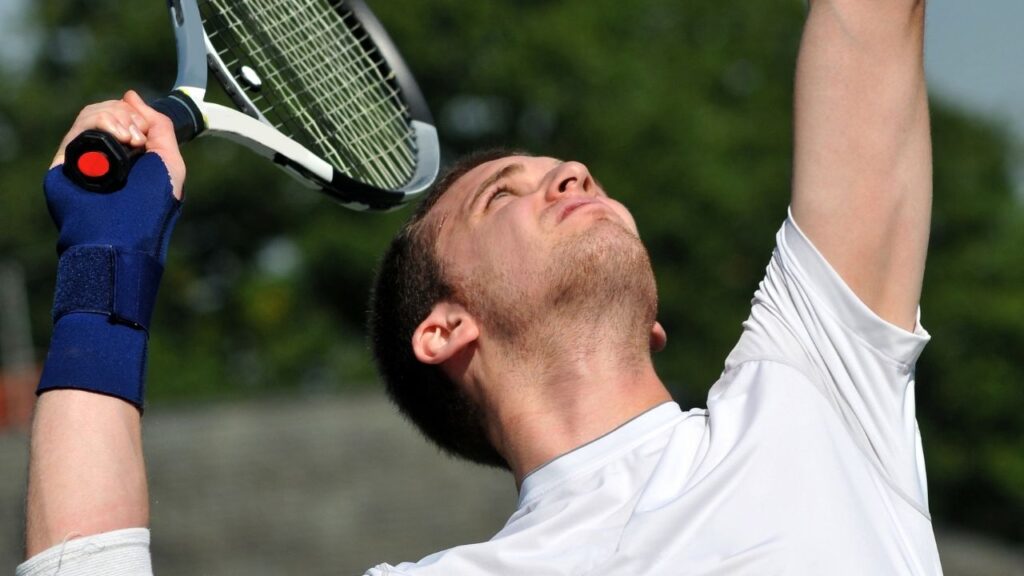
Unlocking Shoulder Power and Mobility to Maximize Serve Velocity
The shoulder complex is the powerhouse that initiates the arm acceleration in every tennis serve. Its muscular strength, joint stability, and flexibility directly influence how effectively a player can generate serve speed and maintain injury-free performance. The shoulders manage load transfer from the core and manage the whipping motion, critical for both precision and power.
Focusing on shoulder health means tackling four essential components:
- Rotator Cuff Strength: Ensures joint stability during the high-speed arm rotations intrinsic to serving.
- Scapular Stability: Secures the shoulder blade, providing a stable base for arm movement and preventing compensations leading to injury.
- Mobility & Flexibility: Maintains a full range of motion allowing a smooth and fast serve wind-up and follow-through.
- Explosive Shoulder Power: Facilitates rapid arm acceleration, enhancing racquet head speed at ball contact.
Resistance bands from notable brands like TheraBand and Technogym are particularly effective for shoulder conditioning, offering adjustable resistance and accommodating natural movement patterns. Key exercises include resistance band external rotations to reinforce the rotator cuff and scapular wall slides that improve posture and mobility.
Medicine ball overhead slams engage the entire upper body, mimicking the explosive extension seen in serves, while dumbbell push presses combine leg drive and shoulder overhead strength, reinforcing muscular coordination crucial for high serve velocity. Integrating these into a balanced weekly routine—coupled with dynamic warm-up techniques—facilitates optimal strength gains while minimizing fatigue or overuse risks.
Sample Shoulder Strength & Mobility Exercises:
| Exercise | Equipment | Purpose | Sets | Repetitions |
|---|---|---|---|---|
| Resistance Band External Rotations | TheraBand Resistance Bands | Rotator Cuff Strengthening | 3 | 15 |
| Scapular Wall Slides | Bodyweight | Shoulder Mobility & Posture | 3 | 10-12 |
| Medicine Ball Overhead Slams | Medicine Ball | Explosive Power | 3 | 10 |
| Dumbbell Push Press | Dumbbells | Power & Shoulder Strength | 3 | 8-10 |
Elite players often credit shoulder rotation drills and strength circuits, like those available on this detailed shoulder stability circuit, for their ability to sustain serve speed deep into matches. Shoulders that “whip” with controlled power generate the racquet acceleration necessary for serves that intimidate opponents and command match momentum.
Seamless Integration of Forearm and Shoulder Workouts Within a Routine
Combining forearm and shoulder strength routines presents a powerful strategy for boosting serve speed. Since these muscle groups collaborate closely during the serve motion, training them in a complementary fashion ensures synergy that translates directly into court performance. An efficient weekly plan balances intensity with recovery, encouraging progress while safeguarding against overtraining.
A well-rounded routine incorporates functional and explosive movements spanning strength, endurance, and mobility exercises. Here is an optimal way to structure sessions:
- Day 1: Power and Endurance Focus – Emphasize explosive exercises such as medicine ball slams and dumbbell push presses. Include forearm pronation sets followed by dynamic shoulder warm-ups.
- Day 2: Stability and Control – Center on rotator cuff strengthening via resistance bands, scapular stabilization drills, and grip endurance exercises.
- Day 3: Mobility and Recovery – Prioritize joint mobility with band dislocates, thoracic spine drills, and gentle forearm stretches to maintain tissue flexibility and prevent stiffness.
This routine can be enriched by utilizing resistance bands from trusted providers like TheraBand and integrating medicine ball drills from Technogym portfolios. Moreover, well-chosen tennis gear brands such as Wilson, Babolat, and Yonex supply equipment that complements physical training through innovative racquet technology, helping translate strength gains into serve speed.
Weekly Workout Summary Table:
| Day | Focus | Key Exercises | Equipment |
|---|---|---|---|
| Day 1 | Power & Endurance | Medicine Ball Slams, Dumbbell Push Press, Forearm Pronation | Medicine Ball, Dumbbells, Resistance Bands |
| Day 2 | Stability & Control | Resistance Band External Rotations, Scapular Wall Slides, Grip Strengtheners | TheraBand Resistance Bands, Grip Trainers |
| Day 3 | Mobility & Recovery | Band Dislocates, Thoracic Spine Mobility Drills, Forearm Stretching | Resistance Bands, Bodyweight |
Careful structuring aids the player in maintaining progressive overload while respecting essential recovery phases. Pairing this plan with regular tennis practice and agility work, such as agility ladder drills, creates a comprehensive framework targeting serve speed improvement from every angle.

Expert Drills and Techniques to Translate Forearm and Shoulder Strength into Faster Serves
Developing strength off-court is only half the battle. Translating newfound power into serve speed demands deliberate practice of specialized drills emphasizing biomechanics and muscle activation efficiency. Below are some high-impact drills that bridge strength and skill effectively:
- Serve into the Back Fence: Focus on maximal racquet head speed by aiming serves at the distant back fence, encouraging full swing acceleration without restraint.
- Close Court Power Serving: Start serves just behind the service line, concentrating on explosive leg drive and quick arm extension to exaggerate speed sensation.
- Max Effort Serves with Recovery Intervals: Perform 3-5 maximum speed serves followed by 30-60 seconds of rest, training the neuromuscular system for fast recovery and sustained power output.
These drills foster neuromuscular adaptation by repeatedly engaging the serve’s kinetic chain at high velocity, imprinting efficient muscle firing patterns to the forearms and shoulders. Regularly practicing these under controlled conditions, perhaps with monitoring devices such as smart sensors reviewed on platforms like Tennis Sensor 2025, allows players to quantify improvements and adjust training intensity.
Biomechanics experts emphasize also focusing on proper toss height and body rotation synchronization, as these factors amplify serve speed without adding extra strain. Incremental increases in serve velocity often correlate with refined shoulder-hip separation and optimized wrist snap, both driven by forearm and shoulder power.
| Drill | Objective | Key Focus Areas | Equipment |
|---|---|---|---|
| Serve into Back Fence | Maximize swing speed without accuracy pressure | Full body coordination, Forearm snap | Tennis Balls, Racquet |
| Close Court Power Serve | Explosive leg drive and fast arm extension | Leg strength, Shoulder acceleration | Tennis Balls, Court Lines |
| Max Effort Serves with Recovery | Neuromuscular power endurance | Serve speed, Recovery technique | Timer or stopwatch |
Incorporate these drills within a weekly routine, alternating focus with strength sessions and actual match play. A harmonious blend of strength, skill drills, and recovery ensures that serve speed will surge while minimizing injury risks—as recommended in the latest findings showcased on Serena Williams’s training insights.
Preventing Injury and Sustaining Serve Performance Through Mobility and Recovery Protocols
As serve speed intensifies through targeted forearm and shoulder routines, injury prevention and recovery become equally important to preserve longevity. Rapid arm acceleration can stress the shoulder joint, rotator cuff, and elbow tendons, making proper mobility and recovery protocols essential adjuncts.
Key intervention points include:
- Dynamic Warm-ups: Shoulder circles, band dislocates, and controlled arm swings prime muscles and joints for explosive activity and help prevent strain.
- Mobility Exercises: Thoracic spine rotation moves, pigeon stretches for hip flexibility, and scapular mobility drills unlock stiff regions, crucial for fluid serve action.
- Structured Cool-down: Incorporating light stretching and self-myofascial release techniques reduce muscle soreness and encourage quicker tissue repair.
- Load Management: Balancing training volume with sufficient rest days prevents overuse injuries common among serving specialists.
Using tools such as Resistance Bands from TheraBand and training equipment from brands like Under Armour and Adidas helps implement these mobility and recovery measures effectively. For a detailed progression guide on shoulder health, exploring resources like this shoulder stability article provides actionable recommendations.
| Protocol | Purpose | Recommended Exercises | Session Timing |
|---|---|---|---|
| Dynamic Warm-up | Prepare muscles and joints | Shoulder Circles, Band Dislocates | Before Training or Matches |
| Mobility Drills | Maintain range of motion | Thoracic Spine Rotation, Pigeon Stretch | After Training and Rest Days |
| Cool-down Routine | Reduce soreness and aid recovery | Light Stretching, Foam Rolling | Post-Session |
| Load Management | Prevent overuse injuries | Scheduled Rest Days, Progressive Overload | Weekly Planning |
Implementing these recovery protocols ensures your shoulders and forearms stay resilient, allowing sustained high-intensity serving throughout matches and seasons. Combining mobility work with strength gains nurtures durability, a hallmark seen in top professionals and echoed through their training regimens documented in expert sources like Preventing Fatigue in Practice Planning.