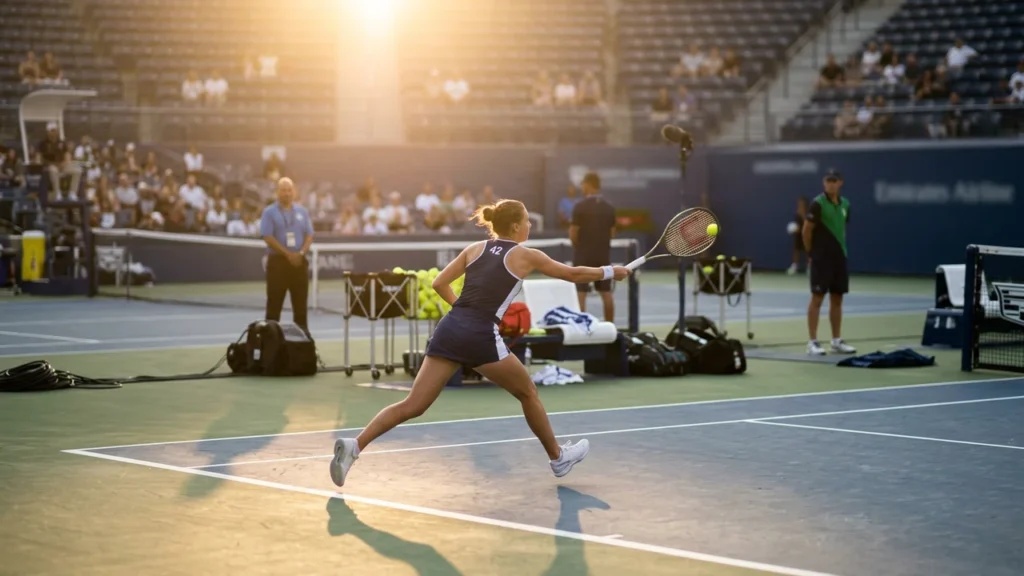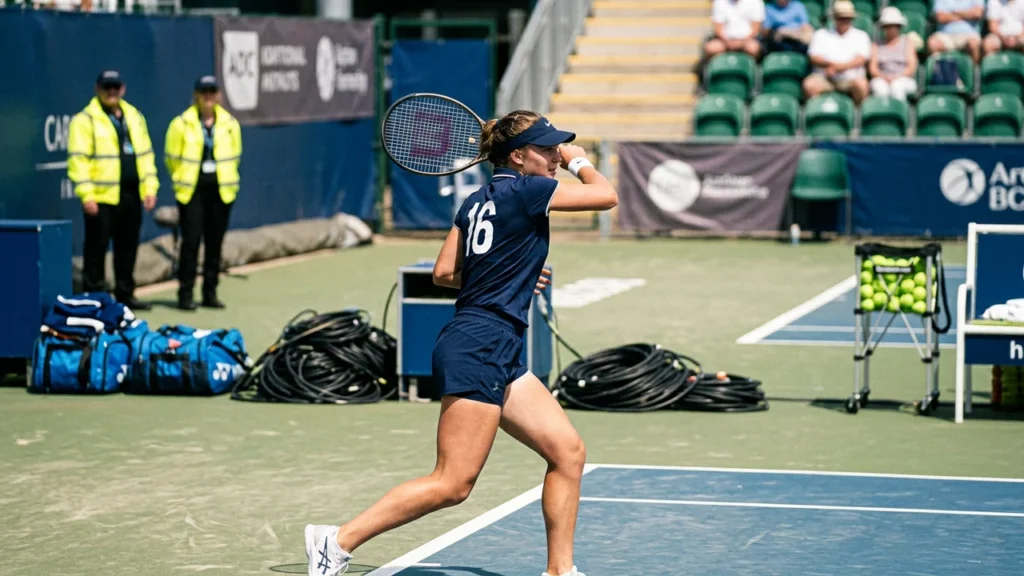
The ATP Stockholm tournament scheduled between October 13 and 19 in 2025 promises a compelling showdown. As the indoor courts set the stage, the tension among players intensifies, reflecting the tournament’s prestigious standing on the ATP Tour. This event marks a pivotal moment for many contenders aiming to solidify their rankings, earn valuable Rolex points, and captivate tennis fans worldwide. The draw reveals a balanced mix of seasoned veterans and rising stars, with notable names like Novak Djokovic, Andrey Rublev, Casper Ruud, and Stefanos Tsitsipas featured prominently.
Stockholm’s atmosphere, enriched by partnerships with iconic brands such as Lacoste, Wilson, and Emirates, magnifies the elegance and precision of tennis at its highest level. The tournament not only highlights athletic prowess but also embodies the sport’s rich culture and intense competition. From powerful baseline rallies to crafty net play, each match will embody the unforgettable drama tennis devotees crave. As the event unfolds, keen observers will watch who masters the indoor conditions and seizes the coveted trophy.
With this backdrop, this comprehensive article will dissect the draw, spotlight key contenders, and uncover the dynamics likely to influence outcomes. A narrative approach blends detail and excitement, designed to engage both newcomers and veteran fans, uniting them in the shared passion that defines tennis.
Key highlights:
- Insightful draw analysis revealing potential matchups and dark horses.
- Profiles of main title contenders featuring Djokovic, Rublev, Ruud, and Tsitsipas.
- Explanation of indoor tennis dynamics and how they shape gameplay strategies.
- Overview of Rolex points and prize money impact on players’ season trajectories.
- Latest trends on the ATP Tour and how Stockholm fits into the broader tennis calendar.
Decoding the ATP Stockholm 2025 Draw: Pathways to Victory and Possible Surprises
Analyzing the ATP Stockholm draw involves more than noting pairing and seedings—it’s about understanding potential momentum shifts and strategic battlegrounds players must navigate. This year, the draw presents a robust field, featuring a mixture of top-seeded giants and emerging challengers eager to make an indelible mark.
A quick look at the top half of the draw reveals a cluster of formidable talents. Novak Djokovic, a perennial force on the ATP Tour, occupies a prime seeded position, reflecting his continued dominance even late in the season. Meanwhile, Andrey Rublev’s reputation for explosive shot-making and aggressive baseline play positions him as a formidable adversary. The draw also includes young guns hungry for their breakthrough, adding an unpredictable dynamic.
The bottom half features Casper Ruud and Stefanos Tsitsipas, both veterans with polished games tailored for indoor courts. Their styles—the steady, powerful groundstrokes of Ruud and Tsitsipas’s versatile tactics—promise thrilling encounters that could sway the tournament’s trajectory. Each block teems with players capable of causing upsets, making the route to the final anything but straightforward.
Strategically, the surface plays a critical role. The indoor hard court in Stockholm favors players who combine aggressive baseline exchanges with precision service games. Adapting to the faster pace and reduced ball bounce can determine who sustains their form deep into the tournament. Furthermore, players’ physical conditioning and mental resilience under spotlight pressure become significant bargaining chips in the demanding schedule.
- Top seeds highlighted: Djokovic, Rublev, Ruud, Tsitsipas.
- Potential dark horses with recent surges on the ATP Tour and Tennis Channel highlights.
- Impact of seedings on probable quarterfinal and semifinal encounters.
- Indoor court conditions favoring offensive players with strong serves.
- Possible clashes influenced by previous head-to-head records and on-court chemistry.
| Section | Player | Seed | Playing Style | Key Strength |
|---|---|---|---|---|
| Top Half | Novak Djokovic | 1 | All-court | Unmatched defense and return game |
| Top Half | Andrey Rublev | 4 | Aggressive baseliner | Powerful groundstrokes |
| Bottom Half | Casper Ruud | 3 | Baseline grinder | Consistency under pressure |
| Bottom Half | Stefanos Tsitsipas | 2 | Versatile attacking | Variety and net play |

Main Contenders to Watch at ATP Stockholm: Form, Style, and 2025 Season Performance
Identifying the frontrunners is essential to understanding potential outcomes in Stockholm. Each marquee player brings a unique mix of form, style, and momentum shaped by their 2025 campaigns. Their progress on the ATP Tour has been closely followed on platforms such as the Tennis Channel, revealing key strengths and vulnerabilities.
Novak Djokovic continues to blend veteran savvy with relentless physical fitness. His adaptability allows him to excel on fast indoor surfaces, using his legendary return game and court coverage to dismantle opponents. Djokovic’s 2025 season includes victories in multiple high-profile tournaments, demonstrating his focus on maintaining peak form heading into Stockholm.
Andrey Rublev boasts a powerful forehand that can dominate rallies, coupled with an aggressive approach. He thrives in environments where quick points and intense baseline play prevail. His previous ATP Tour performances in indoor tournaments suggest he is more than capable of streaking through the draw, especially if his serve remains potent.
Casper Ruud’s
Stefanos Tsitsipas brings creativity and an all-court exhibition. His swift transitions between baseline and net play disrupt opponents’ rhythm. In 2025, Tsitsipas has experimented with new shot selections, gaining favorable results and adding an extra dimension to his game that could prove crucial on Stockholm’s indoor surface.
- Djokovic leverages experience with high-pressure resilience.
- Rublev’s offensive firepower ideal for Stockholm’s conditions.
- Ruud’s endurance suited for longer rallies and tactical consistency.
- Tsitsipas’s variety and net skills disrupt established patterns.
- Players’ momentum on the ATP Tour determines psychological edge.
| Player | 2025 Titles | Indoor Record | Rolex Points Contender | Prize Money Projection |
|---|---|---|---|---|
| Novak Djokovic | 3 | Strong | High | $300,000+ |
| Andrey Rublev | 1 | Moderate | Medium | $150,000+ |
| Casper Ruud | 2 | Good | Medium-High | $180,000+ |
| Stefanos Tsitsipas | 2 | Strong | High | $220,000+ |
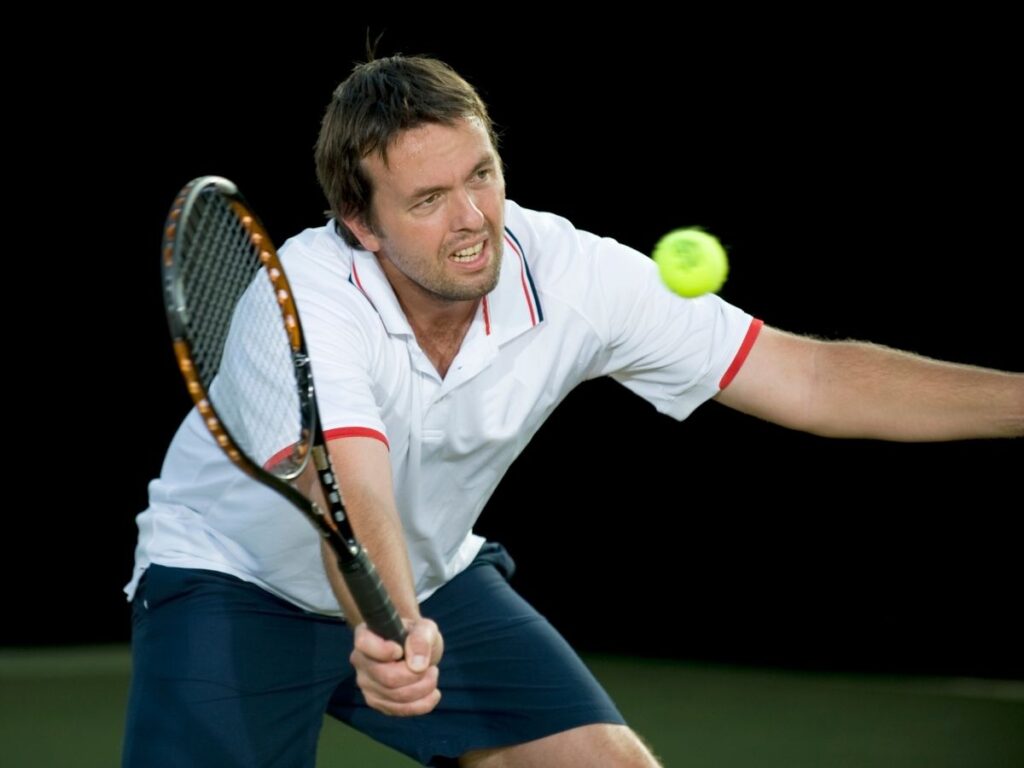
How Indoor Conditions Shape Play Styles and Influence Outcomes at ATP Stockholm
Indoor tennis presents a set of challenges distinct from outdoor court play. With no wind or sun to contend with, the game’s rhythm changes, emphasizing different skills and tactics. Stockholm’s indoor arena offers a relatively fast hard court surface, elevating the importance of serves and quick baseline exchanges. Players need to adapt quickly or be at a considerable disadvantage.
Quick reflexes and adaptability to faster ball speeds make aggressive players, such as Andrey Rublev, particularly dangerous. His ability to close points rapidly aligns well with the surface speed and indoor air conditions. Likewise, strong servers can generate easy winners, making service games a critical battleground. Novak Djokovic’s superb return game seeks to counterbalance this by breaking serve more frequently—a strategic duel that could define tight matches.
Defensive specialists must also modify their approaches, as longer rallies are less common indoors. Instead, patience and selective aggression become vital. Stefanos Tsitsipas exemplifies this with his intelligent shot selection and willingness to venture to the net, disrupting opponents’ rhythm. Casper Ruud’s steadiness and endurance make him effective in neutralizing fast-paced assaults, drawing on consistent depth and placement.
- Advantages of no external weather factors on gameplay stability.
- Fast surface enhances importance of serve and quick points.
- Return game gains tactical prominence indoors.
- Net play and tactical variety can unsettle baseline attackers.
- Physical conditioning critical amid compressed match schedules.
| Indoor Tennis Element | Impact | Players Benefited | Strategic Adjustments |
|---|---|---|---|
| Absence of wind/sun | Consistent ball trajectory | All players | Focus on shot precision |
| Faster court speed | Shorter rallies | Power hitters like Rublev | Aggressive serving |
| Reduced bounce height | Requires quicker reactions | Defensive players like Djokovic | Improved anticipation |
| Controlled climate | Stable playing conditions | Consistent performers like Ruud | Steady baseline play |
| Pressure on physical resilience | Need for efficient recovery | Veterans with fitness regimes | Recovery strategies and pacing |
Role of Rolex Points and Prize Money in shaping Player Motivation and ATP Stockolm’s Significance
Beyond prestige, ATP Stockholm carries crucial implications for players’ season trajectories via Rolex points and substantial prize money allocations. These incentives influence player motivation and tournament intensity, attracting established names and sharp contenders alike. Rolex ranking points contribute directly to year-end standings, entry into elite competitions, and financial bonuses.
Stockholm’s prize money package underscores its attractiveness as a lucrative event. Players like Novak Djokovic, Stefanos Tsitsipas, and others are acutely aware that performing well here not only secures Rolex points but also translates into financial rewards, creating a potent motivation cocktail. Emerging players view the tournament as a gateway to elevate their profiles and rankings, emphasizing the tournament’s ecosystem effect.
From a broader ATP Tour perspective, the Stockholm event represents a strategic late-season fixture. It offers players who missed earlier opportunities a shot at redemption or consolidation. The tournament’s ability to combine top-tier competition with significant Rolex points and strong financial incentives keeps it relevant amid the crowded calendar, delivering tennis fans memorable moments broadcasted globally on Tennis Channel.
- Rolex points crucial for end-of-year ATP rankings and qualification.
- Prize money ranges incentivize peak performance.
- Impact on motivation especially high for mid-tier and rising stars.
- Top players balance fatigue and opportunity at Stockholm.
- Global reach through Tennis Channel elevates tournament prestige.
| Prize Category | Rolex Points Awarded | Approximate Prize Money | Ranking Impact |
|---|---|---|---|
| Winner | 250 | $120,000+ | Major boost |
| Finalist | 150 | $60,000+ | Significant boost |
| Semi-Finalist | 90 | $30,000+ | Moderate boost |
| Quarter-Finalist | 45 | $15,000+ | Minor boost |
Fans can immerse themselves in the thrilling highlights from previous editions and ongoing matchups that define the tournament’s intensity and quality of play.
The Broader Impact of ATP Stockholm on the 2025 ATP Tour and Tennis Landscape
As one of the final ATP 250 events of the season, Stockholm holds strategic significance in the broader 2025 ATP landscape. Success here can recalibrate rankings at a crucial juncture, influencing year-end championships and seeding for the upcoming season. The high level of competition attracts a global audience, reinforcing Stockholm’s status within the ATP Tour ecosystem.
Moreover, the tournament reflects shifts in tennis aesthetics and technology, with advances in racquet design from Wilson and apparel innovation through Lacoste influencing player performance and style. These elements combine to present tennis not just as a sport but as a sophisticated spectacle, engaging fans from the stands and through worldwide Tennis Channel broadcasts.
Stockholm’s tradition, combined with modern marketing partnerships like Emirates’ sponsorship, amplifies the tournament’s reach and prestige. It serves as a reminder of tennis’s ability to unite cultural elegance with competitive drama. The draw provides upsets and breakthrough moments that resonate beyond the city, enriching the sport’s narrative globally.
- Influence on ATP rankings before year-end championships.
- Showcase of technological innovation in gear and apparel.
- Enhancement of tennis’s global reach through Tennis Channel broadcasts.
- Partnerships with global brands like Rolex, Lacoste, Wilson, Emirates.
- Promotion of tennis culture blending tradition and modern spectacle.
| Aspect | Impact on ATP Tour | Significance for Players |
|---|---|---|
| Ranking Adjustments | Crucial for year-end seedings | Determines entry in major tournaments |
| Technological Advances | Improved player performance and audience appeal | Better equipment drives competitive edge |
| Global Broadcasts | Increased fan engagement worldwide | Enhanced exposure for players and sponsors |
| Brand Sponsorships | Financial support and tournament prestige | Player endorsements and incentives |
| Cultural Influence | Elevates tennis as a lifestyle sport | Boosts player marketability |
A candid interview with Novak Djokovic offers deeper insights into the mindset of a top contender and the tournament’s unique challenges.