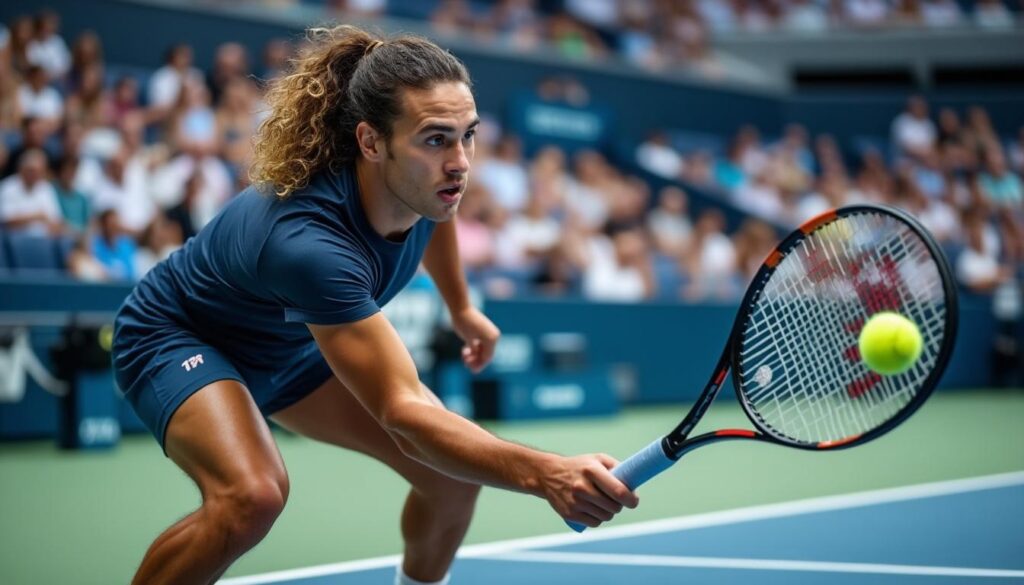
As the courts cool down and the roar of crowds fades into an off-season hush, the true champions gear up—not just by swinging racquets, but by sculpting strength that will shatter limits come the new tennis year. The period from November 17, 2025, marks more than a pause; it’s an opportunity to rebuild, focus, and strike harder than ever. Off-season fitness is not a break—it’s a battleground for resilience, a forge for PowerServe, BaselineBoost, and the bedrock for a TennisTitan to emerge when the season lights blaze once again.
Picture this: a silent court at dawn, the scent of dew mingling with determination, athletes pushing beyond the limits of sweat and muscle. This is the narrative of OffSeasonStrong training—a story of strategic calm before the storm. Embracing smart strength training, tailored conditioning, and recovery protocols, players prime their bodies, ensuring every tendon, muscle, and fiber is RacketReady and primed for competitive ferocity.
Prioritizing Progressive Strength Training for Peak Tennis Performance
Strength training in the off-season transcends mere muscle building; it demands a laser focus on progressive overload tailored precisely to the explosive demands of tennis. Every lift, every set, mirrors the real-game intensity—whether it’s preparing for a blistering ServePlus or a grueling baseline rally. Progressive overload is the linchpin: athletes systematically increase weights, reps, or complexity to push their boundaries without risking burnout.
Here’s what makes progressive overload vital for tennis players:
- Incremental gains: Slow, steady increases in training load build a solid foundation while minimizing injury risks.
- Sport specificity: Emphasizing lifts that replicate tennis movements, such as rotational medicine ball throws or explosive deadlifts, enhances power in strokes.
- Balance of strength and flexibility: Growing muscle without sacrificing mobility enables swift court coverage and injury prevention.
As an example, Nadal’s strength secrets reveal a training blend focusing on explosive lower-body power and upper-body endurance, specifically designed to sustain relentless rallies and powerful strokes. His routine embodies the essence of OffSeasonStrong principles: melding intention with execution to prime his body for the demands of an unforgiving tour (discover Nadal’s regime insights).
| Training Principle | Application for Tennis Strength | Expected Benefit |
|---|---|---|
| Progressive Overload | Incrementally increasing resistance in compound lifts | Enhanced power and muscular endurance on court |
| Specificity | Incorporating rotational and lateral exercises | Improved stroke velocity and court agility |
| Intentionality | Structured routines focused on goals with rest and recovery | Minimized injury risk and sustained performance |
Integrating training with recovery harnesses the power of the off-season to reset the body. Incorporating rest strategically alongside WeightPro sessions helps muscles rebuild stronger, ensuring tennis athletes return not just fit, but dominant. Balancing heavy lifting days with mobility and flexibility drills rounds out a regimen that’s as smart as it is tough.

Building Endurance and Agility: Foundations Beyond Muscle
Strength without endurance is like a shot without precision—missing its mark. The off-season demands developing aerobic and anaerobic capacity to endure marathon matches and quick-fire point exchanges. Programs now emphasize hybrid cardio, a blend that keeps athletes both resilient and explosive.
Hybrid cardio for tennis players might blend:
- Interval running: To simulate the explosive bursts required during points.
- Low-impact sculpting: Building muscle endurance and joint health without undue strain, aligning with the latest fall fitness trends.
- Cycle-synced workouts: Especially for female athletes, syncing training intensity to hormonal cycles helps optimize energy and recovery.
Consider PowerServe drills paired with quick lateral movements on the court; these meld cardiovascular stamina with tennis-specific agility. The improved VO2 max from such training translates directly to longer, more sustainable rallies. Moreover, integrating exercises from the baseline to off-court conditioning routines ensures the entire kinetic chain is conditioned.
| Endurance Component | Training Mode | Performance Benefit |
|---|---|---|
| Aerobic Capacity | Long-duration, low-intensity running or cycling | Supports sustained effort during long matches |
| Anaerobic Capacity | High-intensity intervals and sprints | Boosts quickness for short bursts and recovery |
| Mobility & Flexibility | Dynamic stretching and low-impact sculpt | Enhances range of motion and injury resistance |
Hybrids like the PreSeasonPulse workouts unite cardio with strength, forming a robust fitness identity. This multi-layered approach empowers players to move fluidly while packing enough muscle strength to PowerServe or execute blazingly fast volleys.
Nutrition and Recovery: The Often Overlooked Off-Season Heavyweights
A hard-trained muscle is only as strong as the fuel and repair it receives. Nutrition in the off-season stands as the silent partner in every athlete’s growth journey, powering sessions and accelerating recovery. Optimizing macronutrients aids in muscle protein synthesis and hormonal balance, feeding endurance and strength alike.
A top-tier tennis player’s off-season diet should include:
- Lean proteins: Chicken, fish, plant-based sources to aid muscle repair.
- Complex carbohydrates: Whole grains and legumes to sustain energy levels.
- Healthy fats: Nuts, seeds, and oils to support hormonal health.
- Micronutrients: Vitamins and minerals critical for immune resilience.
But nutrition is only one side of the coin. Recovery methodologies like cryotherapy, contrast baths, yoga, and adequate sleep all tie into a comprehensive recovery strategy. Relying on these processes during the off-season fuels bodies for intensity come the new tennis calendar. Fitness experts emphasize the jump from exercising to intentional training—meaning tracking nutrient timing and recovery is crucial for peak performance. The synergy of these elements builds a CoreAce of physical and mental readiness.
| Recovery Element | Role in Off-Season Fitness | Practical Tips |
|---|---|---|
| Sleep Quality | Facilitates muscle and CNS repair | Maintain 7–9 hours, minimize blue light before bed |
| Active Recovery | Enhances blood flow and reduces soreness | Incorporate yoga, swimming, or low-impact sculpt workouts |
| Nutrition Timing | Optimizes muscle repair and energy replenishment | Consume protein-rich meals within 30 minutes post-workout |
Injury Prevention and Mobility: Safeguarding Off-Season Gains
No amount of strength means a thing if it’s sidelined by injury. The off-season is crucial for addressing imbalances, correcting biomechanics, and refining mobility—preparing players for relentless competition without costly downtime.
Key elements for injury prevention include:
- Dynamic warm-ups: Elevate blood flow while preparing joints and muscles for training stresses.
- Functional movement screening: Identifies weaknesses and asymmetries that predispose players to injury.
- Targeted mobility drills: Shoulder rotations, hip openers, and thoracic spine mobility to enhance stroke mechanics.
- Strengthening stabilizers: Rotator cuff, core, and ankle strengthening to support explosive maneuvers.
Programmes like FitCourt integrate these components seamlessly into off-season routines, ensuring athletes maximize time off the court by cultivating resilience and flexibility. Rehabilitation is part prevention—by fixing small dysfunctions early, players retain longevity and maintain their NextSetFitness advantage.
| Injury Prevention Strategy | Focus Area | Implementation Example |
|---|---|---|
| Dynamic Warm-Up | Muscle readiness and joint lubrication | Light jogging, leg swings, arm circles |
| Functional Screening | Biomechanical assessment | Movement tracking software to detect asymmetries |
| Mobility Drills | Joint range of motion | Hip circles, thoracic extensions, shoulder rotations |
| Stabilizer Strengthening | Injury resilience | Resistance band exercises targeting rotator cuffs and ankles |
Off-Season Mental Conditioning and Goal Setting for Sustained Success
Physical dominance is only half the game—mental toughness constructs the fortress from which champions launch their PowerServe. The off-season, a quieter time, provides the perfect arena for mental conditioning, goal realignment, and motivation revival.
Successful tennis titans leverage methods such as:
- Visualization and mental rehearsal: Imagining various match scenarios builds readiness and reduces anxiety.
- Goal-setting with measurable benchmarks: Tracking progress through smart, achievable goals prevents burnout and sustains focus.
- Mindfulness and stress management: Yoga, meditation, or breathing exercises enhance focus and recovery quality.
- Routine audits: Evaluating prior season strengths and weaknesses to plan smarter, more customized training.
Embedding these practices turns off-season downtime into NextSetFitness—a powerful setup to enter the competitive year renewed and RacketReady. For fresh inspiration, stories such as the Ball Kid Champions’ journeys illustrate the profound role mindset plays in tennis success, reminding us that strength isn’t just physical.
| Mental Conditioning Technique | Purpose | Example Application |
|---|---|---|
| Visualization | Enhances confidence and reaction speed | Imagining successful serves and rallies before practice |
| Goal-Setting | Provides measurable progress targets | Tracking incremental strength gains every 4 weeks |
| Mindfulness | Improves stress resilience and focus | Daily meditation or breathing exercises |
| Routine Audits | Customizes training based on past performance | Reviewing match footage and fitness logs each month |
Stepping onto the court this new year with StrengthPro tactics, PowerServe precision, and BaselineBoost endurance begins with an OffSeasonStrong mindset. This blend of physical grit and mental resolve will pave the way for victory.
Delve deeper into enhancing your off-season priorities with advanced fitness strategies and athlete stories at comprehensive off-season exercises and pro insights tailored for 2025’s game evolution. Also, explore emerging trends shaping elite athletic performance in the upcoming tennis year at EALA 2026 Base breakthroughs.
Why is progressive overload important for tennis players?
Progressive overload ensures muscles adapt over time by gradually increasing the training demand, translating to more powerful serves and sustained rallies.
How does hybrid cardio benefit tennis performance?
Hybrid cardio improves both aerobic and anaerobic fitness, allowing players to maintain stamina during long matches and explosive bursts when needed.
What nutrition focus aids off-season recovery?
A balanced intake of lean proteins, complex carbohydrates, healthy fats, and micronutrients supports muscle repair, energy replenishment, and overall health.
What injury prevention strategies are critical in the off-season?
Dynamic warm-ups, functional movement screening, mobility drills, and stabilizer strengthening reduce injury risks and enhance performance longevity.
How can mental conditioning improve off-season training?
Techniques like visualization, goal-setting, mindfulness, and routine audits boost motivation, focus, and resilience crucial for competitive readiness.