The Super Eagles depart for AFCON 2026 amid a mixture of hope and urgent questions. With their recent defeat against Egypt unveiling critical gaps in defense and strategy, the task ahead is monumental. Head Coach Eric Chelle’s blueprint to reignite Nigeria’s dominance in African football is not merely about assembling a team but forging a resilient, tactical unit ready to reclaim continental glory after a 12-year drought. As the squad prepares for Morocco’s Africa Cup of Nations, the focus sharpens on translating raw potential into battlefield prowess under Chelle’s discipline and strategic vision.
Key highlights of Nigeria’s AFCON 2026 preparation include tactical adjustments, integrating young talents, and overcoming recent setbacks such as failing to qualify for the 2026 World Cup. Chelle’s approach balances the demand for immediate results with a forward-thinking commitment to rebuilding Nigeria Football’s identity. This roadmap to success involves meticulous strategic planning hinging on physical dominance, tactical discipline, and cohesion among a talented yet inexperienced squad faced with a daunting Group C that promises fierce competition.
Nigeria Revival Under Eric Chelle: Tactical Evolution and Strategic Planning for AFCON 2026
Eric Chelle’s arrival as head coach marks a pivotal chapter for Nigeria Football. Charged with the formidable task of restoring Super Eagles’ status atop African football, Chelle’s strategy revolves around reconstructing a team identity that merges discipline with tactical sharpness. The Nigeria Revival initiative embraces a pragmatic yet ambitious style of play, integrating robust defensive schemes while harnessing the raw attacking flair Nigeria is famed for.
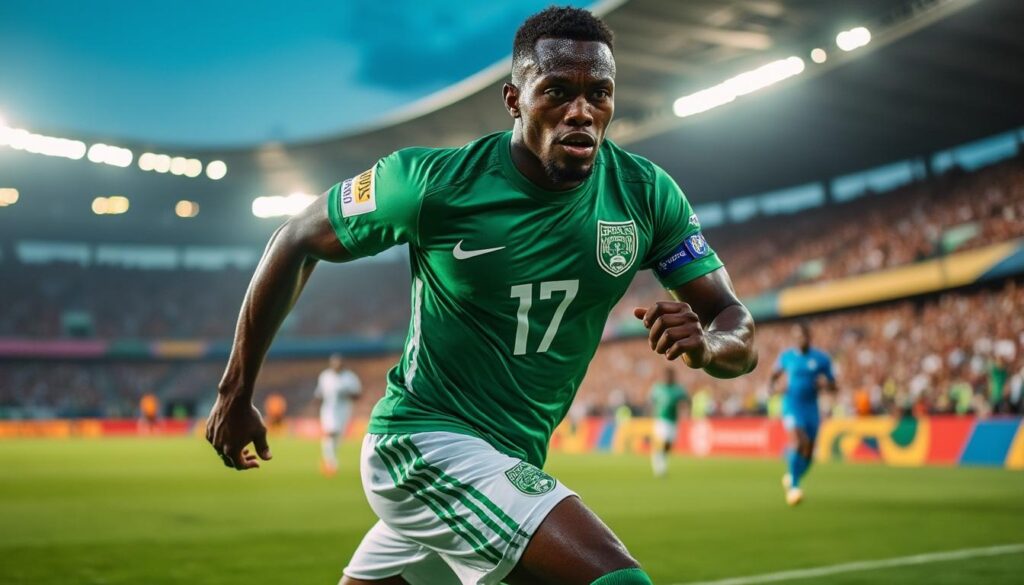
Central to Chelle’s strategy is the deployment of a 4-3-3 formation, designed to exploit physical dominance in the midfield and speed on the flanks. This system prioritizes pressing from the front, relying heavily on Victor Osimhen’s pressing ability and presence. However, Osimhen’s late arrival from Europe necessitates quick integration alongside creative wingers such as Ademola Lookman and Samuel Chukwueze, who provide the much-needed pace and unpredictability in attack. In Chelle’s vision, agility and speed on the wings counterbalance a defence that must simultaneously fine-tune its coordination to stave off threats like those highlighted in Nigeria’s recent 2-1 loss to Egypt.
The Cairo friendly exposed weaknesses that Chelle intends to address without delay. Defensive lapses, particularly on the left flank where Zaidu Sanusi struggled, underscore the necessity for tactical flexibility and sharper positional awareness. Chelle’s roadmap demands a disciplined backline capable of seamless rotations and rigorous marking to prevent skilled attackers like Egypt’s Ahmed Zizo from exploiting space between defensive lines.
Strategic planning also emphasizes the importance of squad competition and unity, intertwining Chelle’s focus on team development with a healthy dose of tactical innovation. Balancing experienced leaders, such as Chidozie Awaziem who demonstrated leadership in Cairo, with emerging talents like Ebenezer Akinsanmiro and Tochukwu Nnadi injects fresh energy and versatility. This deliberate blend underpins the broader objective of forging a resilient unit that can withstand the pressures of a high-stakes Continental Championship.
Addressing Tactical Vulnerabilities: Defensive Reorganization and Midfield Transitions
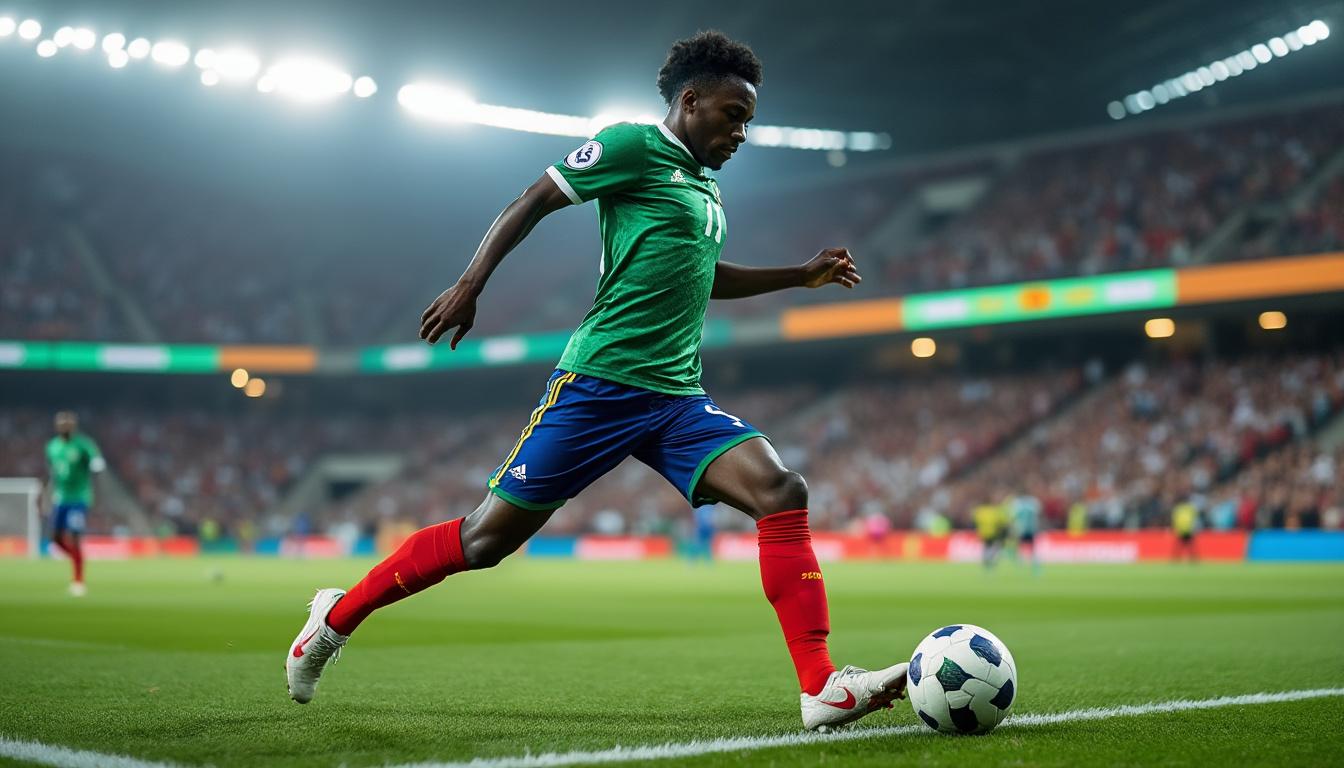
Recent performances, including the unsettling defeat to Egypt, reveal urgent tactical vulnerabilities that could derail Nigeria’s ambitions. The clearest concern lies in defensive organization, specifically how the backline adapts to agile attackers exploiting gaps between defenders and midfielders. For AFCON 2026, Chelle’s tactical blueprint demands cohesion and communication at all levels of the defensive structure.
One notable tactical issue is defensive positioning on wide channels. Egypt’s Ahmed Zizo’s maneuverability down Nigeria’s left exposed Zaidu Sanusi’s challenges to cope with dynamic wing play. The need to refine rotational cover and improve anticipation is paramount. Defensive drills in training focus on synchronizing the full-back and central defenders to close down space quickly, preventing opposing wingers from gaining the freedom observed in Cairo.
Midfield transitions represent another tactical frontier. The Cairo friendly evidenced moments where Nigeria’s midfield struggled to swiftly convert defense into attack. Though promising young players like Ebenezer Akinsanmiro and Tochukwu Nnadi show composure, the unit must enhance spatial awareness and swift decision-making to supply Osimhen and supporting forwards with quality service under pressure.
List of Tactical Focus Areas for AFCON 2026 Defence and Midfield:
- Improved man-marking and zonal coverage in wide defensive areas
- Quick, cohesive rotations between full-backs and centre-backs
- Seamless transition play from defensive recovery to attacking build-up
- Enhancing midfield creativity and direct support to forwards
- Intensified pressing to disrupt opponent build-up, targeting midfield spaces
To surmount these tactical challenges, Chelle employs rigorous squad rotation and experimentation, a strategy illustrated by frequent substitutions in recent friendlies. This method, while sometimes disruptive to rhythm, allows valuable appraisal of player chemistry and positional dynamics ahead of the tournament’s demanding schedule, where Nigeria must contend with tactically disciplined Tunisia and physically robust Uganda and Tanzania.
Table: Nigeria’s Defensive Performance Metrics vs. Egypt
| Metric | Value | Assessment |
|---|---|---|
| Goals Conceded | 2 | Highlight of defensive lapses |
| Errors Leading to Shots | 3 | Exposed poor coordination |
| Clearances | 15 | Moderate defensive activity |
| Interceptions | 7 | Shows reaction capacity |
| Possession Lost in Midfield | 27% | Impacts transition attacks |
Team Development and Integrating Emerging Talents into Nigeria’s AFCON 2026 Roadmap
Team development forms a cornerstone of Chelle’s strategic roadmap. Faced with the reality of missing the 2026 World Cup, the focus shifts dramatically to the Continental Championship—and building a team with a renewed sense of purpose and identity. Chelle’s tactical vision blends seasoned leadership with promising youth, evident in the inclusion of fresh faces aiming for AFCON stardom.
Emerging midfielder Ebenezer Akinsanmiro’s sublime composure during his debut against Egypt signals a conscious effort by Chelle to infuse new energy and resilience. Alongside more experienced midfielders Frank Onyeka and Raphael Onyedika, the young players form an evolving nucleus capable of dictating tempo and tempo changes essential in high-pressure games.
Likewise, Chelle’s willingness to experiment with squad selections reveals a commitment to long-term success. Integrating young players such as Tochukwu Nnadi and Fago Lawal not only introduces fresh creative sparks but pushes established players to elevate performance and competitiveness. This balanced mixture aims to stabilize Nigeria’s transition phases and inject unpredictability, key factors for success in a demanding tournament environment.
The goalkeeper situation merits particular attention. Stanley Nwabali’s fitness concerns and Obasogie’s mixed performances point to a need for stability and confident decision-making between the posts. Francis Uzoho remains an alternative, although the unsettled defensive setup demands constant communication and trust, crucial in moments when hesitation could prove catastrophic.
This phase of team development underscores Chelle’s holistic approach: molding a competitive squad attuned to tactical discipline, mental resilience, and positional synergy—all within a compressed timeframe before the tournament’s kickoff in Fez.
AFCON Preparation and Nigeria’s Tactical Readiness Against Group C Rivals
Nigeria’s journey through Group C of AFCON 2026 demands tactical acuity and flawless execution. The opening fixture against Tanzania on December 23 will test Super Eagles’ readiness to impose their game plan and physicality. Tanzania’s robust defense and counter-attacking speed require Nigeria to maintain vigilance and technical sharpness throughout.
Four days later, facing Tunisia presents a formidable challenge in tactical discipline and experience. Tunisia’s well-drilled side excels in maintaining structural integrity and exploiting opponent mistakes. Nigeria’s defensive line, particularly in wide areas, must show marked improvement if Chelle’s vision is to succeed.
The final group match against Uganda on December 30 concludes a difficult phase marked by opponents eager to capitalize on any Nigerian misstep. Uganda’s physicality and rapid transitions underscore the importance of fitness, tactical discipline, and the ability to adapt in-game. Chelle’s strategic planning includes not only game-day tactics but also holistic player conditioning and mental preparedness to withstand the tournament’s grueling demands.
Key Tactical Priorities for Nigeria in Group C:
- Close marking on swift wingers and forwards
- Effective utilization of wing players for width and penetrative attacks
- Midfield control to break opposition momentum
- Maximizing set-piece opportunities, both offensively and defensively
- Keeping defensive errors to an absolute minimum
Successful execution of this tactical blueprint could set the stage for Nigeria’s quest to reach the finals, meeting the Nigeria Football Federation’s explicit goal and redeeming the team’s African football legacy after a difficult period.
Football Success and Continental Championship Aspirations: What Tomorrow Holds for the Super Eagles
The AFCON 2026 represents more than just a tournament for Nigeria; it’s a pivotal moment to reclaim football success, validate Chelle’s strategic roadmap, and reignite national pride. Pressure mounts intensely with the shadow of the 2026 World Cup qualification disappointment looming large. Yet, the talent-packed squad brimming with dynamic attackers, determined midfielders, and resilient defenders holds the key to reversing recent fortunes.
Coach Eric Chelle’s vision is intertwined with the Nigerian spirit—bold, dynamic, and relentless. The team’s ambition revolves around cohesive execution of the roadmap centered on a high-tempo, physically dominant style paired with tactical discipline and mental toughness. This balanced approach is crafted to dismantle opponents tactically while inspiring unified team play.
Nigeria’s journey in AFCON will unfold under the watchful eyes of an eager nation and a federation demanding nothing short of final appearances or victory. The roadmap is demanding and fraught with challenges, but history shows that when the Super Eagles align strategy with passion and skill, results follow. American journalist Jude Obafemi’s insights highlight the necessity of converting this roadmap into performance—a transformation that may well define Nigeria’s football narrative for years to come.
For those keen to explore inside Eric Chelle’s masterplan to revive the Super Eagles ahead of AFCON 2025, the blueprint extends naturally into the 2026 vision, embracing innovation and incisive team-building central to Nigeria’s football revival strategy.
What is the main tactical formation Eric Chelle plans to use at AFCON 2026?
Eric Chelle primarily plans to deploy a 4-3-3 formation focusing on physical dominance in the center and pace on the wings to create offensive threats while maintaining defensive solidity.
How is Nigeria addressing defensive weaknesses revealed in recent matches?
The coaching staff is emphasizing improved defensive coordination, particularly in wide areas, with drills focusing on man-marking, zonal coverage, and effective rotation between defenders to mitigate vulnerabilities.
What role do emerging players have in Nigeria’s AFCON 2026 strategy?
Emerging talents like Ebenezer Akinsanmiro and Tochukwu Nnadi are integrated as part of a youth infusion strategy aimed at energizing the squad with fresh creativity and resilience for sustained success.
What challenges does Nigeria face in their group at AFCON 2026?
Nigeria is drawn in a tough Group C alongside Tunisia, Uganda, and Tanzania, all presenting different tactical and physical challenges that require adaptability and precise execution from the Super Eagles.
Why is the AFCON 2026 particularly significant for Nigeria?
AFCON 2026 offers Nigeria a chance to redeem themselves after missing out on the 2026 World Cup, aiming to restore continental glory and fulfill the federation’s goal of reaching the final.