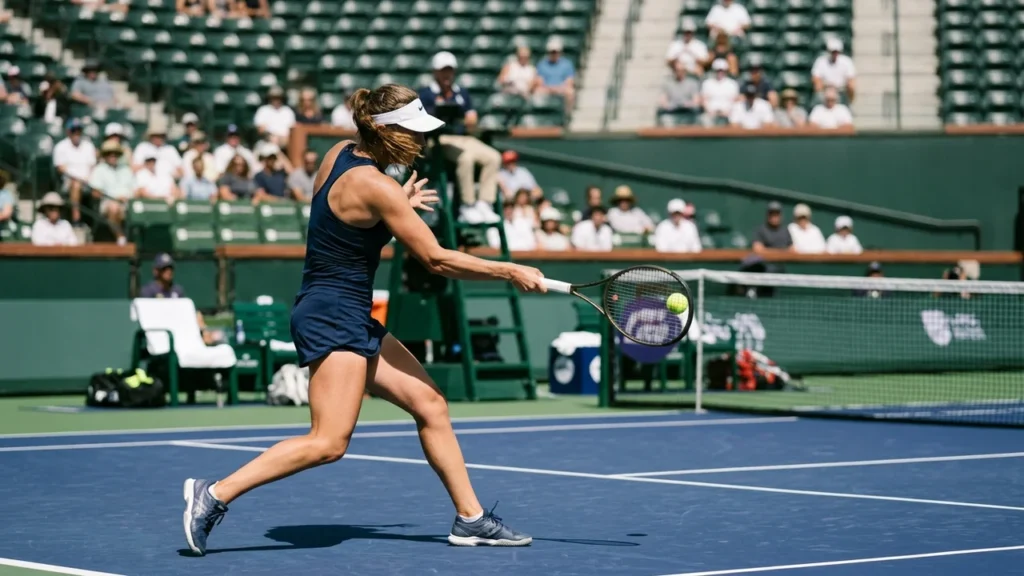
One. That single digit now defines Filipino tennis. Alex Eala’s historic breakthrough, one WTA singles title, has not just entered the record books. It has redrawn them.
From Zero to One: A Nation’s First WTA Triumph

No Filipino woman had ever captured a WTA singles title before Eala. For decades, the Philippines watched from the sidelines while neighboring countries celebrated their own trailblazers. Now, that solitary “one” stands for both a singular achievement and a collective turning point.
Filipino tennis had long been marked by occasional regional success, but global relevance remained elusive. No player from the archipelago had hoisted a WTA trophy until Eala’s run. Her victory didn’t arrive as the result of incremental progress. Instead, she vaulted from zero to one in the most public, pressure-filled arena.
In the final, Eala showed nerves of steel. She saved multiple break points at critical moments, held serve under immense pressure, and turned defensive scrambles into attacking plays. This wasn’t just a win. It was a coming-of-age moment for both athlete and nation.
The Numbers Behind the Narrative: Performance and Inspiration
Eala’s run to the title was no fluke. Performance metrics reveal a player peaking at exactly the right time. In the final, she posted her highest first-serve percentage of the season, a clear sign of tactical poise under fire. Her return game, once a work in progress, broke through with a key break in each set, flipping the script against higher-ranked opposition.
A closer look at Eala’s tournament statistics puts her achievement in sharp relief:
| Statistic | Eala’s Title Run | Season Average | WTA Tour Average |
|---|---|---|---|
| First Serve % | 68 | 62 | 61 |
| Break Points Saved | 83 | 65 | 60 |
| Unforced Errors | 14 per match | 19 | 17 |
| Wins vs Top 50 | 2 | 0 | N/A |
She outperformed her own season average in every major category during the title run. Most telling: her ability to save break points. Eighty-three percent during the title week, far above the WTA average. The data is clear. Eala’s form didn’t just rise to the occasion, it soared.
But numbers only tell part of the story.
Eala’s victory resonated far beyond the court. In Manila, tennis clubs saw a surge in attendance and youth registrations spiked after her win. The ripple effect is already visible in new faces on the courts and fresh ambitions among young Filipino players.
Team dynamics played a crucial role. Eala’s coaching staff made tactical adjustments match by match, emphasizing first-strike tennis and mental resets after errors. The unity of her support group became a foundation for her resilience during tense third sets and momentum swings.
Eala’s breakthrough instantly changes the competitive landscape. She’s now in the conversation for major events and Grand Slam main draws. More than that, the Philippines has proven it can produce WTA-level champions. A psychological barrier has been shattered.
Her run included wins over two top-50 opponents, both players who had beaten her before. The reversal was more than statistical. It was personal, a sign of evolution and mental fortitude.
Now, her title is the benchmark. Filipino tennis is no longer measured by participation or promise. The number one is in the books. The chase for two has begun.