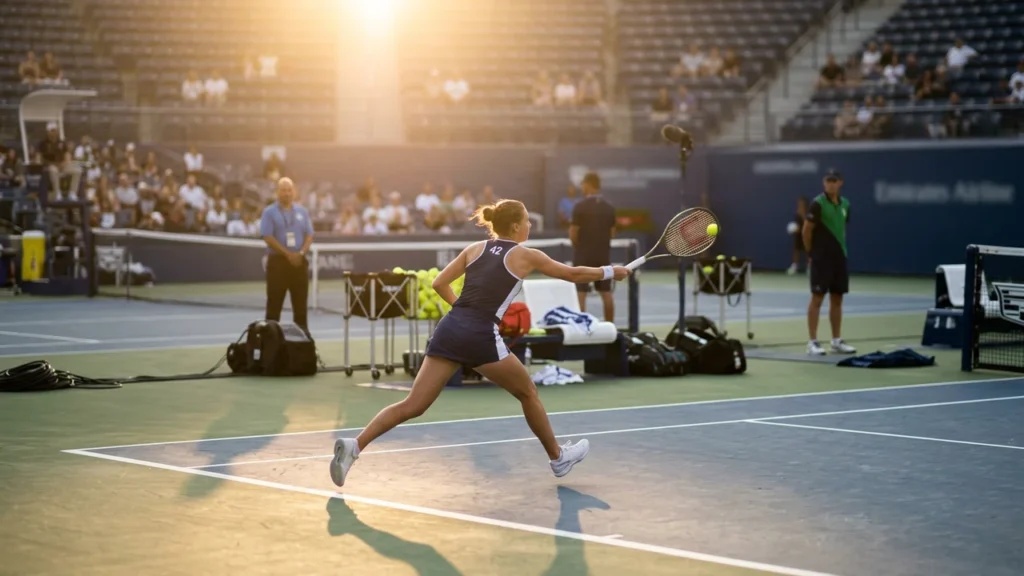
Andy Murray has called for tennis to abolish the service let, joining John McEnroe and Martina Navratilova in a growing push for rule reform.
The three-time Grand Slam champion made the comments while promoting his own Padel business, bringing commercial weight to a debate over the sport’s product as well as its rulebook.
Murray retired from professional tennis in the summer of 2024 but has remained close to the game through coaching stints with Novak Djokovic and, more recently, Jack Draper. Away from the court, he has built a second career as an investor. Less than a year before he hung up his racket, Murray launched his own Padel franchise, Team AD/vantage, and he has since put money into Game4Padel, a company riding the sport’s rapid commercial growth across the UK.

Speaking to LTA Padel about changes he would make to the fast-growing sport, Murray delivered his verdict on lets. "I would probably get rid of a let on serves. Same thing with tennis, don’t like it," he said. The comment was about Padel, but Murray made clear that his preference extends to tennis, a sport whose scoring conventions he helped shape for two decades as a player and now, potentially, as an investor with a stake in how racket sports evolve.
Navratilova, an 18-time Grand Slam singles winner, raised similar concerns during Karolina Muchova’s quarter-final win over Naomi Osaka at Wimbledon this year, while McEnroe has previously voiced the same view. Three of the sport’s most decorated names agree that the let rule adds friction without adding value. That view also matters to broadcasters and tournament organisers seeking tighter match durations and stronger viewer engagement.
Tennis administrators are already being pressed to justify format changes on business grounds elsewhere in the calendar. The extended 12-day Masters 1000 and WTA 1000 events, including the Canadian Open in Montreal and Toronto, were sold to players and fans partly on the promise of increased prize money. But this year’s Montreal withdrawal list included Jannik Sinner, Carlos Alcaraz and Novak Djokovic, undermining the commercial case for the longer format even as the extra days generate additional broadcast and ticketing inventory. Alexander Zverev has since floated what he called an "easy fix" for the scheduling problems behind the withdrawals.
Toronto’s WTA leg held up better, with the sport’s leading names competing. Yet the Canadian swing has exposed a structural problem by staging the events across two separate venues rather than one shared site. A 12-day event makes commercial and logistical sense when men’s and women’s draws operate in tandem at the same location, and organisers face pressure to fix that model before selling the concept for future editions.
Every rule change or format extension in tennis carries a financial calculation, from sponsorship value and broadcast scheduling to player appearance fees tied to marquee draws. Fans looking for context on how stakes and tactics shift across major knockout stages can find detailed bracket stage match previews useful for understanding how tournament structure shapes outcomes elsewhere in competitive sport.
Murray’s intervention on lets is smaller than the scheduling overhaul facing Masters 1000 events, but it reflects the same pressure on tennis to become a leaner, more commercially efficient product.