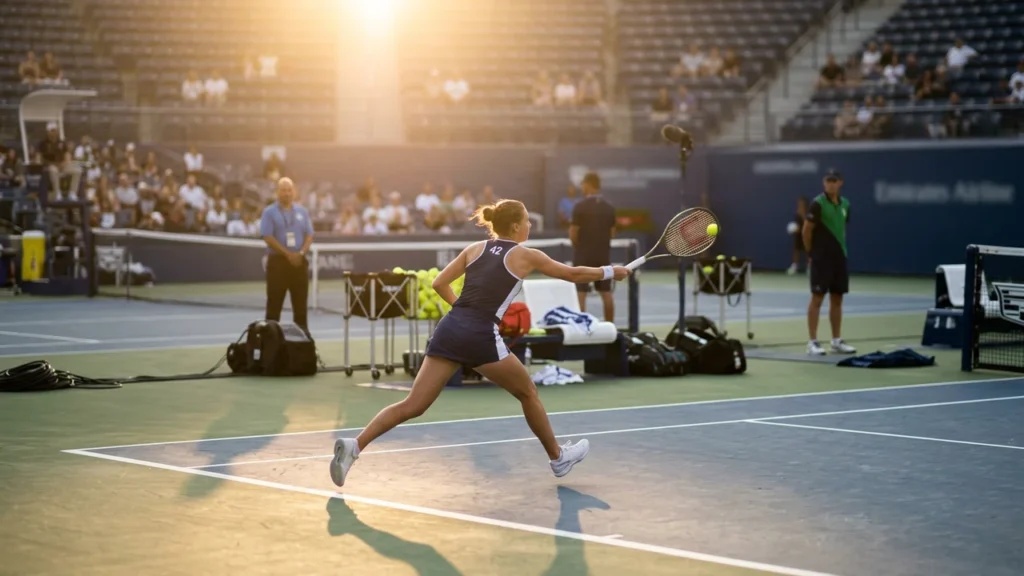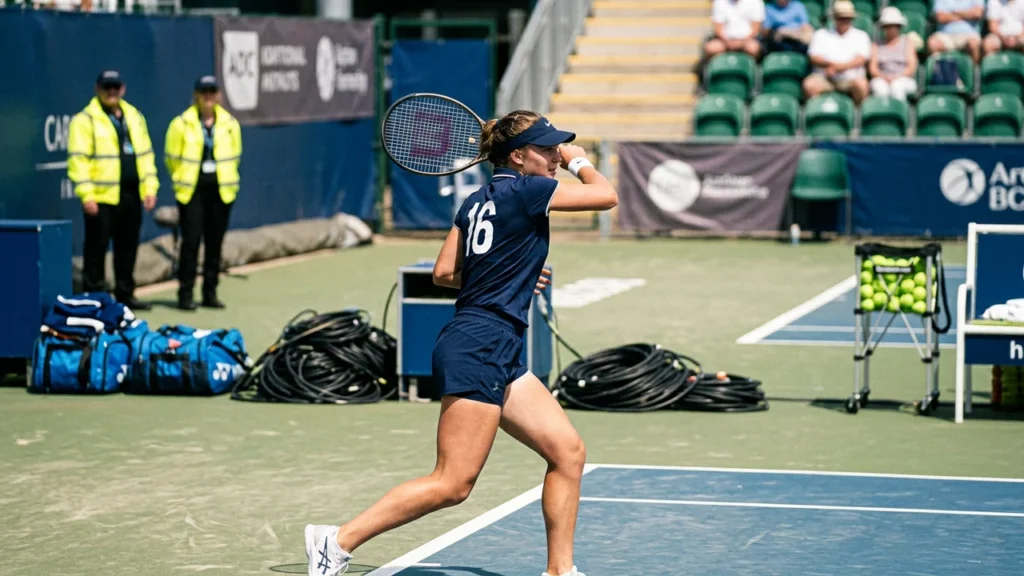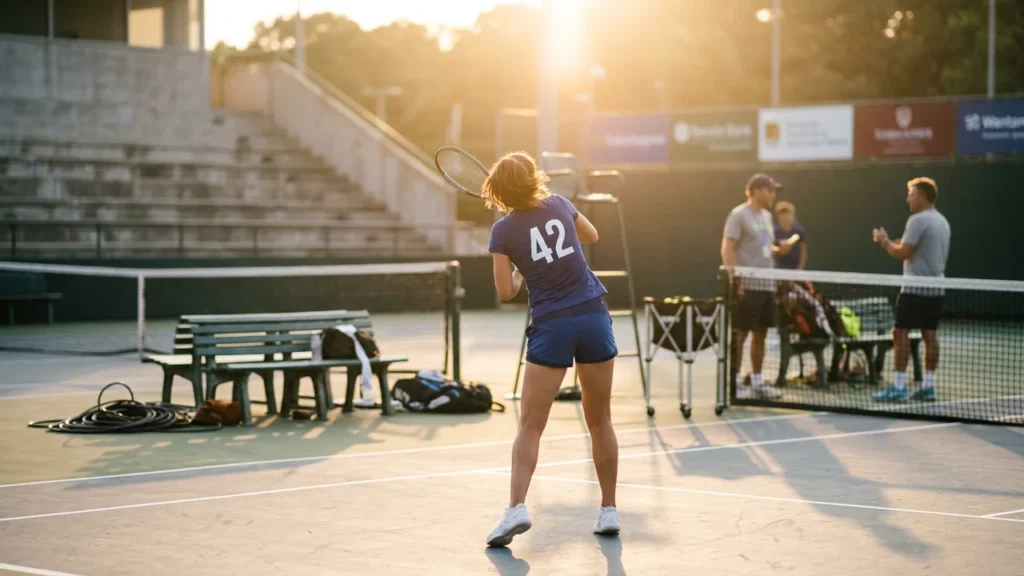
The night air was thick with anticipation and raw energy at Flushing Meadows as Carlos Alcaraz went head-to-head with Alexander Zverev in a gripping U.S. Open quarterfinal. This wasn’t just any match; it was a clash filled with star power and tennis mastery. Alcaraz, the young phenom rapidly ascending to tennis royalty, faced Zverev, a seasoned gladiator with a track record of top-tier Grand Slam performances. The electric atmosphere under the stadium lights pulsed with drama and the promise of something extraordinary.
Zverev arrived with momentum, having just upset a top-six player, Jannik Sinner, and carrying the confidence amassed from recent deep runs in majors. Yet, even with this momentum, Alcaraz demonstrated poise and power, weaving a masterpiece of precision and flair that left spectators breathless. Each rally beneath the glowing lights felt like a suspenseful cinematic scene – intense, unpredictable, and breathtaking.
Flushing Meadows has long been a crucible where legends are forged and rivalries ignite. As Alcaraz moves boldly toward a potential title defense, the stakes couldn’t be higher. His emphatic straight-sets victory over Zverev signaled not only a triumph of technique but an emotional journey that resonates beyond the scoreline. With every forehand smash and delicate drop shot, Alcaraz showed why tennis is more than just a sport; it’s a thrilling pursuit where passion meets precision, and every match tells a story worth following.
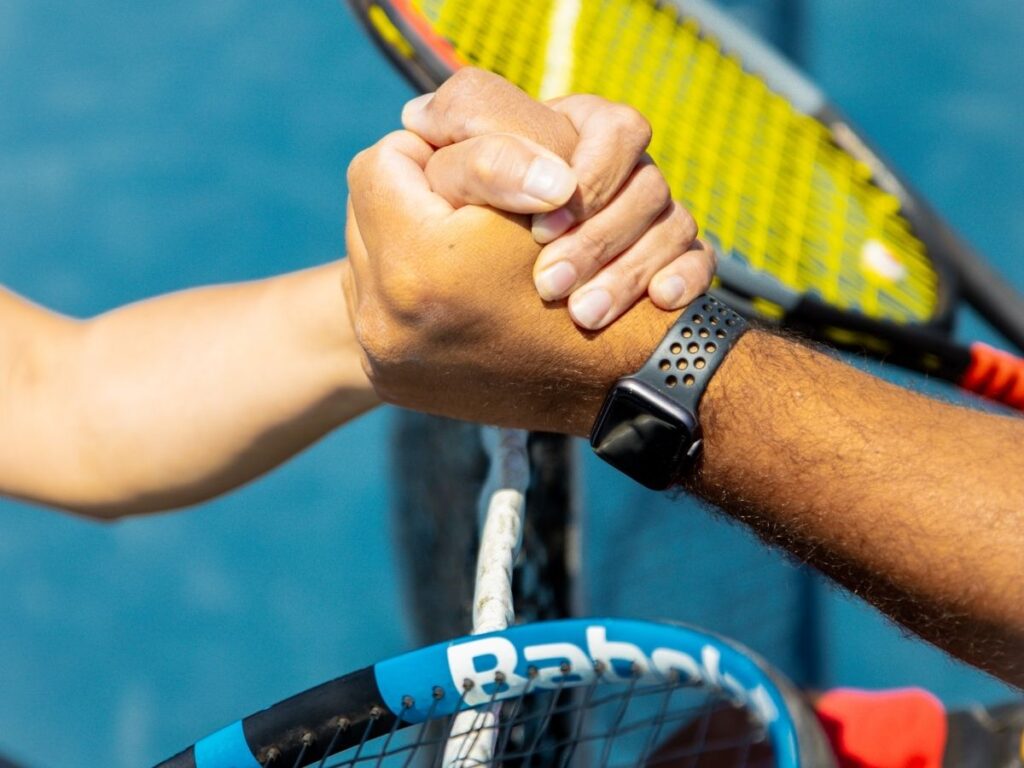
Mastering the Mental and Physical Chess Match: Alcaraz vs Zverev at Flushing Meadows
Under the night sky of Arthur Ashe Stadium, Carlos Alcaraz’s clash with Alexander Zverev evolved beyond mere physical prowess; it transformed into a riveting mental battle. Both players, armed with a rich arsenal of skills backed by rigorous training from brands like Wilson and Babolat, demonstrated why tennis is often described as chess at high speed.
Despite Zverev’s solid first set where he arguably outplayed the Spaniard early on, Alcaraz showcased remarkable resilience. He faced critical moments, including five break points against him, yet held his nerve displaying exceptional composure. Zverev, in contrast, missed five chances to break Alcaraz’s serve, a crucial lapse that ultimately swung the momentum.
To understand such contests, one must appreciate several critical elements of tennis combat:
- Serve and return precision: Alcaraz’s ability to convert all four of his break points was a testament to his tactical mastery of return games, a deadly weapon on a fast hard court surface.
- Movement and endurance: Speed off the baseline, quick directional shifts, and all-court coverage enabled Alcaraz to consistently extend rallies, pushing Zverev into defensive positions.
- Shot variety and innovation: The silky drop shots, net approaches, and devastating forehands keep opponents guessing. Alcaraz’s use of diverse shots showed influence from learning resources like the drop shot execution guide, making his play unpredictable and thrilling.
- Emotional control: Handling pressure in Grand Slam late stages is a skill cultivated over time and showcased magnificently by the 20-year-old, sparking memories of Djokovic’s early dominance.
| Aspect | Alcaraz | Zverev |
|---|---|---|
| Break Point Conversion | 100% (4/4) | 0% (0/5) |
| Serve Speed (max) | 129 mph (208 kph) | 125 mph (201 kph) |
| Match Duration | 2 hours 29 minutes | |
| Rally Length | Avg. 7 shots | Avg. 5 shots |
This mental and physical interplay is a window into why tennis captivates: it demands peak physical conditioning melded with razor-sharp strategy, all unfolding live under blazing lights and millions of watching eyes.
Alcaraz’s Technical Brilliance and Its Impact on Modern Tennis Fans
Carlos Alcaraz did more than just win that evening; he delivered a performance that redefined the art of play on hard courts, a surface known for its fast pace and demanding footwork. Supported by top-tier equipment like the Head racquet he wields with precision and the agility-enhancing technologies in Nike and Adidas gear, Alcaraz’s game is a blend of raw power and finesse.
His approach is multifaceted:
- Baseline Dominance: Alcaraz controls rallies with heavy topspins, pushing opponents behind the baseline. His forehand power – a crowd favorite – earns gasps as the ball rockets past defenders.
- Innovative Net Play: Rather than lumbering to the net, he employs quick explosive steps aided by Asics tennis shoes, catching opponents off guard with well-timed volleys and drop shots.
- Varied Shot Selection: The integration of delicate drop shots, firm backhand slices, and powerful returns disrupts Zverev’s rhythm, illustrating modern tennis evolution towards all-court versatility.
- Physical Endurance: Conditioning and recovery, facilitated by tailored workout routines and gear from Under Armour, ensure sustained energy through demanding multi-hour matches.
The spectacle of Alcaraz’s style is a key factor in tennis’s growing audience. Fans new and old are drawn to the drama, the unpredictability, and the sheer skill of watching such athletes who push the boundaries of possibility.
| Technical Element | Effect on Match | Associated Brands |
|---|---|---|
| Forehand Power | Dominates baseline exchanges | Nike, Head |
| Net Play | Creates offensive pressure | Asics, Babolat |
| Movement Speed | Enhances court coverage | Adidas, Under Armour |
| Shot Variety | Keeps opponents off balance | Wilson, Yonex |
The Road Ahead: Young Stars, Tournament Dynamics, and Tennis Futures
Alcaraz’s triumph signifies more than a single victory; it sets the stage for a new generation of players reshaping tennis’s landscape. Just as Novak Djokovic and Federer once defined eras, today’s rising stars demand attention, with Alcaraz at the forefront.
The field now waits as Alcaraz prepares to face Daniil Medvedev, the 2021 U.S. Open champion and a persistent challenge. Medvedev, fresh from a straight-set victory over Andrey Rublev, represents a formidable obstacle with his relentless baseline game and mental toughness.
Beyond the immediate showdown, these contests highlight several crucial dimensions shaping the sport’s direction in 2025:
- Diverse playing surfaces: The nuances between hard courts, clay, and grass courts demand adaptable skill sets. Guides like hard court tennis techniques have become essential for players to maximize their performance.
- Technological advances: Improved equipment, ranging from racquets crafted by Yonex to footgear innovations by Fila, enhance speed, power, and injury prevention.
- Young talent emergence: Inspired by Alcaraz’s style, younger players use strategies found in resources like upcoming tennis players dominate next to accelerate their rise.
- Fan engagement and media: Social media platforms and live streaming, detailed in the live streaming Grand Slams guide, broaden global connection and enthusiasm.
| Category | Influence on Tennis in 2025 |
|---|---|
| Playing Surface Adaptation | Increased player versatility, tactical shifts |
| Equipment Technology | Enhanced power and injury management |
| Emerging Young Stars | Competitive depth and fresh narratives |
| Media Engagement | Expanded fan base, interactive experiences |
The upcoming tournaments, frequently covered by enthusiasts on sites like upcoming tennis tournaments, promise riveting clashes that will further define the legacies of players like Alcaraz and Medvedev. The evolving dynamics ensure tennis remains a thrilling spectacle, blending tradition with innovation.
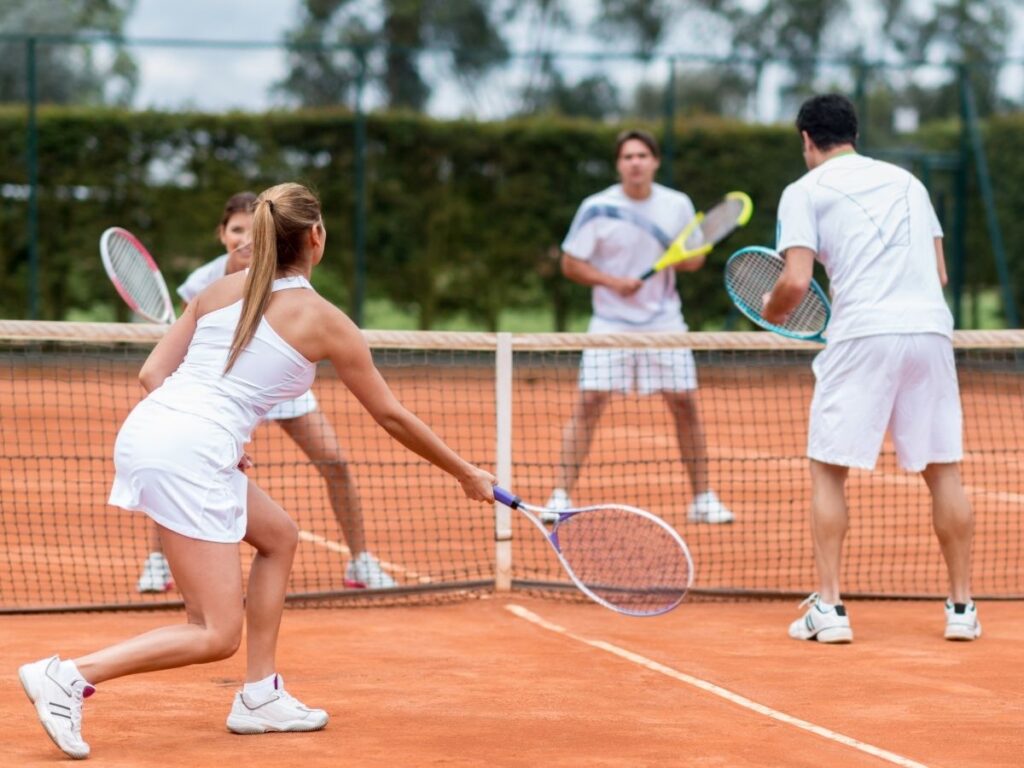
Understanding and Enjoying Tennis: What Beginners and Fans Can Learn from Alcaraz’s Play
Tennis bursts with excitement but can appear complex to newcomers. Alcaraz’s match against Zverev is a perfect case study that reveals accessible insights and foundational elements for those beginning or deepening their fascination with the sport.
At its core, tennis is a game of scoring points through strategic shot placement and physical execution. The encounter at Flushing Meadows invites exploration of essential concepts:
- Basic scoring system: Understanding games, sets, and matches makes watching more enjoyable. Resources like the tennis basics rules and gear guide provide clear explanations.
- Shot variability: Alcaraz’s blend of powerful forehands, delicate drop shots, and effective serves exemplifies how variation keeps opponents guessing.
- Match tactics: Response to opponents’ weaknesses, as seen when Alcaraz capitalized on Zverev’s second serves, highlights strategic thinking.
- Equipment significance: The choice of racquet brands like Wilson, Yonex, and Babolat directly impacts swing speed and shot control.
- Physical preparation: Stamina and footwork, boosted by sportswear from Lacoste and Fila, influence performance across long matches.
| Element | Explanation | Why It Matters |
|---|---|---|
| Scoring Format | Points accumulate in games, games in sets | Structures match progression |
| Shot Variety | Combines power, finesse, and placement | Keeps play unpredictable |
| Tactics | Adapts based on opponent’s weaknesses | Maximizes winning chances |
| Equipment | Racquet and shoe choice affect play | Enhances control and agility |
| Fitness | Physical endurance sustains performance | Critical in long matches |
For those eager to deepen their understanding, guides on winning singles tennis strategies serve as excellent next steps. The growing accessibility of live streams, covered extensively at live streaming Grand Slams, further invites fans into the thrilling world of tennis with real-time action and insights.
Unexpected Drama at the US Open: Lessons from Alcaraz and Zverev’s Fight
The 2025 US Open quarterfinal match was filled with suspense, a showcase of tennis’s ability to surprise and enthrall at every turn. Zverev, the 12th seed, pushed hard early on, threatening to disrupt what many forecasted as a straightforward path for Alcaraz. His aggressive returns and fight for every point created palpable tension.
However, key moments defined the match’s turning point. Zverev’s failure to convert break points, especially those double break chances in the third set, echoed the cruel heartbreak that tennis can inflict. On the flip side, Alcaraz’s calm under pressure, exemplified by saving every break point he faced, highlighted his maturity and mental fortitude beyond his years.
Some takeaways from this gripping battle include:
- Momentum shifts: Tennis matches often hinge on pivotal games or points that can psychologically rupture an opponent’s confidence.
- Physical toll: Zverev’s earlier marathon match might have influenced his fading stamina, underscoring the importance of recovery.
- Strategic patience: Alcaraz’s choice to ride out tough moments and pick spots for aggressive shots proved wise.
- Unpredictability of sport: Even top players like Djokovic face unexpected challenges, reminding fans that no outcome is a given.
| Match Aspect | Impact | Example from Match |
|---|---|---|
| Break Point Opportunities | Decisive in match outcome | Zverev missed 5 break points, Alcaraz converted all 4 |
| Physical Condition | Influenced energy levels | Zverev’s previous 4hr 41min battle vs. Sinner |
| Psychological Edge | Confidence boost for Alcaraz after saving break points | Early break in first set sealed momentum |
| Match Narrative | Fed fans’ anticipation of a possible Djokovic-Alcaraz final | Zverev’s comments recognizing other players’ potential impacts |
For curious fans looking to explore more shocks and storylines, resources such as tennis upsets and tournament shocks enrich understanding of the sport’s thrilling volatility. Betting enthusiasts also find value in tennis betting guide materials that explain how to read these dynamics strategically.