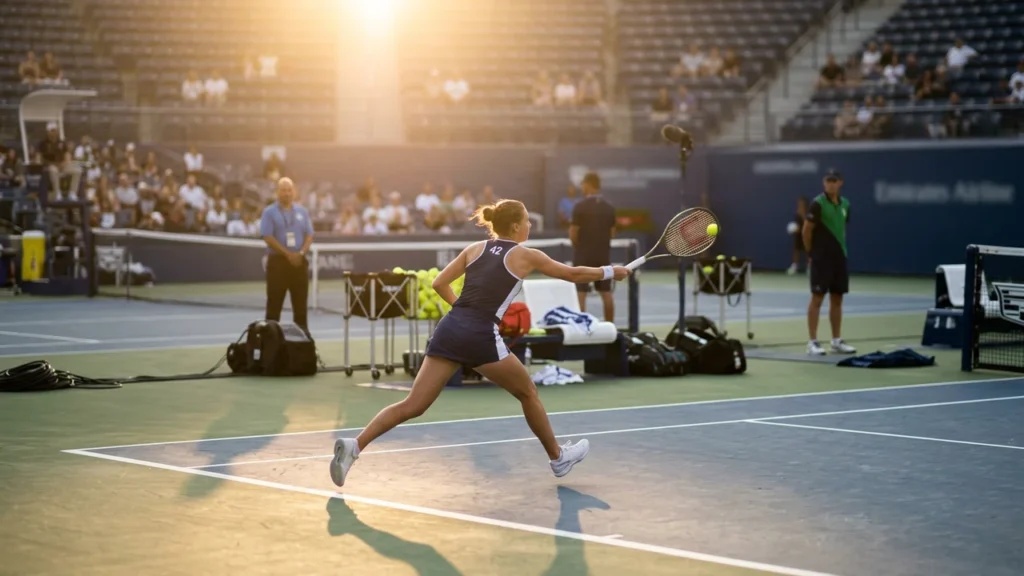
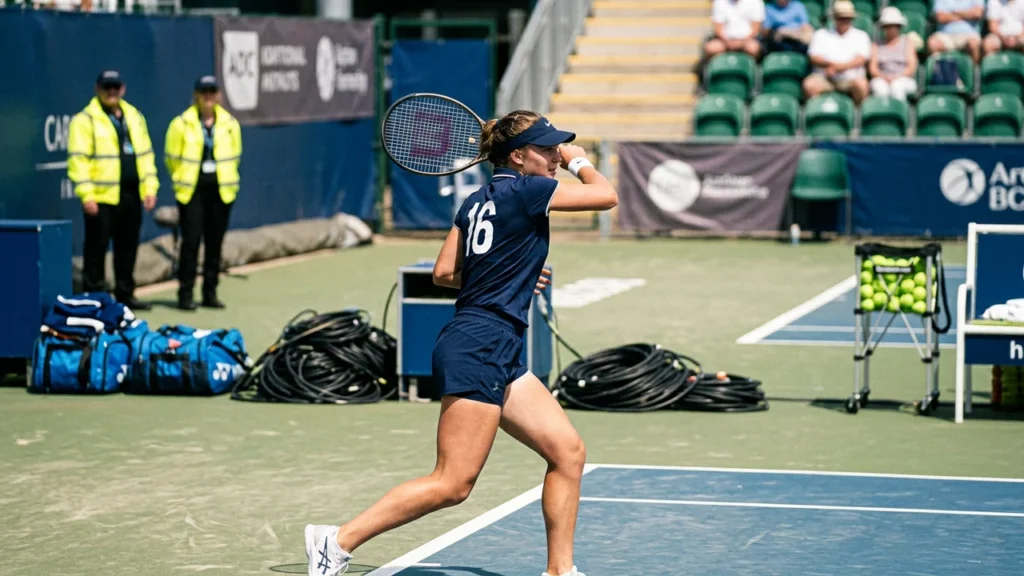
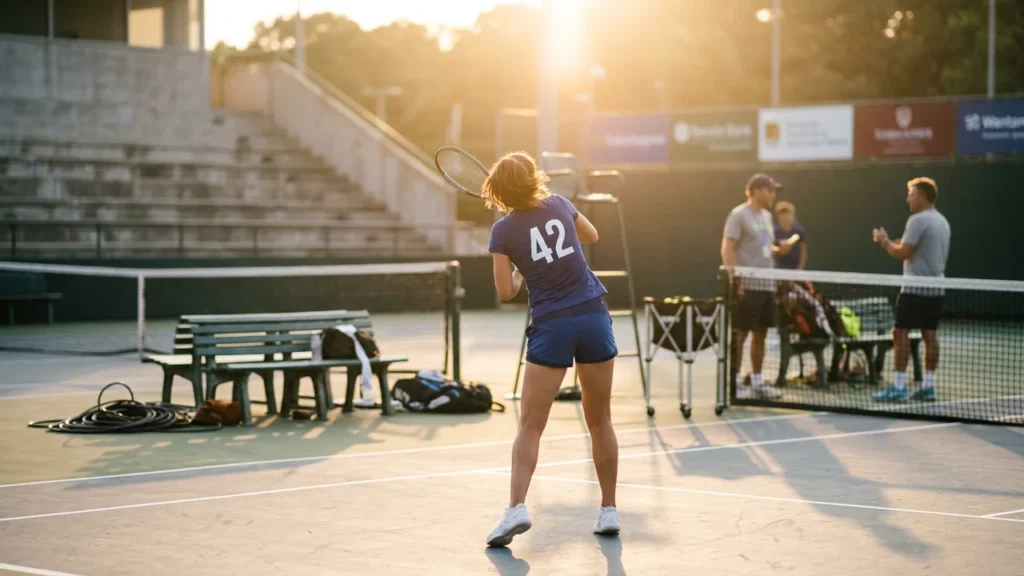
Tracking serve accuracy in professional tennis reveals much more than the raw power athletes bring to the court. This season, the spotlight shines brightly on players whose precision with their first serve eclipses even their fastest rivals. The battle between speed and accuracy forms a captivating narrative—one that highlights strategic mastery akin to a sharpshooter’s unerring aim rather than sheer force. From towering serves courtesy of Yonex and Babolat racquets to the sleek designs of Wilson and Head empowering players’ wrist actions, this analysis unlocks the interplay between technique and technology that fuels the season’s most consistent servers.
The riveting drama unfolding this year is not just a tale of aces and winners but of the surgical placement of first serves, consistently striking the sweet spot near lines and corners to seize the advantage. Tennis enthusiasts and budding players alike will find rich insight in understanding who stands atop the chart and how their serve composition shapes match outcomes in 2025’s elite tournaments.
Top Players Setting the Benchmark with First Serve Accuracy
Dominating first serve accuracy charts this season is Poland’s Hubert Hurkacz, a master craftsman when it comes to reliable serving. His ranking at the intersection of speed and precision is unparalleled; consistently placing first serves close to the lines, Hurkacz’s serve often leaves returners scrambling more on placement than pace. Players using equipment from adidas and Nike complement their serving prowess with apparel designed for optimal movement and aerodynamics—an often overlooked ingredient to serve consistency.
Close behind Hurkacz, Grigor Dimitrov clinches his spot as the season’s third-best server in both speed and accuracy aggregates. Known for his elegant style, Dimitrov demonstrates how smart serve selection and control compensate for any limitations in backhand consistency. His Wilson racquet’s sweet spot is meticulously leveraged in delivering precise first serves, setting up opportunities to dominate points early. Dimitrov’s evolution—marked by improved serve mechanics and forehand power—reminds fans that serve accuracy is not merely about placement but also about rhythm and timing.
Structure and velocity are critical, but so too is adapting serve style to conditions like wind or court surface. For instance, Stefanos Tsitsipas ranks fifth overall in combined speed and accuracy, propelled by his ability to slice and kick serves with high consistency using his Head racquet. Meanwhile, Andrey Rublev’s Babolat racquet helps him maintain a top-six position, showcasing the importance of equipment matching player style to maximize first serve effectiveness.
| Player | First Serve Speed Rank | First Serve Accuracy Rank | Combined Average Rank | Preferred Racquet Brand |
|---|---|---|---|---|
| Hubert Hurkacz | 1 | 1 | 1 | Wilson |
| Grigor Dimitrov | 3 | 3 | 3 | Wilson |
| Stefanos Tsitsipas | 4 | 6 | 5 | Head |
| Andrey Rublev | 8 | 4 | 6 | Babolat |
| Nicolas Jarry | 5 | 7 | 6 | Prince |
- Speed and precision ranked hand in hand define a player’s serving edge.
- Player equipment such as racquets from Wilson, Babolat, and Head play a subtle yet pivotal role.
- Consistency over power tends to win long rallies and matches.
- Environmental factors like wind influence accuracy and are addressed in modern serving techniques.
- Top pros blend shot variety with placement, favoring precise kick and slice serves.
The synergy between a player’s skill and their choice of gear such as Nike, Asics, Lotto, and Puma for footwear further complements the physical and technical demands of serving with exceptional accuracy. Understanding these elements can help amateurs and enthusiasts alike to dive deeper into the fascinating world of serve dynamics.

Serve Accuracy: The Hidden Weapon of Tennis Masters
Serve accuracy transcends raw speed. It embodies the precision of a marksman rather than the sheer power of a cannon. For players consistently hitting first serves in or near the service box lines, the psychological impact on the opponent is immense, instilling doubt and forcing defensive positions early in the point.
Novak Djokovic exemplifies this concept. Despite his first serve speed ranking lower than some of his rivals—often around 13th—his accuracy is second to none. His ability to consistently place serves deep and tight to the lines is a cornerstone of his service game, contributing massively to his longevity and success. His “spot serve” reputation results from mental mastery and biomechanical efficiency, a lesson for any player aiming to improve their serve’s effectiveness.
On the flip side, Carlos Alcaraz demonstrates that even a player with a weaker first serve accuracy—ranked around 18th this season—can still cling to top rankings through an explosive second serve and aggressive baseline game. However, analysts agree that his growth as a dominant force hinges on improving that first-serve weapon, combining the power seen in his forehands with the precision needed under pressure.
- Accuracy challenges players to master serve placement over maximum speed.
- Maintaining serve spot under pressure is a hallmark of champions like Djokovic and Rublev.
- Serving accuracy statistics might exclude body serves and consider their strategic use.
- Controlled slice and kick serves often contribute to higher accuracy percentages.
- Serve accuracy strongly correlates with match wins in top-tier tennis.
| Player | First Serve Speed Rank | First Serve Accuracy Rank | Notes on Serve Style |
|---|---|---|---|
| Novak Djokovic | 13 | 2 | Precision-oriented, relies on placement over raw pace |
| Carlos Alcaraz | 17 | 18 | High variety, struggles with first serve consistency |
| Andrey Rublev | 8 | 4 | Heavy hitting with dependable accuracy |
Fine-tuning first serve accuracy is often intertwined with mental toughness. Techniques such as visualization and targeted practice sessions—covered in depth on tennis guide mental training—play a crucial role in elevating precision under competitive stress. Players combine these with drills tailored to refining serve placement, many echoing the methodologies found in advanced warm-ups and serve routines that build muscle memory and confidence.
Technological Innovations Empowering Serve Precision in 2025
The relationship between technology and tennis equipment has never been more pivotal. Manufacturers such as Wilson, Head, Babolat, and Prince continually innovate their racquet designs, enhancing racket stability and sweet spot size, directly influencing the player’s ability to deliver pinpoint first serves.
In 2025, innovations focus on materials that reduce vibration, improve energy transfer, and fine-tune balance, all translating to more consistent serve mechanics. Meanwhile, shoes by Adidas and Puma integrate motion-capturing technology that informs players of their stance and foot positioning, essential elements in executing a flawless serve. The fusion of these elements marks a new era where physical technique meets cutting-edge gear to elevate serve accuracy.
Smart racquet prototypes and connected sensors embedded within the frame now enable pro players to analyze serve trajectories in real time, hire biomechanics coaches, and adjust grip or toss to perfect their serve accuracy at unprecedented levels. This tech-driven feedback revolution is complemented by online platforms offering serve analysis and drills, as highlighted on Tennis Guide’s racquet tech innovations 2025.
- Material science breakthroughs reduce frame vibration.
- Smart racquets provide instant feedback on serve placement and mechanics.
- Performance footwear with sensors enhances balance and stability on serve.
- Data-driven training is increasingly vital for first serve consistency.
- Complementary technology aids mental and physical serve preparation.
| Equipment Category | Impact on Serve Accuracy | Leading Brands |
|---|---|---|
| Racquets | Enhanced sweet spot & stability improve precision | Wilson, Babolat, Head, Prince, Yonex |
| Footwear | Advanced grip and sensor feedback optimize stance | Adidas, Nike, Asics, Puma, Lotto |
| Technological Aids | Real-time data analysis for biomechanical tuning | Various smart sensor providers |
Mastering Serve Accuracy: Drills and Mental Strategies Used by Top Servers
Skill and precision on the serve combine intense physical training with mental discipline. Players employ servo drills emphasizing placement over velocity. In these sessions, practice balls are targeted to narrow zones close to sidelines and service box corners, mimicking high-pressure scenarios. This focus aligns with beginner and advanced training programs detailed at Tennis Guide’s practice drills.
Mental strategies include visualization and goal-setting to sharpen focus during serve execution. According to experts, picturing successful serve placement repeatedly strengthens neural pathways, which improves consistency in match situations. Tools such as visualization techniques and mental routines incorporated in training help players maintain composure and precision under stress.
Moreover, serve routines are crafted to harness reliable tempo, including practiced ball toss and consistent pre-serve rituals. These are essential to fend off the disruptive effects of elements like wind or crowd noise. The use of light-weight Prince or Yonex racquets supports swift handling and reduced fatigue, critical during long matches where maintaining serve precision is imperative.
- Targeted drills on corners and sidelines improve muscle memory.
- Mental imagery enhances serve consistency and confidence.
- Pre-serve routines help steady nerves and ensure rhythm.
- Equipment choice influences physical ease and control during serve.
- Combating environmental factors through adjusted techniques is crucial.
| Training Aspect | Purpose | Tools and Methods |
|---|---|---|
| Drills | Refine placement accuracy and precision | Serve to target markings, angle variations, practice clinics |
| Mental Training | Boost focus and confidence in serve execution | Visualization, goal setting, mindfulness routines |
| Pre-Serve Routine | Maintain rhythm and steadiness under pressure | Consistent toss, breath control, ritualized gestures |
Understanding Serve Accuracy’s Impact on Match Strategies this Season
Precise first serves are changing match strategies on the ATP and WTA tours. Players with the highest serve accuracy often dictate rallies from the outset, forcing opponents onto the defensive with fewer second serve vulnerabilities. This tactical edge results in quicker points and a psychological upper hand, demonstrated by players like Hubert Hurkacz and Stefanos Tsitsipas.
The season reveals patterns where high accuracy translates into higher first serve percentages in critical break point situations, sealing games with less wear on endurance. Coaches and players are increasingly focused on serve-return combinations to leverage this advantage, with resources like serve and return combo routines guiding tactical development.
Moreover, players adapting their serve posture and timing to court conditions, using linesman and electronic line judging technologies (electronic line judging) for feedback, further enhance serve accuracy’s strategic role. This evolution is reshaping fundamental concepts about what it means to effectively serve and rally in modern tennis.
- Serve accuracy reduces the opponent’s ability to anticipate returns.
- Serve placement influences rally control and point progression.
- Combining serve precision with strategic game reading is critical.
- Advanced line judging technology aids in refining serve targeting.
- Serve-focused tactics reduce mental and physical strain over matches.
| Strategic Aspect | Impact on Match | Utilized Tools / Technologies |
|---|---|---|
| First Serve Accuracy | Maintains point advantage, forces weak return | Video analysis, tactical clinics, line judging tech |
| Serve-Return Systems | Dictate rally dynamics and control flow | Combo drills, opponent analysis |
| Environmental Adaptation | Overcome external factors, maintain consistency | Sensor feedback, real-time coaching |