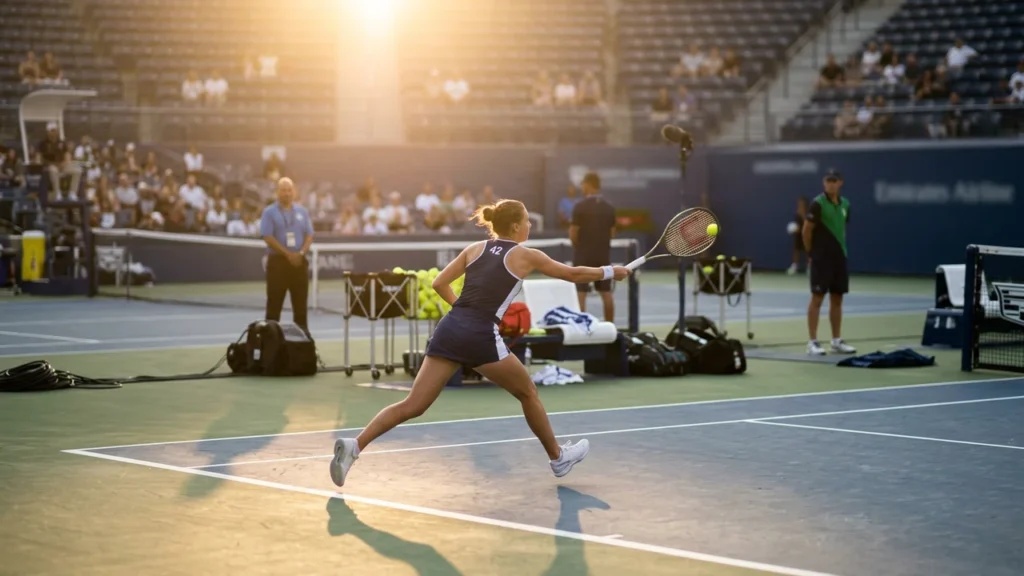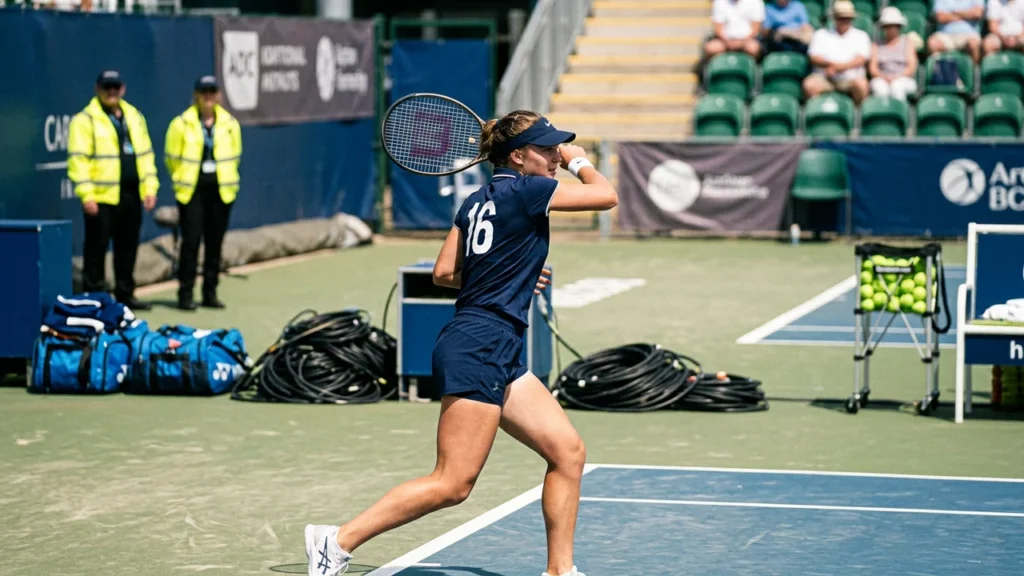
The 2025 Vienna Open sets the stage for an electrifying duel between two of tennis’s most compelling figures: Daniil Medvedev and Stefanos Tsitsipas. This clash is far more than a mere match; it’s a vibrant collision of distinct playing philosophies that has fans and experts buzzing with anticipation. Medvedev, known for his tactical precision and relentless baseline endurance, meets Tsitsipas, whose aggressive all-court style and powerful forehand paint a spectacle of raw talent and meticulous strategy. Both players have carved impressive paths through the tournament, overcoming formidable opponents with gritty determination and tactical brilliance that underline their elite status in men’s tennis. The tension is palpable as they prepare to face off in Vienna’s high-stakes semi-finals, promising a match that embodies the drama, skill, and passion driving tennis’s global appeal.
The Vienna semi-final lineup was shaped by stellar performances: Medvedev battled past Karen Khachanov in a nail-biting three-set encounter, while Tsitsipas delivered a composed win against Borna Gojo. With rankings tightly packed and form sharply rising, this match encapsulates the essence of competitive tennis — where every serve, rally, and volley sways the tide. For tennis enthusiasts ranging from novices discovering the sport’s intricacies to seasoned fans analyzing every strategic nuance, this encounter offers a rich tapestry of insights. The medley of styles on display is a living lesson in the sport’s evolution, highlighting the varied routes to success on hard courts and beyond.
Crucially, this encounter is not only a personal duel but a showcase of cutting-edge tennis equipment and brand influences shaping players’ performances. From Medvedev’s preference for Wilson racquets known for their control and spin potential, to Tsitsipas’s trusted Head gear that enhances his aggressive baseline assault, their gear choices reveal subtle aspects of their playing identities. Brands like Nike and Adidas utilize these platforms to evolve sportswear technology, contributing to optimum player mobility and endurance. Puma, Asics, Under Armour, Babolat, Yonex, and K-Swiss also play pivotal roles in advancing on-court comfort and style, integrating innovation that resonates with the sport’s modern demands. As the match looms, the blend of legacy brands and athlete-driven technology elevates the spectacle, adding a high-tech edge to this battle of titans.
Analyzing Daniil Medvedev’s Tactical Mastery and Playing Style in Vienna’s Hard Court Arena
Daniil Medvedev’s approach to tennis in 2025 reflects a mastery of strategy, combining relentless baseline endurance with pinpoint tactical awareness. Vienna’s hard courts suit his style perfectly, favoring players who thrive in extended rallies and possess the ability to construct points patiently while punishing opponents’ errors. Medvedev’s game is often defined by his defensive flexibility, turning defense into attack with an uncanny knack to read shots and anticipate opponents’ moves.
Medvedev’s accomplishments this season highlight his formidable hard-court prowess. His recent three-set victory against Karen Khachanov at Vienna showcased his mental resilience—close matches demand not just skill but psychological toughness. Overcoming adversity, especially after losing a set as he did against Grigor Dimitrov, reveals a competitor who not only possesses skill but profound tenacity.
His racquet choice—a Wilson model optimized with the latest string technology—helps him achieve remarkable control and spin, crucial for executing his signature shots. The Wilson brand, praised widely in the tennis community, has embraced racquet innovations documented in https://tennisguide.net/racquet-tech-2025-innovations/, enabling Medvedev to fine-tune his equipment for maximum efficiency and consistency.
On the apparel front, Medvedev’s on-court outfit typically features Nike gear, which balances freedom of movement with high-end moisture-wicking fabrics. Such equipment influences his court coverage, helping maintain focus during long rallies.
Key components of Medvedev’s playing style
- Baseline endurance: His ability to sustain long rallies while applying consistent pressure.
- Slice-based defense: Using low slices to disrupt opponents’ rhythm.
- Sharp anticipation: Reading opponent’s play to intercept and counterattack.
- Serve versatility: Mixing spins and speeds to keep returns off balance.
This combination makes Medvedev a formidable opponent to anyone on the hard court, particularly in venues like Vienna where surface speed and bounce height accentuate baseline rallies.
| Aspect | Strength Level | Impact in Vienna Hard Court Matches |
|---|---|---|
| Baseline Endurance | High | Consistently wins long rallies |
| Serve Variation | Medium | Creates unpredictability |
| Defensive Slices | High | Breaks opponent rhythm |
| Mental Toughness | High | Performs under pressure |
Stefanos Tsitsipas’ Dynamic All-Court Aggression: Strengths and Challenges in the Vienna Matchup
Stefanos Tsitsipas approaches matches with an explosive blend of athleticism and precision that stretches the boundaries of baseline tennis. His all-court game is characterized by aggressive groundstrokes, rapid net approaches, and a forehand that is celebrated for its lethal pace and cutting angles.
In Vienna, Tsitsipas arrived in spectacular form, dispatching wildcard Borna Gojo in straight sets. His court coverage, enhanced by Adidas performance wear designed for maximal agility, supports his high-energy style. Players like Tsitsipas rely heavily on the bindings between footwork and shot-making, an area where Puma and Asics shoes deliver competitive advantages.
The Greek star’s equipment choices reflect a balance between power and finesse. Tsitsipas has been a longstanding user of Head racquets, often opting for advanced models that emphasize spin generation and maneuverability, an essential factor on hard courts where heavy topspin can dominate points. More about the varied racquet types and their influence can be explored via https://tennisguide.net/tennis-equipment-guide/tennis-racquet-types/.
Tsitsipas’ defining attributes on court
- Power-leading strokes: Forehand and backhand strikes marked by pace and depth.
- Net adeptness: Effective volleying to finish points quickly.
- Topspin mastery: Heavy spin to control rallies and push opponents back.
- Mental composure: Maintaining focus in crucial points, exemplified by his close-set wins.
Yet, with such an aggressive style comes risks — Tsitsipas occasionally succumbs to unforced errors, especially when attempting high-risk shots under pressure. His challenge in Vienna will be balancing aggression with discipline to counter Medvedev’s tactical defense.
| Attribute | Effectiveness | Match Impact |
|---|---|---|
| Foreground Power | Very High | Forces defensive play |
| Net Play Frequency | Medium | Quick point finishes |
| Topspin Control | High | Pushes opponents back |
| Mental Focus | High | Closes tight sets |
Historical Rivalry and Current Head-to-Head Statistics Between Medvedev and Tsitsipas
The rivalry between Daniil Medvedev and Stefanos Tsitsipas stands as one of tennis’s most intriguing narratives in recent years. Their contrasting styles have led to numerous epic battles, each contributing layers to their ongoing saga. As of 2025, the two titans have crossed paths on 14 occasions, with Medvedev holding a commanding 10-4 lead. This tally speaks to the mathematical edge he has maintained, especially on hard courts with a 5-1 record.
Their latest encounter before Vienna, in the October 2024 Shanghai Masters, saw Medvedev clinch a straight-set victory through a tightly contested tiebreak first set. Such outcomes underscore Medvedev’s mental edge in pressure moments, yet Tsitsipas’s victories have come in memorable, hard-fought battles that have tested Medvedev’s resolve.
Key moments in Medvedev-Tsitsipas rivalry
- 2018 to 2025: 14 matches shaping their dynamic competition
- Surface distribution: Predominantly hard court battles with occasional clay court clashes
- Match intensities: Several semis and finals in major ATP events including Vienna, with fluctuating momentum swings
- Mental warfare: Both players have experienced moments of tension and mutual respect, intensifying fan engagement
This rivalry encapsulates a chess-like duel — each adjusting tactics to exploit weaknesses and maximize strengths. Tennis fans tune in not only to witness physical performance but strategic adaptability showcased at the highest level.
| Statistic | Value |
|---|---|
| Total Matches | 14 |
| Medvedev Wins | 10 |
| Tsitsipas Wins | 4 |
| Medvedev on Hard Courts | 5-1 Record |
The Vienna Open 2025 Semi-Final Build-up: Player Form and Tournament Context
Before meeting in the semi-finals, both players showcased exceptional form. Medvedev’s path included a gritty three-set win over Karen Khachanov (6-3, 3-6, 6-3). This match highlighted his ability to maintain composure under pressure, sealing two decisive breaks across sets. The encounter followed a similar comeback pattern from his previous clash with Grigor Dimitrov, reinforcing his psychological resilience on indoor hard courts.
Tsitsipas, as the tournament’s fourth seed, displayed consistent attacking tennis to defeat Croatian wildcard Borna Gojo 7-6 (4), 7-5. His prowess in tight moments, such as securing a first-set tiebreak, signals readiness to wage battle against Medvedev’s tactical machine.
- Medvedev’s consistent recovery after losing sets exemplifies mental toughness.
- Tsitsipas’s ability to close tight matches reflects a high level of focus.
- Both players have benefited from cutting-edge tennis technology and apparel enhancing their performance.
- Vienna’s indoor hard courts favor patients and precision, making this matchup a classic test of styles.
Meanwhile, other notable contenders in the Vienna Open include Andrey Rublev and Jannik Sinner, whose semifinal clash follows the Medvedev-Tsitsipas showdown. Rublev’s season-best 53rd win against Alexander Zverev further accentuates the depth of competition present at the tournament.
| Player | Seed | Recent Match Result | Ranking |
|---|---|---|---|
| Daniil Medvedev | 3 | Defeated Karen Khachanov 6-3, 3-6, 6-3 | World No. 3 |
| Stefanos Tsitsipas | 4 | Defeated Borna Gojo 7-6 (4), 7-5 | World No. 4 |
| Andrey Rublev | 5 | Defeated Alexander Zverev 6-1 6-7 (5) 6-3 | World No. 5 |
| Jannik Sinner | 6 | Defeated Frances Tiafoe 6-3 6-4 | World No. 6 |
Brand Influence and Tennis Gear Innovations Impacting Player Performance in 2025
Tennis in 2025 is about more than raw talent and physical prowess; it’s equally a technological battleground where advanced equipment from global brands drives performance breakthroughs. Players like Medvedev and Tsitsipas rely heavily on racquets and apparel that deliver both precision and comfort, crucial for optimal execution during high-stress matches.
The lasting rivalry between Wilson, Head, and Babolat in crafting the ultimate tennis racquet spurs continuous innovation. Wilson’s latest models focus on enhancing striking precision for baseline grinders like Medvedev, while Head designs cater to Tsitsipas’s dynamic spin-heavy style. Puma and Asics innovate in footwear technology, advancing shock absorption and traction, vital for quick directional changes. Similarly, Nike, Adidas, and Under Armour provide high-tech apparel that combines breathability and support, critical for maintaining peak condition over marathon matches.
For players and purists alike, understanding equipment nuances—from racquet types to shoe construction—enriches appreciation of modern tennis. Beginners keen to explore equipment options and court dimensions can refer to detailed guides such as https://tennisguide.net/choose-right-tennis-racquet/ and https://tennisguide.net/tennis-beginners-guide/tennis-court-dimensions-lines/ for starter knowledge. The impact of these gear choices extends beyond mere comfort; they influence stroke mechanics, court speed adaptation, and injury prevention.
Benefits of top-tier tennis gear in competitive play
- Increased shot precision: Modern racquets optimize control and power balance.
- Enhanced mobility: Apparel and shoes reduce fatigue and improve quick transitions.
- Injury risk reduction: Advanced shock absorption technology protects joints.
- Psychological edge: Confidence in gear boosts player focus and performance.
| Brand | Equipment Focus | Player Endorsements | Technological Highlights |
|---|---|---|---|
| Wilson | Racquets (Control and Spin) | Daniil Medvedev | Precision string pattern, light frame |
| Head | Racquets (Spin and Agility) | Stefanos Tsitsipas | Adaptive frame technology |
| Nike | Apparel and Footwear | Daniil Medvedev | Moisture-wicking, lightweight fabrics |
| Adidas / Puma | Footwear | Stefanos Tsitsipas | Enhanced traction, shock absorption |
| Babolat | Racquets and Strings | Various ATP players | Dynamic string tension adjustment |