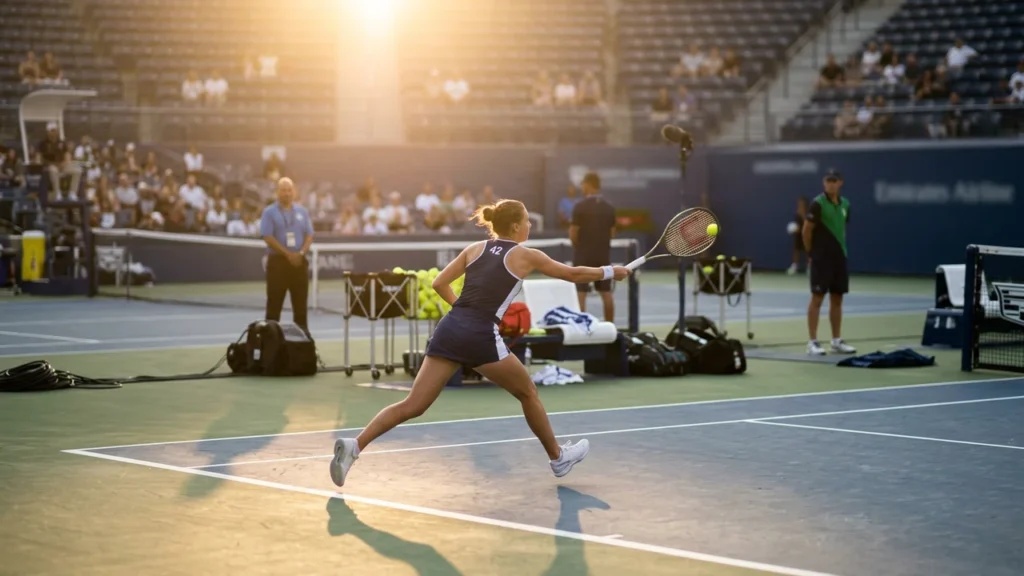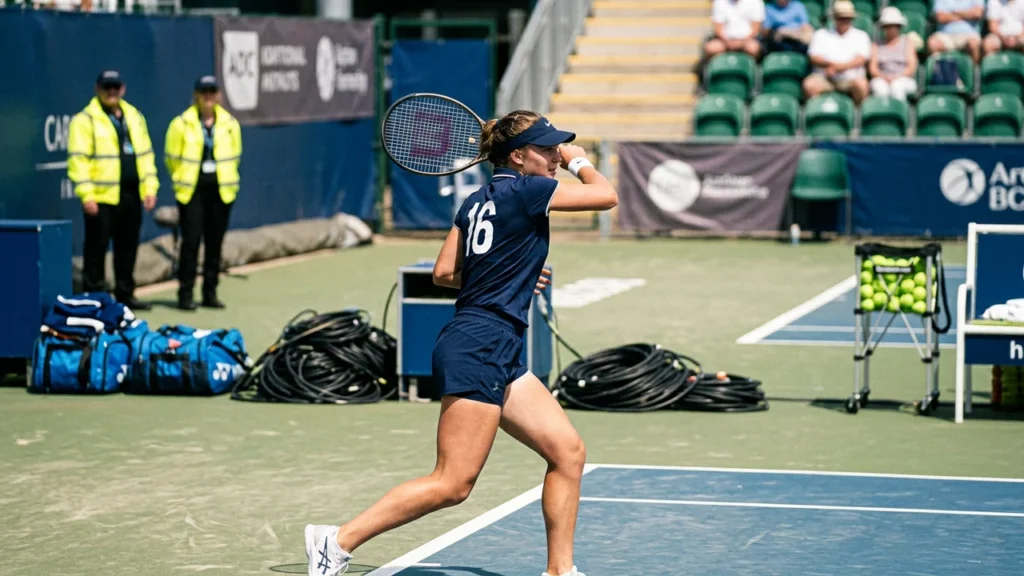
As the 2025 grass court season unfolds, anticipation grows not just for the grandeur of Wimbledon or the historical flair of Queen’s Club but for the roaring serves that define modern tennis. Players across the ATP and WTA tours are sharpening their weapon of choice—the serve—and this year’s rising serve speeds are reshaping the dynamics of grass court battles. The surface itself, known for rewarding agility and precision, now equally reveres raw power, pulse-quickening aces, and breakneck first serves that leave opponents scrambling. With stars like Jack Draper and Carlos Alcaraz headlining the circuit, and promising talents poised to break through, the stage is set for an electrifying summer where serve speeds could dictate legacies. This surge in serve velocity isn’t just a numerical ascent; it signals evolving strategies and training regimes influenced by innovations in racquet technologies from brands like Wilson, Babolat, and Head, alongside fitness and recovery programs designed to maximize explosive power and endurance.
Grass court tennis, unlike the slower hard courts or the heavy bounce of clay, demands a unique blend of quick reflexes, tactical acumen, and serving prowess. The blistering serves, now complemented by enhanced spin and placement courtesy of top string manufacturers such as Yonex and Prince, fortify players’ arsenals. Meanwhile, apparel giants including Nike, Adidas, and Asics are outfitting players with gear that supports agility and comfort, adding a subtle but vital advantage on the slippery, fast-paced grass. This intermingling of technology, training, and talent creates a thrilling spectacle, setting the tone for tournaments across Birmingham, Ilkley, Nottingham, and Eastbourne. This article delves deep into the players most notable for their rising serve speeds, exploring their trajectories, playing styles, and the evolving landscape of grass court tennis in 2025.
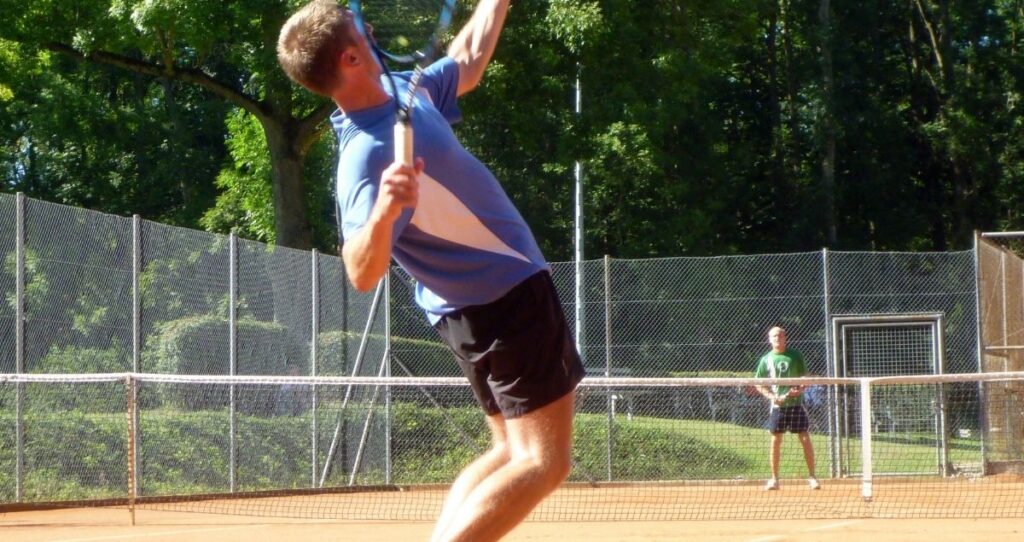
Top ATP Players with Explosive Serve Speeds: Power Meets Precision on Grass Courts
The grass courts demand a fast serve, with players consistently seeking to not only increase speed but also enhance precision and variability. Leading the charge is Jack Draper, the British No. 1, whose serve speed has skyrocketed, fueling his rise into the top five ATP rankings. Draper’s latest performances exhibit an aggressive first serve averaging over 125 mph, a significant uptick from previous years. His breakthrough in Stuttgart and spectacular win over Carlos Alcaraz at Queen’s Club demonstrated how a booming serve combined with a strategic game plan can topple even the best.
Draper’s trajectory shows how power and control converge on grass. Players like Taylor Fritz, a dominant force with three Eastbourne titles, consistently clock serves exceeding 130 mph, leveraging speed for service winners and setting up attacking forehands. Fritz’s all-court game amplified by his serve speed poses a formidable challenge. Meanwhile, rising stars such as Joao Fonseca showcase aggressive baseline play, with first serves breaching the 120 mph mark, adapting explosiveness to the low bounce and quick exchanges unique to grass courts.
Grass court success is not solely about speed; it’s about the synergy between serve mechanics, recovery, and court coverage. Many ATP players have embraced recovery tools and fitness training methods focused on explosive power, supported by technological advances in footwear from New Balance and lotto, optimizing grip and movement on grass. The interplay of efficient footwork with serve speed enhances performance during quick rallies, turning matches into breathtaking displays of athleticism.
- Jack Draper: Booming 125+ mph first serve, ATP Top 5 presence, and proven grass record
- Taylor Fritz: Multiple British grass titles, serves averaging 130+ mph, versatile all-court game
- Joao Fonseca: Explosive forehand power, rising serve speeds around 120 mph, key player to watch at Eastbourne
- Carlos Alcaraz: Multiple grass titles, averaging 124 mph, tactical serving precision combined with mobility
| Player | Average First Serve Speed (mph) | Grass Court Titles (2022-2025) | Notable Strength |
|---|---|---|---|
| Jack Draper | 125+ | 2 (Stuttgart 2024, Vienna 2025) | Power and Court Coverage |
| Taylor Fritz | 130+ | 3 (Eastbourne 2020, 2022, 2024) | Serve Variety and Consistency |
| Joao Fonseca | 120+ | 1 (ATP Challenger 2025) | Baseline Aggressiveness |
| Carlos Alcaraz | 124 | 3 (Wimbledon 2023, 2024) | Strategic Serve Placement |
WTA Serves Accelerating into the Grass Season: Emerging and Established Stars on Fire
The women’s game on grass is witnessing a remarkable surge in serve speeds and effectiveness, with players like Mirra Andreeva and Diana Shnaider pushing boundaries. Andreeva, though young and relatively inexperienced on grass, has shown an impressive capacity to develop her first serve, touching speeds that challenge her peers. Her aggressive baseline style, complemented by an increasingly powerful serve, makes her a genuine contender as she adapts to the quick tempo of grass courts.
Meanwhile, Diana Shnaider’s success in Bad Homburg, where she claimed a grass court title, highlights the importance of precision paired with speed. Her serves average around 105-110 mph, providing critical pressure early in rallies that she then capitalizes on with aggressive net play and groundstrokes. The rise in serve speeds correlates not only with raw athletic ability but also comprehensive training regimens and tactical adjustments tailored for grass play, including enhanced spin techniques and serve placement strategies developed with insights from coaches and technology.
Further enriching the grass season narrative are veterans like Katie Boulter, who leads the British charge with her consistent serve that blends speed with placement, crucial for sustaining rallies on grass. These players’ equipment choices—ranging from Babolat’s racquets to footwear crafted by Adidas and Asics—support their dynamic movements and explosive serving motion, illustrating how gear advances propel their performances.
- Mirra Andreeva: Rising star, sharpening grass serve speed and accuracy
- Diana Shnaider: WTA 250 grass title winner, serving consistency around 108 mph
- Katie Boulter: Three-time Nottingham Open champion, strong serve precision
- Ons Jabeur: Known for tactical serve variations and defensive prowess on grass
| Player | Average First Serve Speed (mph) | Recent Grass Titles | Key Advantage |
|---|---|---|---|
| Mirra Andreeva | 105-110 | None yet – rising contender | Power Development & Adaptability |
| Diana Shnaider | 108 | Bad Homburg 2024 | Serve Consistency & Net Play |
| Katie Boulter | 102 | Nottingham Open (3x) | Serve Precision & Rally Management |
| Ons Jabeur | 95-100 | Multiple SF Wimbledon | Tactical Variety in Serve |
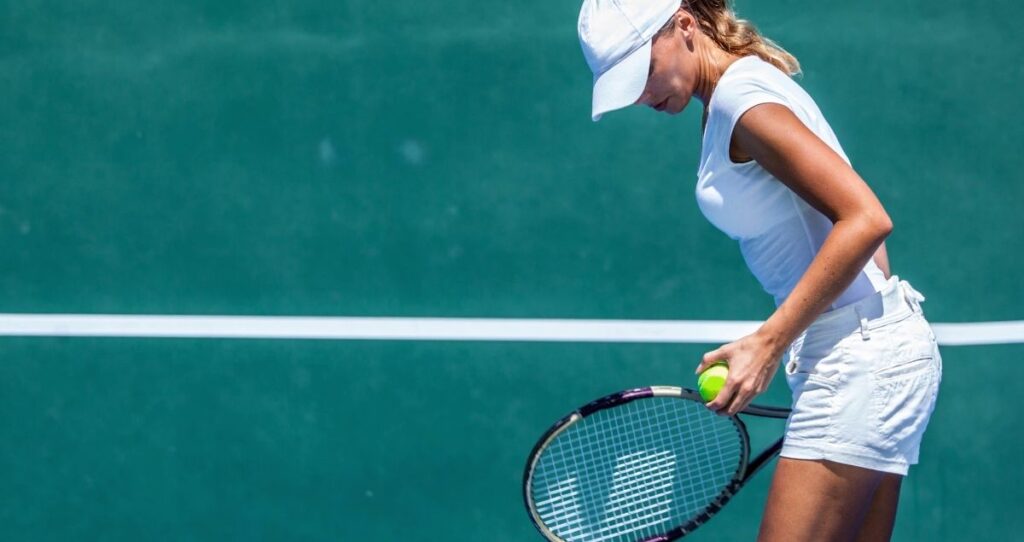
How Technology and Training Innovations Drive Serve Speed Increases on Grass
The leap in serve speeds as grass season kicks off does not arise from talent alone. Behind the scenes, a fusion of technology, equipment innovation, and advanced training methodologies is accelerating player performance. Tennis rackets from manufacturers like Wilson, Head, and Yonex have integrated carbon-fiber composites and aerodynamic designs enhancing swing speed and stability, enabling players to unleash powerful serves with greater control. Meanwhile, string technology pioneered by Babolat and Prince offers varying tensions and responsive feedback, which players customize to optimize serve power and spin—critical elements on fast grass courts.
In parallel, fitness programs tailored for explosive power—emphasizing plyometric drills and agility workouts—are becoming standard, supported by leading apparel companies such as Adidas, Nike, and New Balance offering gear optimized for speed and flexibility. Recovery tools, stretching routines, and mental toughness circuits further refine athletes’ capacity to maintain peak serve speeds throughout physically demanding grass tournaments.
Players and coaches increasingly rely on data analytics and tennis-specific gadgets to track serve velocity and accuracy, aligning with tactical strategies to exploit grass’s distinct characteristics. Incorporating these tools helps players manage fatigue and adjust their serving patterns strategically during matches to sustain high-performance levels.
- Advanced racket design enhancing power and control
- Customized string tension adaptations for spin and speed
- Plyometric and agility training for explosive first serves
- Mental toughness and recovery routines for sustained serve performance
- Utilization of analytics gadgets to fine-tune serve accuracy and speed
| Technology/Training Aspect | Benefit for Serve Speed on Grass | Brands/Tools Involved |
|---|---|---|
| Carbon-fiber, aerodynamic rackets | Increased swing speed and control for powerful serves | Wilson, Head, Yonex |
| Custom string tension | Optimized spin and speed delivery | Babolat, Prince |
| Plyometric and agility training | Explosiveness and quick footwork on grass | Fitness trainers, Nike, Adidas |
| Mental toughness circuits | Sustained concentration and consistency in serve execution | Sports psychologists, training apps |
| Tennis analytics gadgets | Real-time serve feedback and adjustments | TennisGuide equipment and analytics |
Rising Serve Speeds and Their Impact on Match Strategies and Grass Court Dynamics
Serve speed is a weapon but also a strategic tool that intertwines with a player’s broader match approach, especially on grass courts where reaction times shrink and points are punctuated by rapid-fire exchanges. A faster serve increases the likelihood of aces and weak returns, placing immediate pressure on opponents. This dynamic forces a rethinking of traditional tennis tactics where serve strength complements movement, volleying, and baseline defense.
Players with rising serve speeds adapt by refining their serve placement to open the court effectively—targeting wide corners or body serves to disrupt opponent rhythm. The increased pace allows for a more aggressive approach with serve-and-volley tactics, a style uniquely suited to the fast, low-bounce surface of grass. Moreover, quick serves set up put-away opportunities with forehands or backhands, demanding opponents to be at their quickest on footwork and anticipation.
This strategic shift is evident in players like Carlos Alcaraz and Jack Draper, who leverage their accelerated serves to dictate play tempo. For progressing players such as Mirra Andreeva, improving serve speed is not just about raw power but integrating it into fluid point construction strategies. Understanding these nuances is essential for fans, beginners, and seasoned players aiming to master their own grass court game, as practical advice and winning strategies continuously evolve to match this trend.
- Maximizing service aces and weak returns through increased serve speed
- Utilizing serve placement to control point construction on grass
- Integration of serve-and-volley tactics enabled by serve velocity
- Demand for heightened opponent anticipation and footwork precision
- Adopting serve speed improvements into comprehensive match strategy
| Strategic Element | Impact of Rising Serve Speeds | Example Players |
|---|---|---|
| Ace Frequency | Higher with faster serves, shortening points effectively | Taylor Fritz, Carlos Alcaraz |
| Serve Placement | More precise serving tactics exploiting court angles | Jack Draper, Diana Shnaider |
| Serve-and-Volley | Renewed relevance due to increased serve potency | Jack Draper, Katie Boulter |
| Opponent Pressure | Elevated due to reduced reaction time and forced errors | All listed players |
| Match Tempo Control | Serve speed facilitates dictating pace and flow of play | Carlos Alcaraz, Mirra Andreeva |
Grass Court Event Highlights: Rising Serve Speed Stars to Watch During 2025 British Tennis Swing
The 2025 British grass season is packed with tournaments from Birmingham to London, Ilkley to Eastbourne, offering numerous opportunities for players with increasing serve speeds to make their mark. Jack Draper’s quest to defend his reputation as a homegrown powerhouse will be monitored closely, while Carlos Alcaraz seeks to further engrain his legacy with a potential hat-trick at Wimbledon. On the WTA side, Mirra Andreeva’s debut on British grass courts could signal the arrival of a future star, while Diana Shnaider aims to build on her strong grass court performances.
These tournaments also spotlight the evolution of tennis experience, blending veteran savvy with youthful exuberance. Notable events like the Lexus Eastbourne Open and the HSBC Championships are set to feature thrilling battles where serve dynamics are pivotal. Fans eager to witness high-speed serves complemented by quick footwork, sharp volleys, and tactical brilliance can follow live action and detailed analysis through platforms such as TennisGuide.
Success on grass increasingly hinges on adaptive serve techniques tailored to the surface’s quirks, including lower bounce and faster pace. Players employing premium equipment from Prince, Yonex, and Wilson benefit from cutting-edge racquets that maximize serve speed and control, while shoes from Lotto and New Balance provide essential grip and support for rapid court coverage.
- Jack Draper: British No.1 with growing serve speed heading to Queen’s Club
- Carlos Alcaraz: Two-time Wimbledon champ returning for three-peat attempt
- Mirra Andreeva: Rising WTA star adapting serve for grass season debut
- Diana Shnaider: Defending titles and sharpening serve on grass
- Taylor Fritz: US Open runner-up with multiple Eastbourne crowns
- Katie Boulter: British champion pursuing third straight Nottingham Open title
| Tournament | Featured Player | Serve Speed Significance | Equipment Highlight |
|---|---|---|---|
| Queen’s Club | Jack Draper, Carlos Alcaraz | Platform for serve showcase and first-match momentum | Wilson & Babolat racquets |
| Wimbledon | Carlos Alcaraz, Katie Boulter | High-pressure, serve speed critical for match control | Head rackets and Asics footwear |
| Eastbourne Open | Taylor Fritz, Joao Fonseca | Serve dominance often pivotal on faster grass points | Prince racquets and New Balance shoes |
| Nottingham Open | Katie Boulter | Serve precision integral to defending title streak | Yonex racquets and Lotto shoes |