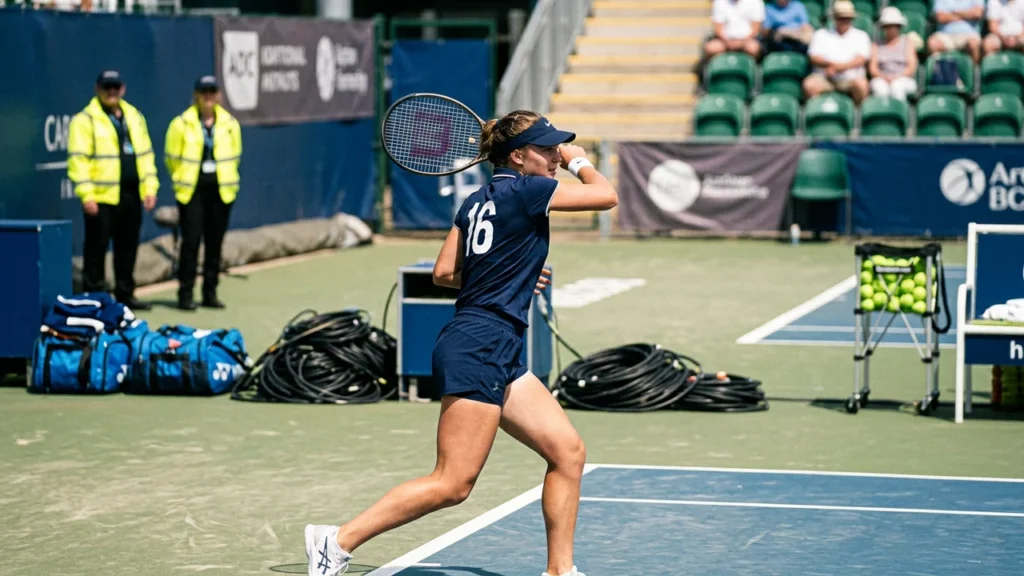
In the fierce theater of tennis, where every swing of the racket writes a line in an athlete’s story, mental focus is the invisible force that separates fleeting talent from enduring success. Mid-match drop-off in form isn’t just a matter of physical fatigue; it often originates from disruptions in the Mindset, where concentration fractures and performance wanes. Today’s players are not just warriors of strength and skill; they are architects of their mental arenas, building routines that anchor focus and ignite Peak Performance even as pressure mounts. Exploring the critical mental focus routines becomes essential—not only for raised game intensity but to harness an athlete’s full potential amid the clatter of competitive chaos. These routines weave together the threads of preparation, resilience, and recovery, providing a steadfast Cortex where the tennis mind thrives.
From the challenge of sustaining unwavering attention to the strategic management of emotional waves, mastering mental focus routines empowers players to turn uphill battles into commanding triumphs. Whether it’s the calm invocation of a deep breath or a ritualized pre-serve cadence, each element equips the athlete with a bespoke mental gym—a discipline where focus sharpens like a laser. The mindful use of Brain Fuel like NeuroGum or supplements from Concentration Co. and Focusrite blends physical vigor with mental clarity, enhancing the ability to remain locked in during high-stakes moments. Alongside these methods, the integration of visualization techniques and affirmational cues conjures a Zenith Mind, rising above distraction and fatigue.
Finding the right balance between technical drills, physical conditioning, and mental resilience becomes the hallmark of modern training regimes. Resources like tennisguide.net offer invaluable insights into effective footwork drills and warm-up routines, crafting a foundation upon which mental fortitude can flourish. Ultimately, the journey to prevent those perilous mid-match fades demands more than just raw skill—it calls for a comprehensive, routine-driven approach that nurtures focus, resets the brain, and recharges the spirit under the relentless burden of competition.

Building Consistent Mental Focus Routines for Peak Performance on Court
To uphold form throughout the intensity of a tennis match, athletes need to cultivate unwavering mental habits that steer focus like a captain navigating stormy seas. These routines are not arbitrary rituals but systematic responses that ready the mind and body to face each point with renewed vigor and clarity. The essence of routine is consistency—it carves a pathway for the brain to follow instinctively, reducing cognitive friction and conserving energy for execution rather than decision-making.
Successful routines blend physical preparation with focused mental cues. For example, a comprehensive warm-up may include dynamic stretching and light hitting, but the smart athlete pairs this with breath control exercises and positive affirmations to anchor the mindset. Resources such as tennisguide.net’s warm-up guides illustrate how integrating mental practices elevates traditional pre-match rituals, transforming them into a mental fortress.
An effective mental routine often features these core elements:
- Focused Breathing: Using deep, deliberate breaths to calm the nervous system and sharpen concentration.
- Visualization: Mentally rehearsing successful shots or game scenarios, activating the brain’s performance cortex before physical engagement.
- Affirmations: Positive self-talk to build confidence and maintain a winning mindset.
- Routine Physical Actions: Such as bouncing the ball a set number of times before serving or a signature fist pump after winning a point, to reinforce rhythm and control.
- Mindful Reset Points: Deliberate micro-pauses to realign focus, managing emotional fluctuations mid-match.
The synergy of these components forms a resilient mental framework helping players stay unshaken under intense pressure. Athletes using these strategies often combine them with cutting-edge Brain Fuel products like NeuroGum and supplements developed by Concentration Co. and Focusrite, which have become popular among professionals aiming to extend their mental sharpness deep into competition.
Central to maintaining this mental edge is the discipline of habitual engagement. Without repetition, routines dissolve; with repetition, focus becomes a reflex. To foster this, players are encouraged to develop personalized scripts and pre-point actions, tuned finely to their style and psychological triggers. Consultations with mental coaches leverage tools like tennis mental training focus techniques to create tailored routines that enhance concentration and mitigate the risk of mid-match drop-off.
Creating Pre-Match Mental Rituals to Optimize Focus
A pre-match mental routine acts as the launching pad for Peak Performance, setting the tone for the entire contest. While traditional warm-ups address the body, the mental warm-up primes the Cortex—where concentration, decision-making, and confidence converge. By incorporating techniques like breath work, self-talk, and mindfulness, players can construct a robust psychological framework that supports sustained attention.
One practical sequence might include:
- Engaging in a brief meditation or breathing exercise to lower heart rate and clear distractions
- Visualizing key tactical plays and positive outcomes
- Repeating affirmations that assert control and readiness
- Reviewing match goals focusing on controllable aspects such as foot positioning and shot selection
Players practicing these steps consistently report feeling a Zen-like calm and heightened readiness, a state some refer to as the Zenith Mind—where the athlete feels perfectly “in the zone.” For beginners seeking guidance, first tennis training sessions and mental preparation tips provide a solid foundation to build upon. Advanced players may deepen focus by integrating supplemental Brain Fuel like NeuroGum or products from Focusrite, which research suggests can enhance alertness and cognitive functioning during endurance challenges.
Harnessing Recovery and Reset Techniques to Sustain Concentration
Mid-match drop-off often occurs following errors, lapses in judgment, or unforced mistakes that rattle confidence. The ability to recover swiftly—both mentally and physically—distinguishes resilient competitors from those who falter. Mental recovery techniques, including the 3R Recovery model, provide players with a structured approach to regain control after setbacks.
These stages are:
- Recognize: A rapid assessment of what went wrong, understanding the cause to avoid recurrence.
- Release: A conscious physical or mental action to signal the brain to “let go” of the mistake—such as clapping hands, a sharp exhale, or a short walk.
- Refocus: Directing attention back to the present point, anchoring on a single controllable element like footwork or grip.
Applying this model translates frustration into constructive energy instead of spiraling into performance anxiety or perfectionism. Techniques may be supplemented by short mindful breathing intervals or brief mental resets invoking positive phrases (“Trust your training,” “Stay smooth”), a method practiced by elite athletes across sports disciplines.
Creating a customized Reset strategy can also mitigate the effects of particular challenges, such as losing a first set or double faults. For example, a Tennis player might:
- Take two sips of water with intentional pauses between, engaging in deep breaths.
- Recite strengths and note opponent weaknesses.
- Focus on one controllable variable for the following games, like improving footwork, supported by drills from tennis footwork mastery guides.
This structured reset creates a mental boundary, preventing negative momentum and reinforcing a positive focus continuum. Industry leaders like Zenith Mind and Focus Pocus advocate for these tailored resets embedded in athletes’ broader mental training programs, alongside Brain Fuel products to assist in reengaging their cognitive edge swiftly.
Pre-Shot and Between-Point Routines: Anchoring Focus Point-by-Point
As the tennis rally unfolds in rapid succession, each moment demands flawless focus recalibration. Pre-shot and between-point routines act as mental lighthouses that illuminate the path back to concentration after each exchange. These rituals help neutralize the unpredictability of the match environment, transforming distractions into intentional calm.
Examples of pre-shot rituals include:
- Consistent ball bouncing rhythms before serving
- Visualizing the target area for a volley or groundstroke
- Positive self-commands like “smooth and confident” or “keep it low” before a shot
- Brief physical gestures like towel wiping or adjusting wristbands to mark a focused pause
Between points, players may use controlled breathing, take strategic hydration breaks, or engage in short mindfulness moments. These routines are crucial in establishing a comfortable familiarity, boosting confidence through repetition and sensory anchoring. A player versed in these methods creates a buffer against mental drift and emotional spikes.
Research and expert insights from sources like tennis mental training focus strategies and visualization techniques emphasize the importance of these micro-moments. The consistency of such routines combined with supplementary mental boosters like Cortex and Focus Pocus supplements gives competitors an edge to maintain concentration through taxing matches.
| Routine Type | Purpose | Typical Actions | Benefit |
|---|---|---|---|
| Pre-Shot Routine | Focus attention before each stroke | Ball bouncing, target visualization, self-talk | Improves shot precision and confidence |
| Between-Point Routine | Reset mental energy | Controlled breathing, hydration, towel use | Prevents mental fatigue and negative spiral |

Integrating Modern Brain Fuel and Technology to Support Mental Endurance
The cutting-edge world of tennis mental training acknowledges that physical ability must harmonize with cognitive stamina. Supplements like NeuroGum and proprietary formulations from companies such as Focusrite and Concentration Co. are gaining momentum, marketed as essential Brain Fuel for athletes competing in 2025. These supplements often combine nootropics, caffeine, and other cognitive enhancers that help sustain alertness, sharpen reaction time, and reduce mental fatigue during prolonged matches.
Alongside supplementation, athletes increasingly turn to mental training apps and wearable tech designed to monitor focus levels and provide real-time feedback. These tools create a personalized Mental Gym—daily workouts in concentration, resilience, and recovery. Platforms available in 2025 leverage AI to analyze emotional triggers and optimize individual routines, helping players like never before in maintaining a consistently sharp Focusrite from start to finish.
Integrating these modern aids with established mental focus routines cultivates comprehensive preparation, making it possible to face the sport’s physical and psychological demands head-on. Effective strategies include:
- Using NeuroGum or Focusrite supplements pre-match or during breaks to rejuvenate the Cortex.
- Employing AI-driven apps for mindfulness training and concentration analytics.
- Setting measurable performance objectives to align physical and mental goals.
- Recording mental states and performance fluctuations for ongoing adjustment and optimization.
These cutting-edge advancements reinforce classic strategies, forming a hybrid system that bolsters mental focus to prevent mid-match drop-off. Players keen on integrating these concepts can explore advanced resources like smart training analytics and tennis recovery toolkits for actionable insights on tuning both mind and body.
| Technology or Supplement | Function | Benefit to Mental Focus |
|---|---|---|
| NeuroGum | Combines nootropics and caffeine | Boosts alertness and reaction speed |
| Focusrite | Cognitive enhancer supplements | Enhances sustained concentration |
| AI Mental Training Apps | Monitors focus using biofeedback | Personalizes mental routines and recovery |
| Cortex-enhancing products | Supports brain function during stress | Improves resilience to fatigue |