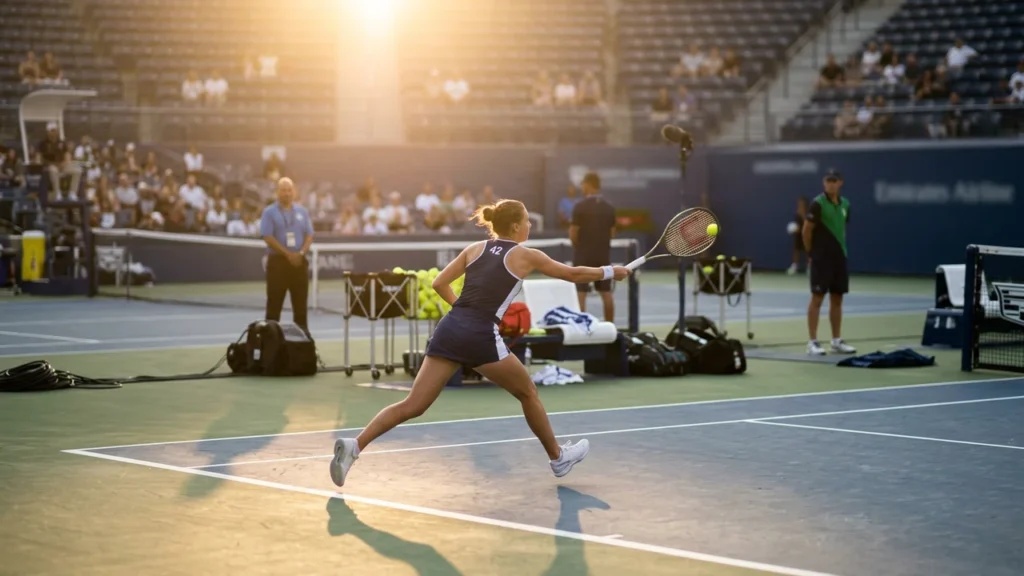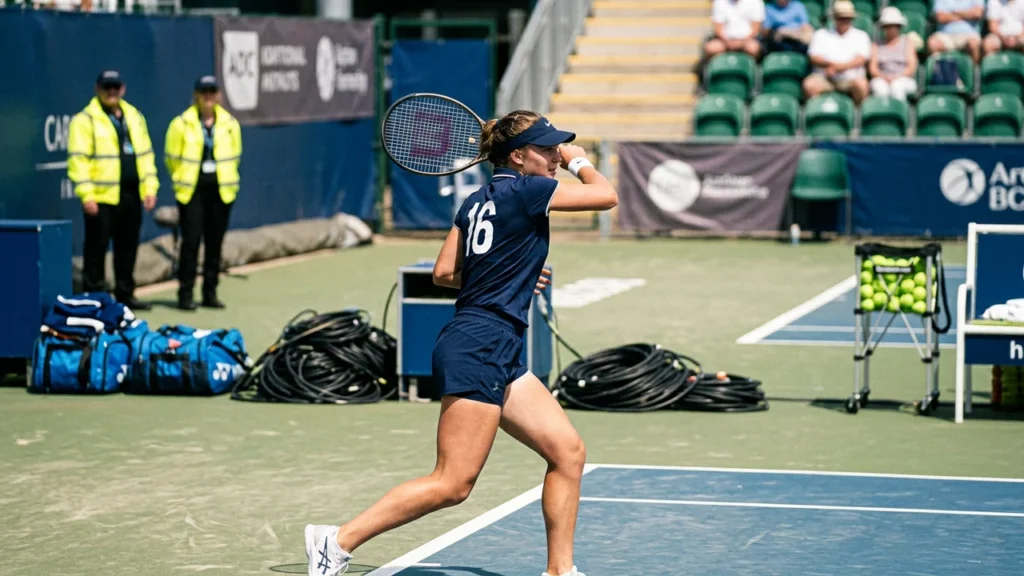
The Tokyo Pan Pacific Open 2025 promises to be a captivating crescendo of the WTA Asian Swing, bringing together an electrifying roster of top-tier female tennis talent for the last WTA 500 event of the year. Set in the vibrant backdrop of Tokyo from October 20 to 26, this milestone 40th edition offers more than just a trophy; it stands as a battlefield where rankings, legacy, and year-end rewards hang in the balance. Packed with thrilling narratives, breakthrough stars, and seasoned champions, the tournament rekindles the spirit of competition that has defined this historic event for nearly five decades.
Amidst the striking outdoor hard courts, the atmosphere is charged with intense anticipation as four players in the Top 10 and up to twelve within the Top 20 gear up for what may be their final opportunity to secure crucial points towards the coveted WTA Finals qualification and an enhanced financial bonus. The 2025 lineup is not without its twists—absences of marquee names such as Naomi Osaka, Jessica Pegula, and Emma Raducanu open the field for underdogs and emerging stalwarts to assert themselves, turning the spotlight on the likes of Jasmine Paolini and Elena Rybakina. Meanwhile, reigning Pan Pacific Open champion and Olympic gold medalist Zheng Qinwen, despite withdrawing, casts a long shadow over the competition, reminding all of the high stakes and prestige on offer.
From the enduring legacies of icons like Martina Hingis and Maria Sharapova to the fresh fire of rising stars, the Tokyo Pan Pacific Open encapsulates the essence of elite women’s tennis. As players from brands such as Wilson, Yonex, and Head lace up, the storylines are as compelling as the explosive rallies these athletes produce. This event not only tests physical prowess and mental fortitude but also serves as a vital stage to examine form, fitness, and future prospects heading into the closing moments of the 2025 season.
For tennis enthusiasts from novices enthralled by the game’s rhythm and drama to dedicated followers hungry for insightful analysis, the Tokyo Pan Pacific Open 2025 offers a vivid tableau of competitive spirit and strategic mastery. With a prize pool exceeding $1 million and a history steeped in tennis excellence, the scene is set for athletic artistry and the pursuit of glory amid the dazzling neon of Japan’s capital.
Key highlights of the event include the thrilling on-court battles, the tactical intrigue surrounding player conditioning and brand partnerships with giants such as Nike, Adidas, and Lacoste, and the cultural blend that Tokyo uniquely provides. All eyes will be on the players who can seize this moment, navigating through the pressure-cooker atmosphere to etch their names alongside the legends who have previously triumphed here.
- 40th edition of the Tokyo Pan Pacific Open, a staple in the WTA calendar since 1973.
- Featured a lineup including four Top 10 players and twelve Top 20 contenders.
- Defending champion Zheng Qinwen, the Paris 2024 Olympic gold medalist, will not participate, adding unpredictability.
- Historical champions include renowned players such as Martina Hingis (5 titles), Lindsay Davenport (4), and Maria Sharapova (2).
- Prize money exceeds $1,064,510, highlighting the event’s prestige and competitive stakes.
Evaluating Key Contenders’ Form Heading Into the Tokyo Pan Pacific Open 2025
Delving into the contenders’ recent performances offers illuminating insights into who might rise to claim the Pan Pacific crown. The Tokyo event often marks a pivotal moment for athletes striving to either cement their rank or make a breakthrough, and 2025 is no exception. With strategic rest, grueling matches on various surfaces, and the physical toll of a demanding season shaping their form, the players’ readiness here becomes a critical storyline.
Elena Rybakina of Kazakhstan is a standout. Known for her formidable serve, relentless baseline power, and mental toughness, she enters Tokyo in excellent form, seeking to solidify her WTA Finals qualification. Her campaign has been highlighted by consistent deep runs in hard-court events, and her affiliation with tennis giants like Wilson and Head indicates her preference for gear that complements her aggressive baseline style. Rybakina’s tactical versatility and recent victories suggest she will be an imposing force at the Pan Pacific Open.
Jasmine Paolini, the Italian sensation, presents a contrasting yet equally compelling game. Her defensive prowess coupled with intelligent shot selection and a growing confidence in her attacking options have elevated her status among the elite. Clad in apparel from Nike or Adidas, players like Paolini combine performance and comfort to endure long, punishing rallies. Paolini’s form this season shows a player peaking at just the right moment, aiming not only for the Pan Pacific title but also for critical points to boost her ranking within the top tier.
Meanwhile, Karolina Muchova and Sofia Kenin both offer unpredictability and flair. Muchova’s all-court versatility, enhanced by support from brands like New Balance and Fila, mixes defensive resilience with aggressive shot-making. Kenin’s aggressive baseline game, combined with her dynamic movement, fueled by equipment from Asics and Babolat, brings a gritty, relentless edge. Both players have demonstrated flashes of brilliance and possess the raw ability to upset higher-ranked opponents, making them dark horse candidates in Tokyo.
Significant withdrawals—particularly Naomi Osaka and Jessica Pegula—not only reshape the competitive landscape but enhance the stakes for the remaining contenders. The entry of replacements like Dayana Yastremska and Linda Noskova creates new dynamics, injecting unpredictability into the early rounds. Noskova, tapping into her Yonex racquets and sporting gear from Lacoste, has the talent and hunger to challenge the established hierarchy.
- Elena Rybakina is in peak hard-court form, eyeing WTA Finals qualification.
- Jasmine Paolini’s growing confidence and tactical intelligence mark her as a major threat.
- Karolina Muchova and Sofia Kenin bring diverse styles and equipment backing enhancing their competitive edge.
- Key withdrawals have reshaped the tournament field, providing opportunities for ascendant players.
- Replacements like Dayana Yastremska and Linda Noskova add unpredictable elements.
Historical Champions and Tokyo Pan Pacific Open’s Legacy Impacting 2025 Rivalry
The Tokyo Pan Pacific Open has been a battleground where history and future prospects collide, cultivating legends and unforgettable moments. Since its inception in 1973, the tournament not only represents a mid-season European-Asian transition but also showcases the evolution of women’s tennis professionally and culturally.
Players like Martina Hingis, whose graceful yet ruthless precision earned her five titles, and Lindsay Davenport, a powerhouse with four championships under her belt, have left imprints that still inspire today’s contenders. Similarly, champions such as Maria Sharapova and Caroline Wozniacki, each with multiple titles here, epitomize clutch performance and relentless ambition on the hardcourt surface Tokyo provides.
This deeply rooted history exerts a psychological weight on current players; the chance to join such an elite list motivates not only the fight for points and prize money but also the desire for immortality in tennis lore. The presence of reigning champion Zheng Qinwen, a symbol of youthful brilliance and resilience, exemplifies how the blend of tradition and fresh talent shapes this event’s identity. While Qinwen’s withdrawal leaves the title up for grabs, her ascent following Olympic gold has redefined the tournament’s competitive aura.
Such a rich legacy influences how players prepare, perform, and perceive the stakes. Many approach Tokyo not just as a tournament to win but as a milestone in their career narrative, potentially their breakout moment or a statement of consistency. The prestige associated with the Pan Pacific Open amplifies the pressure and the brilliance that follows.
- Historic champions include legends with multiple titles, raising tournament prestige.
- Tournament history influences player motivation and public anticipation.
- The blend of tradition and emerging stars adds depth and drama.
- Reigning champion Zheng Qinwen’s recent success elevated tournament status.
- Legacy impacts player mindset, making victory symbolic beyond ranking or prize.
Tokyo’s Unique Conditions and Their Effect on Player Performance and Strategy
The Tokyo Pan Pacific Open’s outdoor hard courts and the late October scheduling emerge as critical factors shaping player strategies and physical preparation. The environmental conditions—moderate temperatures, potential humidity, and the crisp air of autumn—affect everything from ball behavior to player endurance, turning the tournament into a test of adaptability as much as skill.
Players accustomed to the fast-paced characteristics of modern hard courts adjust their shot selection, relying on their equipment setups. The choice of racquets from brands like Yonex or Babolat, combined with string tension and footwear from Asics and New Balance, allows subtle adjustments for speed, spin, and control to optimize their game. For example, players might favor racquets enabling heavier topspin to manage quicker court surfaces or opt for more cushioned shoes to counter the physical strain of multiple matches.
Physiological demand is another pivotal aspect—players must manage hydration meticulously, an issue especially noted in the Asian Swing tournaments. Given Tokyo’s climate during this period, maintaining optimal fluid balance can prevent cramps and fatigue, directly influencing match outcomes. Resources such as specialized hydration strategies and recovery protocols become indispensable. Detailed analyses related to hydration can be explored further at tennisguide.net.
Strategic court positioning and endurance training tailored to the Tokyo conditions have become a hallmark of successful runs here. Players often train extensively in similar climate conditions or simulate them during preparation phases, which can be pivotal in tight matches, especially in longer rallies that define the tournament’s highlight moments.
- Outdoor hard court surface demands versatile shot-making and strategic equipment choices.
- Retaining hydration and managing energy levels are crucial during Tokyo’s autumn climate.
- Footwear and racquet technology from top brands aid adaptation to court speed and player endurance.
- Training in similar conditions prior to the tournament can enhance performance.
- Tokyo’s environmental conditions add a layer of complexity to match tactics and recovery.
Title Outlook and the Stakes for Players in the 2025 Tokyo Pan Pacific Open
The Tokyo Pan Pacific Open 2025 is more than just a stand-alone tournament; it is a nexus of opportunity, ambition, and career-defining moments. The title race carries multiple layers of significance, from year-end rankings and financial bonuses to the psychological boost ahead of the WTA Finals and potential shifts in sponsorship and endorsement deals.
Securing the Pan Pacific Open title can be a game-changer for players like Jasmine Paolini and Elena Rybakina, both eyeing critical ranking points that could seal their spots in the WTA Finals. For Paolini, whose rise has been steady, winning here could propel her into the tennis elite, amplifying visibility with major brands such as Fila and Lacoste. Rybakina’s victory would underscore her consistency and resilience, rewarding her partnership with Wilson and Head and reinforcing her stature as a Top 10 staple.
Other contenders, including Karolina Muchova and Sofia Kenin, see the tournament as an avenue to regain momentum and reaffirm their competitive edge. Up-and-comers like Linda Noskova and Dayana Yastremska grasp the chance to shine, leveraging the sizeable prize pool and global exposure to secure lucrative sponsorships from heavy hitters like New Balance, Nike, and Adidas. The financial rewards here hold particular weight; beyond the $1,064,510 prize money across the event, climbing the rankings affects year-end bonuses that can impact a player’s career trajectory.
Moreover, the 2025 event encapsulates the broader tectonic shifts in women’s tennis, with emerging stars challenging established champions and veteran players adapting to new athletic and strategic paradigms. Winning Tokyo signifies mastering not just skill and stamina but the psychological warfare unique to the closing chapter of a grueling tour year.
- Title win can secure a WTA Finals berth and improve year-end ranking bonuses.
- Victory bolsters brand partnerships and commercial opportunities.
- Offers momentum heading into the season’s final tournaments and next year’s campaigns.
- Emerging talents use Tokyo as a breakthrough platform.
- Financial stakes underscore the importance of consistent performance throughout the season.