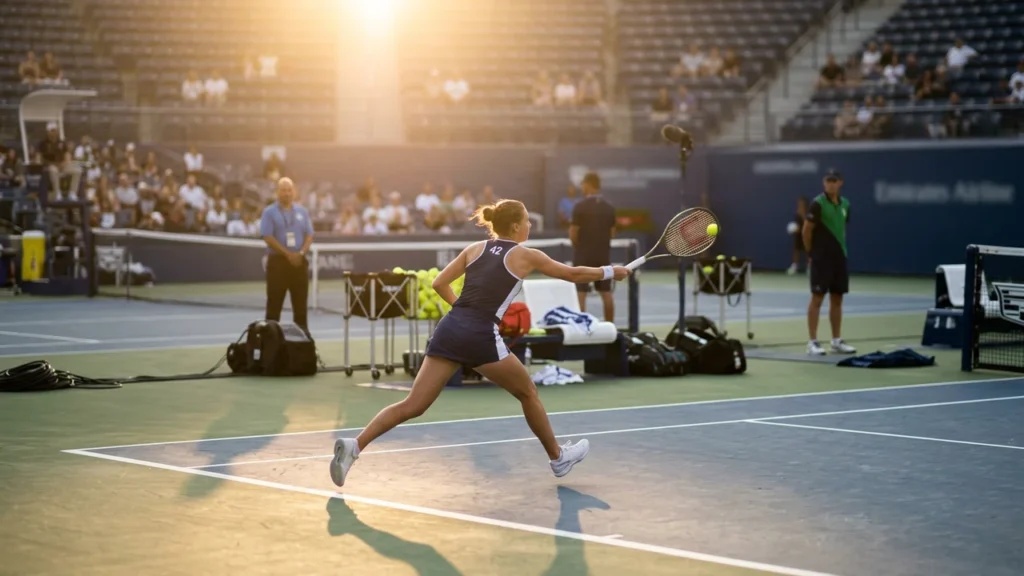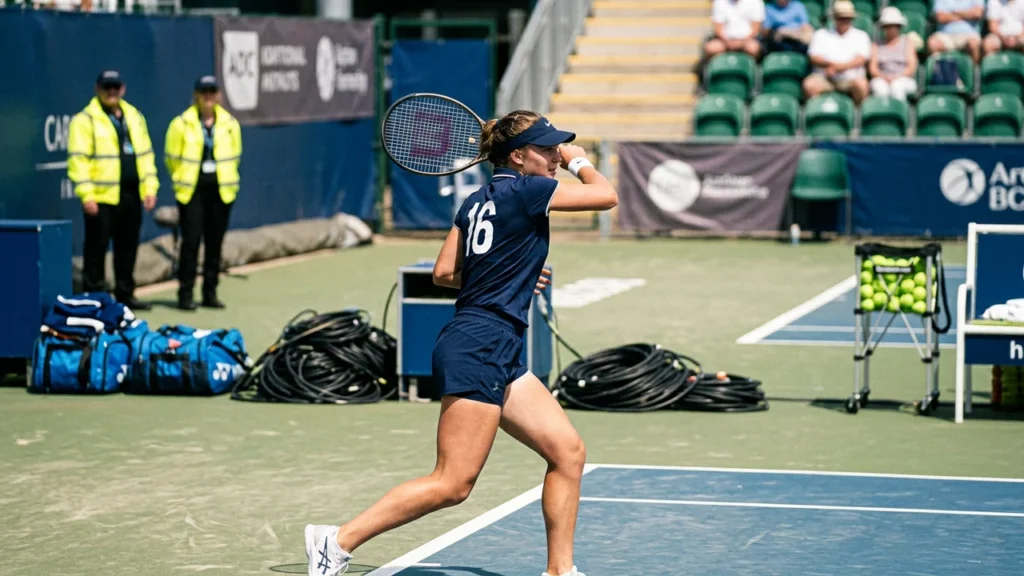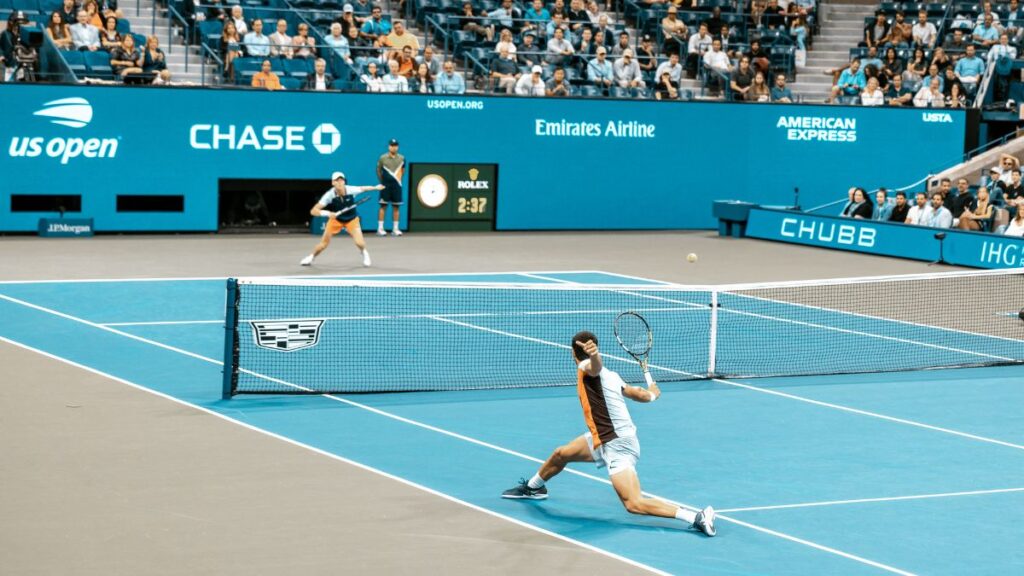
The Moselle Open in Metz stands as one of the thrilling end-of-season ATP Tour stops, offering a dramatic stage for emerging talents and seasoned players alike. This indoor hardcourt tournament, scheduled for early November, has witnessed a spectrum of dramatic upsets and shining triumphs, making its draw analysis a captivating subject for tennis enthusiasts. The 2024 edition has already unfolded with gripping matches and unexpected twists, setting the tone for 2025, where tumultuous battles and strategic matchups await. A deep dive into the Moselle Open draw reveals an arena ripe for disruption, where the seeds face genuine threats from ambitious contenders. Brands like Wilson Sporting Goods, Dunlop Sports, Lacoste, Head Tennis, and Babolat are omnipresent through the event’s atmosphere, underscoring the professional caliber and sport’s commercial pulse. Meanwhile, media giants such as ESPN and Eurosport keep fans connected to the pulse of the action, highlighting the tournament’s global significance.
Key points to watch heading into the Moselle Open:
- The tactically demanding indoor hardcourt conditions that influence player performances.
- The blend of experienced seeds and hungry dark horses creating an unpredictable competitive environment.
- Past champions’ profiles offering insights into the tournament’s playing styles and typical victors.
- Recent match results impacting player confidence and momentum as the draw progresses.
- The potential for upsets that can alter not only tournament dynamics but also late-season ATP rankings.
Analyzing the Top Seeds at the Moselle Open for Potential Vulnerabilities and Threats
The Moselle Open draw has brought together a compelling list of top seeds, including names such as Andrey Rublev, Casper Ruud, Grigor Dimitrov, and Holger Rune. While each carries strong rankings and reputations on the ATP Tour, tennis history and recent matches suggest several have vulnerabilities ripe for exploitation by challengers.
Andrey Rublev, a formidable player known for his explosive playing style and relentless baseline aggression, holds the top seed position. However, his demanding semi-final matches in previous editions, including a tough quarterfinal win by walkover against a crafty Corentin Moutet, reveal moments where stamina and mental endurance have been tested. Players like Moutet thrive on these opportunities to disrupt Rublev’s rhythm with tactical variety, strategic net play, and relentless defense. Rublev’s powerful groundstrokes and Wilson Sporting Goods racquet blend promise potency but may be countered by patient, steady opponents exploiting his occasional over-aggression.
Casper Ruud, seeded second, enters the draw as a consistent contender on hardcourts but came short in the second round against Benjamin Bonzi recently. This loss underscores Ruud’s susceptibility when facing versatile and confident players who adapt aggressively, particularly indoors where indoor lighting and faster surfaces require quicker shot execution. The mental edge gained by Bonzi at the Moselle Open – who also boasts the 2024 championship trophy – elevates the threat level for other top seeds. Known for his versatility and dynamic play, Bonzi exemplifies the kind of seed-upsetting potential lurking beneath the surface.
Grigor Dimitrov and Holger Rune, the third and fourth seeds respectively, present intriguing matchups. Dimitrov, the elegant shotmaker recognized for his artistry on court and strategic point construction, remains a tough opponent. However, his performances sometimes show inconsistency under pressure on indoor courts, suggesting opportunities for younger and aggressive players to test his resolve. Similarly, Rune’s powerful baseline game and physical presence on court align with higher expectations; yet, his relative youth and less experience in late-season pressure moments could open pathways for upsets.
| Seed | Player | Strengths | Potential Weaknesses | Recent Notable Results |
|---|---|---|---|---|
| 1 | Andrey Rublev | Powerful baseline game, high aggression | Stamina in long matches, mental lapses | QF win (walkover) vs. Moutet 2024 |
| 2 | Casper Ruud | Consistent play, strong backhand | Indoor adaptability, pressure moments | 2nd round loss to Bonzi 2024 |
| 3 | Grigor Dimitrov | Elegant shot making, strategic | Inconsistent finishes, pressure handling | Advancing rounds steadily in 2024 |
| 4 | Holger Rune | Physicality, aggressive baseline play | Youth, late-season fatigue | Strong early-round evidence in 2024 |
Given these factors, the top seeds’ path is anything but guaranteed. The Moselle Open’s unique environment – faster indoor hard courts under controlled conditions – demands swift reactions and ozone-fresh tactical adaptability. This creates fertile ground for upsets, where lower-ranked, more fluid players like Benjamin Bonzi and Corentin Moutet shine as natural threats. Fans seeking a comprehensive preview will find valuable insights on emerging players and potential winners at ATP Tour qualifiers analysis.
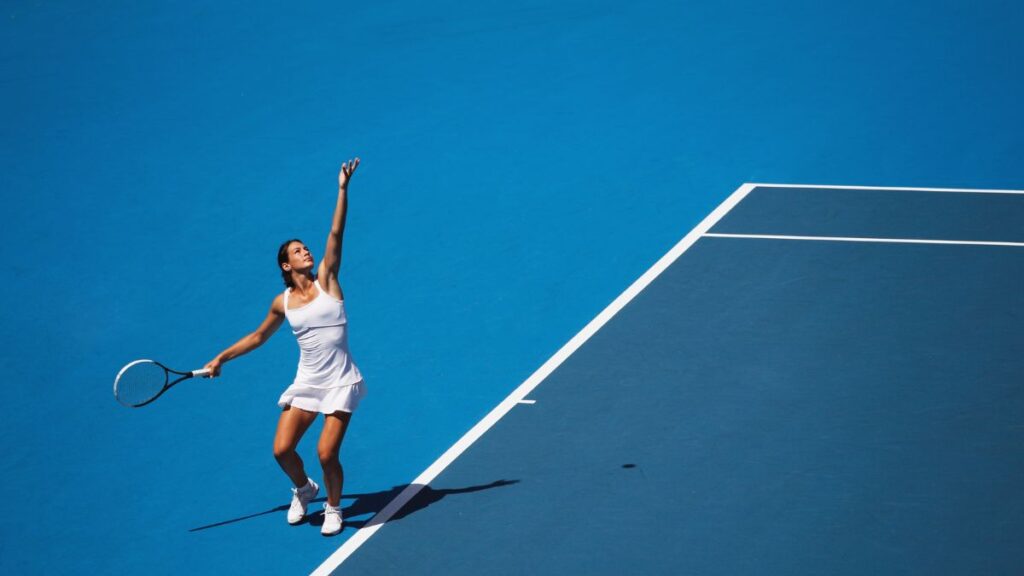
The Indoor Hardcourt Factor: How Surface Influences Player Performance and Upset Potential at Moselle Open
Indoor hardcourts are a defining feature of the Moselle Open, shaping not only player strategies but also the competitiveness and unpredictability of matches. Unlike outdoor events exposed to weather variables, the indoor setting offers consistent ball bounce, no wind interference, and often slightly faster courts. This benefits players with strong serves, quick reflexes, and aggressive baseline games.
However, such conditions also impose unique challenges: indoor lighting and pressure-cooker atmospheres magnify psychological elements. Players accustomed to slower surfaces might struggle to adapt, while tactical nuance gains prominence. Hence, understanding how the surface favors certain playstyles provides a deeper grasp of who might upset the seeds.
- Fast Court Advantages: Serves gain extra speed and precision indoors, amplifying the rewards of effective first serves and aggressive starts.
- Reduced External Variables: No wind or sun distractions place premium focus on footwork, timing, and mental discipline.
- Emphasis on Return Games: The amplified serve speed can favor dominant servers but also create momentum shifts on successful returns.
- Foreshadowing Fatigue: The quick pace can demand explosive energy bursts, impacting stamina in tightly contested three-setters.
Players like Botic van de Zandschulp and Arthur Rinderknech, who have shown outstanding capacity to adjust pace and hitting angles indoors, are well placed to exploit these conditions. Their shots, blending depth and sharp angles, can force errors from more predictable seed players. Importantly, these conditions reward a blend of power with finesse, opening the door for adaptive players who can read the game tactically.
The influence of equipment brands such as Dunlop Sports and Head Tennis is visible here; many players prefer rackets and strings fine-tuned for indoor bounce and speed, which indirectly shapes match outcomes. This interplay between environment and gear echoes through tournaments covered by channels like the Tennis Channel, where detailed breakdowns highlight these nuances game by game.
| Indoor Hardcourt Surface Traits | Impact on Player Performance | Implication for Upset Potential |
|---|---|---|
| Consistent Bounce | Facilitates aggressive baseline play | Benefits players who can dictate rallies quickly |
| No Wind or Sun | Precision and timing improved | Disadvantages players reliant on deep spin or outdoor variation |
| Faster Court Speed | Amplifies serve effectiveness | Advantageous for strong servers and volleyers |
| Demanding Physical Pace | Tests stamina and recovery | Can expose seeds vulnerable to pressure |
Unheralded Contenders and the Dark Horses Ready to Disrupt the Moselle Open Order
The Moselle Open’s charm partly lies in its ability to catapult less heralded talents into the spotlight. Benjamin Bonzi’s 2024 victory after defeating Cameron Norrie in a gritty three-set final vividly demonstrates the event’s appetite for upsets. Bonzi’s aggressive yet tactical approach, combined with his adaptability to indoor hardcourts, makes him a perennial threat in the draw.
Alongside Bonzi, players like Corentin Moutet and Arthur Rinderknech have carved notable paths through challenging rounds, leveraging their all-court games and resilience. Their ability to unsettle seeds has become a talking point among pundits and fans alike, featured across platforms such as ESPN and Eurosport which provide in-depth match analytics and player interviews.
Moreover, the entry of qualifiers and lucky losers brings fresh unpredictability, often translating into formidable battles against established players. Arthur Rinderknech, for instance, has displayed robust form, blending defensive solidity with opportunistic aggression. These competitors frequently benefit from playing with less pressure and more freedom, enabling them to execute bold tactics.
- Benjamin Bonzi’s recent championship adds confidence and sets a psychological challenge to top seeds.
- Corentin Moutet’s crafty shotmaking and variety disrupt baseline rhythms.
- Arthur Rinderknech’s physical endurance and tactical insight make him a dark horse in critical rounds.
- Qualifiers and lucky losers such as Quentin Halys can gain momentum and surprise favorites early in matches.
| Dark Horse Player | Strengths | Recent Form | Notable Upset Potential |
|---|---|---|---|
| Benjamin Bonzi | Versatile aggression, mental toughness | 2024 Moselle Open champion | High – defeated a top seed in final |
| Corentin Moutet | Varied shot selection, net play | Advanced to QF in 2024 | Medium-High |
| Arthur Rinderknech | Endurance, tactical positioning | Strong early rounds in Metz | High |
| Quentin Halys | Consistent baseline game | Qualifying rounds success | Medium |
The storylines brewing among these challengers reflect the tournament’s broader narrative—where steadfast ambition meets tactical innovation, and where the interaction of physical skill, psychological resilience, and indoor conditions creates fertile ground for unexpected outcomes.
Historical Insights and Past Champions’ Patterns Illuminating the Moselle Open’s Competitive Landscape
Charting the tournament’s history offers vital perspectives into the trends and traits correlated with success at the Moselle Open. From the legendary Jo-Wilfried Tsonga’s multiple titles to recent champions such as Ugo Humbert and Benjamin Bonzi, the event has seen a blend of local French talent domination alongside international contenders asserting control.
The characteristics often shared by victors include adaptability to indoor hardcourt conditions, clutch performance under pressure, and an ability to navigate the taxing end-of-season ATP Tour schedule. The tournament’s timing in early November places it just before the ATP Finals, meaning players come in with varying physical freshness and motivation levels.
Reviewing the final match scorelines and opponents, many champions have succeeded with decisive two-set wins, focusing on fast aggression and error minimization:
- Benjamin Bonzi’s 2024 victory over Cameron Norrie (4-6, 6-0, 7-5) demonstrates resilience and comeback ability.
- Ugo Humbert in 2023 defeated a strong Andrei Shevchenko convincingly (6-3, 6-3), emphasizing baseline dominance.
- Lucas Sonego’s 2022 triumph showcased a blend of steady consistency and opportunistic shotmaking.
| Year | Champion | Runner-up | Final Score | Playing Style Highlight |
|---|---|---|---|---|
| 2024 | Benjamin Bonzi | Cameron Norrie | 4-6, 6-0, 7-5 | Resilient baseline aggression |
| 2023 | Ugo Humbert | Andrei Shevchenko | 6-3, 6-3 | Powerful baseline control |
| 2022 | Lucas Sonego | Alexander Bublik | 7-6, 6-2 | Consistent shotmaking |
| 2019 | Jo-Wilfried Tsonga | Aljaz Bedene | 6-7, 7-6, 6-3 | Clutch performance |
Understanding this historical context provides clues for bettors, fans, and analysts watching the 2025 edition unfold. The chapter of Moselle Open champions is one of varied playing styles, but with a shared emphasis on tactical intelligence and the mental tenacity to withstand tight indoor pressure. This dynamic arises clearly in extensive coverage by media like ESPN, blending live commentary with player stats.
Predictions and Factors Driving Potential Upsets at the Moselle Open November 6
As the tournament intensifies, a spotlight shines on the mix of form, fitness, and psychological momentum influencing matches from the Round of 32 through to the finals. Several components drive the potential for upsets at this ATP Tour event:
- Recent Match Fatigue: Many top seeds have endured tough matches or come off late-season injuries, possibly affecting their sharpness.
- Confidence Boosts for Challengers: Winners from qualifying rounds and lucky losers often carry momentum and few expectations, allowing freer, pressure-free play.
- Indoor Adaptation: Players with a history of excelling indoors hold an edge, particularly if matched against seeds more comfortable outdoors.
- Head-to-Head Records: Tactical matchups based on past encounters impact player confidence and strategic game plans.
Analyzing the 2024 results offers a tangible preview: Benjamin Bonzi ousted Casper Ruud in the second round and eventually captured the title, hinting at similarly bold runs in 2025. Equally, episodes like Corentin Moutet’s ability to overcome seeded players emphasize that tactical nuance and adaptability can overturn rankings.
| Player Matchup | Surface Preference | Recent Form | Upset Likelihood |
|---|---|---|---|
| Benjamin Bonzi vs Casper Ruud | Indoor Hardcourt | Champion (2024) | High |
| Corentin Moutet vs Andrey Rublev | Indoor Hardcourt | Strong Challenger | Medium-High |
| Arthur Rinderknech vs Grigor Dimitrov | Indoor Hardcourt | Good Momentum | Medium |
| Quentin Halys vs Holger Rune | Indoor Hardcourt | Qualifiers Form | Medium |
The interplay of these factors, combined with inspired play and the high stakes near the ATP calendar’s close, make the Moselle Open a battleground where seeds must remain vigilant. Fans can engage with comprehensive analysis and betting tips to anticipate surprises via expert platforms including the latest ATP qualifier insights.