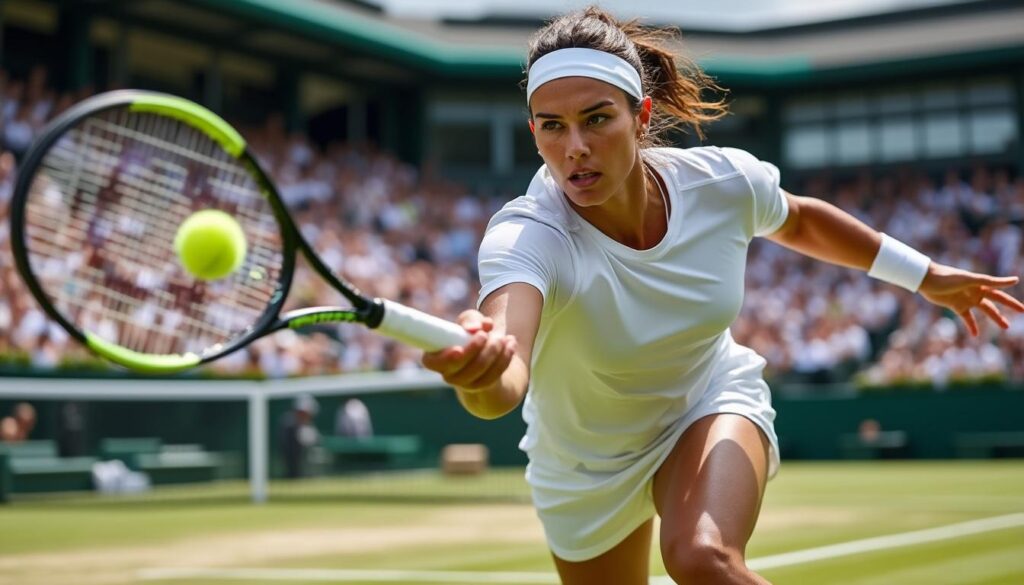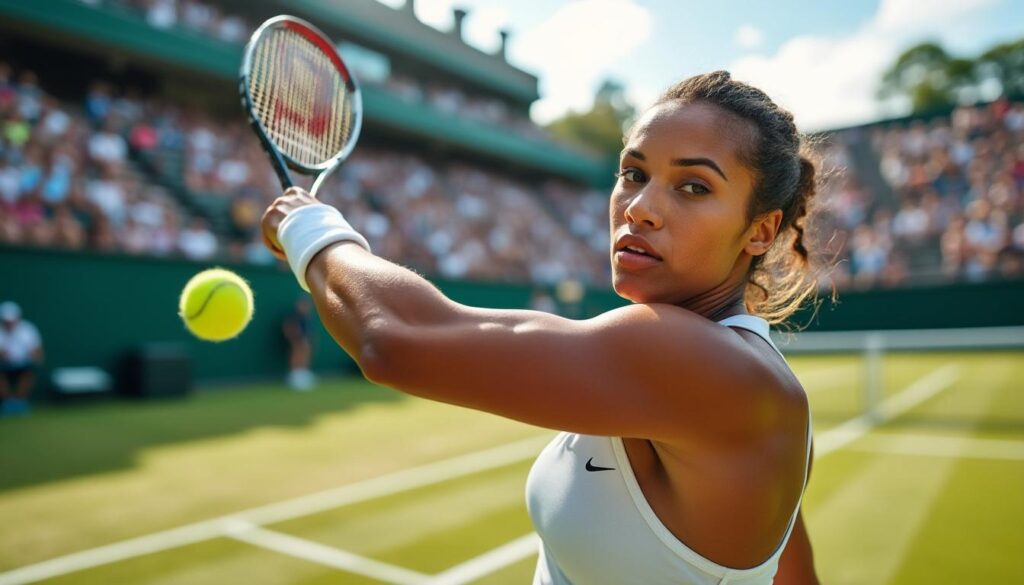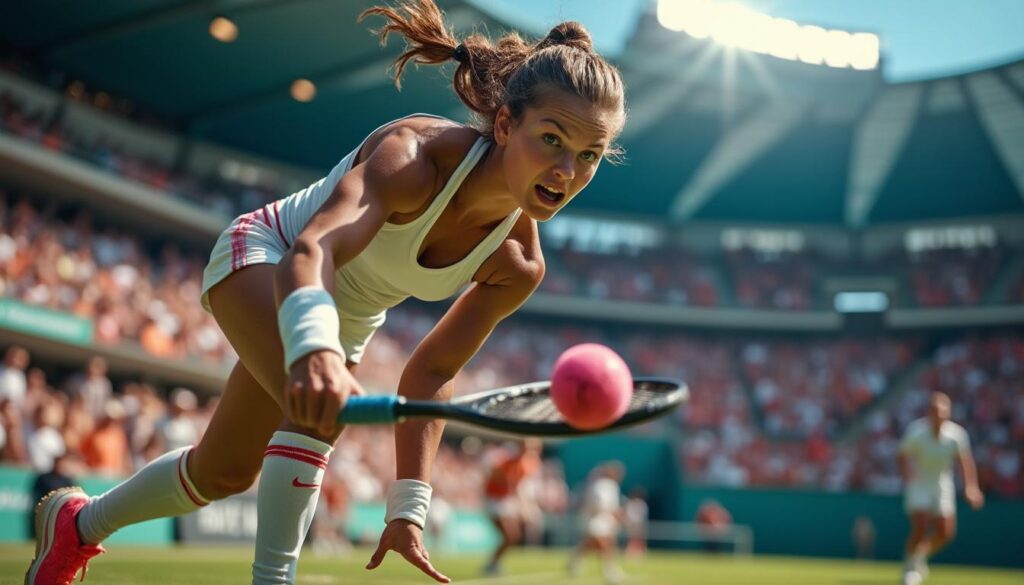
Hard courts stand at the crossroads of tennis surfaces—offering a rapid yet consistent battlefield where raw power meets sharp precision. These courts, sprawling across neighborhoods and professional arenas alike, demand players elevate their game beyond brute strength. Each rally on this surface morphs into a tactical dance, every footwork adjustment and shot selection weaving a story of aggression and control. The strategic interplay of serve placement and spin variation transforms the hard court into a grand chessboard where those who master consistency and adaptability reign supreme.
Unlike the slipperiness of grass or the endurance testing clay, hard courts reward a blend of explosive energy and patient rally patience. Players face a unique challenge: balancing baseline dominance with aggressive returns, crafting points that can suddenly shift momentum with a sharp angle or a penetrating flat shot. Meanwhile, footwork on this surface blends the need for solid planting with the ability to explode into sudden direction changes—all while maintaining enough stability to counterbalance the impact stresses typical of these courts.
In the high-stakes arena of 2026, players are pushing boundaries with refined slide technique adaptations and precision serve placement, leveraging cutting-edge training insights and equipment optimized specifically for the fast yet forgiving nature of hard courts. From the amplified explosiveness of top-ranked professionals to emerging talents applying tactical rehearsals in off-season drill sessions, the hard court remains the proving ground for versatile and mentally sharp competitors eager to dominate the relentless baseline rallies and shifting tactical landscapes.
Embracing technological breakthroughs such as advanced motion capture and sensor-embedded rackets allows competitors to fine-tune every component of their game, from footwork efficiency to spin variation in each stroke. The evolving synergy between strategic footwork, court positioning, and mental tenacity will define not only match outcomes but entire seasons. It’s here, on these unforgiving surfaces, where tennis transforms into a captivating spectacle of power, precision, and mind over muscle.
Step onto a hard court, and you step into a world where every millisecond counts, every mental adjustment echoes louder than a crowd’s roar, and every shot is a chance to rewrite the match’s script.
In brief:
- Hard courts demand a balance of power, consistency, and tactical adaptability.
- Precise footwork combined with stable but explosive movement is essential for success.
- Serve placement and spin variation are crucial to control the pace and direction.
- Players must maintain rally patience while mixing baseline dominance with timely aggressive returns.
- Advanced technology and equipment are revolutionizing training and performance insights on hard courts.
Mastering Footwork and Court Positioning on Hard Courts for Tactical Edge
Footwork on hard courts is the heartbeat of tactical success. This surface demands players to merge explosive power with stability to withstand repeated impacts. Unlike clay’s forgiving soil or grass’s slippery blades, hard courts require a dynamic balance between aggressive starts and controlled stops, ensuring players can cover the court effectively while guarding against injury.
Proper court positioning amplifies this challenge. Players often find themselves oscillating between aggressive baseline stances and creeping closer to the net for finishing volleys, all within split seconds. This swift transition demands acute spatial awareness and lightning-fast decision-making.
In 2026, the latest focus for training professionals revolves around integrating refined slide technique adapted for hard courts, a skill once exclusive to clay specialists. This controlled slide helps dissipate impact forces and extends reach during long rallies without sacrificing balance.
Developing this footwork mastery involves a multi-pronged approach:
- Acceleration drills: Focusing on rapid first-step bursts to get inside shots early.
- Pivot and recovery: Training to quickly regain balance after a shot for immediate court coverage.
- Multi-directional agility: Navigating lateral and diagonal movements efficiently to maintain baseline dominance.
- Explosive planting: Balancing foot impact to maximize power output and minimize injury risk.
Players who fine-tune their footwork surface transitions are more capable of adapting mid-rally and keeping their opponents off-balance. For example, a well-timed pivot lets a player flow seamlessly from defense to offense, while strategic court positioning can force rivals into awkward, weak returns.
The integration of video analysis tools and virtual reality simulations enables players to review and rehearse ideal court positioning scenarios, sharpening instincts before stepping onto the hard court. This technology-supported training not only enhances physical response but also boosts the crucial mental map players maintain throughout intense points.
Mastering this interplay between refined footwork patterns and court positioning is no longer optional at the top levels. It’s a tactical imperative that separates winners from also-rans amid the grueling demands of hard court competition.
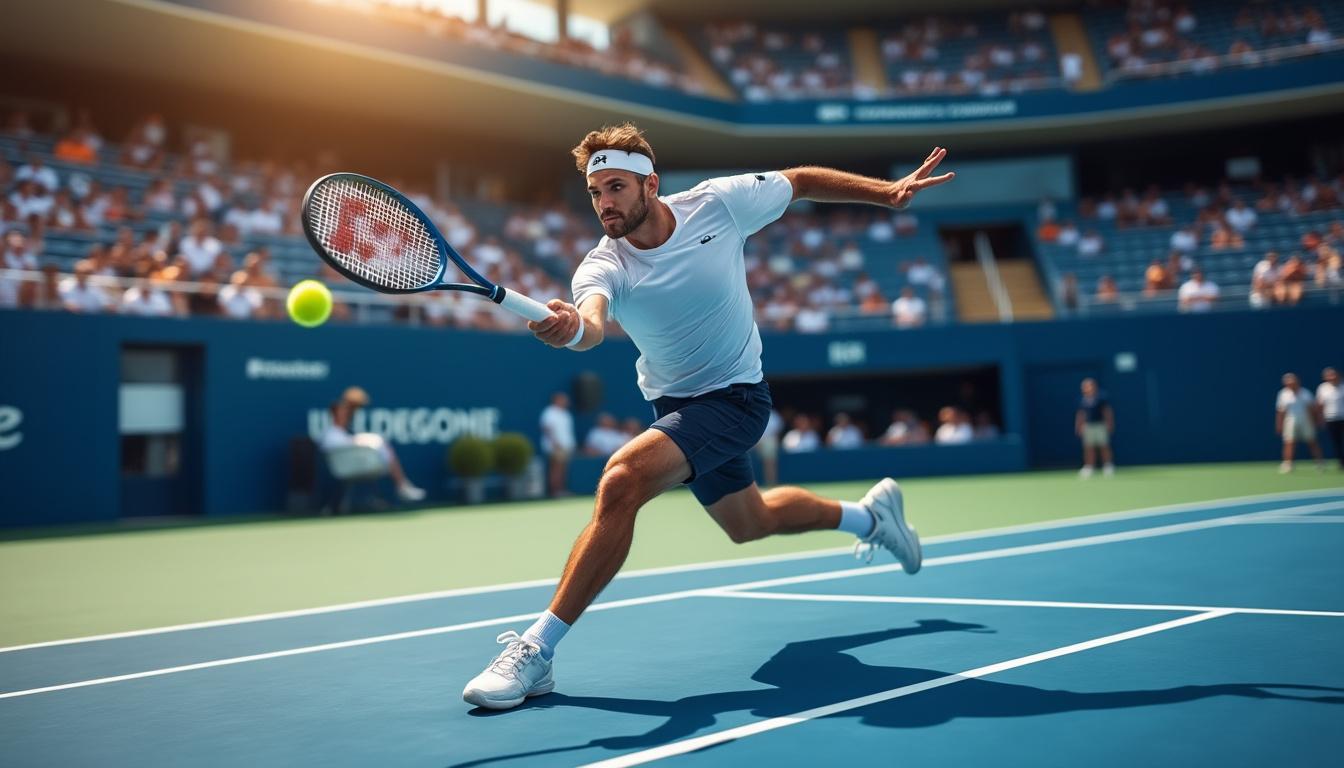
Strategic Shot Selection and Serve Placement: The Hard Court Playbook
Aggression paired with cunning defines shot selection on hard courts. Players know that controlling the ball’s pace and angle can turn the tide in a blink. Successful competitors weave together a diverse arsenal of shafts, blending flat serves with sharp spin variation and intelligent placement to unsettle their opponents.
The serve is the cornerstone of hard court dominance. In 2026, we see players leveraging improved biomechanics and data analytics to optimize serve placement for maximum disruption. Precise serves aimed at the corners or body doubles as a tactical weapon, often leading to quick points or weak returns ripe for aggressive attacks.
Equally critical is adapting shot selection based on real-time court positioning and opponent tendencies, a skill sharpened through rigorous hard court tennis techniques. Lower-bounce characteristics and medium ball speed reward both sharp cross-court winners and well-timed drop shots that exploit the opponent’s positioning.
Players master a dynamic balance:
- Deep baseline strokes to dictate rallies and force errors.
- Varied spins to change ball trajectory and challenge opponent timing.
- Surprise angle shots to shift court positioning and open shooting lanes.
- Strategic drop shots and lobs to mix rally rhythms and capitalize on opponent weaknesses.
These tactical choices transform the hard court into a chess match where every shot signals a new threat or opportunity. The ability to predict opponents’ movements and adjust serve placement accordingly shows up in detailed match data like at the Comprehensive ATP Match Reports, highlighting momentum shifts driven by serve strategy.
Physical Endurance and Rally Patience: Winning the War of Attrition
Hard courts are brutal on the body and mind, calling for elite physical endurance to thrive through extended rallies without dropping intensity. Each sharp pivot and explosive return chips away at players’ stamina, making recovery and conditioning non-negotiable.
Long rallies test not only physical limits but also mental endurance. Successful players cultivate rally patience—knowing when to stall, defend, and when to unleash power shots. This ability prevents rash errors and structures points to wear down opponents over time.
Conditioning programs for hard court specialists are no longer generic. Training focuses sharply on building:
- Explosive leg strength for quick court coverage.
- Core stability to maintain body control during intense directional shifts.
- Cardiovascular fitness tuned for high-intensity intervals and short recovery.
Examples of this approach abound in the 2025 WTA season, where finalists often credited their success to superior physical scaling designed specifically for hard courts—a topic closely linked to insights on injury predictions and prevention.
Without sustained physical conditioning, even the sharpest tactical mind falters under the grind of relentless baseline slugfests. Endurance is the backbone of turning tactical plans into consistent victories.
Key Equipment Choices Influencing Performance on Hard Tennis Surfaces
The right equipment fosters peak hard court performance by enhancing stability, power, and durability. Advances in footwear technology are pivotal, with shoes engineered for maximum shock absorption and grip on abrasive surfaces to support optimal movement and reduce injury.
In 2026, players gravitate toward shoes featuring cushioned midsoles and robust outsole patterns to balance traction and comfort. Leading brands like Nike and New Balance continuously innovate materials to extend shoe lifespan amid harsh play conditions and to cushion joints against impact stress common on hard courts.
Likewise, racquet technology has evolved, offering a broad spectrum from high-powered frames favoring aggressive returns to balanced models enabling refined spin variation and control. Choices in string tension also reflect tactical preferences, with slightly higher tensions improving precision and lower tensions offering more power and spin.
Protocols for equipment selection include:
| Equipment Aspect | Player Benefit | Top Brand Examples |
|---|---|---|
| Shoe Cushioning & Traction | Reduces joint stress, improves movement stability | Nike, New Balance, Asics |
| Racquet Frame Weight | Balancing power and control for baseline dominance | Wilson, Yonex, Babolat |
| String Tension | Enhances shot control or spin, tailored to play style | Professional Stringing Shops |
Upgrading gear in line with hard court demands can be a game-changer, ensuring that tactical prowess is not compromised by equipment limitations. Seasoned players frequent in-depth guides such as the latest gear reports to stay ahead of equipment trends and innovations.
Smart Tactical Approaches and Mental Resilience on Hard Courts
The mental battlefield of hard courts calls for adaptable tactics and rock-solid composure. Players often face pressure cooker moments where shot selection, footwork, and court positioning intertwine closely with psychological toughness.
Adapting to fluctuating match dynamics demands quick mental recalibration. When opponents exploit aggressive returns, adjusting to more defensive lobs or slicing to reset rallies can be the difference between victory and defeat. Mastery of this mental flexibility shines brightly in thrilling matches documented in sources such as the 2025 season’s matchday analyses.
Hard court success also hinges on maintaining calm amid unpredictable bounces or physical fatigue. Players consciously train mental endurance alongside physical with techniques ranging from mindfulness to scenario-based mental drills. This synergy supports sustained concentration and strategic decision-making under fire.
Key mental tactics include:
- Embracing the baseline grind with controlled aggression.
- Anticipating opponent patterns to execute timely counterattacks.
- Utilizing tactical rehearsals to prepare for various in-match scenarios.
The interplay of physical readiness, technical skills, and mental fortitude embodies the hard court challenge, pushing players to their limits and igniting unforgettable tennis battles.
How do players adjust their footwork specifically for hard courts?
Players focus on explosive but stable footwork, practicing acceleration drills and controlled slide techniques adapted for the firmer and less forgiving hard court surface.
What types of shot selections are most effective on hard courts?
A mix of deep baseline strokes, spin variations, strategic drops, and angles keep opponents off balance and control the pace on hard courts.
Why is physical endurance crucial on hard courts?
Hard courts demand sustained intensity due to their medium-paced rallies and repetitive impact, requiring players to develop cardiovascular fitness and muscular resilience to maintain high performance.
What footwear features are essential for hard court tennis?
Shoes with cushioned midsoles and durable, traction-optimized outsoles are critical for stability, shock absorption, and injury prevention on hard courts.
How important is mental adaptability during hard court matches?
Mental resilience enables players to navigate match momentum shifts, execute tactical adjustments, and remain calm under pressure—key factors in securing victory on hard courts.