

In the electrifying world of tennis, every inch of the court stakes its claim on the intense battles fought daily between players. The dimensions and lines of a TennisCourt aren’t just arbitrary markings—they are the battlefield boundaries that shape every rally, every serve, and every breathtaking point that keeps fans on the edge of their seats. From Wimbledon’s pristine grass courts to the hard surfaces that make Nike and Adidas gear slide and pivot with precision, understanding the court is the first step to mastering the game itself.
Imagine stepping onto the same court layout that legends like Federer and Osaka have battled on—precise dimensions that test skill, strategy, and stamina. For newcomers, grasping these fundamentals opens the door to appreciating the sport’s finesse; for seasoned players and brand aficionados like those loyal to Wilson, Babolat, and Yonex, it’s the canvas where athletic artistry unfolds. Dive deep into the anatomy of this arena, uncovering how every line and measurement fuels the drama of tennis at a global scale.
Comprehensive Breakdown of Tennis Court Dimensions: Width, Length, and Surface
The foundation of any great tennis play starts with mastering the geometry of the court. A standard tennis court for singles matches stretches 23.77 meters (78 feet) in length and a width of 8.23 meters (27 feet). For doubles, that width broadens to 10.97 meters (36 feet), inviting a broader battlefield where teamwork and strategy blend intricately.
But the story doesn’t end with measurements alone. The type of surface—be it the booming hard courts favored in North America, the plush grass surfaces of England, or the slow clay courts cherished at Roland Garros—dramatically influences the game’s rhythm and player’s footwear choices. Brands like Asics and Nike have engineered tennis shoes specifically tailored to the traction demands of these varied surfaces, allowing players to electrify their footwork as they dance along these defined lines.
The Standard Tennis Court Layout
The court splits into two halves by the net, standing 0.914 meters (3 feet) high at the center, stretching the entire width of the court. Beyond the net, each side houses the service boxes, constructed by the service line, center service line, and the singles and doubles sidelines.
- Baseline: Farthest back boundary line where players often launch powerful groundstrokes.
- Service line: Located 6.4 meters (21 feet) from the net, marking the boundary of the service boxes.
- Center service line: Divides the service boxes vertically, ensuring service accuracy and fairness.
- Sidelines: Differentiate the singles and doubles play areas.
Each of these lines is a story in itself—a Wilson or Prince racquet in the hands of a player responds to the spatial demands these boundaries impose, whether it’s nailing a service into the right box or commanding the court’s width during a doubles clash. TennisGuide’s resources in advanced training techniques shed light on how mastery of positioning relative to these lines can be a game-changer.
| Dimension | Measurement (Meters) | Measurement (Feet) |
|---|---|---|
| Length (Singles & Doubles) | 23.77 | 78 |
| Width (Singles) | 8.23 | 27 |
| Width (Doubles) | 10.97 | 36 |
| Net Height (Center) | 0.914 | 3 |
| Service Line Distance from Net | 6.4 | 21 |
The Roles and Rules of Tennis Court Lines: Understanding Boundaries and Their Impact
Lines on a TennisCourt don’t just mark territory; they command the pace, tension, and eventual outcome of every duel that unfolds on them. The laws of tennis recognize and enforce these lines strictly, turning each “in” or “out” call into high-stakes moments.
The baseline acts as the fortress behind which players unleash groundstrokes and evaluate their opponents’ tactics. Cross it early during a point, and you risk a tactical disadvantage or a mis-hit. The sidelines mark the divide between singles and doubles play, and the slightest deviation beyond those boundaries spells a fault.
- Service box boundaries: Servers must land their ball within these confines to initiate the point fairly.
- Center mark: Crucial for positioning during serves, guiding players’ foot placement.
- Alley: Exclusive for doubles, creating a more expansive front court area that injects fresh strategies.
These lines are not mere paint; they integrate with the technology embedded in modern courts—client brands like Wilson and Head back advanced line-calling systems that eliminate guesswork, delivering fairness and edge-of-seat drama alike. By understanding these boundaries, players can fine-tune their strategies and fans can better interpret the game’s unfolding narratives.
| Line | Purpose | Impact on Play |
|---|---|---|
| Baseline | Defines the back boundary | Strategic launching point for groundstrokes |
| Service Line | Restricts service area length | Ensures fair service placement |
| Center Service Line | Divides service boxes | Dictates serve targeting |
| Sidelines (Singles) | Defines singles match width | Limits lateral movement |
| Sidelines (Doubles) | Defines doubles match width | Expands playing area for teamwork |
| Center Mark | Aids server’s foot positioning | Optimizes serve execution |
Tennis Court Surface Types: How Different Grounds Shift Game Dynamics and Gear Choices
The soul of the court lies beneath the feet—surface types don’t just influence play style; they dictate the fashion and function of gear choices from trusted names like Babolat, Yonex, and Asics. Each surface demands unique footwork, shot selection, and physical stamina, creating a diverse spectrum of tennis experiences worldwide.
Hard Courts: Typically made from asphalt or concrete with an acrylic surface, these courts offer a fast-paced game with predictable ball bounce. The surface durability aligns perfectly with the latest models of Wilson and Head tennis shoes, designed to cushion impact and provide grip for explosive movements.
Grass Courts: Remember the elegance of Wimbledon? That’s grass—a lush, natural surface yielding low, quick bounces that favor serve-and-volley tactics. Nike and Adidas tennis gear are often crafted with grass-specific soles that excel in traction and stability during sprinting and sliding moments.
Clay Courts: Known for slower ball speeds and high bounces, clay courts demand endurance and tactical ingenuity. Players must be nimble, sliding into shots with calculated grace. Shoes from Adidas and Asics that resist clay buildup and offer superior lateral support are crucial here.
- Each surface shapes training regimens and recovery strategies. Check out TennisGuide’s expert articles on effective warm-ups and injury prevention tailored to tennis surfaces.
- Prospective players should explore the best beginner gear customized to surface types.
- Keeping up with upcoming tournaments reveals how top players adapt their game to different courts.
| Surface Type | Characteristics | Impact on Play | Recommended Gear |
|---|---|---|---|
| Hard Court | Fast, predictable bounce | Favours baseline power play | Wilson and Head cushioned shoes |
| Grass Court | Low, slippery bounce | Encourages serve-and-volley | Nike and Adidas traction-focused shoes |
| Clay Court | Slow, high bounce | Demands endurance and slide control | Adidas and Asics lateral support shoes |
How Court Dimensions Influence Player Strategy and Movement
The precise measurements of a TennisCourt aren’t just numbers—they are the skeleton underpinning every strategic move, from fiery baseline rallies to delicate net plays. Every millimeter shapes how players along with their Babolat or Prince racquets choreograph their steps and swings.
In singles, the narrower width compels players to cover more ground vertically, triggering explosive advances from baseline to net. Doubles widen the battlefield and introduce alley dynamics that demand synchronized teamwork. The dimensions translate directly into physical demands and tactical decisions.
- Positional awareness: Players tailor their shot placement with acute attention to the sidelines and service boxes.
- Movement efficiency: Court length challenges stamina; mastering footwork drills elevates performance.
- Service tactics: Navigating the center mark enhances serve accuracy and deception.
- Net play: Restricted spaces on singles courts push players to perfect volley reflexes.
For those aiming to master these strategic nuances, TennisGuide offers invaluable insights through guides like forehand mastery and advanced training techniques that hone precision targeting and court coverage.
| Factor | Influence on Play |
|---|---|
| Singles Court Width | Requires focused lateral coverage |
| Doubles Court Width | Encourages team coordination and alley use |
| Court Length | Tests stamina and depth control |
| Net Height | Demands precision in shot trajectory |
Essential Tennis Court Maintenance: Surface Care and Line Marking for Optimal Play
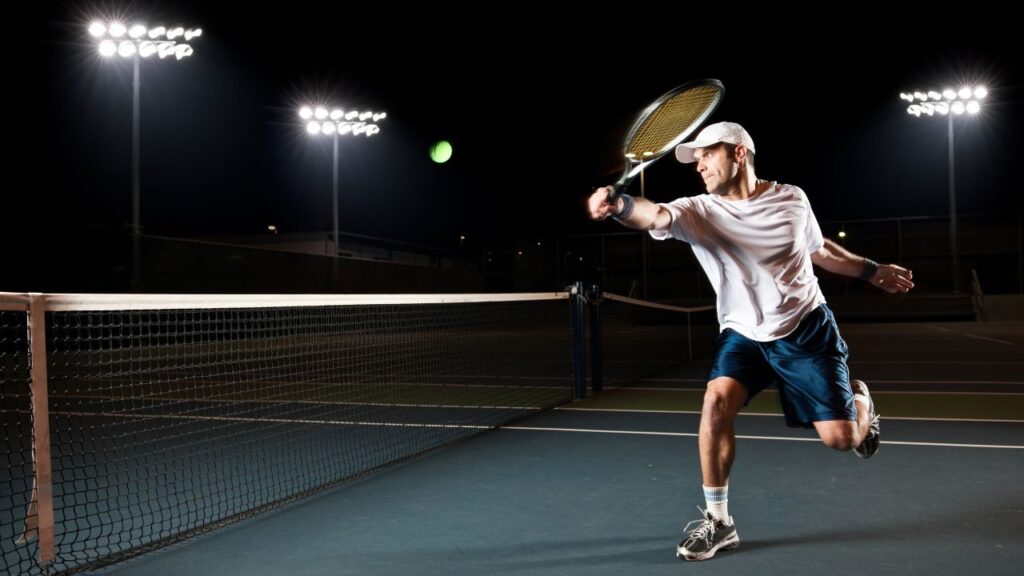
Beyond the drama and tactics, the physical TennisCourt demands consistent care to remain the stage worthy of champions armed with Yonex, Prince, and Wilson gear. Proper maintenance preserves surface integrity and ensures the vibrant lines remain the unerring guides for every ace, volley, and sideline contest.
Court caretakers—from club pros to municipal groundskeepers—engage in diligent routines:
- Surface cleaning: Removing debris, leaves, and dirt to maintain consistent ball bounce and player traction.
- Line repainting: Ensuring white lines stay crisp, visible, and regulation-compliant for clear line calls.
- Surface repairs: Addressing cracks, surface wear, and uneven patches, especially on hard courts.
- Grass maintenance: Regular mowing, watering, and soil aeration to keep grass courts playable at their best.
- Clay court rolling: Evenly redistributing clay for a uniform playing surface that supports sliding.
In 2025, technological innovations also complement traditional care. Smart sensors integrated with artificial intelligence monitor court conditions, providing data-driven insights on moisture levels and surface wear to optimize maintenance schedules. This precision is essential to keep players safe and the game fair.
| Maintenance Task | Frequency | Impact on Play |
|---|---|---|
| Surface Cleaning | Weekly | Ensures consistent ball bounce and traction |
| Line Repainting | Monthly | Keeps boundaries visible and regulation-compliant |
| Surface Repairs | As needed | Maintains even play surface, reduces injury risk |
| Grass Mowing & Watering | Twice weekly | Preserves healthy grass for ideal bounce |
| Clay Court Rolling | Daily | Provides uniform slide-friendly surface |
Frequently Asked Questions About Tennis Court Dimensions and Lines
- What are the official dimensions of a tennis court?
The standard tennis court measures 23.77 meters (78 feet) long. For singles matches, it is 8.23 meters (27 feet) wide and expands to 10.97 meters (36 feet) for doubles. - How high is the tennis net at the center?
The net height at the center is 0.914 meters (3 feet), creating the critical barrier for every serve and volley. - Why are tennis court lines important?
They define the playing field’s boundaries, guide players’ positioning, and determine valid points, maintaining fairness and structure throughout the game. - How do court surfaces affect play and equipment?
Surfaces like hard, clay, and grass influence ball speed, bounce, and player movement. This impacts gear selections, with shoe brands like Adidas and Asics designing surface-specific footwear. - How often should tennis courts be maintained?
Regular upkeep is vital: weekly cleaning, monthly line repainting, daily rolling for clay courts, and twice-weekly mowing for grass, preserving play quality and safety.