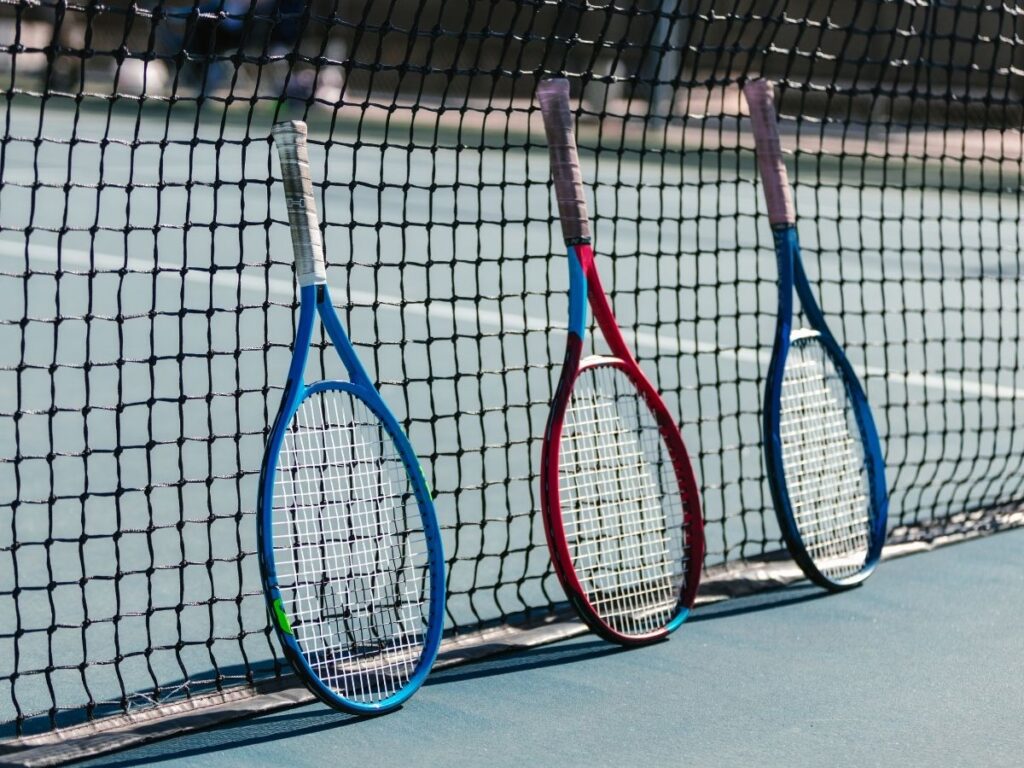
In the high-octane world of tennis, athletes are continuously seeking the edge that transforms a good player into a match-winning force. What if the secret to pushing through those grueling baseline rallies and abrupt serve returns lies not just in endless hours on the court, but in the strategic integration of high intensity interval training? This method, blending explosive bursts with measured recovery, mirrors the unpredictable rhythm of tennis matches and primes the body to sustain peak performance. From the rapid-fire ServeSprint drills to the endurance-sharpening RallyBurns, each tailored workout targets essential tennis attributes: agility, power, and stamina. Whether preparing for an important tournament or maintaining CourtCondition through the season’s ebbs and flows, these dynamic exercises guarantee a game that’s stronger from first serve to final point.

Optimizing Speed and Agility with TennisHIIT for Match-Level Performance
Speed is more than just quick feet—it’s anticipation, reaction, and explosive movement combining seamlessly under pressure. TennisHIIT, or high intensity interval training tailored specifically for tennis players, sharpens this vital triad by simulating the court’s demanding starts and stops. Unlike steady-state cardio, TennisHIIT features short-duration sprints mixed with active rest, eliciting improvements in both aerobic and anaerobic fitness, essential for those sudden dashes to intercept volleys or chase down deep lobs.
In practice, drills such as 30-second sprint bursts followed by 30 seconds of light jogging or dynamic stretching replicate the unpredictable pace of tennis rallies. This type of interval conditioning has been shown in recent studies to increase VO2 Max while decreasing recovery time between points—two critical elements for sustaining intensity in multi-set matches.
Key TennisHIIT Drills Include:
- FastServeFitness Sprints: Multiple 20-second sprints simulating explosive serve preparations interspersed with 40 seconds of walking.
- BaselineBlast Shuttle Runs: Short lateral movements covering court width, mimicking baseline exchanges, timed over several rounds.
- AceIntervals Ladder Drills: Combining footwork agility ladders with rapid direction changes to enhance quickness and coordination.
Each of these exercises demands high neuromuscular engagement, training the body and mind alike to react efficiently. Regular incorporation of TennisHIIT can lead to faster decision-making on court, an invaluable asset when players need to execute perfectly under pressure.
| Drill Name | Duration | Focus Area | Equipment Needed |
|---|---|---|---|
| FastServeFitness Sprints | 8 rounds of 20s sprint / 40s walk | Explosive speed and stamina | None |
| BaselineBlast Shuttle Runs | 5 rounds of 30s intense lateral runs | Endurance and lateral quickness | Cones or markers |
| AceIntervals Ladder Drills | 4 sets of ladder footwork combos | Agility and coordination | Agility ladder |
Discover more on enhancing your footwork and agility with drills specifically designed for tennis athletes at tennisguide.net.
Building Endurance and Recovery Capacity Through MatchPointFit Strategies
Endurance in tennis goes far beyond long-distance running. The game’s intermittent nature requires players to repeatedly summon near-maximal efforts followed by rapid recovery. Enter MatchPointFit strategies—intervals that mirror these surges and recoveries, helping players maintain peak output from the opening serve until that decisive tie-break point.
One favored approach entails circuits combining cardiovascular machines and body-weight exercises, alternating vigorous activity and brief respite periods. Popularized routines like the Mikko Triangle integrate rowing, skiing ergometer, and assault bike exercises in a continuous, high-intensity rotation to sustain cardiovascular demands akin to match conditions.
Implementing such routines not only improves stamina but also accelerates heart rate recovery, reducing the kinesthetic fatigue that often leads to lapses in focus and form.
Effective Endurance Drills for CourtCondition include:
- Row Your Boat: Intense rower intervals comprising 500-meter sprints followed by minute-long rests, repeated over eight cycles to boost aerobic capacity and recovery efficiency.
- Death by Burpees Challenge: Progressive rep increases each minute taxing muscular endurance and cardiovascular resilience simultaneously, closely echoing tennis’ cumulative fatigue.
- Interval Running with VO2 Max Focus: Structured track runs alternating distances with varying effort levels designed to enhance oxygen uptake capacity.
| Workout | Time/Repeat | Primary Benefit | Equipment Required |
|---|---|---|---|
| Row Your Boat | 8 rounds of 500m row / 1-minute rest | Aerobic endurance & recovery | Rowing machine |
| Death by Burpees | Until failure, increasing reps | Muscular & cardio endurance | None |
| VO2 Max Interval Runs | 3 rounds of mixed distances (400m to 100m) | Oxygen uptake and performance | Track or treadmill |
For additional tips on endurance conditioning specific to tennis, explore endurance drills curated for court athletes.
Comprehensive Core and Strength Workouts Amplifying ServePower and SmashSweat
Serving and smashing demand a powerful kinetic chain driven by core stability, shoulder strength, and lower body explosiveness. High intensity interval workouts crafted to reinforce these elements pay dividends by increasing ServeSprint velocity and reducing injury risk. This is where skillful integration of functional strength exercises with interval timing proves invaluable.
Workouts focusing on medicine ball drills, kettlebell swings, and plyometric jumps—targets for muscles tied to explosive tennis strokes—complement interval runs and circuits. The Karen workout, for instance, involves performing 150 explosive wallball throws, perfect for building upper body power, rapid hip extension, and endurance with an emphasis on squatting mechanics.
Strength and Core Interval Exercises for Tennis Players:
- Wallball Karen Challenge: 150 medicine ball squat-throws against the wall as fast as possible, emphasizing form and explosive power.
- Kettlebell Swing Intervals: 40 seconds of swaying focus on hip drive, followed by 20 seconds rest repeated over multiple rounds.
- Plyometric Drill Finisher: Combines jump squats, box jumps, and lateral bounds to elevate explosive strength and quickness.
Adopting such exercises with a tennis-centric approach fortifies the entire muscular framework deployed during serves and aggressive baseline play. These preparations can be refined further by reviewing professional routines at tennisguide.net.
By coupling CourtCondition-focused cardio with this suite of muscle-engaging moves, tennis players forge durability and power capable of withstanding strenuous match play while enhancing SmashSweat endurance levels.

Maximizing On-Court Conditioning with FastServeFitness and RallyBurn Combinations
Translating off-court conditioning gains onto the tennis court demands specificity—fast twitch muscle recruitment combined with sustained tactical execution. FastServeFitness and RallyBurn routines unite these goals by pairing quick-footed interval work with on-court movement patterns and shot simulations.
For example, short bursts of lateral sprint drills integrated with recovery on the baseline simulate the intermittent pace of a match. Incorporating resistance bands or weighted vests enhances muscular endurance and CourtCondition, giving players the stamina needed to maintain focus and explosiveness deep into matches.
On-Court Interval Training Essentials:
- Resistance Band Agility Drills: Improves hip mobility and accelerative power through multi-directional runs.
- Weighted Vest RallyBurn Circuits: Enhances cardiovascular capacity and leg strength with controlled shot execution between intervals.
- Serve-and-Run Combo Drills: Combining explosive serves with immediate baseline sprints to mimic real match pressure.
| Drill | Description | Duration | Focus |
|---|---|---|---|
| Resistance Band Agility Drills | Multi-directional sprinting with bands | 5 rounds of 30 seconds | Hip mobility and acceleration |
| Weighted Vest RallyBurn Circuits | Shot simulation with weighted sprint recoveries | 4 sets of 2 minutes | Endurance and power |
| Serve-and-Run Combos | Explosive serve followed immediately by baseline sprint | 6 sets with rest | Explosiveness and cardiovascular fitness |
Players looking to elevate their court-based conditioning can benefit by exploring targeted footwork and tactical play at court geometry and tactical resources.
Integrating Recovery and Mental Agility for Holistic GameSetHIIT Success
Physical preparation peaks only when balanced with recovery and mental sharpness. The intensity of GameSetHIIT workouts demands dedicated recovery strategies to prevent injuries and sustain motivation. Foam rolling, dynamic stretching, and focused hydration maximize muscle repair and readiness for subsequent sessions.
Equally important is the mental agility developed through reaction drills and visualization techniques. Tailored HIIT reaction training enhances split-second decision-making, elevating in-game responsiveness and tactical prowess—essential ingredients in competitive tennis.
Crucial Recovery and Mental Focus Practices:
- Post-Match Foam Rolling: Encourages muscle relaxation and injury prevention following intense sessions (read more).
- Mental Toughness Circuit: Incorporate drills training focus and composure under pressure.
- Sleep and Hydration Optimization: Foundational for physical and cognitive restoration (details here).
By marrying physical conditioning with recovery and mental fortitude, players complete the GameSetHIIT equation—ready to meet the demands of tennis in 2025 and beyond with resilient bodies and razor-sharp minds.