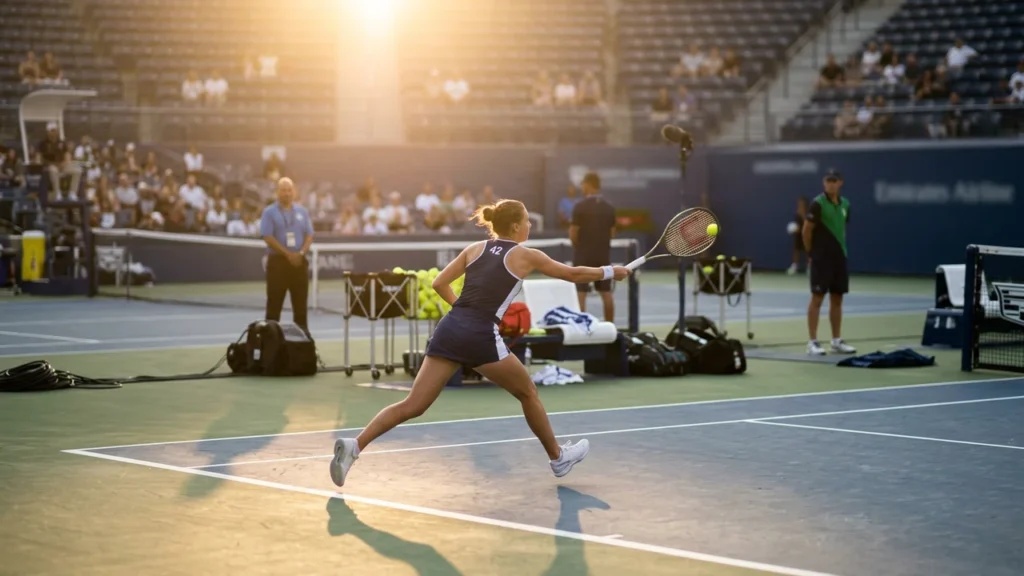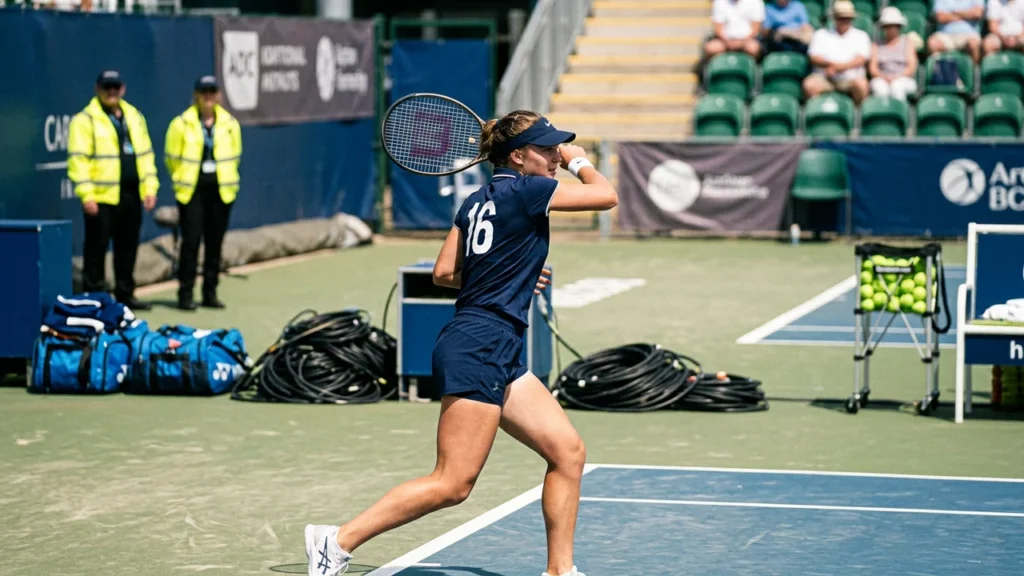
Hard court tennis finals often serve as intense battlegrounds where every shot carries weight, every rally tests resilience, and strategic shot selection can become the ultimate weapon for victory. The rise of advanced data analytics and interactive heatmaps has transformed how players, coaches, and fans understand these decisive moments on court. By examining shot selection heatmaps from recent hard court finals, it’s possible to reveal fascinating insights into player tendencies, weaponized angles, and pivotal strategies that define the modern game. The evolution of equipment brands like Nike, Wilson, and Babolat, combined with cutting-edge analytics, offers a detailed inside look at the mechanics behind powerful winners and clever defensive plays that stamp a champion’s authority.
From the blistering serves down the T to the subtle drop shots that catch opponents off-guard, shot heatmaps unveil not only where players prefer to strike but also how they adapt under pressure. As this detailed analysis unfolds, readers will discover the layers of tactical depth and athletic excellence that shape today’s finals on the unforgiving hard courts. Whether it’s the relentless baseline pounding from a Wilson or Head racquet, the inspired footwork supported by New Balance or Asics shoes, or the precise string tension calibrated for power and control with Yonex or Prince, shot selection intertwines the human element with technology and equipment in remarkable harmony.
Exploring these heatmaps also highlights the crucial influence of court positioning, shot type variety, and surface transitions, details every player must master to dominate at this level. This vivid exploration dives into the heart of high-stakes encounters where every angle, every spin, and every tactical choice paints a vivid picture of the battle for glory on blue and green hard courts globally.
Mapping the Strategic Landscape of Hard Court Finals Shot Selection
Shot selection in hard court finals is a complex dance that balances aggression with caution. Players craft their offensive and defensive maneuvers by carefully considering the court’s layout, their opponent’s tendencies, and the physical demands of the surface. Recent heatmaps from high-profile finals depict zones of concentrated shot activity — typically near the baseline, service boxes, and occasionally in aggressive net incursions.
These maps reveal that the majority of successful shots in finals tend to cluster around the deep corners and the middle of the service line. This pattern reflects a fundamental strategy: pushing opponents wide off the court to open up space, followed by penetrating shots down the middle that cut off easy angles for counterattacks. The technology underlying these maps, built on extensive play-by-play tracking systems similar in concept to the analytic tools found in sports like basketball from Shotcreator or Hoopsalytics, measures shot frequency, success rates, and spatial distribution.
- Baseline dominance: Players exploit the natural rebound and bounce characteristics of hard courts to launch deep groundstrokes, typically with a Wilson or Babolat racquet optimized for power and spin.
- Service box precision: Effective server placement in the service box maximizes opportunities for aggressive first-strike tennis, with Nike and Adidas gear often preferred for their grip and comfort during explosive motions.
- Net approach tactics: Despite a baseline-centric trend, successful volleys and overhead finishes—utilizing racquets like Head or Prince—still appear in clusters near the net, indicating selective net rushes to surprise opponents.
Understanding this strategic shot placement offers new layers of appreciation for the interplay between player choices and court conditions. Fans and coaches can better grasp how equipment, player style, and competitive instinct converge to influence where winners happen most effectively.

Decoding Baseline Heatmap Patterns in High-Pressure Matches
The baseline has historically been the most contested battleground, especially on hard courts where the ball speed and bounce favor heavy hitters. Recent finals’ heatmaps show a significant concentration of shots just inside the baseline lines, revealing that players leverage both defensive retrievals and offensive drives in this zone.
These heatmaps emphasize the advantage of mastering movement and shot precision in this area. For instance, players equipped with shoes like New Balance or Asics exhibit enhanced footwork and stability, which translate to heightened shot control on the baseline. The superstars of the game who wield Yonex or Prince racquets capitalize on this positioning with aggressive topspin forehands and backhands lifted by advanced string technologies.
- Shot variety: Deep slices, spin-heavy forehands, and sudden flat drives are all employed to dissect opponent positioning.
- Tactical patience: Sustained rallies often force errors from opponents pressured by relentless baseline exchanges.
- Physical demands: Absolute fitness and mental resilience underpin the ability to execute under high-stress final match conditions.
| Zone | Shot Frequency (%) | Average Shot Success (%) | Common Shot Types |
|---|---|---|---|
| Near Baseline | 58 | 72 | Topspin Drives, Crosscourt Forehands |
| Service Box | 27 | 68 | Serve and Volley, Drop Shots |
| Net Area | 15 | 80 | Volleys, Overheads |
This data combined with the tactical acumen underlines why mastering baseline control remains essential for winning hard court finals and why players focus so keenly on perfecting their positioning.
How Equipment Influences Shot Selection and Player Performance in Finals
Equipment is an invisible ally shaping shot selection decisions during hard court finals. From racquets designed by Babolat and Head, known for their blend of power and control, to footwear innovations by Adidas and New Balance that enhance lateral movement and cushioning, players rely on cutting-edge gear to maximize their shot effectiveness.
Heatmaps not only show where players strike but implicitly reflect how equipment enables or restricts certain types of shots. For example, the twisted frames of Yonex or Prince racquets accommodate varied spin rates, allowing players to execute sharper angles or disguise drop shots. Similarly, the string technology worn tight or loose affects ball speed and control, a subtle but crucial factor in tight final matches.
- Shot speed enhancement: Stiffer frames contribute to faster ball velocity and more penetrating groundstrokes.
- Spin generation: Unique string patterns and tensions aid in putting heavier spins on serves and groundstrokes, helping balls bounce unpredictably on the hard surface.
- Footwork support: Superior shoe traction and cushioning reduce injury risk and enable explosive direction changes.
- Grip and control: Handle materials and design, influenced by brands like Lacoste and Wilson, enhance player grip crucial for executing precise shots under pressure.
| Equipment Type | Impact on Shot Selection | Brand Examples |
|---|---|---|
| Racquets | Power, Spin Control, Angle Creation | Babolat, Head, Yonex, Prince |
| Footwear | Agility, Stability, Injury Prevention | Nike, Adidas, New Balance, Asics |
| Strings | Ball Speed, Spin Effectiveness, Control | Wilson, Head, Babolat |
| Apparel / Grip | Comfort, Grip Stability | Lacoste, Wilson |
Surface-Specific Shot Selection: Why Hard Courts Demand Tactical Versatility
Hard courts occupy a unique position among tennis surfaces, offering a blend of speed, consistency, and physical strain that calls for multifaceted shot selection strategies. Unlike clay or grass, which each emphasize sliding or quick bounces, hard courts reward dynamic, all-court players who can shift tactics seamlessly. Insight into recent final matches reveals that players adapt their shot placement and types — from aggressive flat serves to topspin-heavy baseline exchanges — to exploit surface features efficiently.
Surface characteristics outlined in the tennis playing surfaces guide clarify why strategic shot selection is paramount. Hard courts, often appreciated for their reliable bounce, demand that players perfect their anticipation and stroke timing, as errors tend to be punished by the relentless speed of the ball. This presents opportunities to vary shots using lobs, drop shots, or angled volleys to break opponent rhythm.
- Consistency and pace: Ball speed on hard courts requires strong shot-making skills combined with patience.
- Placement over power: Smart players use heatmap insights to target opponent weak zones rather than relying on sheer force.
- Surface wear and conditions: Temperature and court maintenance can affect ball bounce, influencing shot selection throughout a match.
| Surface Type | Typical Bounce Speed | Shot Selection Tendencies | Recommended Footwork Drills |
|---|---|---|---|
| Hard Court | Fast-Moderate | Versatile shots, aggressive baseline play, selective net approaches | Surface transition footwork drills |
| Grass Court | Fast | Flat serves, quick volleys, slicing shots | Grass court movement drills |
| Clay Court | Slow | High topspin, drop shots, endurance rallies | Clay-specific drills |
Exploring these surface-specific nuances enhances understanding of why shot selection heatmaps are indispensable tools for tailoring final match strategies and improving training regimens specifically for hard court play.
Psychological Factors Affecting Shot Selection in Finals Pressure Cooker Moments
Tennis finals are framed not only by physical skills and surface dynamics but also by the intense psychological battles waged point by point. How players manage stress, control emotions, and maintain focus fundamentally influences their shot choices in those pressure cooker moments typical of finals.
Analyzing heatmaps alongside player body language and match tempo highlights patterns of risk-taking and conservatism. For instance, in critical tie-breaks, heatmaps often reflect tighter shot zones, emphasizing safer placements. In contrast, when chasing crucial breaks, players expand shot variety, targeting more ambitious angles or advanced drop shots supported by brands like Head or Wilson which offer stability in racket performance under pressure.
- Mental resilience: Confidence enables players to execute bold shots, while doubt tends to restrict shot selection to safer zones.
- Emotional control: Managing adrenaline surges affects timing precision and power modulation.
- Routine and consistency: Pre-point rituals, such as serve-return combos, help maintain mental equilibrium during tense rallies.
| Psychological Factor | Impact on Shot Selection | Training Tips |
|---|---|---|
| Stress | More conservative shot choices, reduced aggression | Stress management techniques |
| Confidence | Increased risk-taking, varied shot types | Visualization and shadow tennis drills (more info) |
| Focus | Precision placement, timing accuracy | Mental training for serve accuracy |
The complex relationship between mind and body underlines that comprehensive preparation goes beyond physical training. Future champions will harness psychology and technology to master shot selection and elevate performance in hard court finals.