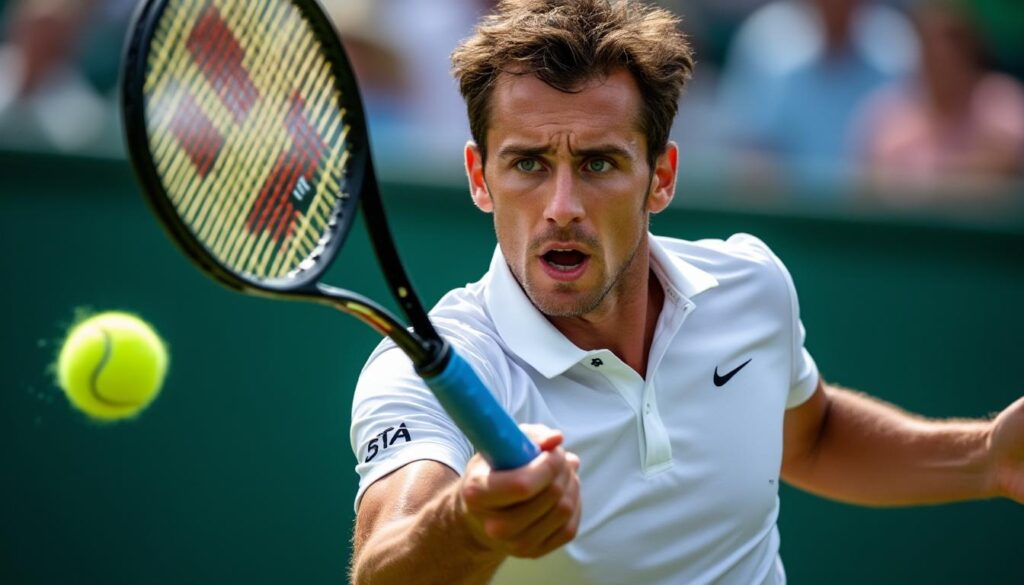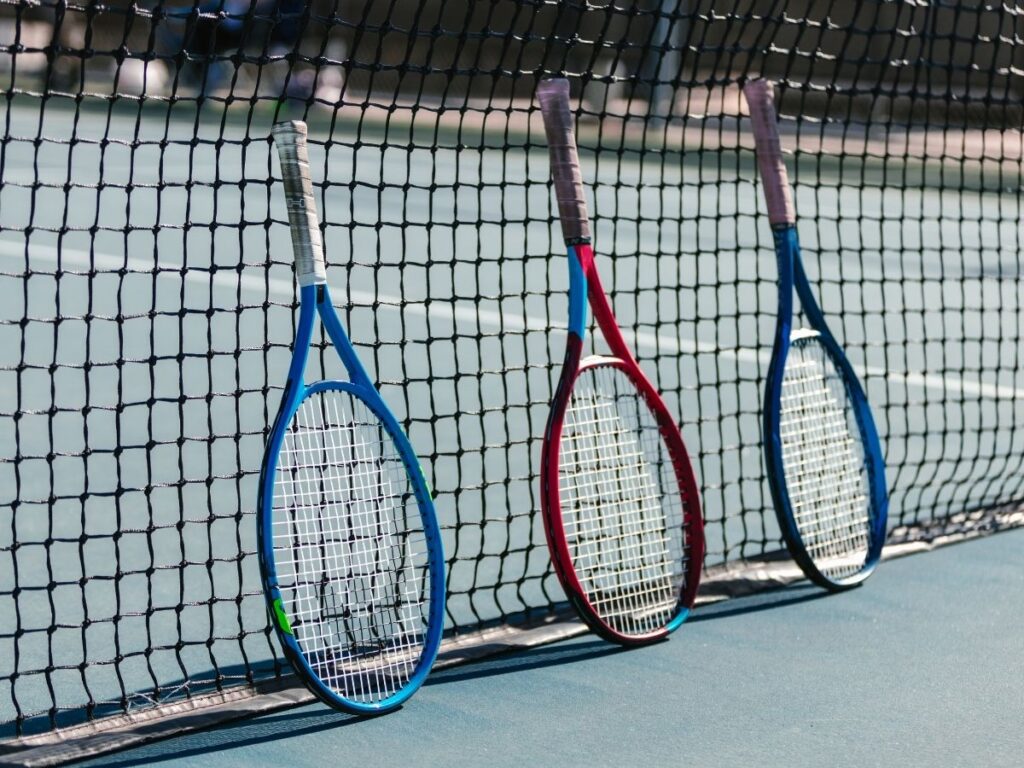
Tennis is a sport where the smallest adjustments can shape the outcome of a match and even a season. A hidden yet crucial factor that often determines success at elite levels is string tension in a player’s racquet. The 2024 Shanghai Masters and China Open in Beijing showcased dazzling displays of skill, and what stood out was not just the finesse or power but the science behind string tension preferences of the top pros competing. From Novak Djokovic’s precise balance to Carlos Alcaraz’s explosive spin, tweaking string tension has become a fine art, shaped by surface, climate, and personal style. Winning players understand the subtleties of these changes, unlocking an edge in both grand rallies and critical points.
In brief:
- Pro tennis players regularly adjust string tension based on court surface, weather conditions, and ball type to maximize control and power.
- Top names like Djokovic, Nadal, and Sinner demonstrate a range of tensions reflecting their distinct playing styles, often differing by a few pounds depending on the tournament.
- Technological advances and string materials from brands like Babolat, Luxilon, and Tecnifibre drive modern tension trends.
- Understanding these nuances helps amateur players experiment toward their ideal setup and improve their game significantly.
- String tension strategies vary also due to environmental factors such as temperature and humidity, affecting string behavior and performance.
Contents overview:
- Adaptive String Tension Strategies by Surface Type
- Weather, Temperature and Their Impact On String Performance
- Player Preferences and Equipment Choices from Shanghai & Beijing Insights
- The Science Behind Optimized String Tension Adjustments
- How Amateurs Can Learn From Pros to Find Their Perfect String Setup
Adaptive String Tension Strategies by Surface Type: Lessons from Shanghai & Beijing
Tennis courts are far from uniform; their speed, bounce, and interaction with the ball demand very specific string tension strategies. The hardcourt surfaces in Shanghai and Beijing are fast-paced, featuring medium to high ball rebound, which influences how professionals set their racquet tension.
Hard surfaces favor controlled power and bite. Consequently, many players choose a moderately higher tension in their racquets compared to clay courts where a bit more elasticity in strings can help with heavy topspin shots. For example, Novak Djokovic prefers 59 lbs on the mains and 56 lbs on the crosses with Babolat VS Touch and Luxilon Alu Power strings. This setup produces precise ball placement essential on these fast courts.
Meanwhile, Carlos Alcaraz’s slightly lower string tension — 55 lbs mains and 53 lbs crosses of Babolat RPM Blast — optimizes his aggressive topspin style combined with unpredictability, which is effective on the hard surfaces of these venues. His adjustment contrasts with Jannik Sinner’s more taut string setup with 61 lbs on both mains and crosses using Head Hawk Touch strings, underscoring individual stylistic needs even on similar courts.
- Hard courts (Shanghai/Beijing): Generally demand mid to high tension (55-61 lbs), balancing power and control.
- Clay courts: Slightly lower tensions help generate heavier topspin and softer touch.
- Grass courts: Often use lower tension to maximize power and slice effectiveness.
These values also mirror trends across top tournaments like the Cincinnati Masters and Wimbledon where players closely monitor surface response, tailoring tension changes to suit varying ball dynamics and footing.
| Player | Main String | Cross String | Main Tension (lbs) | Cross Tension (lbs) | Preferred Court Surface |
|---|---|---|---|---|---|
| Novak Djokovic | Babolat VS Touch (1.30mm) | Luxilon Alu Power (1.25mm) | 59 | 56 | Hardcourt |
| Carlos Alcaraz | Babolat RPM Blast (1.30mm) | Babolat RPM Blast (1.30mm) | 55 | 53 | Hardcourt/Clay |
| Jannik Sinner | Head Hawk Touch (1.30mm) | Head Hawk Touch (1.30mm) | 61 | 61 | Hardcourt |
| Emma Raducanu | Luxilon Alu Power Rough (1.25mm) | Luxilon Element (1.25mm) | 52 | 52 | Hardcourt |
Understanding how these professionals adapt string tensions based on surface type offers valuable insight. Players especially benefit from recognizing the influence of court speed and bounce on their shot-making. Surface-specific stringing knowledge is an essential weapon at the highest levels and an overlooked gem for recreational players seeking performance improvements.
Weather, Temperature and Their Impact On String Performance and Tension
String tension is not static; environmental conditions such as temperature and humidity can alter it significantly even during a single match. At venues like Shanghai and Beijing, where conditions can swiftly oscillate, players must have a flexible approach to string tension adjustments to maintain feel and consistency.
Heat tends to cause strings to lose tension faster. This results in a “softer” feel, less control, and unpredictability in spin generation. Many pros counteract this by stringing their racquets tighter before matches in warm climates. For instance, Naomi Osaka strings slightly tighter tensions around 59 lbs mains and 56 lbs crosses utilizing Yonex Poly Tour Strike and Babolat VS Touch strings to maintain racquet stability under heat stress.
Conversely, cold weather stiffens strings, reducing power and endurance, which can make hitting long rallies exhausting due to lost energy return. Players like Daniil Medvedev opt for lower tensions (around 50 lbs) in colder conditions with softer Tecnifibre Razor Code Soft strings to compensate for this stiffness and improve comfort. Maintaining string integrity during long baseline rallies—an area well-researched and highlighted in recent tournament analyses like WTA 1000 events—is critical for top-tier performance.
- Hot weather: String tension tends to drop during play; tighter pre-match stringing is common.
- Cold weather: Strings stiffen; lowering tension helps retain power and comfort.
- Humidity: Increased moisture can affect string grip and tension stability.
- Wind conditions: Influence string choice and tension as players seek stability for accurate shot shaping.
Wind and ball type also play significant roles in string tension choices. Players competing in windy Shanghai or Beijing conditions often prefer slightly higher tension for better ball control, enabling sharper ball direction changes in gusty environments. This interplay between weather and string specs is a dynamic aspect that pros master rigorously.
| Condition | Typical String Tension Adjustment | Performance Impact | Pro Example |
|---|---|---|---|
| High Heat | Increase tension by 2-3 lbs pre-match | Maintain control, reduce string slack | Naomi Osaka (59/56 lbs) |
| Low Temperature | Lower tension by 3-5 lbs | Boost power, maintain comfort | Daniil Medvedev (50/50 lbs) |
| High Humidity | Prefer durable strings; slight tension reduction | Consistency during rallies | Emma Raducanu (52/52 lbs) |
These careful tension calibrations are why string maintenance knowledge has become a top priority for athletes and coaches, often aided by high-end stringing machines and expert stringers found at professional tournament venues. For more in-depth info on stringing technology, see the resource on stringing machines.
Player Preferences and Equipment Choices from Shanghai & Beijing Insights
Equipment choice often reflects tension strategy. Manufacturers such as Wilson, Babolat, Head, Yonex, Prince, Tecnifibre, Luxilon, Solinco, Gamma, and Dunlop supply top players with tailored strings that complement their game and environmental demands.
At Shanghai and Beijing almost every player uses hybrid stringing setups, combining two different strings in mains and crosses to optimize spin, durability, and feel. For instance, Stefanos Tsitsipas uses Luxilon 4G on both mains and crosses at 57 lbs, aiming for a blend of control and touch suited for his aggressive baseline game. Meanwhile, Emma Raducanu’s rough Luxilon Alu Power mains combined with Luxilon Element crosses, both at a lighter 52 lbs, emphasize comfort and precision in her style, suitable for long rallies and quick ball placement as seen in her US Open and WTA matches.
The choice of string brand and gauge is also a fine balance. Thicker gauges like Babolat RPM Blast (1.35mm) as used by Rafael Nadal at 55 lbs mains and crosses help with spin durability. Conversely, thinner strings (1.25mm – 1.30mm) yield better spin potential but may sacrifice lifespan, a tradeoff many pros manage carefully during a grueling tour season.
- Hybrid stringing: Common trend mixing polyester and natural gut or softer strings.
- Gauge selection: Balancing durability vs. spin — 1.25mm to 1.35mm preferred by elite athletes.
- String brands: Babolat for spin and power, Luxilon for control, Tecnifibre for comfort, Yonex and Dunlop for specialized needs.
- Tension variances: Range from 50 lbs to 61 lbs based on play style, surface, and climate.
| Player | String Brand | Gauge | Tension (lbs) | Play Style | Tournament Example |
|---|---|---|---|---|---|
| Rafael Nadal | Babolat RPM Blast | 1.35mm | 55 mains/55 crosses | Heavy topspin baseline | Shanghai Masters |
| Naomi Osaka | Yonex Poly Tour Strike & Babolat VS Touch | 1.25mm | 59 mains/56 crosses | Power baseline with precision | China Open Beijing |
| Stefanos Tsitsipas | Luxilon 4G | 1.25mm | 57 mains/57 crosses | Aggressive baseline play | Shanghai Masters |
| Daniil Medvedev | Tecnifibre Razor Code Soft | 1.25mm | 50 mains/50 crosses | Defensive counterpuncher | China Open Beijing |
Such customized configurations underscore how string tension choices are inseparable from equipment preferences. Players often test strings extensively between matches, even adjusting tensions daily to combat fatigue and weather conditions, illustrating the fusion of technology, science, and art in top-level tennis.
For more expert guidance on tennis strings and tension setups, visit Tennis Strings Guide.
The Science Behind Optimized String Tension Adjustments: Biomechanics and String Physics
Diving deeper, string tension is at the intersection of physics and biomechanics. It affects ball speed, spin, control, and shock absorption upon impact. The string bed acts like a trampoline: tighter strings recoil faster but offer less dwell time for the ball, aiding control but reducing power. Looser strings increase dwell time for enhanced power but risk sacrificing precision and string durability.
Biomechanical studies demonstrate that slight tension differences can alter a player’s stroke mechanics subtly but significantly. For professionals enduring intense matches and long rallies, the right tension mitigates risk of repetitive strain injuries by optimizing force transfer and vibration dampening. Players like Medvedev and Tsitsipas have adapted their tension preferences to minimize arm fatigue while maintaining explosive shot-making.
- Tight tension: More control, less power, ideal for precision and aggressive court positioning.
- Medium tension: Balanced power and control, suitable for versatile styles.
- Low tension: More power, increased comfort, preferred by defensive or counterpunching players.
Understanding tension also involves string material properties. Synthetic polys like those by Solinco, Gamma, and Dunlop exhibit varying elasticity and durability profiles crucial for selecting ideal tension under different play conditions.
| String Material | Elasticity | Durability | Recommended Tension Range (lbs) | Typical Player Use |
|---|---|---|---|---|
| Polyester (Babolat, Luxilon, Solinco) | Low to moderate | High | 50-61 | Baseline hitters, spin players |
| Multifilament (Tecnifibre, Gamma) | High | Moderate | 50-55 | All-court players seeking comfort |
| Natural Gut | Very high | Low to moderate | 48-54 | Players needing maximum power & comfort |
Tension optimization continues to gain importance, with innovators developing hybrid blends enhancing elasticity and control, a critical factor for pros facing grueling match schedules. Their stringing strategies ensure peak racquet responsiveness adapting to evolving game demands and environmental variables.
How Amateurs Can Learn From Pros to Find Their Perfect String Setup
Recreational players often overlook string tension as a key performance lever. Yet observing pros such as Carlos Alcaraz or Emma Raducanu reveals that small, systematic adjustments can unlock notable gains in power, spin, and comfort. Tailoring string tension to personal preferences and playing conditions is both an art and science worth mastering beyond buying the latest racquet model.
Start by experimenting within safe tension ranges aligned with typical professional use—generally between 50 and 60 lbs. Players should consider playing style:
- Aggressive baseliners: May prefer tighter tensions (~58-61 lbs) for precision and control, mimicking Jannik Sinner’s approach.
- All-court players: Should try medium tensions (54-57 lbs), balancing power and touch like Stefanos Tsitsipas.
- Defensive or counterpunchers: Benefit from looser tensions (50-54 lbs) improving power and reducing shock, in the style of Daniil Medvedev.
Climate sensitivity is also critical for amateurs playing in diverse locales. Warm, humid conditions suggest slightly tighter stringing to prevent excessive string loosening during play. Conversely, cold venues require reducing tension to maintain comfort and ball responsiveness. Regularly monitoring string performance and match feedback can emulate how pros continuously refine setups throughout tournaments.
- Consult reputable stringing guides such as these expert resources.
- Experiment incrementally, adjusting string tension by a few pounds at a time.
- Work with certified stringers who use precision tension machines to ensure consistency.
- Keep notes on performance differences across conditions and tweak accordingly.
Players can also benefit from hybrid string installations, mixing durable polyester mains with comfortable multifilament crosses to balance wear and playability. Brands like Prince, Wilson, and Gamma provide excellent hybrid string options for every budget.
Modern stringing technology combined with lessons from 2024 Shanghai and Beijing show how mastering string tension profoundly influences both elite and recreational tennis. Players willing to embrace this science-driven tweaking often find faster progress and greater joy on the court.