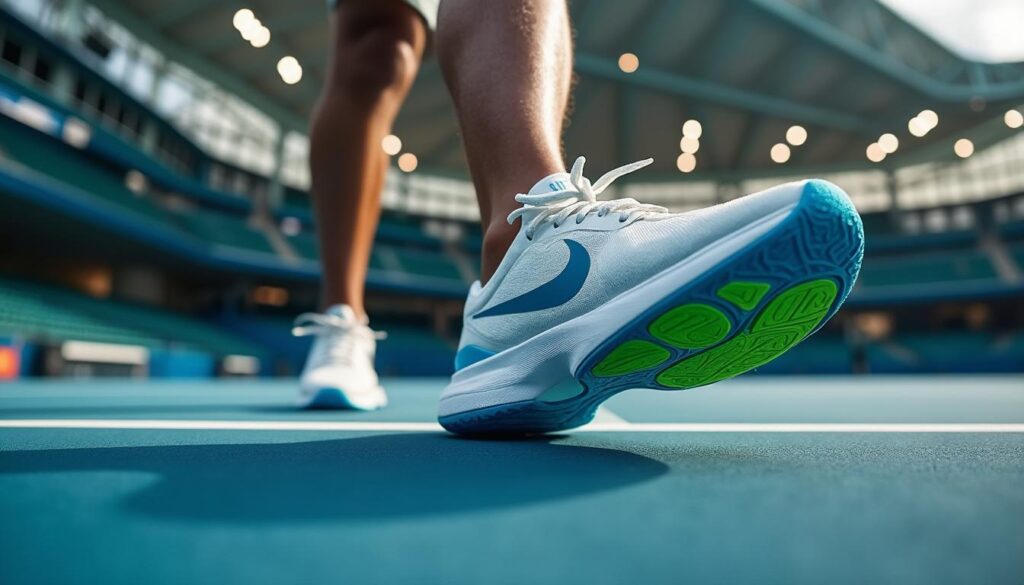
Indoor hard-court tennis presents a unique challenge—a blend of rapid ball speed and limited environmental variables that demands finely tuned equipment. The fastest hard courts inside a controlled arena mean shorter reaction times and intense exchanges, where every millimeter of string tension and every fraction of grip size can dictate victory or defeat. Understanding how to configure your racket, especially the string tension and grip choices, becomes the secret weapon to unlock peak performance in these conditions.
Key insights include:
- The paradox of string tension on fast indoor courts and why lower tension isn’t always better
- Player-specific grip size nuances that maximize comfort and control under speed demands
- How professional tennis athletes tailor their string tension to their playing style and speed of the surface
- Impact of string materials and racket models for indoor hard courts
- Training resources and gear innovations that complement the ideal tension and grip setup
Decoding the Perfect String Tension for Indoor Hard Courts
Indoor hard-court surfaces amplify the speed of ball rebounds, producing faster game dynamics unlike any other environment. The crux lies in balancing string tension to provide both control and power – a tightrope walk for players and stringers alike.
The default assumption has long been that higher tensions offer added control, especially on fast surfaces, since a taut string bed reduces the trampoline effect and limits ball dwell time. However, many pros are embracing a nuanced approach. For instance, players like Novak Djokovic, known for precise groundstrokes and control, string their rackets with tighter tensions—sometimes between 55-60 lbs—to sharpen accuracy. On the other hand, Hugo Gaston, famed for his crafty spins and touch shots, prefers lower tensions near 50 lbs to maximize dwell time, enhancing spin potential and power.
This duality reflects the surface speed and playing style relationship rather than a one-size-fits-all rule. Indoor hard courts reward quick reflexes and clean ball striking, and equipment must respond accordingly. Lower tension strings provide a softer, more forgiving feel, allowing aggressive players with fast swings to generate power effortlessly. Conversely, control-oriented players benefit from tighter tensions that sharpen their shot precision and minimize string movement.
Experts also stress that string material interacts dramatically with tension settings. Polyester strings, dominant in professional circuits, retain tension well but produce a stiffer response, making them ideal for crisp, controlled shots at higher tension. Multifilament or synthetic gut strings, softer by nature, allow greater spin and comfort for those opting for lower tensions indoors.
Many players experiment continuously, even within a season, to adapt to indoor tournament demands. String tension can shift based on temperature control—warmer indoor conditions may slightly loosen strings, prompting some pros to string marginally tighter as a strategic counterbalance. This fluidity underpins the evolving equipment meta for indoor hard court tennis.
For players seeking to optimize their gear, it’s advisable to consider personal playing style first: control versus power tendencies largely dictate the string tension sweet spot. By aligning tension with shot mechanics—be it heavy topspin or flat-replica strokes—players can seize faster conditions with finesse rather than brute force.

Choosing the Right Grip Size: How Small Differences Make Huge Impacts on Faster Courts
Grip size, often overlooked, is a crucial pillar in the indoor hard-court setup equation. Faster rallies demand quick wrist action, tight control, and shock absorption, all heavily influenced by the fit between hand and handle.
While standard grip sizes range from 4 to 4 5/8 inches, professional players’ preferences reveal compelling diversity. For example, Carlos Alcaraz’s unusual choice of grip size 4 on his Pure Aero 98 demonstrates that the “ideal” grip goes beyond typical trends, focusing instead on tactile feedback and response speed. A smaller grip size can facilitate rapid pronation and supination movements, ideal for the quick wrist flicks needed indoors.
Grip size influences fatigue and injury risks as well. Too large a grip taxes forearm muscles and constrains wrist mobility, reducing shot variety and increasing mishits on fast surfaces. Conversely, a grip too small can lead to over-gripping, tension buildup, and loss of fluidity. This delicate balance is magnified inside where points last seconds, not minutes.
Players should test multiple sizes and consider practical factors like sweat absorption and grip tackiness, which affect stability during intense fast-paced play. Upgraded grip wraps and customization—including variable thickness over the base handle—offer players more control over the feel without changing racket balance.
Proper grip fit not only enhances control over the racquet face during rapid exchanges but also diminishes vibration impact, protecting players from accumulating stress injuries, common indoors where hard surfaces rebound sharply. Addressing these factors with intentional grip size selection ensures every shot is delivered with precision and confidence.
How Pro Players Adjust String Tension and Grip for Faster Indoor Conditions
Elite professionals continuously tweak their setups to extract marginal gains, key in indoor hard-court events like the ATP and WTA indoor tours. This ongoing adjustment reflects an intricate understanding of how racket strings and grips influence stroke mechanics, ball control, and endurance.
One excellent illustration is the contrasting string tensions seen even among top players. Djokovic tends to use tighter strings for laser-focused placement, while a crafty spin artist like Gaston opts for a looser string bed for enhanced snapback and ball bite. This disparity demonstrates that string tension is a personal toolkit, shaped by game style rather than surface alone.
The grip story is equally fascinating. Grip size selection might seem static, yet players like Alcaraz break norms, embracing smaller sizes to meet their lightning-fast wrist needs during sharp indoor rallies. Grip changes within a season are rare among pros due to the importance of muscle memory and feel consistency, but subtle overgrip modifications are common to tweak handle thickness.
The popularity of classic rackets such as the Wilson Blade on the WTA tour, with players even using older models with refreshed appearances, signals the value placed on consistent feel over flashy new gear. This equipment loyalty translates to string and grip continuity, supporting reliable performance amid the chaotic pace of indoor matches.
Professional insights affirm that the best tournaments push athletes to experiment with string tension within a range of ±5 lbs, reacting to opponent style or court speed slight variations. Similarly, grip maintenance becomes crucial in these fast conditions, where quick grip changes or sweaty hands can severely impact shot quality. Having the right off-court gear and grips ready enhances readiness and adaptability for both amateurs and pros competing indoors.
Innovations in String Technology and Grip Materials for Indoor Play
The relentless pursuit of performance in indoor hard-court tennis has spurred significant advances in string composition and grip technology. These innovations offer players nuanced control over tension stability, comfort, and spin potential, all critical to thriving in fast, reflective court environments.
Modern polyester strings now incorporate hybrid fibers and coatings designed to maintain tension longer despite the rigors of indoor play. This resilience translates to consistent ball response throughout high-intensity matches, where every serve and forehand counts. Additionally, multifilament strings increasingly feature advanced elastomers that optimize shock absorption without sacrificing power:
| String Type | Typical Tension Range (lbs) | Main Benefits for Indoor Courts |
|---|---|---|
| Polyester (Coated Hybrid) | 53-60 | Durability & Control; Maintains tension well |
| Multifilament Synthetic Gut | 48-54 | Comfort & Power; Enhanced ball pocketing and spin |
| Natural Gut Hybrid | 50-57 | Optimal Feel & Resilience; Superior tension retention |
In parallel, grip materials now offer moisture-wicking layers and ergonomic shaping to reduce slippage and fatigue during indoor marathon rallies. Tennis enthusiasts increasingly favor grips that combine softer compounds with durable outer wraps that boost tactile connection without sacrificing longevity.
The boon of these material advances cannot be understated. Players entering indoor tournaments with such high-tech setups enjoy sharper control outcomes and greater consistency. For those looking to enhance their court performance, a combination of the right string type, tension, and grip material forms the cornerstone of a competitive edge. Curious about the latest racket trends to pair with these setups? The best tennis rackets of 2026 offer perfect complements to these innovations.
Complementary Strategies: Footwork and Conditioning for Fast Indoor Court Success
Even with perfect string tension and grip setup, indoor hard-court tennis demands exceptional footwork and physical conditioning to master the lightning-quick pace. Precise equipment choices must be paired with elite movement patterns and endurance to sustain performance through grueling exchanges.
Players training for faster indoor conditions increasingly prioritize dynamic footwork drills that enhance reaction times and lateral agility. This is essential for efficiently positioning oneself to strike the ball cleanly on the cushioned yet speedy court. Ground-speed drills focusing on split-step timing and explosive push-offs mimic match scenarios and minimize injury risks.
Beyond mechanics, the endurance aspect is crucial. Indoor matches are often intensely physical with fewer external fatigue factors like wind. Conditioning regimens integrating strength, mobility, and recovery protocols ensure that players maintain sharpness through multiple sets, reducing injury occurrences tied to repetitive impacts on unforgiving hard surfaces.
Here’s a detailed list of vital complementary practices to maximize setup benefits:
- Agility ladder and cone drills for improved foot speed and direction changes
- Strength training emphasizing lower limb power and core stabilization to maintain court coverage
- High-intensity interval training (HIIT) tailored for tennis-specific endurance
- Recovery routines featuring dynamic stretches and mobility workouts to enhance muscle elasticity
- Regular practice of strategic serve and volley points to exploit faster court bounces
For a deeper dive into footwork techniques that pair effectively with optimized equipment, check out specialized footwork training programs designed for tennis players. And don’t overlook the role of proper footwear in indoor environments to maximize traction and stability—explore the top tennis shoes designed for indoor courts to complement your setup perfectly.
What string tension range is recommended for indoor hard courts?
Most players find that a string tension between 50 and 60 lbs suits indoor hard courts depending on their style; tighter tensions favor control, while lower tensions provide more power and comfort.
How important is grip size selection in indoor tennis?
Grip size is vital because it directly impacts wrist mobility, control, and comfort during faster exchanges. Choosing the wrong grip size can lead to increased injuries and decreased shot precision.
Do professional players change string tension for indoor tournaments?
Yes, professionals frequently adjust their string tension based on risk factors like court speed, opponent style, and indoor environmental conditions to optimize performance.
Can players benefit from newer grip technologies indoors?
Absolutely, the latest grip innovations featuring moisture-wicking properties and ergonomic designs can significantly reduce slippage and fatigue during fast-paced indoor matches.
Are there specific footwork drills recommended for indoor hard-court play?
Yes, drills focusing on quick lateral movements, explosive push-offs, and reaction time training are essential for success on faster indoor surfaces.