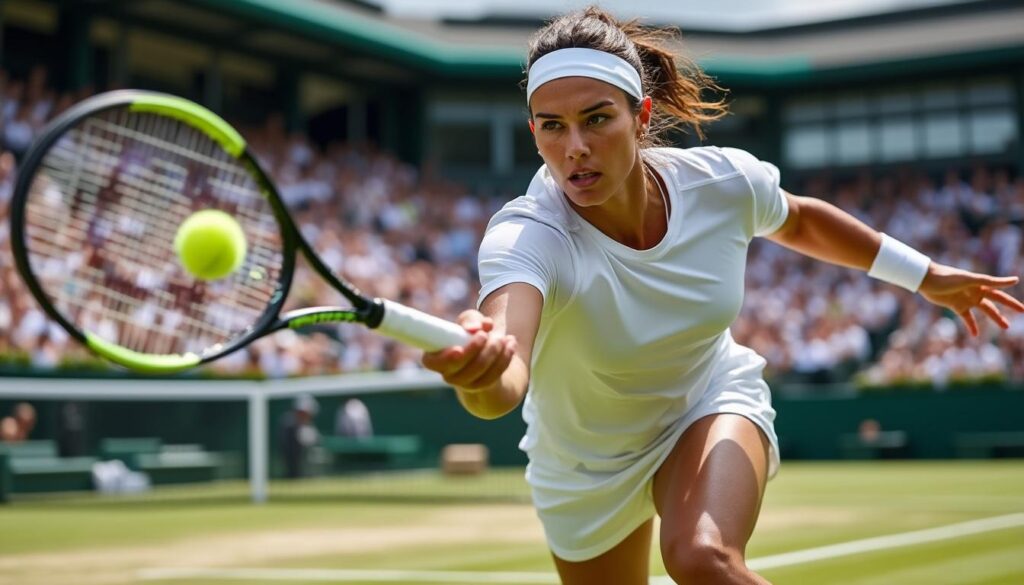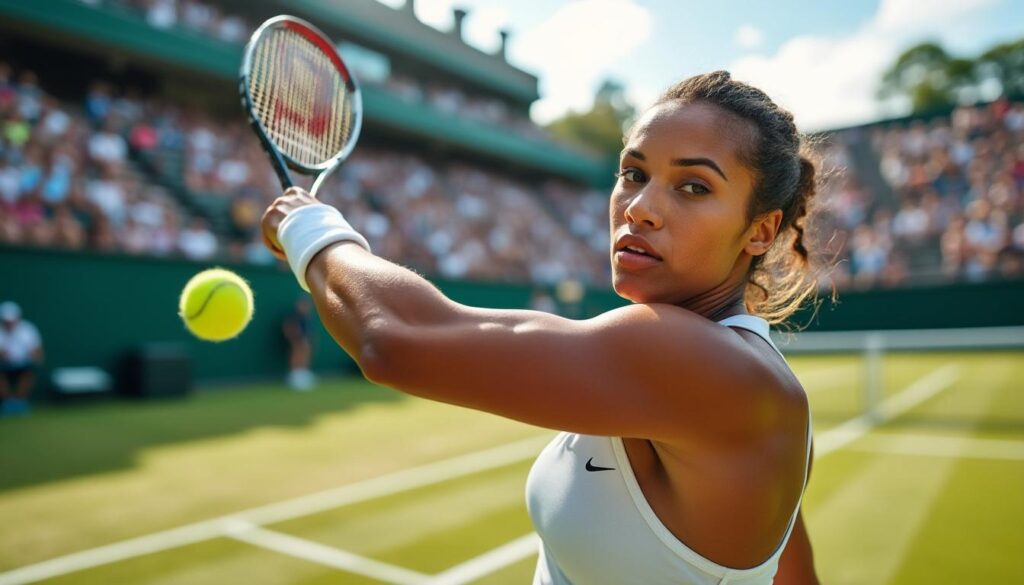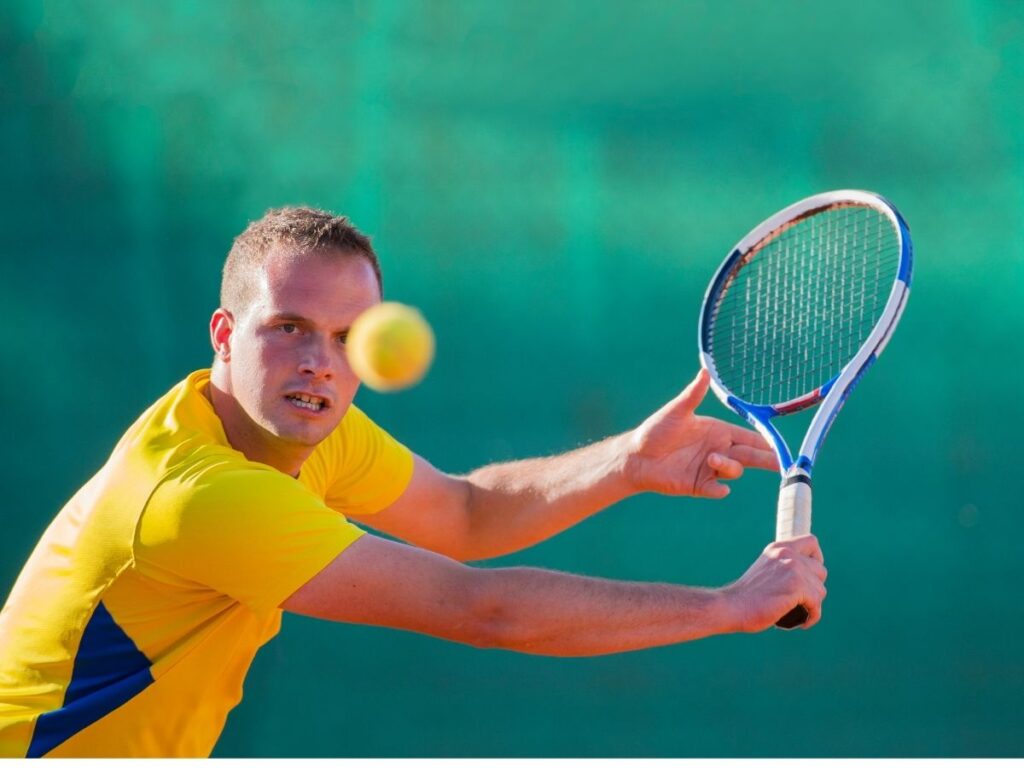
Jannik Sinner’s backhand is not just a stroke; it’s a weapon that transforms matches and sets new benchmarks for power, precision, and timing. His ability to accelerate the racket late, make early contact with the ball, adeptly redirect shots, and maintain impeccable depth control has captivated tennis fans and analysts alike. This blend of skills elevates Sinner’s two-handed backhand to elite status, showcasing why he consistently outperforms even the toughest opponents in the ATP Tour.
In the intense and competitive environment of professional tennis, understanding Sinner’s backhand can provide invaluable insights for players looking to enhance their game. This article dives deep into key components of his shot mechanics, explores the physics behind his acceleration, and highlights how equipment choices from leading brands like HEAD, Wilson, and Babolat complement his style to generate that lethal combination of power and control.
Key takeaways about Jannik Sinner’s backhand:
- Late acceleration in the swing increases racket velocity right through contact, distinguishing his stroke from many players who maintain constant speed.
- Early contact timing brings the ball closer to the body’s center of mass, enabling better control and faster recovery.
- Redirection skills allow Sinner to quickly change the ball’s trajectory, keeping opponents guessing and off balance.
- Depth control ensures the ball penetrates deep into the court, allowing Sinner to dictate the tempo and placement during rallies.
- Equipment synergy involving technology from Yonex, Tecnifibre, and Prince further enhances the stroke’s effectiveness.
The science of late acceleration in Jannik Sinner’s backhand
Acceleration vs velocity is a subtle yet crucial difference in the context of tennis strokes. Velocity measures how fast the racket moves and in which direction, while acceleration refers to how quickly that velocity changes. Jannik Sinner’s backhand excels because he doesn’t just swing fast; he accelerates his racket throughout the entire swing, reaching its peak speed late in the motion just before contact.
This late building of speed is what sets apart elite backhands. Many players achieve an early burst of acceleration, then sustain a constant velocity or even slow down slightly before contact. This results in shots that feel less explosive and lack maximum power.
Sinner’s approach begins with a deliberate “pseudo-preparation” phase. His hips and torso rotate to initiate early acceleration, but the racket itself starts nearly at rest. This generates a gradual increase in velocity that gains momentum as his arm uncoils. The final phase, from when the elbow passes the hip and advances forward, is lightning-fast, packing a punch as his chest muscles engage and propel the racket through the ball.
This entire kinetic chain – hips, torso, chest, arm, and wrist – is timed to perfection. It’s as if each link triggers the next at just the right moment, creating a smooth but explosive “slingshot” effect. The racket velocity spikes in the milliseconds before contact, delivering power with minimum wasted movement.
- Early acceleration starts as the hips and torso begin unwinding
- Velocity increases gradually at first because the racket starts near zero speed
- Explosive acceleration occurs during final milliseconds as the racket moves past the chest plane
- Engagement of pectoral muscles fires the final surge of power
- Finish with a full, fluid follow-through ensuring shot balance and control
| Phase | Frames Duration | Description |
|---|---|---|
| Pre-Contact | 11 frames | Rotational build-up, early acceleration, racket near rest |
| Contact Phase | 7 frames | Final acceleration, peak racket velocity, chest engagement |
Mastering this late acceleration concept can transform a backhand dramatically. Tennis players looking for deeper insights should explore mastering tennis strokes to pair biomechanics with practice strategies, complementing the natural talent seen in Sinner’s game.
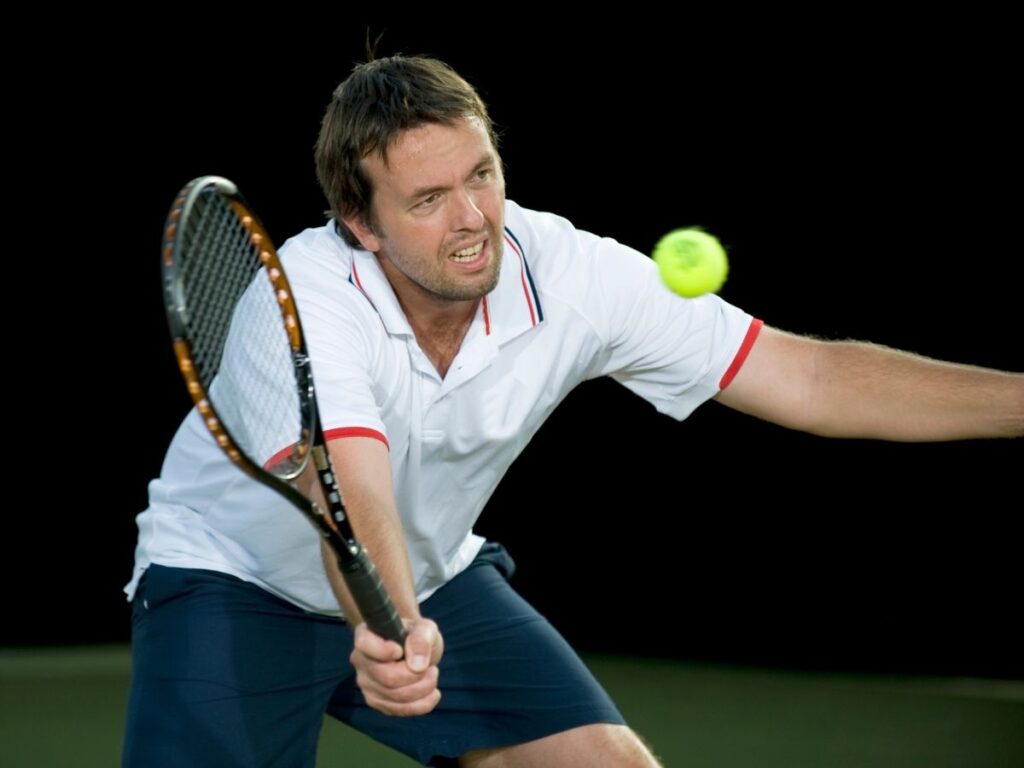
Early contact and its impact on control and power
Sinner’s early contact point is a crucial ingredient in his backhand’s consistency and effectiveness. Striking the ball earlier relative to the body allows for more controlled, compact swings, enabling rapid shot adjustment and quicker recovery for the next move—a vital edge in high-speed rallies.
This early point of contact happens close to the leading hip, where Sinner’s kinetic chain is at maximum readiness to transfer energy smoothly and powerfully. It minimizes the risk of ‘power leaks’ that occur when contact is too far out or too late, which often leads to slices or pushed shots.
Contrasted with players who contact the ball far in front or away from the body, Sinner’s compact posture helps him redirect balls with lightning-fast reflexes, often turning defense into offense seamlessly. This combination of early contact with late acceleration creates a torque in the swing that rival brands like Solinco and Luxilon string technologies amplify by providing the spin and snap-back needed for optimal ball exit speed.
- Early contact improves shot consistency and control
- Reduces swing path length, increasing shot compactness
- Enables efficient kinetic energy transfer through optimal body alignment
- Shortens recovery time for the next ball
- Facilitates effective shot redirection and strategic placement
| Impact Factor | Early Contact Advantage |
|---|---|
| Power Efficiency | Maximizes kinetic energy transfer |
| Shot Precision | Improves directional accuracy |
| Recovery Speed | Accelerates repositioning |
| Spin Generation | Enhanced by combination with advanced string technology |
For players and fans intrigued by the mechanics of timing in tennis shots, additional drills and techniques on effective backhand timing can help harness better early contact instincts.

The art of shot redirection and variation in Sinner’s backhand
Jannik Sinner is not just powerful; he’s also a master at redirecting baseline exchanges with subtle yet devastating changes in ball trajectory. This ability to pivot seamlessly from power to precision keeps opponents on their toes, often making yard-by-yard tactics futile.
Central to this redirection is Sinner’s grip and wrist flexibility, which allows for quick alterations in racket face angles during contact. His semi-Western or modified Eastern grip, adapted from earlier tennis legends and combined with modern string setups from brands like Yonex and Tecnifibre, offers an optimal balance of spin and speed. Such control is especially useful when Sinner employs tactical shots such as cross-court angles, sharp down-the-line strikes, and sudden dropshots.
The skill to redirect efficiently involves:
- Maintaining racket speed while changing the racket face angle
- Using wrist mobility without compromising stability
- Applying spin to alter ball trajectory and bounce unpredictably
- Disguising shot intentions with consistent pre-shot positioning
- Reading opponent positioning to exploit weak zones on court
| Redirection Technique | Function | Example in Match Play |
|---|---|---|
| Wrist Flexion | Rapid change in racket face angle mid-swing | Sharp down-the-line in fast-paced rallies |
| Grip Adjustment | Fine spin modulation | Cross-court passing shots |
| Subtle Body Positioning | Shot disguise | Deceptive drop shots mixing pace |
| Timing Variation | Opponent disruption | Delayed contact to change rally rhythm |
In-depth video tutorials and slow-motion analysis reveal how players can develop such versatility for their backhands, and further details can be found in training materials focusing on backhand drills and variations.
Depth control: mastering ball placement and consistency
Alongside power and redirection, depth control is fundamental to Sinner’s backhand prowess. This is the skill of placing the ball at strategic distances within the opponent’s court, forcing them into defensive positions or creating openings for winners. In 2025, this aspect has become even more critical as baseline rallies lengthen and players seek to dominate with court positioning.
Sinner achieves such precise depth through a combination of:
- Consistent racket face angle through impact to control trajectory
- Optimizing string tension from rackets like those offered by Prince and Dunlop to balance power and feel
- Fine-tuning stroke tempo to adjust ball flight
- Physical conditioning ensuring stability and repeatability under pressure
- Mental acuity to assess opponent positioning instantly and react accordingly
| Depth Control Element | Benefit | Sinner’s Strategy |
|---|---|---|
| Racket Face Stability | Consistent trajectory and placement | Maintains steady racket head through contact |
| Optimal String Setup | Enhanced control and ball feel | Routines including frequent restringing to adapt to conditions |
| Adaptive Stroke Tempo | Variation in ball speed and bounce | Deliberate tempo changes depending on rally context |
| Physical Conditioning | Accuracy persistence during long rallies | Rigorous fitness and endurance training |
| Situational Awareness | Strategic shot placement | Real-time opponent positioning analysis |
Those interested in enhancing depth control should prioritize training exercises focused on precision ball placement and consistency, readily available in resources such as advanced footwork and stroke placement drills.
The role of equipment in maximizing Sinner’s backhand performance
While technique forms the foundation, the right equipment can amplify a player’s strengths. Jannik Sinner’s collaboration with top-tier brands such as HEAD and Wilson ensures that his rackets, strings, and shoes are finely tuned to the demands of his game. Modern tennis technology contributes significantly to his ability to accelerate late, achieve precise redirection, and maintain depth control under intense match conditions.
Sinner’s choice of rackets usually features a stiff frame optimized for power without sacrificing maneuverability. For instance, rackets from Wilson and HEAD incorporate advanced materials that efficiently transfer energy, enabling swift acceleration even when the player is forced into defensive positions.
String technology also plays a vital role. Innovators from Luxilon and Solinco develop strings offering enhanced elasticity, snap-back, and spin potential, integral to Sinner’s redirection skills and ball control. Precision is further enhanced by Tecnifibre’s blend of string tension and durability, allowing Sinner to maintain control longer into rallies.
Footwear and apparel, primarily from Asics, complement his movement efficiency. Improved traction and cushioning facilitate balanced, quick transitions during the demanding footwork required for early contact and recovery.
- Wilson and HEAD rackets provide optimized stiffness and maneuverability
- Luxilon and Solinco strings contribute to power, spin, and control balance
- Tecnifibre strings offer durability and consistent tension over playtime
- Asics shoes improve court stability and injury prevention
- Prince custom grip adjustments aid racket handling and swing feel
| Equipment Type | Brand & Technology | Impact on Backhand |
|---|---|---|
| Rackets | Wilson, HEAD | Enhanced early acceleration and swing speed |
| Strings | Luxilon, Solinco, Tecnifibre | Improved spin, snap-back, and depth control |
| Shoes | Asics | Facilitate footwork, balance, and quick recovery |
| Grip | Prince | Customized for superior racket control |
Players looking to refine their equipment setup should examine detailed reviews and latest innovations such as those found in the 2025 racket technology showcases to tailor gear choices to their playing style and physical needs.
By dissecting the nuances behind Jannik Sinner’s backhand acceleration, early contact timing, shot redirection, and depth management across different match scenarios, it’s evident that his success is a fusion of remarkable biomechanics, tactical intelligence, and state-of-the-art equipment. This combination positions him as one of the most exciting talents in contemporary tennis, reshaping standards for aspiring players worldwide.