In Brief:
- Mastering the split step significantly boosts your return game by sharpening reaction time to serves and positioning.
- Reading serving patterns from opponent tosses allows anticipation of serve spin, speed, and direction before contact.
- First ball return strategies shape the point early and force opponents into defensive modes.
- Practice drills incorporating varying speeds and spins—including innovative “two-ball” exercises—build split-second decision making under pressure.
- Flexibility and adaptability in positioning and shot selection are critical to successfully counter elite-level serving tactics.
- Pro players like Djokovic and Nadal demonstrate the power of compact returns and strategic court positioning that exemplify these return principles in action.
As the tennis season accelerates into its crescendo phase in late 2025, it’s clear that return of serve isn’t just a reactive shot—it’s a pivotal weapon. From the subtle timings of a split step to dissecting first ball serve patterns, this article dives deep into how novices and seasoned players alike can take command of the point immediately after the serve is launched, transforming what often seems like defense into an offensive opportunity.
Refining the Split Step: Timing and Tactical Execution for Superior Return Positioning
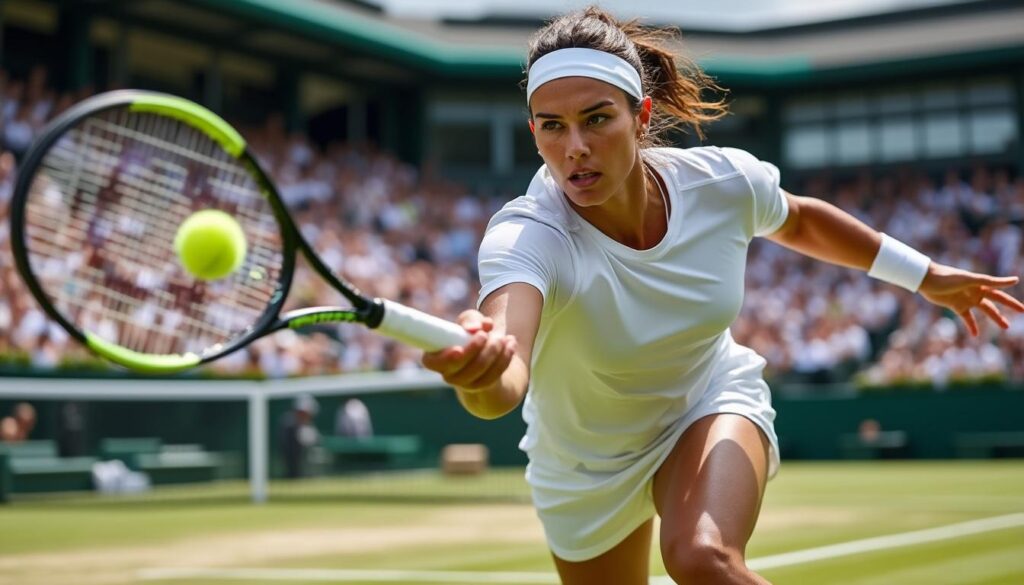
The split step is a deceptively simple but profoundly critical movement in tennis, often undervalued by recreational players but fiercely relied upon by professionals across the ATP and WTA tours. At its essence, the split step is a small, explosive hop performed exactly as the opponent makes contact with the ball during the serve, allowing for ideal balance, flexibility, and precise footwork necessary to react.
Proper execution begins with adopting a ready stance: feet shoulder-width apart, knees softly bent, weight balanced on the balls of the feet, and a relaxed grip on the racket held in front approximately near the waist level. Interestingly, some coaches advocate for a forward step or two before launching into the split step, a technique that injects momentum and rhythm, aiding a more forceful push-off in any direction. This dynamic preload translates into split-second advantage in foot speed.
A hallmark example is Novak Djokovic, renowned for his split step precision and fluid footwork, often landing in a staggered position facing the server directly. This stance facilitates rapid movement either forward, laterally, or backward, depending on the anticipated trajectory of the serve. The apex of the hop aligns exactly with the server’s ball contact, ensuring maximum readiness.
- Key split step components include:
- Timing the hop to peak at server contact
- Landing with a wide leg split and bent knees for stability
- Maintaining focused gaze on the ball toss and contact point
- Facing directly towards the server for optimal reaction angle
These technical details have been validated by recent SplitStep Pro training guides and invoke a blend of physical agility and mental focus that enhances server read accuracy. As players prepare for different serving styles, this foundational movement can mean the difference between a neutral or advantageous return.
Understanding and incorporating such a split step not only optimizes the return stance but also sets the tone for a proactive return strategy, turning defense into immediate offense by quickly positioning the body in alignment with first ball serve tendencies.
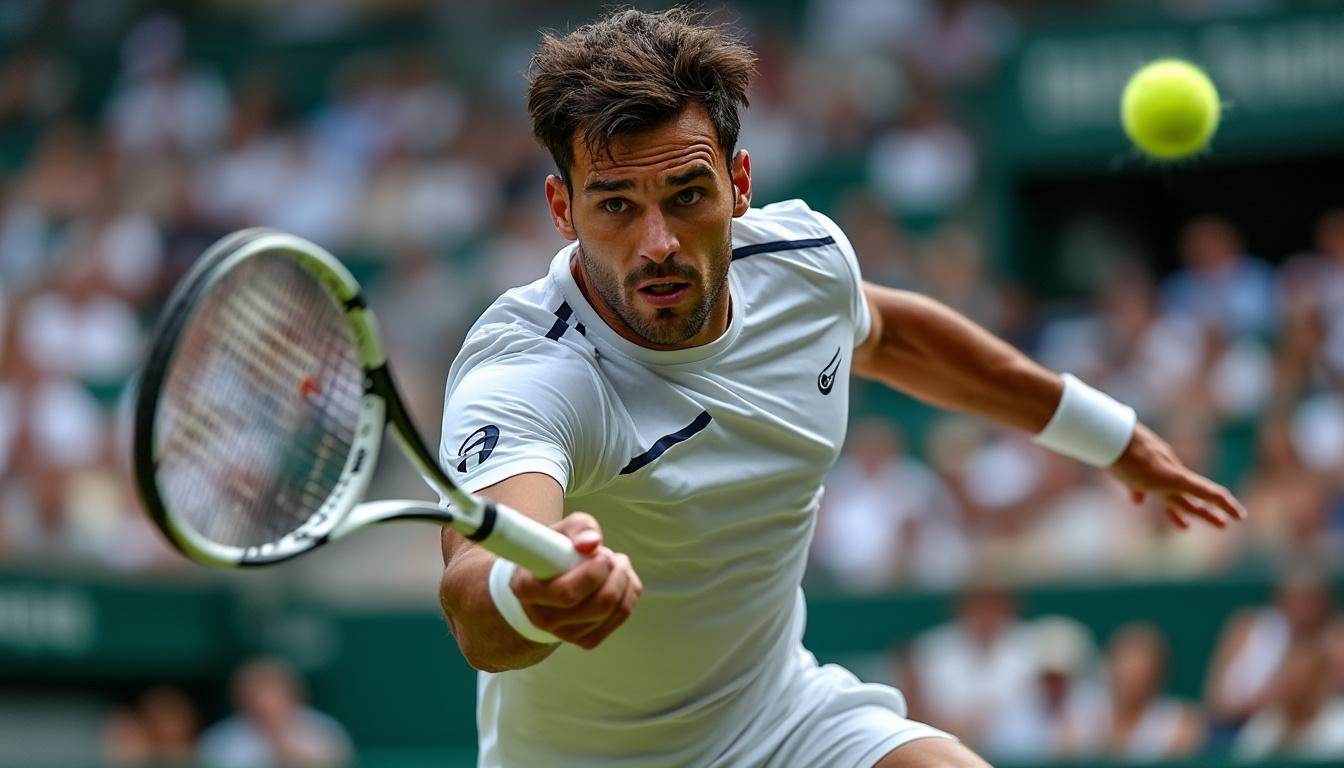
Decoding First Ball Serve Patterns: Enhancing Anticipation Beyond Speed
Every serve carries a story, and its subtle clues begin the moment the opponent tosses the ball. Top servers use nuanced ball toss height, angle, and shoulder rotation to disguise the intended type of serve—flat, slice, or kick—with these subtle revelations forming the cornerstone of anticipation and effective return placement.
For example, a toss hovering high and pushing behind the server’s head typically signals a forthcoming kick serve—characterized by topspin and a higher bounce—requiring a more closed stance and looser grip to absorb and redirect the ball’s upward trajectory. By contrast, a toss tilted forward or slightly to the dominant side often heralds a flat or slice serve, suitable for an open stance and firmer grip to take the ball early.
Such insights are not only theoretical. Players use drills under varying serve speeds and spins to internalize these visual patterns. Serving partners alternate between half-speed and full-pace first serves, mixing in slice and topspin variations. This diversity cultivates adaptability and trust in peripheral cues beyond raw reaction to ball speed.
- Critical visual cues to read first ball serves include:
- Height and angle of ball toss
- Server shoulder and racket preparation
- Ball trajectory at contact
- Initial bounce pattern and spin variation
Organized training sessions recommended by FirstBall Patterns Co. emphasize consistent observation of these components, scaling up from slow serves to adrenaline-pumping match pace. By mapping serve patterns during matches, players sharpen return decision quality and react with precision, turning the serve return into a tactical chess opening with every point.
| Serve Type | Ball Toss Characteristics | Recommended Stance | Grip Adjustments | Expected Ball Behavior |
|---|---|---|---|---|
| Flat | Moderate height, tilted forward | Open stance | Firm, stable grip | Direct, fast trajectory |
| Slice | Lower toss angled sideward | Open stance | Controlled grip to angle racket face | Side spin causing curve |
| Kick (Topspin) | High toss behind head | Closed stance | Loose grip to absorb bounce | High bounce with arc |
Such serve decoding is a secret weapon amidst growing serve speeds—the constant escalation in ball velocity on grass courts and synthetic surfaces explored in recent BallTrack Innovations research. Early anticipation and adjustment allow returners to respond not only with speed but with intelligent placement and shot selection, drastically impacting point momentum.
Case Study: How Top Returners Capitalize on Serve Insights
Novak Djokovic’s impeccable return game is a prime example. His “Return Ready” protocol integrates split step timing with instant recognition of server toss patterns via detailed pre-contact visual markers. By landing in a staggered stance and adapting his racket angle mid-motion, Djokovic turns powerful serves into opportunities to seize the attack, a fact highlighted in Serve Return Dynamics analytic breakdowns.
Similarly, the return positioning adjustments made by Rafael Nadal—which sometimes see him retreating yards behind the baseline to better absorb blistering serves—demonstrates tactical flexibility essential to absorb kick serves or bludgeoning flat deliveries. These positioning shifts enable him to transition the return into his customary heavy topspin groundstrokes, transforming defense into offense seamlessly.
Innovative Partner Drills: Two-Ball Exercises and Tempo Variations for Reactive Mastery
Mimicking high-pressure match scenarios through advanced practice drills is crucial in translating theory into performance. One drill gaining traction among elite coaches involves the “two-ball” serve return method, where the server launches two sequential balls at varying pace and spin. This unexpected dual-feed sequence forces the returner to maintain engagement beyond the initial strike, exercising split-second decision-making and stamina.
Structuring drills in graduated tempo phases—from half-speed serves for pattern recognition to full-velocity deliveries pushing physical limits—builds mental resilience and physical reactivity. Additional complexity arises by inserting slice and topspin variations unpredictably. This exercise is essential to cultivating a comprehensive return arsenal adaptable to any serving style or court surface.
- Components of effective return drills include:
- Randomized serve speeds and spins
- Immediate recovery and footwork after shot execution
- Maintaining visual fixation on opponent toss and ball trajectory
- Practicing varied return shots: chip, drive, slice, drop
Studies featured in QuickSplit Athletics emphasize that such diversified practice fosters not just physical ability but strategic adaptability, which is paramount to overcoming the increasing serve velocities witnessed in 2025 tournaments like the European Open 2025. Coaches recommend incorporating these complex drills regularly to simulate the chaos of match play and foster poise under pressure.
| Drill Phase | Focus Point | Expected Skill Outcome | Recommended Frequency |
|---|---|---|---|
| Slow Serve Phase | Recognize toss and body cues | Improved serve prediction | 2 sessions/week |
| Moderate Speed Phase | Adapt footwork to increases in pace | Smooth transition under pressure | 2-3 sessions/week |
| Full Serve Phase | Optimize reaction speed and shot selection | Confidence in match-paced returns | 1-2 sessions/week |
| Two-Ball Drill | Multi-tasking under stress | Enhanced stamina and decision making | Weekly |
Flexibility and Muscular Adaptation: Building a Tactical and Technical Return Arsenal
Flexibility — physical and tactical — defines modern tennis return mastery. Beyond muscle pliability, flexibility refers to having the breadth of shots, positioning, and mental agility to switch strategies mid-match. Recent techniques emphasize a “complete toolbox” approach, where a player’s arsenal includes power drives, slice shots, chip returns, and net rushes to counter any serving style.
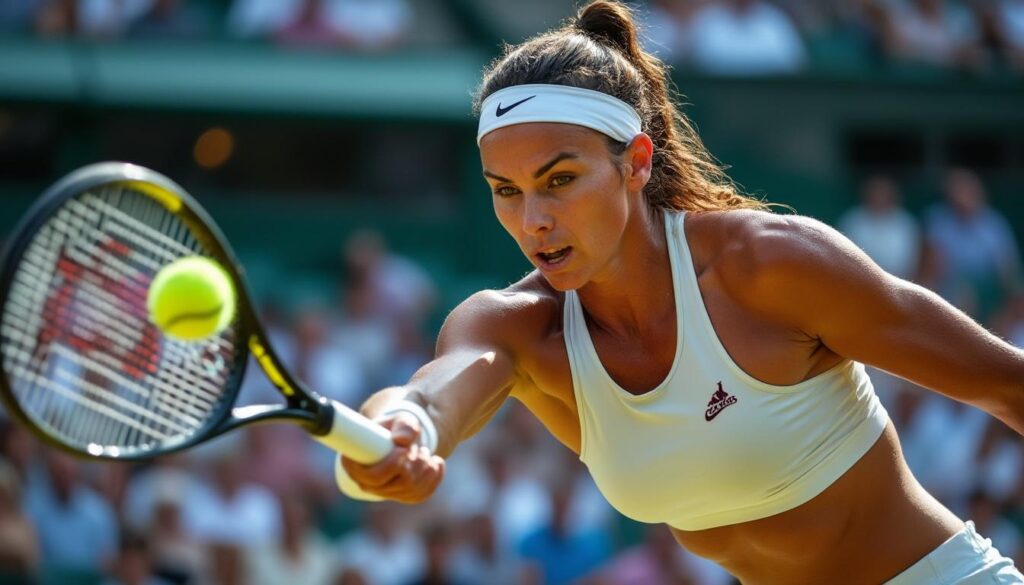
Unlike regular groundstrokes, returns require a distinct technique due to the faster ball speed (often 30-40% quicker) and less reaction time. Here, simplification rules. A compact, smooth stroke – as demonstrated by Djokovic’s return blueprint – introduces stability as the body negotiates unstable, high-speed surroundings.
- Essential tactical flexibility traits include:
- Adjusting return court position depending on serve speed and style
- Switching between aggressive drives and defensive chip returns
- Experimenting with grip and stance for variety and deception
- Recognizing and exploiting opponent’s weak second serves
For instance, if faced with a serve consistently exceeding 100 mph that challenges standard positioning, stepping back several feet—effectively slowing perceived ball speed by about 5 mph per three feet backward—grants precious reaction time. Conversely, stepping closer for weaker second serves or aggressive opponents enables taking balls earlier and applying pressure.
This principle aligns with insights from ServeMaster tutorials, which stress adaptability as vital to progress beyond baseline power reliance and elevate match-winning potential.
Successful application of these strategies demands endurance and mental discipline, with circuits combining shoulder stability exercises and mobility workouts fostering the physical resilience to maintain consistent returns throughout grueling matches.
Summary Table: Core Return of Serve Flexibility Techniques
| Technique | Description | When to Apply | Expected Benefit |
|---|---|---|---|
| Moving Back from Baseline | Increasing reaction time for high-velocity serves by retreating several feet | Facing top servers over 90 mph | Improved timing and shot preparation |
| Chip Returns | Backspin returns to neutralize power and create low, skidding shots | When drives yield errors or expose weak second serves | Enhanced control and variation |
| Shot Variation | Using drop shots, slices, and drives strategically to disrupt opponent rhythm | To surprise conditioned opponents | Psychological advantage and point control |
| Aggressive Positioning | Stepping forward to attack short serves or weaker second serves | Facing opponents with serve-and-volley style | Opportunity to seize early momentum |
How does the split step improve return timing?
The split step aligns your body in a balanced and ready position just as the server contacts the ball, allowing for faster directional changes and enabling more reactive and explosive footwork.
What visual cues help anticipate different serves?
Players can read the opponent’s ball toss height, angle, and shoulder rotation to predict a flat, slice, or kick serve before the ball leaves the racket, providing crucial early reaction time.
How do the ‘two-ball’ drills enhance return skills?
These drills simulate high-pressure situations by forcing the returner to handle two fast-paced balls consecutively, improving endurance, reaction time, and mental focus on unpredictable shot sequences.
Why is flexibility in return positioning important?
Adjusting your distance from the baseline expands reaction time on fast serves and allows you to adapt to varying opponent strategies, helping maintain consistent and effective returns.
Can tactical shot variety disrupt an opponent’s rhythm?
Yes, mixing chips, slices, drops, and drives prevents opponents from anticipating your returns, forcing them to react continuously and opening opportunities to control rallies.