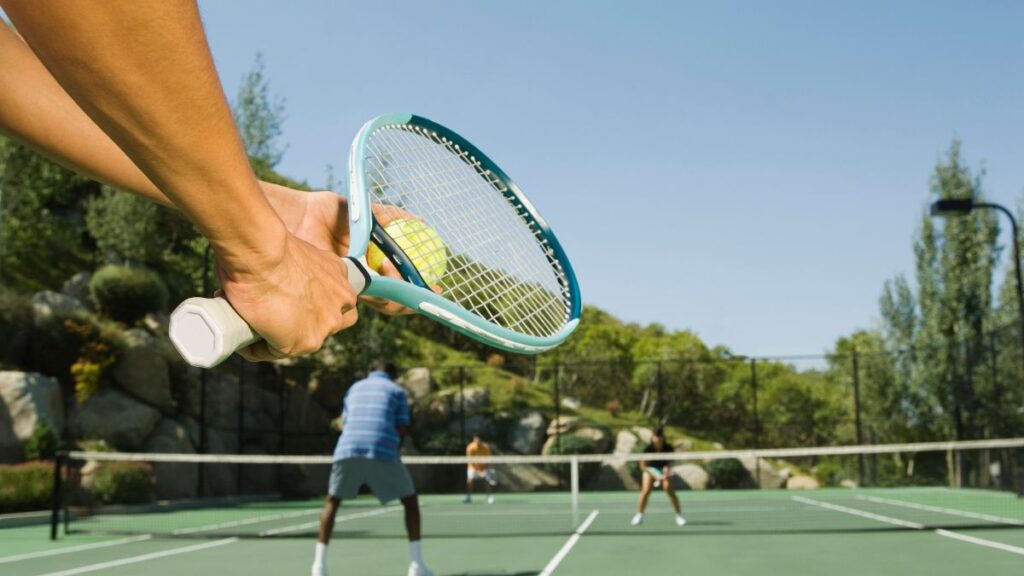
In the fast-paced world of doubles tennis, every fraction of a second counts. Unlike singles, doubles demand a unique blend of agility, power, and precision, where quick hands and sharp reflexes dictate the outcome. The gear that supports these players needs to match this relentless dynamism. As 2025 unfolds, the quest for the ideal tennis racket tailored specifically for doubles players has led to revolutionary advancements across brands like Wilson, Babolat, Head, Yonex, and Prince, among others. These rackets are engineered to offer a larger sweet spot for those stiff volley exchanges, lighter frames for swift reaction at the net, and innovative materials for enhanced power and control. Navigating this landscape can be overwhelming, but this guide dives deep into the features that set apart the best doubles rackets. From grip size to balance, and from cutting-edge string technology to ergonomic designs, every attribute matters. The right racket not only amplifies a player’s strength but also complements their strategy, ultimately turning net battles and baseline exchanges into decisive moments.
Key Features of the Best Tennis Rackets for Doubles Tennis in 2025
Doubles tennis demands equipment that can keep up with the rapid-fire exchanges and swift net play. Winning points often hinge on effortless maneuverability and a generous sweet spot more than sheer power. To this end, manufacturers have meticulously designed rackets that cater specifically to doubles play, focusing on attributes that give players an edge.
Lightweight Frames for Rapid Reflexes
In doubles, the proximity to the net and the need for quick volleys make a lightweight racket an absolute necessity. Rackets weighing around 10 to 10.5 ounces in strung weight strike the perfect balance — they’re easy to maneuver without sacrificing stability. Brands like Prince and Tecnifibre have championed lightweight graphite composites providing both nimbleness and resilience.
- Maneuverability Enhances Reaction Time: A lighter frame lets players intercept fast-paced shots with less arm fatigue, allowing for sharper reflexes during long rallies.
- Quick Swings at Net: Rapid changes in direction require rackets that can barely be felt in the hand, aiding finesse touches and drop volleys.
Large Head Size for a Forgiving Sweet Spot
The sweet spot size has emerged as a decisive factor for doubles rackets. Larger heads (typically 100 to 108 square inches) increase the margin of error during fast exchanges and allow players to generate powerful shots even on off-center hits. The HEAD Graphene 360+ Extreme MP, renowned for its open 16/19 string pattern, enhances string movement to create a powerful trampoline effect, yielding explosive returns even in split-second situations.
- Forgiving Shots: Enlarged head areas provide forgiveness on volleys and quick reflex shots.
- Optimized String Patterns: Open string patterns, featured on several models like the Dunlop and Yonex rackets, bring added spin and pop ideal for aggressive doubles tactics.
- String Tension Control: Innovations in string technology have improved control without sacrificing power, vital for the tactical volley exchanges in doubles play.
Balance and Weight Distribution
Balance refers to where the racket’s weight is concentrated. Doubles players often prefer head-light rackets for easier wrist snap and faster maneuvering at the net. However, some may opt for an evenly balanced racket to add mass behind their groundstrokes when covering the baseline. The Wilson Ultra 100 V3.0 embodies this philosophy, combining controlled heft and an enlarged sweet spot to deliver stability and power without compromising rapid volley responses.
| Racket Model | Weight (Strung) | Head Size (sq. in.) | Balance | Key Benefit |
|---|---|---|---|---|
| Babolat Pure Drive | 10.6 oz | 100 | Even | Explosive power with enhanced feel |
| Prince TXT Warrior 100 | 10.1 oz | 100 | Head-Light | Easy maneuverability and excellent control |
| Wilson Ultra 100 V3.0 | 10.8 oz | 100 | Even | Power with stability and enhanced sweet spot |
| HEAD Graphene 360+ Extreme MP | 10.9 oz | 100 | Even | Spin and power with innovative string tech |
To leverage these technical choices fully, doubles specialists often look toward expert tips on tactical play over court geometry, agility, and footwork drills which can be deepened via resources like court geometry tactical play guides, further enhancing on-court synergy and precision.
Performance Enhancements: How Modern Materials and Technologies Impact Doubles Play
Tennis rackets in 2025 have embraced cutting-edge materials like ultra-light nano carbon frames and flax fiber dampeners to reduce vibration and improve shot feel. These technologies not only improve the player’s comfort but have a tangible influence on shot execution and endurance during tense doubles matches.
Ultra-Light Nano Carbon Frames
Many models from Babolat, Wilson, and Tecnifibre incorporate nano carbon composites that achieve exceptional weight reduction without compromising strength. This means players can swing faster and react quicker to volley shots, particularly at fast-paced net exchanges common in doubles. The reduced inertia enables swift directional changes on returning sliced or angled shots, which is critical when your partner covers half the court.
- Speed Meets Strength: Variables like beam thickness and carbon layering optimize both racket stiffness for power and flexibility for control.
- Injury Prevention: Lightweight yet structurally sound frames help alleviate strain on the arm, essential for players who engage in extensive tournament schedules.
Low Vibration Dampening Technologies
Vibration dampeners using natural fibers and synthetics reduce the “sting” from fast-paced volleys and groundstrokes, contributing to enhanced comfort and confidence during prolonged doubles battles. The Babolat Pure Drive’s integration of NF2 technology, which uses flax fibers, smoothes out harsh vibrations without deadening the feel, offering an unrivaled tactile feedback. Such innovations are crucial to maintaining finesse for delicate drop shots and aggressive poaching at the net.
- Better Ball Feel: Players report heightened precision and comfort, enabling fine adjustments in touch shots.
- Reduced Fatigue: Less impact vibration means less arm fatigue, allowing doubles players to maintain performance across long matches.
For those interested in the science of racket vibration control, detailed insights can be found in articles exploring low vibration dampeners and their role in player durability and performance.
The Importance of Grip, String Pattern, and Customization for Doubles Specialists
Mastering doubles tennis extends beyond basic racket selection to include nuanced tweaks such as grip sizing, string tension, and balance customization. These refinements translate into real-time advantages where precision and reliability often decide points under pressure.
Optimal Grip Size for Control and Comfort
A properly sized grip ensures maximum control without risking injury. Players should measure from the tip of the ring finger to the second crease of the palm to find their ideal fit, which usually ranges between 4 and 4 5/8 inches. For doubles players frequently volleying and executing quick wrist flicks, the right grip size supports stability during explosive, close-range exchanges.
- Preventing Injuries: Avoiding slips and excessive wrist strain maintains longevity on tour or in local club circuits.
- Improving Volleys: Secure grip control facilitates sharp volleys and deft net play.
String Patterns Tailored for Doubles Tactics
Doubles experts often opt for a string pattern that favors stability but doesn’t sacrifice spin potential. A 16×19 pattern is popular for its balance of power and control, allowing players to create angled volleys and passing shots effectively. Strings that are strung at mid to high tension optimize precision without sacrificing the trampoline effect crucial for reflexive shots.
- Power and Spin: Helps generate acute angles and spin lobs vital in breaking opponents’ formations.
- Tension Choices: Players can tune string tension to their specific doubles strategies, an approach detailed on topspin boosting string techniques.
Racket Customization for Advanced Players
Customization options like adjusting the balance by adding lead tape or changing grip shape can offset individual playing characteristics. This level of detail enables doubles specialists to optimize their racket for their style, whether focusing on quick net play or baseline rallying.
- Balance Customization: Head-light modifications favor net play; more head-heavy balance suits baseline strokes.
- Adjustable Grip Composition: Layered grips for moisture management and comfort improve confidence during critical match moments.
Players aiming to delve deeper into these nuances can explore resources on racquet customization techniques and how grip and balance influence forehand control and accuracy.
Top Racket Models of 2025 Favored by Doubles Players Around the World
Leading brands have responded to doubles players’ nuanced needs with diverse models emphasizing power, control, and comfort. Examining these top rackets reveals what separates a good tennis racket from a doubles specialist’s weapon of choice.
| Model | Key Features | Best For | Average Price Range |
|---|---|---|---|
| Babolat Pure Drive 2025 | Explosive power, NF2 flax fiber vibration dampening, 16/19 string pattern | All-round power and feel, versatile doubles play | $200 – $230 |
| Prince TXT Warrior 100 | Lightweight graphite frame, head-light balance, precision control | Doubles net play, volleyers | $180 – $210 |
| Wilson Ultra 100 V3.0 | Enhanced sweet spot, braided graphite + basalt composite, even balance | Intermediate to advanced baseliners in doubles | $210 – $240 |
| HEAD Graphene 360+ Extreme MP | Open string pattern, spin grommets, extra flex with Graphene 360+ | Spin and power-oriented doubles players | $220 – $250 |
| Yonex EZONE 8th Gen | Reengineered frame beam for increased power, ISOMETRIC head shape | Players seeking balance between stability and forgiveness | $230 – $260 |
Notable mentions include Dunlop’s latest innovations focusing on comfort and control, Volkl’s precision engineering for intricate volleying, Slazenger’s heritage with durable build quality, and ProKennex’s holistic approach to arm care and performance — all valuable contenders for doubles play improvement. For customization of racket ergonomics or deeper technical insights, sources like racquet technology developments 2025 are recommended.
Training With the Right Racket: How Equipment Influences Doubles Tennis Strategy
When combined with tactical expertise, the right racket amplifies gains from drills targeting coordination, court positioning, and teamwork. Modern doubles tennis thrives on synchronized movement and split-second decisions, where equipment plays an unsung role.
Complementing Tactical Play with Racket Choice
Doubles players often focus on refining their footwork and positional awareness. A racket that facilitates swift net coverage and quick transition shots makes all the difference. This is especially true in drills geared towards improving reflexes and agility, such as ladder drills and reaction speed exercises. Using rackets optimized for lightness and control in combination with tactical footwork enhances court coverage dramatically.
- Enhanced Agility: Using suited rackets complements drills as outlined in footwork and agility ladder training.
- Improved Serve and Return: Lighter rackets enable more precise serve placements and effective volley returns.
- Boosts Communication: Confident racket performance lets partners focus more on verbal cues and teamwork.
Case Study: Doubles Teams Leveraging Equipment in Competition
Top professionals in doubles tennis often equip themselves with the latest models from Wilson and Head, known for integrating player feedback into design tweaks. These choices pay off when executing complex poaching moves or lobbing while under pressure. Their commitment to both fitness and equipment synergy is profiled extensively in resources like the mental training and serve accuracy guides.