As the tennis season draws to a close, many players find their stamina waning just when sustained endurance becomes paramount. The option to squeeze in a 20-minute High-Intensity Interval Training (HIIT) session on court offers a powerful solution to boost late-season endurance without demanding hours of extra training. Unlike traditional long cardio sessions, these focused bursts of activity engage muscles, elevate heart rates, and ignite calorie burning well beyond the workout duration. By embracing this method, athletes can maintain peak physicality, recover quicker between points, and harness fresh energy for those challenging rallies that define autumn tournaments.
With dynamic exercises tailored specifically for tennis, blending agility, power, and cardiovascular intensity, a 20-minute on-court HIIT routine serves as a vital weapon in the arsenal. Whether emulating explosive shot preparation or mastering rapid direction changes, each drill sharpens the body and mind. Brands like Wilson and HEAD have long championed innovations in equipment that complement players’ physical demands, and integrating HIIT sessions only magnifies those advantages. The late-season grind no longer needs to feel draining — with the right approach, players can ignite their stamina and consistently perform at their best in October and beyond.
Combining this regimen with apparel and footwear from Nike, Adidas, or Puma ensures flexibility and comfort during these explosive intervals, while supportive gear from Asics and New Balance helps protect joints through rigorous motion. For enthusiasts and pros alike, the following dive into on-court 20-minute HIIT techniques unlocks the secrets to sustaining strength, speed, and focus through the final chapters of the tennis calendar.
Whether the priority is fat burning, muscle retention, or cardiovascular conditioning, these workouts bring together scientifically validated methods and practical tennis insights. By gaining mastery over the timing, intensity, and recovery phases, players can maximize their energy output, control fatigue, and elevate overall performance during matches. The interplay between science and court discipline finds a perfect cadence within these short yet impactful sessions, making the late season a period of renewed vitality rather than decline.
Enriching this approach further, integrating tennis-specific agility drills and reaction training amplifies the benefits of HIIT. Recent advances documented in tennis reaction and speed training demonstrate that combining cardiovascular workouts with skill drills leads to superior match readiness. Implemented consistently several times per week, this hybrid strategy bolsters stamina and the sharpness required to excel in the fast-paced battles that define competitive tennis’s autumn stage.
Understanding the Science and Impact of 20-Minute On-Court HIIT for Late-Season Endurance
Twenty minutes of focused, high-intensity interval training can generate remarkable physiological effects, transforming endurance and vitality late in the tennis season. The core principle is alternating maximal effort bursts with brief rest periods, pushing the body beyond standard aerobic boundaries into a zone of anaerobic exertion where stored energy fuels performance. This approach creates an oxygen deficit, triggering the body’s metabolic systems to operate at a higher level throughout the day via excess post-exercise oxygen consumption (EPOC).
By repeatedly straining the heart and muscles near their limits during short intervals, players improve both cardiovascular capacity and muscular endurance. Key to this process is the adaptation of fast-twitch muscle fibers, essential for explosive starts, rapid directional changes, and prolonged rallies that demand quick recovery. In contrast to steady-state cardio exercises, 20-minute HIIT workouts optimize training time and efficiency.
Fitness experts emphasize that maintaining consistency with 3 to 4 sessions per week taps into sustained endurance gains and prevents overtraining risks common in intensive training phases. Many benefits extend beyond pure stamina, including improved oxygen uptake, increased human growth hormone release which supports fat metabolism and muscle maintenance, and enhanced neurological firing patterns crucial for split-second decision-making on court.
To visualize the scope of caloric expenditure during a 20-minute HIIT session, consider the following table showcasing estimated calories burned, influenced by body weight and workout intensity:
| Body Weight (lbs) | Calories Burned (Est. Range) | Post-Workout Calorie Burn (EPOC) |
|---|---|---|
| 130 | 150 – 250 | Additional 50 – 75 |
| 160 | 180 – 300 | Additional 60 – 90 |
| 200 | 230 – 400 | Additional 75 – 110 |
Such efficiency enables tennis players juggling practice, matches, and recovery to maximize stamina gains with time economy — a crucial advantage during their busiest competitive period.
This intense training rhythm also builds mental toughness, as players adapt to managing high fatigue levels, pushing through discomfort without sacrificing form — a pivotal skill during grueling late-season contests. Top players practicing similar methods, as observed in detailed tennis physical conditioning programs, show how structured HIIT enhances resilience and match longevity.
The synergy between physical conditioning and tactical on-court performance cements the value of dedicated 20-minute HIIT routines, not just as workouts, but as performance multipliers for the late-season tennis warrior.

Designing Effective 20-Minute On-Court HIIT Sessions: Principles and Tennis-Specific Drills
Crafting a 20-minute HIIT workout tailored for tennis players demands focus on agility, power, and recovery — all executable within the sport’s unique movement vocabulary. Unlike gym-based HIIT, on-court sessions exploit court lines and player footwork patterns for direct transferability to match play.
The workout structure typically begins with a 2 to 3 minute warm-up involving dynamic stretches and light cardio to prepare muscles and joints. Intervals follow, mixing high-intensity exercises lasting 30-45 seconds with short rest phases of 15-30 seconds. The session rounds off with cooldown stretches targeting tennis-specific muscle groups like calves, hamstrings, and shoulders.
Consider these essential components when building on-court 20-minute HIIT sessions:
- Explosive lateral movements: Practice side shuffles to mirror the quick sidesteps for baseline defense and volley approaches.
- Sprint intervals: Short dashes from the service line to the net, replicating approach shots and net plays.
- Jump drills: Squat jumps and plyometric bounding to boost leg power and court coverage.
- Core engagement: Incorporate medicine ball throws or rotational twists to hone trunk stability essential for stroke mechanics.
- Footwork mastery: Shuttle runs and split-step drills to sharpen reaction times and balance during rallies.
Pairing these aspects provides an intense, well-rounded challenge. The high variety keeps neuromuscular pathways primed and prevents plateauing, while also simulating the sporadic bursts common in competitive tennis. Equipment use can be minimal — often just the player, racket, and court — but adding tools like resistance bands or light dumbbells can enhance strength components.
Brands like Wilson and HEAD have pioneered rackets designed for responsiveness complementing a player’s increased power and stamina from such training. Apparel giants including Nike and Under Armour supply breathable, movement-friendly gear that withstands HIIT’s elevated sweat and strain conditions.
| Exercise | Duration (sec) | Focus Area | On-Court Relevance |
|---|---|---|---|
| Side Shuffle Sprints | 40 | Lateral Agility | Defensive court coverage |
| Sprint to Net & Back | 30 | Speed & Acceleration | Transitioning between baseline and net |
| Squat Jumps | 45 | Leg Power | Explosive shot preparation |
| Medicine Ball Rotations | 30 | Core Stability | Stroke control and balance |
| Split-Step Timing Drill | 20 | Reflexes | Improved reaction |
For players on the go, integrating these drills into a compact 20-minute block ensures each session builds upon match-specific fitness. This focus not only conserves training time but elevates on-court effectiveness, sharpening the body’s readiness for quick exchanges and endurance tests. Learn more about split-step timing and reaction drills that complement these efforts for late-season battle readiness.
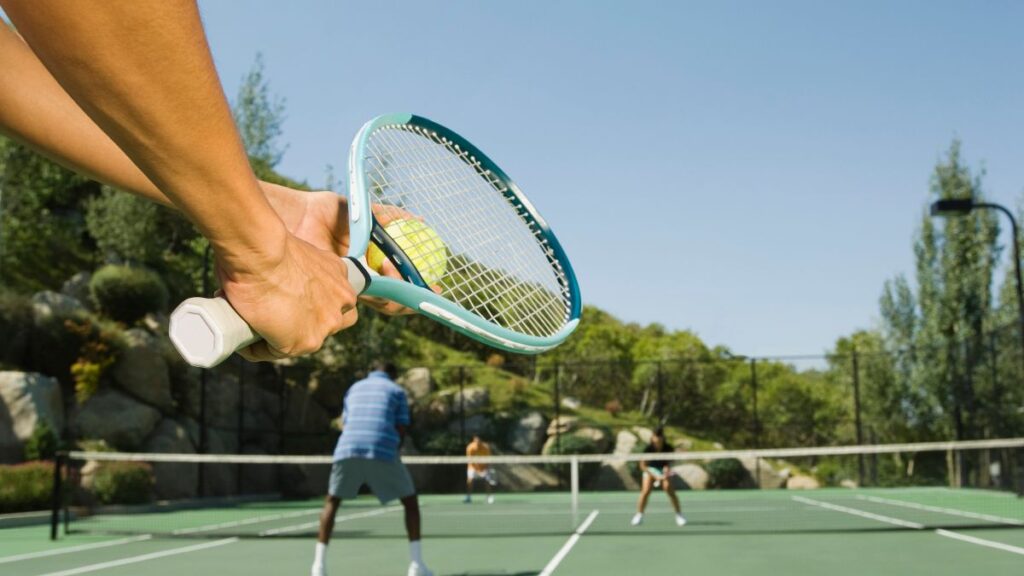
Balancing Rest and Intensity: Recovery Strategies for Sustainable Late-Season HIIT Success
Incorporating high-intensity training late in the season requires a delicate balance between pushing limits and honoring the body’s need to recover. Fatigue management is critical to prevent burnout and injuries while preserving gains in stamina and strength. Scientific inquiry into training recovery underscores that at least 48 hours between intense HIIT sessions allows muscles and the nervous system to reset effectively.
Rest days are not merely pauses but essential periods for physiological repair. Post-HIIT, the body experiences elevated cortisol levels that, if sustained too long, can lead to chronic fatigue or impair immune function. Strategic scheduling ensures players avoid consecutive intense sessions, thereby enhancing performance longevity.
Incorporate these recovery methods to optimize your late-season HIIT regimen:
- Active recovery: Gentle stretching, low-intensity walks, or yoga maintain blood flow without taxing muscles (see effective post-match recovery advice at tennis recovery tips).
- Hydration and nutrition: Replenish electrolytes and consume balanced meals rich in proteins and carbohydrates to support muscle repair.
- Sleep quality: Deep sleep accelerates hormone regulation and tissue recovery, essential for daily stamina replenishment.
- Massage and myofascial release: Using foam rollers or professional therapy to reduce muscle tightness and improve circulation.
Avoiding daily HIIT is a crucial consideration. While three 20-minute sessions weekly can produce remarkable endurance improvements, exceeding this without adequate rest invites higher injury risks. Integrating resistance training sessions—promoted by athletes like Djokovic and documented in sources such as Djokovic strength and endurance training—supports muscle preservation, complementing HIIT’s cardiovascular benefits.
| Recovery Strategy | Purpose | Recommended Frequency |
|---|---|---|
| Active Recovery Sessions | Maintain blood flow without strain | 1-2 times/week |
| Balanced Nutrition | Support muscle repair and energy restoration | Daily |
| High-Quality Sleep | Optimize hormonal and tissue recovery | Nightly |
| Foam Rolling/Massage | Reduce muscle stiffness and enhance circulation | 2-3 times/week |
By respecting these recovery principles alongside intense 20-minute HIIT workouts, players extend their peak performance window deep into October and beyond, managing the demands of tournament play while avoiding the pitfalls of overtraining.
Integrating Popular Athletic Brands and Gear for Optimized Late-Season Tennis Fitness
The best 20-minute on-court HIIT sessions also benefit from using the right equipment and gear designed to support performance and protect the athlete. Major athletic brands—Nike, Adidas, Under Armour, Reebok, Puma, Lululemon, New Balance, and Asics—have developed cutting-edge gear focusing on breathability, support, and durability tailored for tennis’s unique demands.
- Footwear: Brands such as New Balance and Asics design tennis shoes optimized for multi-directional movement, stabilizing the foot during rapid sprints and lateral shifts with specialized outsoles suitable for hard and clay courts.
- Apparel: Nike and Lululemon craft lightweight, moisture-wicking fabrics that keep players dry while maintaining freedom of movement under intense exertion.
- Supportive Accessories: Compression sleeves, wristbands, and headgear from Under Armour and Puma help sustain muscular warmth and reduce injury risks during explosive HIIT drills.
Among tennis equipment, Wilson and HEAD continue advancing racket technologies that deliver enhanced control and power, vital for leveraging physical stamina gained from such training into match-winning shots. Together, the synergy of top-tier gear and concise HIIT workouts ensures players are prepared physically and mentally for the high demands of late-season competition.
| Brand | Key Product for Tennis HIIT | Performance Benefit |
|---|---|---|
| Nike | Lightweight, breathable apparel | Temperature regulation and freedom of movement |
| Adidas | Multi-directional tennis shoes | Stability and traction on court |
| Wilson | Responsive rackets | Power amplification and precision |
| Under Armour | Compression gear | Muscle support and injury prevention |
| New Balance | Tennis-specific footwear | Optimal fit and cushioning |
For players eager to enhance their late-season stamina with 20-minute on-court HIIT, pairing workouts with advances in gear technology elevates training quality. This comprehensive approach is a hallmark of elite preparation, as exemplified by professionals adopting best practices detailed in top fitness routines.
Implementing a Weekly 20-Minute On-Court HIIT Plan for Sustained Late-Season Endurance Gains
Consistency remains the linchpin for capitalizing on 20-minute HIIT benefits in tennis. Establishing a weekly routine balanced with recovery and skill work fosters both physical and mental resilience. Below is a practical weekly template designed to integrate on-court HIIT effectively during the late-season, keeping players energized, agile, and powerful:
| Day | Focus | Details |
|---|---|---|
| Monday | Cardio HIIT with Lateral Movement | Side shuffle sprints, sprint to net and back, squat jumps – 4 rounds |
| Tuesday | Active Recovery | Yoga, light stretching, or low-impact cycling |
| Wednesday | Power and Strength HIIT | Medicine ball rotations, resistance band drills, plyometric jumps |
| Thursday | Skill Drills & Reaction Training | Split-step timing drills, quick reaction exercises (reaction drill reference) |
| Friday | Full-Body HIIT | Combination of lower body, upper body, and core exercises – Tabata style |
| Saturday | Optional Recovery or Light HIIT | Choice of brisk walk, swimming, or low-resistance bike HIIT |
| Sunday | Rest | Complete rest or mindfulness meditation |
This plan blends intense workdays with essential recovery, emphasizing progression without overstrain. Advanced players can tailor intensity or integrate weights-based HIIT sessions that echo strategies seen in elite circuits, such as Serena Williams’s renowned training regime detailed at Serena Williams training routine.
Tracking performance through metrics like heart rate zones, reps per interval, and perceived exertion helps refine training quality. Utilizing timer apps and monitoring recovery as highlighted in studies about marathon endurance training (see endurance training insights) ensures each session fuels left-over stamina rather than compromises it.
This video demonstrates an efficient 20-minute on-court HIIT session focusing on endurance, agility, and explosive moves vital for tennis matches late in the season.
Gain insight into combining strength and stamina drills in a compact HIIT workout designed for tennis players aiming to maintain peak form as the season closes.
With scientific backing, sport-specific training, deliberate recovery, and gear integration, these on-court 20-minute HIIT workouts emerge as a critical innovation for sustaining stamina deep into the competitive tennis calendar. Through consistent application, players equip themselves to seize every moment on court with vigor and resilience.