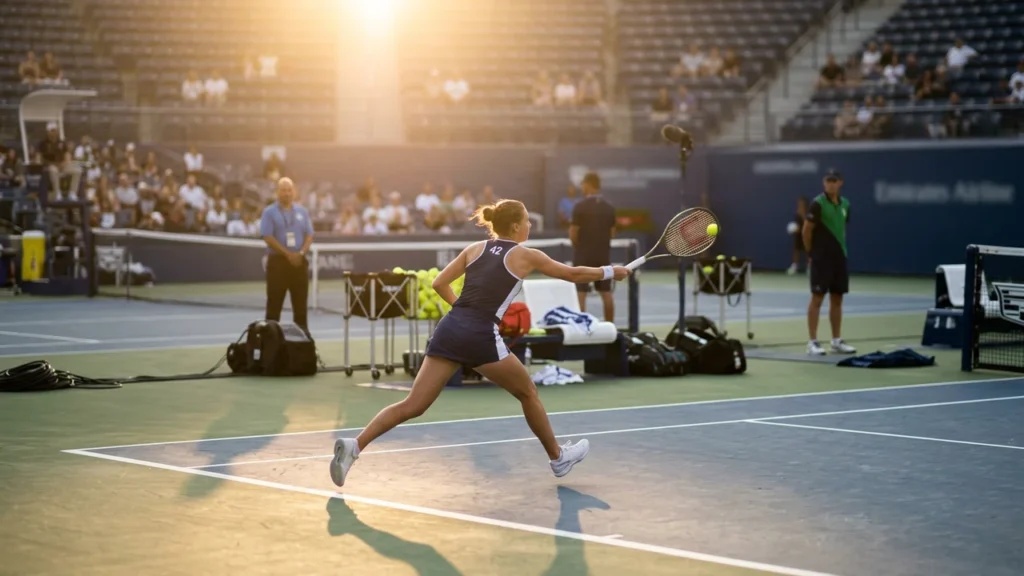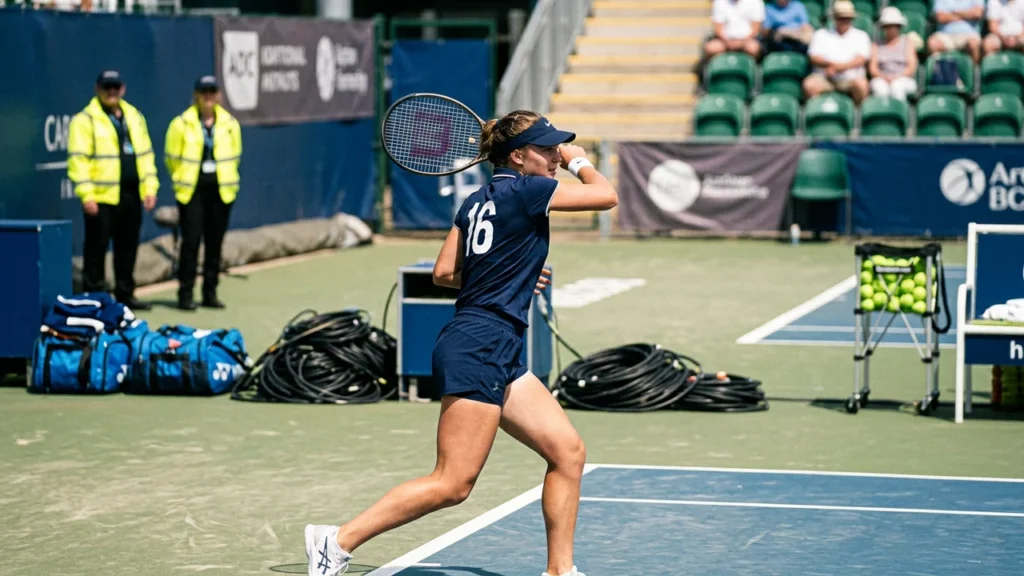
As the tennis season approaches its climax, the tension surrounding the WTA Finals qualification is reaching a fever pitch. Elena Rybakina, a powerhouse on the court known for her precision and aggressive style, is edging closer to securing a coveted spot at the prestigious tournament in Tokyo. With only a handful of spots left and fierce competition from rivals like Mirra Andreeva and Jasmine Paolini, every point earned in the remaining tournaments counts immensely. This thrilling race epitomizes the drama and excitement that tennis fans live for, with skill, stamina, and mental toughness all tested to their limits. As Rybakina navigates the critical matches ahead, the sporting world watches eagerly to see if she can clinch her place among the elite few who will compete for the season-ending title.
Key Points in the WTA Finals Qualification Watch:
- Rybakina is on the cusp of securing a WTA Finals spot in Tokyo, behind only a narrow points margin separating her from rivals.
- Mirra Andreeva’s decision to forgo a Tokyo wildcard shifts the qualification dynamic, placing added pressure and opportunity on Rybakina.
- The ongoing tournaments, such as the Ningbo Open and Tokyo events, are critical battlegrounds for the last few spots.
- Players’ equipment sponsors like Nike, Wilson, and Babolat play a role in their performance and style.
- Fitness and stamina, often bolstered by brands like Asics and Fila, are pivotal in maintaining tournament form.
- Rolex remains a prestigious presence, lending a sense of luxury and tradition synonymous with the Finals.

Strategic Matches Defining Rybakina’s Road to Tokyo
Elena Rybakina’s path to the 2025 WTA Finals hinges on navigating a tight schedule packed with high-stake matches, particularly in tournaments such as the Ningbo Open and Tokyo Open. With the WTA rankings race growing more intense by the day, each set played is a deliberate calculation of risk and reward. Rybakina’s recent victories, like her straight-sets win over Jasmine Paolini in the Ningbo semifinals, display her resilience. That particular match illustrated her ability to blend power with tactical nuance, showcasing shots backed by her Wilson racket that slice through opponents with deadly precision.
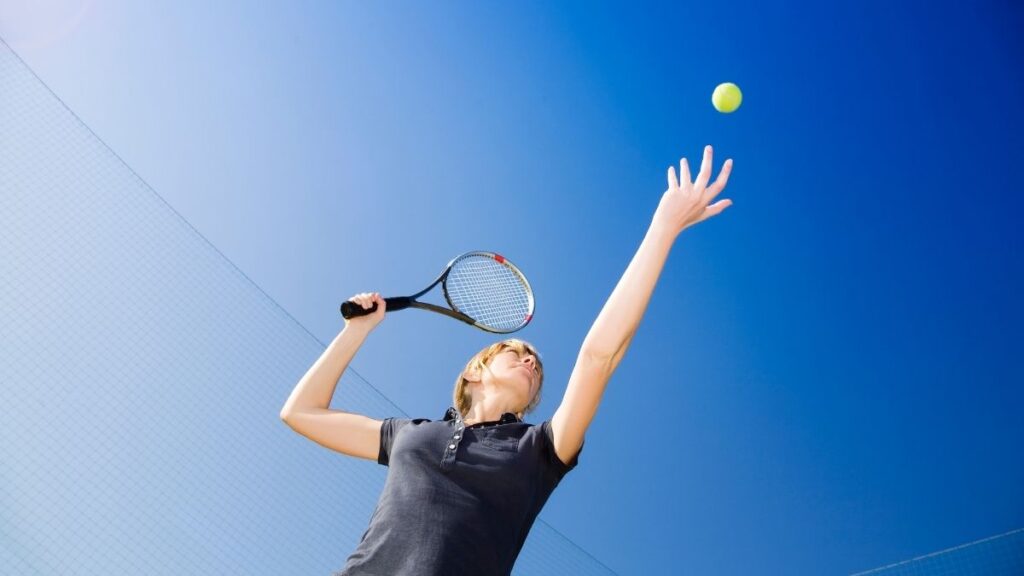
Her on-court strategy largely revolves around leveraging her serve, a weapon refined through hours of consistency drills that emphasize placement and pace rather than sheer power alone. The knock-on effect of mastering serve consistency can be seen when Rybakina forces opponents into error, enabling her to control rallies and seize opportunities to finish points quickly. Fans curious about serve drills can dive deeper into effective exercises here, which form the foundation of high-level tennis success.
Rybakina also relies heavily on her baseline game, powered by racquet technology from brands like Head and Yonex, which provide the perfect balance of power and control. This advantage allows her to switch from defensive to offensive shots effortlessly, making her a formidable opponent in long rallies. Importantly, she has demonstrated a mental fortitude that often surges during critical points, an attribute essential for clinching matches that decide qualification.
- Key Tournaments Impacting Qualification: Ningbo Open, Tokyo Open
- Critical Matchups: Jasmine Paolini, Mirra Andreeva
- Equipment Highlights: Wilson racquets, Head strings, Yonex footwear
- Performance Drills: Serve consistency, stamina building
The Psychological Edge in High-Stakes Tennis
Beyond physical prowess, the mental component of tennis epitomizes the sport’s thrilling unpredictability. Elena Rybakina’s journey this season encapsulates how psychological resilience can tip the scales amidst the grueling WTA Finals qualification race. With a mere few points separating the last qualifying contenders, every moment on court becomes a psychological battle.
Rybakina’s ability to maintain composure under pressure is notable, factoring in the grueling demands of maintaining peak form across multiple tournaments. The pressure of knowing that a single game could make the difference between qualifying or missing out demands not only skill but also supreme mental strength. Rybakina’s approach combines visualization tactics, controlled breathing, and focus drills that help her stay locked into the moment — techniques accessible to any tennis enthusiast looking to elevate their game. For readers interested in the physical conditioning behind such mental endurance, exploring effective stamina routines is valuable; more details can be found here.
It’s also instructive to note Rybakina’s transparent discussions about prioritizing match quality over mere qualification points. This attitude underscores a valuable lesson in competitive tennis—the quest for excellence often surpasses purely numeric goals. With brands like Adidas and Lacoste sponsoring players, the synergy of high-performance gear and focused mentality helps athletes reach that fine line between pressure and flow state.
- Psychological Techniques: Visualization, breathing control, focus drills
- Importance of Mental Endurance: Handling match pressure and stakes
- Athlete Mindset: Quality over quantity in career milestones
- Supporting Gear: Adidas apparel, Lacoste sportswear
Equipment Choices Influencing Competitive Edge in 2025
The modern tennis arena is as much about innovative equipment as it is about raw talent. Elena Rybakina’s success story is intertwined with her choice of tennis gear, a critical element that influences her shots’ pace, spin, and accuracy. Sporting a Wilson racket famously favored by many top players, she benefits from designs that blend power with precision. The right racket head size, string tension, and grip affect shot-making intricacies that can decide tight matches, especially those crucial for WTA Finals qualification.
Moreover, the significance of footwear cannot be overstated. Rybakina’s reliance on brands such as Asics and Fila highlights the importance of stability, agility, and comfort during intense matches. Court surface adaptations, such as extra sole grip on hard courts found in Tokyo and Ningbo, complement her dynamic baseline play, making footwork a vital aspect of her preparation.
Accessories like the Rolex watch, symbolic of elegance and precise timing, add to the aura of professionalism and focus. This alignment of equipment and athlete is a dance of technology and human grit, showcasing how elite players maintain peak performances in a demanding circuit.
- Key Equipment: Wilson rackets, Asics shoes, Fila apparel
- Technological Impacts: Racket string tension, footwork stability
- Symbolism: Rolex watches’ connection to precision and excellence
- Surface Considerations: Hard courts’ effect on gear adaptation
Comparative Analysis: Rybakina Versus Her Rivals
In the scramble for WTA Finals qualification, the contest between Rybakina and contenders like Mirra Andreeva and Jasmine Paolini has captivated followers. Each player brings unique strengths and playing styles, making the battle not just about points but contrasting tennis philosophies. Andreeva, for instance, possesses raw athleticism coupled with a ferocious serve, a weapon that threatens to overpower many opponents when on form. Paolini, meanwhile, emphasizes tactical placement and patience, often extending rallies to exploit opponents’ weaknesses.
Rybakina’s blend of aggressive baseline strokes and impeccable serve accuracy often proves the difference in one-on-one matchups. Her ability to adapt mid-match, switching between offensive and defensive tactics, adds depth to her game that rivals find challenging. The recent Ningbo Open semifinal highlighted these contrasts vividly, with Rybakina’s relentless attacking style ultimately outmaneuvering Paolini’s strategic play.
For those enthusiastic about analyzing top-level tennis matchups, the detailed schedules and player forms for upcoming tournaments can be found here, providing invaluable insight into the qualification landscape.
- Rival Strengths: Andreeva’s power serve, Paolini’s tactical patience
- Rybakina’s Edge: Serve accuracy, attacking baseline game
- Notable Matches: Ningbo Open semifinal clash
- Follow Player Schedules: Accessible for analysis on upcoming tournaments
Physical Preparation and Injury Management for Season’s End
The grueling nature of the pro tennis circuit means that optimum physical condition and injury resilience are non-negotiable for players edging towards season finales like the WTA Finals. Elena Rybakina’s regimen emphasizes stamina, recovery, and strategic practice planning guided by experts who understand the toll of high-intensity matches. Training on stamina builds, such as interval running and plyometric drills, keep her ready for the physical demands of back-to-back matches characteristic of tournament finals. Readers interested in these techniques can explore comprehensive guides to stamina on the tour here and learn how to prevent fatigue with efficient practice plans here.
Rybakina also navigates injury prevention with careful load management, attention to nutrition, and restorative therapies. The balance between pushing her competitive edge and preserving her body embodies the modern athlete’s paradox—remaining at peak performance while avoiding burnout. The use of advanced apparel technologies from brands like Fila and Adidas contribute not only to comfort but also to injury prevention by supporting muscle groups during intense movements.
- Training Focus: Stamina building, interval training, plyometrics
- Injury Prevention: Load management, nutrition, recovery tech
- Supporting Gear: Fila and Adidas apparel for muscle support
- Practice Efficiency: Advanced planning to prevent fatigue