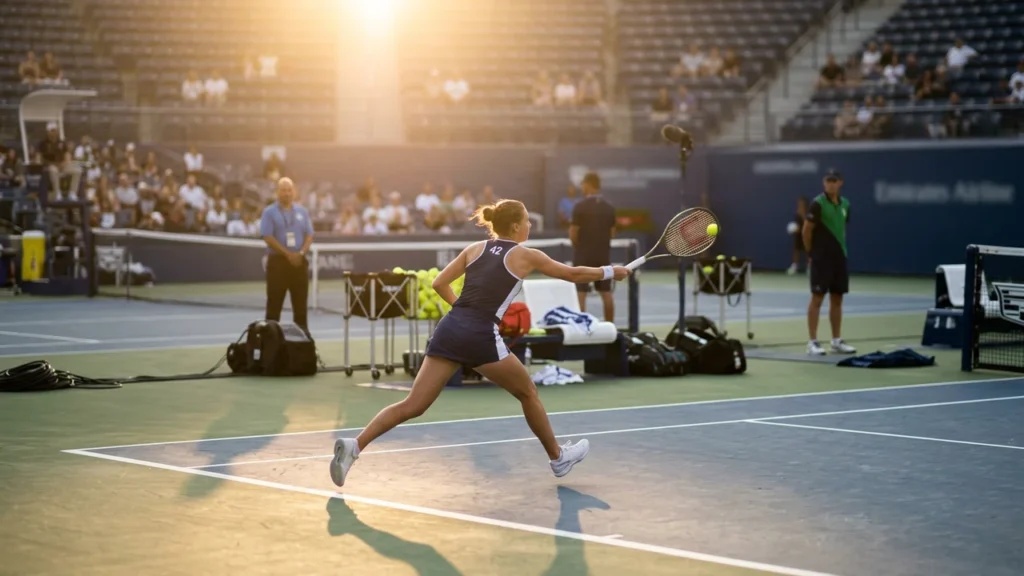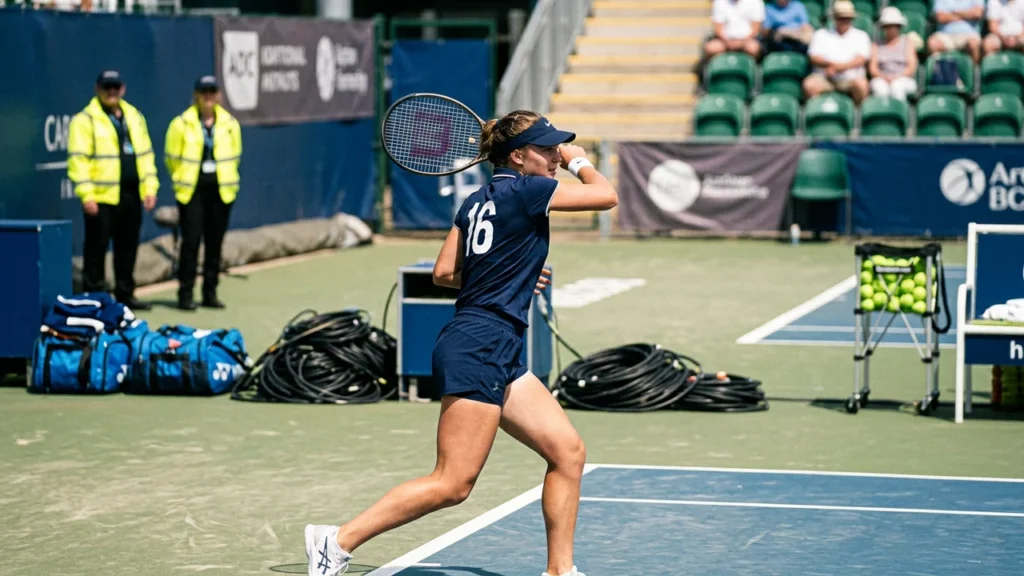
The buildup to the WTA Finals in Cancun has ignited a fervor within the tennis world, spotlighting the blazing momentum of Aryna Sabalenka. As the season edges towards its climax, Sabalenka stands as a compelling figure whose power-packed performances and raw athleticism have captured the imagination of tennis enthusiasts across the globe. The Cancun championship is not just another tournament on the calendar; it represents the ultimate stage where the elite fight for supremacy, glory, and the prized year-end No.1 ranking. With thrilling contests and cutthroat competition, this finale promises high-octane drama wrapped in the sun-drenched backdrop of Mexico’s vibrant coastal city.
Sabalenka’s journey is a narrative rich with transformation and resilience, marked by her ascent to the pinnacle of women’s tennis. She has dazzled with a blend of forceful groundstrokes and strategic finesse, crafting a season filled with captivating victories and lessons learned. The conditions in Cancun, from the atmospheric heat to the new court surfaces, present unique challenges that test the players’ adaptability and preparation – an intriguing subplot adding layers of complexity to the championship.
Beyond the baseline rallies and thunderous serves lies a fascinating exploration of the game itself: the evolving strategies, the critical importance of athletic gear tailored for peak performance, and the psychological warfare fought with every swing. For budding tennis fans and seasoned followers alike, understanding Sabalenka’s momentum involves diving deep into her training, her recovery, and her unwavering competitive spirit, all set against the pulsating heartbeat of the WTA Finals.
This article ventures into the core of Sabalenka’s climb, the nuances of the Cancun tournament environment, and what it all means for the shifting landscape of professional tennis. It uncovers the stories behind the scores, the sportswear technology enhancing the athletes, and the fierce competition that defines the sport at its highest level. Join this exploration for an immersive encounter with the thrilling world of tennis as it reaches one of its most electrifying peaks.

Sabalenka’s Season Breakthrough: Power, Consistency, and Triumphs on the Road to Cancun
Aryna Sabalenka’s 2025 season has been nothing short of a masterclass in determination and athletic prowess. Emerging from her runner-up finish at the previous year’s WTA Finals, she launched into this year with relentless energy that translated into astonishing results. Her initial 13-match winning streak not only set the tone for the season but also cemented her status as a formidable contender for the year-end championship in Cancun. This momentum was propelled by a series of record-setting achievements and dominant performances that carried her to the very top of the WTA rankings.
Her first Grand Slam title at the Australian Open was a defining moment. Not only did it end a string of Grand Slam semifinal hurdles, but it also showcased her ability to harness both power and tactical awareness under intense pressure. Post-victory, Sabalenka reflected on how overcoming previous losses had shaped her into a more resilient and savvy competitor. This transformation is echoed in her improved court positioning and shot selection, fundamentals accessible to all aspiring players eager to elevate their game—readers can find useful tips on these aspects at court positioning techniques and stroke mastery guides.
Throughout the season, Sabalenka maintained an exceptional levels of consistency highlighted by:
- Winning three titles and reaching three additional finals
- Securing her fifth WTA 1000 title in Madrid and making the final at Indian Wells
- Becoming the first woman since Serena Williams in 2016 to reach at least the semifinals at all four Grand Slams in a single year
Her overall Grand Slam record this season stands at a stellar 23-3, underscoring her dominant presence at the majors. The stats below frame her remarkable journey:
| Event | Result | Wins | Losses | Remarks |
|---|---|---|---|---|
| Australian Open | Champion | 7 | 0 | First Grand Slam title |
| French Open (Roland Garros) | Semifinalist | 5 | 1 | Strong clay court performance |
| Wimbledon | Semifinalist | 6 | 1 | Consistent grass court play |
| US Open | Finalist | 6 | 1 | Secured World No.1 ranking |
With this formidable record, Sabalenka’s focus extends beyond just winning titles; she aims to retain the No.1 spot by clinching the WTA Finals championship. As she intensifies her preparation, attention to physical conditioning, recovery, and technological advances in her sportswear and athletic gear play critical roles in sustaining her performance at peak levels.

Adapting to Cancun’s Unique Tournament Conditions: Challenges and Opportunities for Competitors
Hosting the WTA Finals in Cancun introduces a novel environment that tests every player’s capacity to adapt swiftly to court conditions and climatic challenges. The tournament demands not only technical skill but also keen physical and mental management under the pressure of high-stakes competition. Sabalenka’s ability to acclimate rapidly here is crucial to leveraging her ongoing momentum.
The freshest addition to the WTA Finals, Cancun offers a brand-new venue with surfaces and weather conditions differing significantly from traditional sites. Players have faced issues related to limited practice opportunities on the actual tournament courts due to late preparations and infrastructure challenges. Nonetheless, Sabalenka and others have embraced this as a test of resilience and versatility.
Key factors influencing player performance in Cancun include:
- Climate moisture and heat: Players need tailored training to manage hydration and stamina.
- Surface speed and bounce variations: These affect baseline rallies and net approaches, demanding strategic adjustments.
- Practice limitations: Reduced court time encourages mental toughness and quick tactical learning.
Fans seeking to understand the importance of court dynamics can explore detailed guidance around court positioning and effective volley technique. Meanwhile, players continually refine their movement and footwork to match surface transitions (footwork transitions), essential to adapt quickly to Cancun’s courts.
Despite logistical challenges, the competition thrives, with the championship’s $9 million prize money amplifying both stakes and viewers’ excitement. As Sabalenka prepares to fine-tune her game, sports science innovations tied to footwear and gear, especially those enhancing grip and durability (overgrip technology), provide competitive edges. These gear elements ensure she can unleash powerful serves and precise shots vital for dominating the competition at Cancun.
| Factor | Impact on Play | Preparation Strategy |
|---|---|---|
| Climate Heat & Humidity | Increased fatigue and dehydration risk | Enhanced hydration plans and endurance training |
| Court Surface | Variable ball speed & bounce | Practice adapting shot timing & footwork |
| Limited Practice Time | Reduced familiarity with court conditions | Focus on mental toughness and tactical adaptability |
Technological Edge in Tennis Gear Elevating Sabalenka’s Performance
Modern tennis demands athletes integrate technology into their training and competition routines. Sabalenka leverages the latest in sportswear design, emphasizing breathability and moisture management to counter Cancun’s heat. Innovations in racquet technology—like ultra-light nano carbon frames—enhance her stroke power without sacrificing control (racket tech insights).
Her tennis shoes feature advanced traction optimizing quick direction changes and stability required on varying court surfaces. Complementing this, grip customization offers precision control vital for executing her killer serve and dominant forehand shots (serve biomechanics, forehand grip factors).
The Intense Rivalry and Competition Dynamics at the Cancun WTA Finals
The Cancun championship gathers the top eight WTA singles players, setting the stage for riveting rivalry and fierce battle over the coveted Billie Jean King Trophy. Sabalenka faces an elite cohort, including players like Iga Swiatek, Jessica Pegula, and Elena Rybakina, each bringing distinct playing styles and threats to the championship race.
This competition is more than a test of physical skill; it is chess played at high velocity, where split-second decisions on court positioning, shot choice, and momentum shifts decide matches. Sabalenka’s strategy has evolved to incorporate these elements, blending raw aggression with smart shot-making to outsmart her opponents.
Notably, the group-stage encounters have already showcased dramatic moments:
- Sabalenka’s commanding 6-1 set against Elena Rybakina before a rain suspension halted their battle in a high-stakes match
- Pegula’s upset over the world No.1 Sabalenka, displaying the tense unpredictability of competition
- Late rallies highlighting players’ stamina and resilience in Cancun’s taxing conditions
Fans wanting to better grasp the tactical underpinnings can study key techniques such as the drop shot execution or sharpen their serve-return combos via expert routines (serve and return training).
| Player | WTA Ranking (2025) | Strengths | Key Challenges |
|---|---|---|---|
| Aryna Sabalenka | 1 | Powerful groundstrokes, aggressive serves, improved consistency | Adapting to Cancun conditions, maintaining stamina |
| Iga Swiatek | 2 | Exceptional baseline defense, tactical variety | Handling pressure at pivotal moments |
| Jessica Pegula | 5 | Consistent all-court play, mental toughness | Breaking through elite rivals |
| Elena Rybakina | 4 | Strong serve, aggressive net play | Court adaptability and stamina |
Momentum, Mindset, and the Road Ahead: Sabalenka’s Pursuit of Year-End No.1 in Cancun
The pursuit of finishing the season as the World No.1 adds layers of psychological intensity to the WTA Finals in Cancun. Sabalenka’s journey reflects a blend of physical excellence and mental strength, honed through years of competing against the world’s best. Sabalenka’s candid reflections on embracing past losses sparked a visible evolution in her competitive approach: transforming setbacks into motivation fuel.
Her preparation routine places significant emphasis on reaction speed and endurance, critical for maintaining dominance through grueling rallies and long matches. High-intensity interval training (HIIT) customized for tennis—covering reaction drills and court coverage—is integral to her regimen (HIIT conditioning for tennis). Analysis of her tactical adaptability highlights how she adjusts point construction based on opponent tendencies, an aspect vital in a compact and highly competitive tournament format.
This mentality is paired with meticulous attention to gear choice and injury prevention strategies, ensuring peak availability and performance. The nuanced balance between aggressive baseline play and patience when constructing points exemplifies her ‘different Aryna’ era, poised to culminate in Cancun.
- Sport-specific conditioning and recovery protocols enable sustained performance
- Video analysis and opponent scouting sharpen strategic preparation
- Mental toughness circuits reinforcing competitive resilience under pressure
- Leveraging top-tier sportswear and athletic gear for physical support and comfort
In the grander scheme, Sabalenka’s quest to seal the year as No.1 resonates deeply within the tennis community and fans worldwide. It galvanizes interest in the sport’s evolution and spotlights the dedication required to excel on the professional stage, inspiring newcomers and veterans of tennis alike.