In the electrifying world of tennis, every millisecond and every step counts. The pivotal role of tennis shoes transcends mere footwear; it is about harnessing speed, balance, and endurance to elevate performance on court. As 2025 unfolds, the marketplace presents a dazzling array of tennis shoes engineered to transcend traditional boundaries: merging cutting-edge traction technology, unparalleled stability, and supreme comfort. These innovations do not just protect the athlete’s feet, they empower explosive movement, seamless direction changes, and relentless rallies. From the hardwood to the clay, from amateurs beginners to seasoned pros, the tennis shoe has transformed into both armor and instrument for triumph. Understanding the latest advancements and rankings in tennis shoe design is essential for players seeking to dominate their game with confidence and style.
In brief, the essential qualities driving the dominance of this year’s top tennis shoes include: advanced traction systems optimized for various court surfaces, enhanced lateral stability that prevents slips during rapid side-steps, and ergonomic cushioning that absorbs shock and maintains freshness deep into matches. Brands like Nike, Adidas, Asics, and New Balance continue to push innovation boundaries, blending technical expertise with player feedback. Whether you prioritize durability for intense hardcourt sessions or the perfect fit for explosive multimove games, knowing which tennis shoe suits your style can catalyze your entire season.
Cutting-Edge Traction Technologies Shaping Tennis Performance in 2025
Tennis courts vary dramatically—hard courts, clay, indoor surfaces—and mastering traction is paramount. The best tennis shoes integrate traction patterns explicitly designed to grip surfaces without compromising swift directional changes or accelerating fatigue. The revolutionary patterns on outsoles in 2025 include modified herringbone, hexagonal pods, and multi-directional textured grooves, each catering to unique playing surfaces.
Why traction goes beyond grip: While effective grip prevents slips and injuries, advanced traction systems actively enhance court responsiveness. For example, the Nike Air Zoom Vapor Cage 4’s outsole employs a durable rubber compound combined with lateral stiffness to deliver stability and dependable court grip, crucial during high tension lateral movements on hard courts. This lets players swiftly launch into volleys or recover after challenging shots without hesitation.
Similarly, Adidas sets the standard with their SoleCourt model, featuring an abrasion-resistant Adituff outsole wrapped around toes and medial forefoot, engineered to resist foot drag during aggressive serves and volleys. This durability extends the life of the shoe and gives players consistent traction as they batter across the court surface.
- Modified herringbone patterns optimize multi-directional grip on hard and indoor courts.
- Hexagonal pods disperse pressure and enhance quick pivots while reducing wear.
- Rubber compounds adapt to temperature and surface texture changes providing reliable adhesion.
- Advanced Breathability integrates seamless ventilation to maintain grip by reducing sweat accumulation.
| Shoe Model | Traction System | Ideal Court Surface | Durability Highlights |
|---|---|---|---|
| Nike Air Zoom Vapor Cage 4 | High-density rubber with lateral stiffness | Hard court | Durable outsole designed for intense wear |
| Adidas SoleCourt | Modified herringbone with Adituff wrap | Hard court / Indoor | Abrasion-resistant and toe protection |
| Asics Gel Resolution 8 | Non-marking, hard-wearing rubber | Indoor / Hard court | Extended outsole life and protection from toe drag |
| New Balance 996 V4 All Court | Durable rubber with six-month warranty | All court | Reliable grip with durability reassurance |
Selecting shoes with optimal traction for your preferred court not only boosts performance but reduces injury risks linked to unexpected slips or poor surface contact. Players interested in deepening their knowledge about shoe grip nuances can explore this comprehensive guide on best shoes for hard courts.
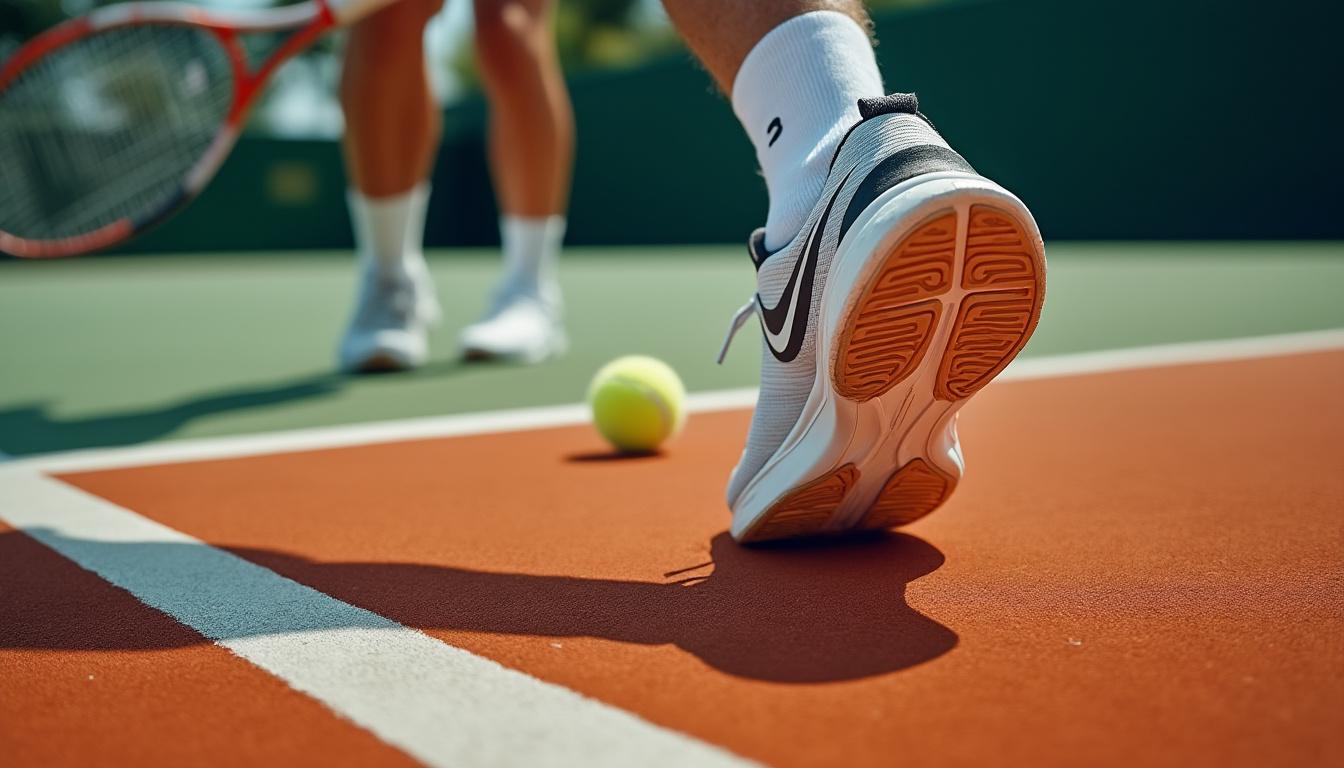
Stability Innovations That Keep Players Grounded in High-Intensity Matches
As agility and explosive lateral movement dominate competitive tennis, the value of stability-enhancing tennis shoes cannot be overstated. Stability integrates structural features within the shoe design that anchor the foot during abrupt stops and side-to-side ranges, essential to avoid ankle injuries and maintain stroke precision.
The Nike Air Zoom Vapor Cage 4 exemplifies this with a stiffened lateral cage engineered specifically to lock the foot in place. Its innovative lacing system hides the shoelaces protecting them from wear while simultaneously providing a snug, locked-in feel that makes it a top pick among players who demand stability with durability.
Yonex Power Cushion Eclipsion 2 continues to receive accolades on the ATP Tour, worn by champions like Stan Wawrinka. The dynamic shoe prioritizes grip and explosiveness, blending speed with stability—though the rubber outsole requires a breaking-in period, it delivers unparalleled traction after adaptation. Its mesh upper enhances breathability, a bonus for long, intense matches.
Moreover, Asics Gel Resolution 7 and 8 models integrate Flexion Fit technology—offering protection without restricting movement—and a firm external heel counter to secure the heel during lateral scrambles. The incorporation of SpEVA midsole material boosts bounce-back energy, ensuring dynamic yet secure footing match after match.
- Lateral stability cages help lock the foot for side-to-side control.
- Special lacing systems enhance foot lockdown while protecting lace integrity.
- External heel counters secure heel motion to prevent ankle rolling.
- Advanced midsoles like Adidas Boost and Ortholite for shock absorption linked to stability.
| Shoe Model | Stability Feature | Special Technologies | Player Endorsement / Notes |
|---|---|---|---|
| Nike Air Zoom Vapor Cage 4 | Lateral stiffness frame | Zoom Air forefoot unit | High durability, pro-level stability |
| Yonex Power Cushion Eclipsion 2 | Stable grip with power cushioning | Mesh breathable upper | Preferred by ATP players (Stan Wawrinka) |
| Asics Gel Resolution 7 & 8 | Flexion Fit vamp and external heel counter | SpEVA midsole; Ortholite sockliner | Excellent lateral support and cushioning |
| Adidas SoleCourt | Adituff abrasion-resistant toe protector | Boost midsole cushioning | Wide toe box for foot comfort |
Players aiming to optimize their on-court confidence and safety should prioritize tennis shoes with multi-dimensional stability features that complement aggressive playing styles. More insight on why specific stability designs matter can be found in this tennis stability circuit analysis.
Ergonomic Comfort and Cushioning Systems Redefining Court Endurance
Extended rallies and grueling matches test not only skill but physical stamina. The level of comfort a tennis shoe brings directly correlates with enduring peak performance and injury avoidance. As such, the 2025 landscape showcases shoes with advanced cushioning tech that adapts to foot anatomy and dynamic movement.
Asics’ Gel technology—featured in both the Resolution 7 and 8—remains a cornerstone of shock absorption. The no-sew PU upper and Flexion Fit vamp protect feet without unnecessary weight, while the Ortholite sockliner provides hygienic softness that keeps pace with all-day vigor.
Adidas models such as the SoleCourt and the Stycon introduce Boost midsole materials facilitating unmatched responsiveness and energy return. The Stycon’s laceless design might challenge initial wearers but rewards with explosive power transmission and exceptional comfort in sustained rallies.
New Balance continues innovation with the 996 V4 and All Court models that blend Kinetic Stitch uppers designed for snug, adaptive fits along with Fresh Foam midsoles engineered for plush cushioning and smooth transitions. These designs support players prone to discomfort or foot fatigue during frequent high-speed movements.
- Gel cushioning units focus on localized shock absorption.
- Boost midsoles optimize energy return and reduce impact kicks.
- Adaptive uppers mold to feet structure, improving fit and comfort over time.
- Laceless or innovative lacing systems enhance uniform pressure distribution.
| Shoe Model | Cushioning Technology | Upper Material | Comfort Focus |
|---|---|---|---|
| Asics Gel Resolution 8 | Gel units & Ortholite sockliner | Synthetic no-sew PU | Shock absorption and breathability |
| Adidas Stycon | Boost midsole & EVA layers | Firm, locking fit upper | Energy return and stability |
| New Balance 996 V4 | Fresh Foam midsole | Kinetic Stitch material | Adaptive fit and cushioning |
| Head Revolt Pro 3.0 | Engineered torsional midsole | Adjustable fit via lacing | All-day comfort and support |
Exploring the relationship between footwear comfort and match endurance is crucial, and players looking for guidance can also benefit from this comparison of recovery versus match shoes highlighting cushioning differences.
Durability and Design: Balancing Style and Long-Term Performance
Players seeking value in their tennis footwear emphasize durability along with design innovations which promise long-term performance and style. The structure and materials endure constant abrasion, twisting, and impact—often determining if the tennis shoe is worth the investment. Nike, Adidas, and Asics lead the charge with models designed to maintain form and functionality over extended playtime.
New Balance extends warranties to six months for outsole durability on several models, signaling their confidence. Adidas’ abrasion-resistant Adituff and Nike’s updated Zoom Air materials lay foundations to withstand rigorous use while appealing to player aesthetics. The colorful variety of options lets players maintain their signature look without sacrificing technical prowess.
- Reinforced toe caps and abrasion zones reduce wear from foot drag during quick shifts.
- High-density outsoles resist degradation from multiple surfaces.
- Multi-layer midsoles balance shock absorption with material longevity.
- Stylish colorways and minimalist design keep players looking court-ready.
| Brand | Durability Feature | Warranty & Notes | Design Highlights |
|---|---|---|---|
| Nike | Durable Zoom Air and reinforced lacing system | High durability for hard court wear | Bold color palette; sleek modern designs |
| Adidas | Adituff toe protector; Boost cushioning layers | Long-lasting outsole; great for abrasions | Classic and wide toe boxes |
| New Balance | Six months outsole durability warranty | Warranty assures confidence in wear | Snug fit design with kinetic materials |
| Asics | Non-marking rubber outsoles; PGuard toe protection | Specialized for indoor courts | Technical accents with breathable uppers |
Understanding the synergy between durable materials and court-optimized designs can extend your shoe life and maintain top form throughout your competitive journey. Details on longevity and choice can be discovered in this detailed tennis shoe durability guide.
Choosing the Right Tennis Shoe: Personalized Fit, Foot Type, and Playing Style Considerations
Tennis shoe shopping transcends brand prestige and flashy technology. The final selection must harmonize with the player’s specific foot shape, court preference, and style of play. For instance, players with wide feet might gravitate towards models with roomy toe boxes like Adidas SoleCourt, while swift movers may prioritize lightweight and responsive midsoles as in the New Balance 996 V4.
The fit factor is critical. Shoes that feel too tight cause discomfort and risk blistering, whereas loose-fitting shoes sacrifice stability. Materials like Kinetic Stitch by New Balance provide adaptive flexibility, molding to feet over time. Breathability and moisture-wicking are additional factors to consider, especially for players enduring long sessions in hot environments.
- Foot width and arch type dictate shoe size choices and comfort levels.
- Lacing system adjustments enable personalized lockdown and support.
- Court surface matching ensures traction and durability are appropriate.
- Playing style influence affects choice: baseline grinders need cushioning, serve-and-volleyers require stability.
| Consideration | What to Look For | Brand Examples |
|---|---|---|
| Wide vs Regular Feet | Models with wide toe box or standard fit | Adidas SoleCourt, New Balance 996 V4 |
| Playing Surface | Outsole patterns specific for hard, clay or indoor courts | Nike Vapor Cage 4, Yonex Eclipsion 2 |
| Playing Style | Stability vs Cushioning balance | Asics Resolution series, Head Revolt Pro 3.0 |
| Fit and Comfort | Adaptive materials, adjustable lace design | New Balance with Kinetic Stitch, Adidas Stycon laceless |
A thorough understanding of these factors ensures a shoe choice that not only protects feet but actively enhances every stroke, sprint, and pivot. Further reading on optimal fitting techniques is available at the ultimate tennis shoe fit guide.
What makes a tennis shoe suitable for hard courts?
Tennis shoes for hard courts feature durable outsoles with abrasion-resistant rubber and traction patterns like modified herringbone to grip the surface effectively and withstand the wear caused by hard courts.
How important is stability in tennis shoes?
Stability is crucial to prevent ankle injuries and ensure quick lateral movements without slipping. Shoes with lateral cages, heel counters, and specialized lacing systems provide essential foot lockdown during aggressive play.
What should I consider for tennis shoe comfort?
Focus on cushioning technologies such as gel pads, boost midsoles, and adaptive uppers that provide shock absorption and reduce foot fatigue, allowing longer, more comfortable play.
Are there laceless tennis shoes available in 2025?
Yes, models like the Adidas Stycon feature laceless designs that offer uniform lockdown and sleek aesthetics, suitable for players seeking advanced comfort and style.
Can I use indoor court shoes on outdoor hard courts?
While indoor court shoes offer great traction for smooth surfaces, they may lack the durability needed for abrasive hard courts and could wear out faster if used outdoors frequently.