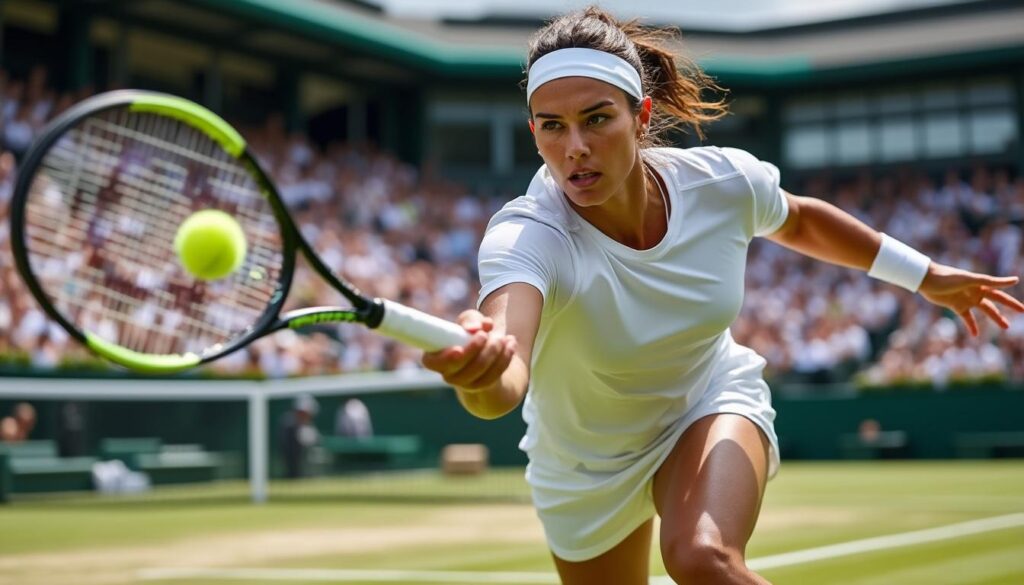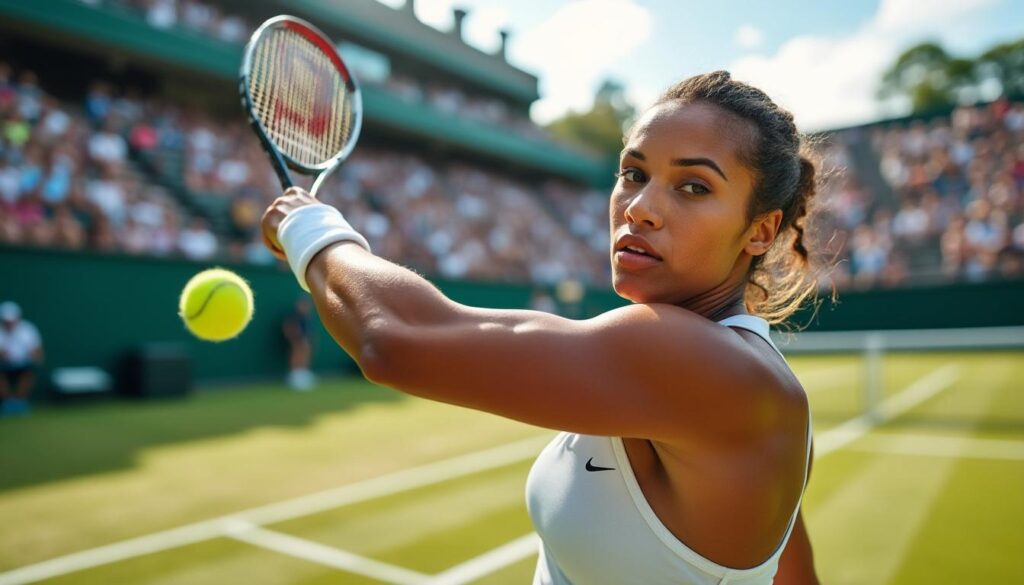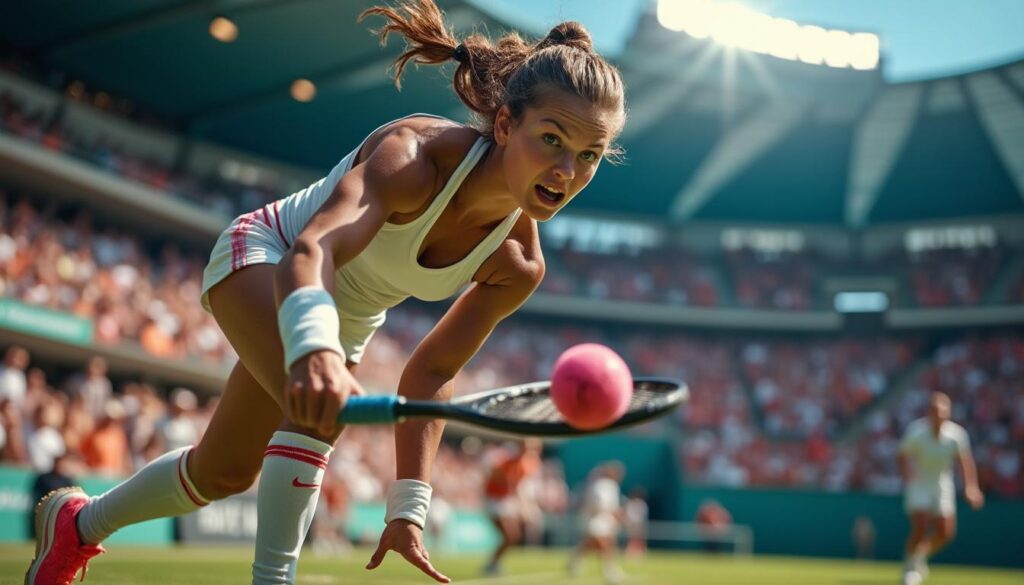
The intensity and precision of tennis at the indoor hard court level demand a ruthless and calculated forehand. Carlos Alcaraz, a formidable young talent in the tennis world as of 2025, has redefined the power and versatility of the forehand engine, especially with his use of inside-out and inside-in patterns. His approach isn’t just a matter of brute force—it’s an intricate blend of biomechanical finesse, strategic positioning, and technological support from top brands such as Nike, Babolat, and Wilson. In the relentless atmosphere of indoor hard courts, where pace and spin need absolute control, Alcaraz’s forehand emerges as a dynamic weapon that shifts momentum in an instant. This article delves deep into the mechanics, patterns, and tactical mastery behind Alcaraz’s forehand, aiming to uncover how he commands the court with devastating accuracy and adaptability.
What makes Alcaraz’s inside-out and inside-in forehand patterns uniquely effective in indoor arenas? How do his technical choices correlate with the sport’s evolution towards increasingly faster rackets and smarter training techniques employed by athletes who sport equipment from Adidas, Yonex, and Head? The transformation of his forehand flowing from uncanny injury prevention methods to lightning-fast transitions reveals a fascinating journey through modern tennis’s challenges and breakthroughs. Here, readers from beginners yearning to refine their strokes and seasoned enthusiasts intrigued by professional nuances will find cutting-edge insights, woven with compelling examples from recent tournaments and performance analytics.
Precision Mechanics Behind Carlos Alcaraz’s Inside-Out Forehand on Indoor Hard Courts
Inside-out forehands represent a fundamental offensive tactic in tennis where a player hits the ball from the inside part of the court to the opponent’s backhand side or open court. For Carlos Alcaraz, mastering this shot on indoor hard courts means leveraging optimal biomechanics and equipment synergy to maximize power without sacrificing control.
Technically, the inside-out forehand requires a player to position their body dynamically, often stepping around the ball with a slightly open stance to generate an explosive kinetic chain. Alcaraz’s forehand is distinguished by a near-perfect synchronization between his rotating hips and the extension of his arm, creating a whip-like acceleration of his Wilson racket’s head. The grip factor, often discussed among tennis aficionados and coaches, greatly influences the shot’s spin and trajectory. Alcaraz tends to rely on a semi-western grip, which allows an excellent balance between topspin and flat ball striking, superbly adapted for indoor conditions where the ball tends to bounce lower and faster than on clay or grass.
Key components of Alcaraz’s inside-out technique include:
- Optimal shoulder rotation: His shoulder coil generates torque that propels the racket head forward in a fluid motion.
- Racket-face angle control: Meticulous control is maintained to avoid unwanted sidespin that could cause the ball to drift out in tight quarters typical of indoor courts.
- Foot placement and balance: His footwork reveals intense drills influenced by top-tier training regimes, including those emphasizing split-step timing and movement simulation. Data-driven approaches, often observed in top-tier training environments reliant on Solinco strings and Tecnifibre grips, further refine foot coordination.
- Follow-through precision: The follow-through ends high and outward, confirming the pronounced top-spin and ball dip that neutralizes opponents’ counterattacks.
Each of these elements combined portrays a player in complete command of his forehand engine. Analysis of slow-motion footage shows Alcaraz’s forearm and elbow remain remarkably stable, reminiscent of legendary styles observed in players who revolutionized this stroke in past decades, such as Roger Federer’s straight elbow drive. This stability assists with shot consistency, crucial when the margin of error on faster indoor courts is razor thin.
The choice of racket also enhances this ability. Alcaraz often wields a Wilson model that combines a lightweight frame with a stiff build suitable for hard courts. When paired with string technologies from Babolat and Solinco, these elements serve not only power but also accuracy. Moreover, Nike’s footwear and apparel help maintain his speed and comfort during grueling rallies inside the controlled conditions of indoor arenas, where temperature and humidity are regulated but the demands on agility and precision grow exponentially.
| Component | Function | Equipment Impact |
|---|---|---|
| Shoulder Rotation | Generates power and torque | Wilson racket stiffness aids in energy transfer |
| Racket-Face Angle | Controls ball trajectory and spin | Solinco strings enhance spin potential |
| Foot Placement | Balance and positioning for shot execution | Asics shoes provide grip and stability |
| Follow-Through | Ensures top-spin and direction control | Grip design from Tecnifibre supports wrist stability |
To witness how Alcaraz’s inside-out forehand has ripped through defenses in recent matches, one can revisit key moments such as his Barcelona Open performance or his approach during the Madrid opener in 2025, where his shot selection overcame some of the world’s best. This inside-out tactic remains one of the most feared in the arsenal of modern tennis thanks to its ability to open up space and initiate aggressive baseline pressure, a topic expanded in strategic play overviews like those found at tennisguide.net.
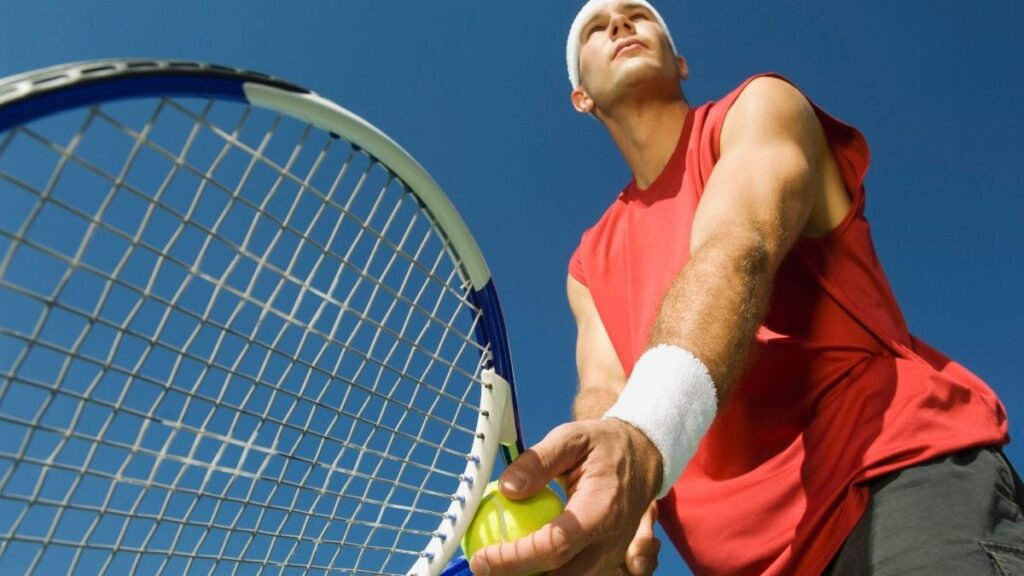
Exploring Inside-In Forehand Patterns: Tactical Advantages for Alcaraz on Indoor Hardcourts
While the inside-out forehand draws immediate attention due to its offensive threat, Alcaraz’s inside-in forehand pattern showcases his nuanced court vision and strategic patience. Unlike the inside-out shot, the inside-in forehand is used to hit the ball down the line, often catching opponents off guard by exploiting the less defended edges of the court.
On indoor hard courts, where ball speed is generally higher and bounce is consistent, Alcaraz’s inside-in shot demands exquisite timing and a refined touch. This pattern requires him to adjust his footwork subtly, creating just enough open angle while maintaining balance to avoid compromising racket efficiency or shot depth. His ability to seamlessly shift between inside-out and inside-in forehands under pressure makes him exceptionally difficult to predict.
- Early ball tracking: Alcaraz excels at reading the ball’s trajectory early, allowing perfect preparation for a split decision on shot direction.
- Compact backswing: The inside-in often employs a shorter backswing to facilitate tight shot placement at high speed.
- Controlled acceleration: Power is generated efficiently but modulated to keep the ball in play within tight court boundaries.
- Use of topspin and flat shots: Blending heavy topspin with occasional flat drives keeps opponents guessing and disrupts their rhythm.
Indeed, video analysis from recent indoor season matches reveals Alcaraz’s exceptional grip adjustments mid-swing, often subtle shifts toward more eastern grips, enabling more precise line drives. His partnership with leading brands ensures his gear adapts perfectly to these demands; for example, his Adidas apparel allows unrestricted arm mobility vital for such rapid adjustments, supporting the rhythm and flow necessary for inside-in patterns.
Incorporating training insights into his gameplay, Alcaraz benefits from simulation technologies where court positioning and split-step timing drills are fine-tuned, helping him anticipate opponent responses and react with blistering pace. Resources like Court Positioning Simulation provide empirical data significantly influencing the development of tactical strokes like the inside-in forehand.
| Inside-In Forehand Feature | Description | Impact on Match Play |
|---|---|---|
| Early Preparation | Early anticipation allows directional flexibility | Reduces opponent’s reaction time |
| Compact Swing | Short, fast backswing for accuracy and speed | Enables quick shot changes in rallies |
| Power Modulation | Adjusting force to maintain precision | Maintains pressure without risking errors |
| Spin Variation | Mixture of topspin and flat to confuse rivals | Breaks opponent rhythm effectively |
The psychological edge of the inside-in shot is that it is less predictable and often catches the opponent leaning toward defending the cross-court. Coupled with his natural speed bolstered by Yonex string technology and Asics shoe support, Alcaraz’s execution of inside-in forehands isn’t just about technical prowess—it’s a mental weapon, psychologically pressuring rivals into defensive errors.
Adapting Forehand Patterns to Indoor Hard Courts: Environmental and Tactical Considerations
Indoor hard courts present a unique tennis environment. The absence of wind and sun removes many common external factors, while the typically consistent ball bounce and rapid surface speed place an emphasis on quick reaction and precise shot making. This setting has a profound influence on how forehand patterns such as inside-out and inside-in are selected and executed by players like Carlos Alcaraz.
Understanding these characteristics is critical to appreciating Alcaraz’s forehand mastery. The controlled climate means fewer disruptions in ball trajectory, enhancing the effectiveness of shots with sharp angles or heavy spin but demanding more accuracy. Against this backdrop, Alcaraz’s ability to vary his forehand patterns not only maintains unpredictability but exploits the speed of the surface to create winning opportunities quickly.
- Consistent bounces demand precise timing: This pushes for the use of stable grips and compact swings to avoid any mishits.
- Faster court speed favors aggressive play: The inside-out forehand is ideal for attacking the opponent’s weak backhand corner.
- Tactical use of angles: Inside-in shots, leveraged with finesse, can end points abruptly down-the-line, rewarding bold tactical decisions.
- Minimal external distractions: Allowing mental focus on shot execution and rally construction, critical for top-level strategic play.
Equipment brands invest heavily in optimizing rackets and strings tuned for indoor hard courts. For instance, Babolat and Head have advanced string materials that enhance control without sacrificing tension durability, while Adidas and Nike continually innovate footwear for enhanced traction and lateral stability in controlled indoor environments. Alcaraz is known to integrate these innovations, giving him a competitive edge by ensuring biomechanics and gear function in perfect harmony.
| Indoor Hard Court Factor | Effect on Forehand Execution | Resulting Tactical Adaptation |
|---|---|---|
| No Wind/Sun | Steady ball flight | Reliable shot placement, faster shot selection |
| Fast Surface | Quicker ball speed and low bounce | Aggressive inside-out shots preferred |
| Consistent Bounce | Enables shot predictability | Allows riskier angles such as inside-in shots |
| Controlled Environment | Focus on precision and speed | Optimized footwork and body positioning drills |
The strategic implications often surface in match replays from indoor tournaments like the Japan Open and the Paris Masters, where Alcaraz’s forehand patterns have dissected elite rivals. His adaptability in these environments makes him a poster child for modern indoor tennis tactics, inspiring rising players working on mastering their strokes, as discussed in foundational guides such as Mastering Tennis Strokes.
Technological and Training Innovations Behind Alcaraz’s Forehand Engine
2025 has seen a remarkable integration of technology and training regimes that have elevated the forehand stroke from a purely technical skill to an engineered tactical tool. Carlos Alcaraz’s forehand engine benefits enormously from these advances, blending data-driven insights with physical conditioning to create a stroke that remains explosive yet reliable, flexible yet consistent.
Modern training techniques incorporate real-time monitoring through tennis sensors that track stroke speed, racket face angle, and ball impact location. Such tools, frequently reviewed and utilized by players sponsored by top brands like Head and Tecnifibre, allow coaches to dissect every millisecond of a forehand swing and optimize it according to surface and opponent tendencies. For example, training drills focusing on split-step timing and dynamic footwork simulations help replicate high-speed indoor exchanges, which are critical to Alcaraz’s ability to launch inside-out and inside-in forehands on demand.
- High-speed video analysis: Allows precise correction of even the smallest technical faults.
- Sensor-based feedback: Offers objective data on impact points and swing metrics.
- Biomechanical assessments: Tailor exercises to strengthen relevant muscle groups and maintain stamina.
- Customized racket-string setup: Tailored tension and string type to match player style and indoor conditions.
In addition, the physical conditioning aspect enhances forearm strength and shoulder flexibility, ensuring that Alcaraz avoids common injuries and maintains the demanding repetitive motions required by his style. His regime, inspired by the endurance plans followed by top players like Novak Djokovic, incorporates resistance training, flexibility routines, and recovery mechanisms involving specialized Nike gear and Adidas sports tech.
| Training/Tech Aspect | Function | Benefit for Forehand |
|---|---|---|
| Video Analysis | Detailed swing review | Minimizes technical errors |
| Tennis Sensors | Measure metrics in real-time | Optimizes shot power and accuracy |
| Biomechanical Training | Enhances strength and flexibility | Supports durability and stroke effectiveness |
| Custom Equipment Setup | Racket and string tailored to style | Maximizes control and spin |
For players and coaches seeking deeper knowledge into such developments, comprehensive reports and reviews like those found at Tennis Sensor 2025 Review and insights on the latest racket trends provide invaluable perspectives on how technology fuels strokes like Alcaraz’s renowned forehand engine.
Psychological Mastery in Using Inside-Out and Inside-In Forehand Patterns
Beyond the purely physical and technical, Carlos Alcaraz’s effectiveness with his inside-out and inside-in forehand lies in his psychological approach and court intelligence. The mental dimension is arguably the final decisive element in elevating a stroke from good to legendary.
Alcaraz approaches each point with a strategic mindset aimed not just at winning the immediate rally but at destabilizing opponent confidence. His use of the inside-out forehand to safely command baseline exchanges, followed by explosive inside-in winners, demonstrates superior anticipation and adaptability. This mental agility allows him to reset patterns abruptly, catching rivals in a psychological vice.
- Anticipation and pattern disruption: Switching forehand directions unpredictably confuses adversaries.
- Confidence under pressure: Clinical execution of demanding shots builds psychological dominance.
- Situational awareness: Adjusting shot selection during long rallies showcases acute game intelligence.
- Mental toughness: Maintaining composure on fast indoor surfaces during pivotal moments.
Studies on player psychology affirm that such mental factors, combined with physical skill, contribute heavily to competitive success at the highest levels. Alcaraz’s matches often reveal how these traits materialize, especially in tight tiebreaks or against physically aggressive opponents. Learning from such examples, developing players increasingly integrate mental training with physical practice, often using validated drills and pressure simulations, as discussed on platforms like training goals for major tournaments.
The dynamic interplay of mind and muscle embodied in Alcaraz’s forehand patterns perfectly illustrates why the sport remains a thrilling spectacle. His blend of innovative technique, rigorous training, equipment prowess, and psychological command continue to push indoor hard court tennis to new heights, inspiring a generation of athletes and enthusiasts alike.