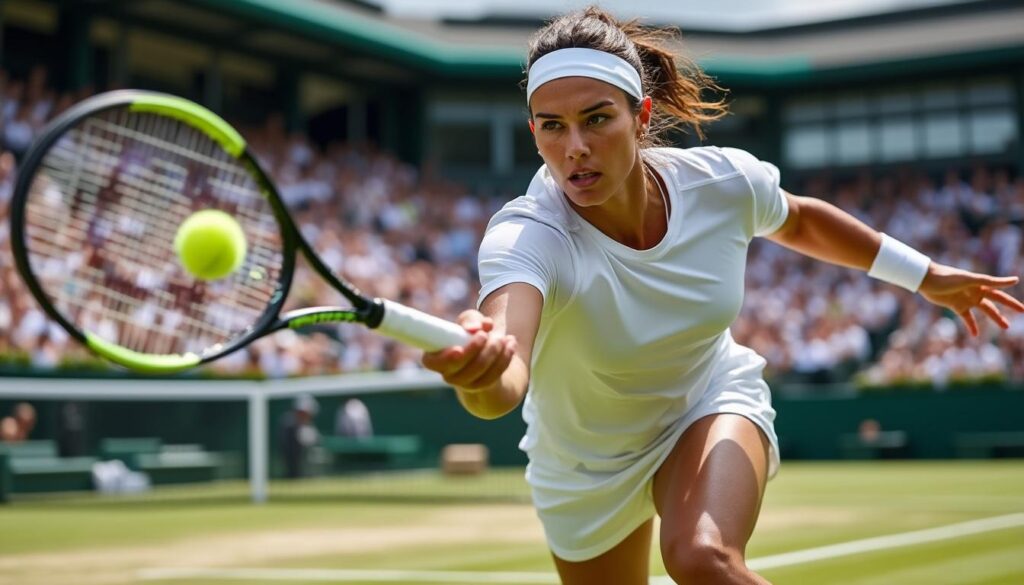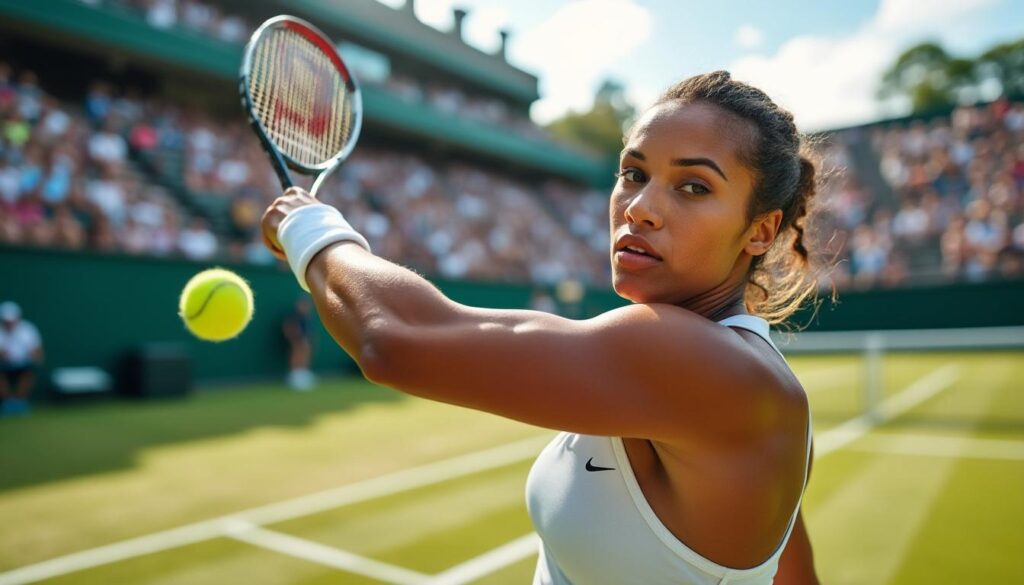
In the high-stakes world of tennis, the difference between a routine match and a gripping showdown often lies in the mastery of court movement and shot consistency. These fundamental skills are the heartbeat of every player’s arsenal, crucial for navigating the fast-paced rallies and relentless pressure that characterize competitive tennis. The ability to glide swiftly across the court while delivering shots with unwavering precision transforms players from mere competitors into commanding forces. This profound synergy between footwork and shot execution fuels every thrilling exchange, every edge-of-the-seat moment where games are won or lost. As 2025 unfolds with evolving training methodologies and groundbreaking insights, today’s drills are designed to sharpen these exact skills, empowering players to elevate their games to unprecedented heights.
Embracing the relentless rhythm of practice, players at all levels are discovering how focused training routines can revolutionize their consistency and movement. These are not just drills; they are game-changers, meticulously crafted exercises that forge agility, precision, and relentless endurance in the arena. Step by step, drill by drill, practitioners refine their timing, decision-making, and accuracy, turning weaknesses into weapons. For tennis enthusiasts committed to developing a dynamic presence on the court, understanding and mastering these drills is paramount. From tennis courts in bustling cities to private training facilities worldwide, this knowledge sharpens competitive edges and rewrites narratives of success.
- Unlock effective court movement through agility-focused drills that enhance speed and directional control.
- Boost shot consistency with targeted exercises increasing control under pressure and improving tactical shot placement.
- Develop muscle memory and precision by integrating repetition and pattern drills into every practice session.
- Innovate training by incorporating technological tools for real-time performance analysis and feedback.
- Enhance mental toughness alongside physical drills to sustain peak performance throughout matches.
Enhancing Court Movement through Agility and Footwork Drills for Competitive Tennis
Mastering court movement is the foundation of tennis success, demanding more than sheer speed; it requires grace, anticipation, and the ability to adapt instantly. Agility and footwork come together to create a player who not only reaches difficult shots but does so with finesse and prepared positioning for the next stroke. Agility drills cultivate explosive starts, smooth directional changes, and the stamina to sustain rapid movement patterns, while footwork drills refine the critical step techniques to maximize balance and control.
Among the most effective agility drills are ladder drills, which compel players to accelerate and place their feet precisely within defined rungs. This not only elevates foot speed but develops coordination essential for fluid court navigation. Another powerful exercise includes cone drills, arranged in zigzag or variable patterns, forcing sharp directional shifts that mimic the unpredictable rally transitions during intense matches. These drills enhance reaction time and the player’s ability to quickly recover balance after lunging or stretching for returns.
Mixing agility with endurance-focused exercises amplifies court coverage. Sprinting from baseline to net repetitively improves explosive power that sustains throughout long matches, essential for maintaining quick recovery between shots. Additionally, practicing the split-step timing drill enables players to hit the ground running exactly as opponents strike the ball, optimizing their readiness to respond effectively.
- Ladder Drills – Boost speed and coordination through rapid, precisely placed footwork.
- Cone Zigzag Drills – Enhance quick directional shifts mimicking unpredictable points.
- Side-to-Side Shuffles – Build lateral quickness and balance in response to shots.
- Baseline Sprints – Increase stamina and explosive recovery for extended rallies.
- Split-Step Timing – Synchronize movement initiation with opponent’s shot for optimal positioning.
| Drill | Purpose | Benefit |
|---|---|---|
| Ladder Drills | Enhance foot speed and coordination | Improves rapid, precise foot placement |
| Cone Zigzag Drills | Train agility and sharp directional changes | Prepares player for unpredictable real match scenarios |
| Side-to-Side Shuffles | Develop lateral quickness and balance | Facilitates effective defensive positioning |
| Baseline Sprints | Build endurance and explosive speed | Supports sustained high-intensity play |
| Split-Step Timing | Improve reaction initiation on opponent’s shot | Maximizes readiness and shot return efficiency |
The integration of these drills into a regular training routine not only hones physical abilities but also rewires neural pathways, embedding faster reflexes and intuitive court sense. Coupled with contemporary technology such as wearable sensors and video analysis, players can receive immediate feedback and tailor drills to address individual weaknesses. This fusion of traditional drills and modern tools ensures that every session contributes significantly to more agile and responsive court movement.
Drills That Build Shot Consistency: From Serve to Volley Precision
Shot consistency is the hallmark of dominating tennis play. The ability to execute shots repeatedly with precision under pressure enables players to control the pace and flow of the game. This consistency encompasses every stroke, from explosive serves to delicate volleys, demanding targeted drills that sharpen muscle memory and mental focus.
Serving drills are a cornerstone of improving shot consistency. These enhance power, accuracy, and repeatability, transforming serves from mere opening shots into strategic weapons. The serve improvement drills encourage players to focus on target practice, aligning serves with specific zones within the service box to heighten placement accuracy. Using tools like speed radar to monitor serve velocity supports gradual power gains, while practicing routine-driven serves helps in establishing a reliable mental and physical pattern, minimizing errors.
Forehand drills such as dyeing focus on controlled topspin generation, allowing players to manipulate ball trajectory and speed effectively. Drills like the Alcaraz forehand drills demonstrate how systematically cultivating racket head speed and brush-up angles results in improved aggression without sacrificing control. Footwork-based forehand routines further amplify consistency by entraining optimal positioning before shot execution.
Volley drills emphasize reflexes and placement, crucial for closing points at the net. Rapid volley sequences against a wall or a partner forcing quick directional changes improve hand-eye coordination. Additionally, practicing sharp-angled volleys and alternating between deep and short placements enables players to disrupt an opponent’s rhythm effectively. These techniques, when performed diligently, translate into decisive point finishes during matches.
- Serve Target Practice – Place targets to refine precision in serve placement.
- Topspin Forehand Work – Increase control and power through spin drills.
- Volley Reflex Training – Use rapid volley exchanges for quick reaction development.
- Consistent Routine Drills – Establish mental and physical habits that reduce errors.
- Shot Placement Drills – Enhance strategic ball placement to control rallies.
| Drill | Focus Area | Expected Outcome |
|---|---|---|
| Serve Target Practice | Serve Accuracy | Precision in hitting service box zones |
| Topspin Forehand Work | Shot Control and Power | Improved spin and ball trajectory control |
| Volley Reflex Training | Net Play Quickness | Enhanced hand-eye coordination and speed |
| Consistent Routine Drills | Serve Mental Focus | Reduced shot errors and shot rhythm stability |
| Shot Placement Drills | Strategic Ball Placement | Improved control over rally dynamics |
Diligent execution of these drills integrates physical technique with focused mindsets, creating a formidable consistency under competitive pressure. Players seeking to raise their game should explore interactive drills such as court geometry tactical play exercises to further develop smart shot placement and court awareness. This comprehensive approach ensures not just physical skill enhancement but also tactical intelligence that defines top-tier players.
Advanced Footwork and Agility Drills to Sharpen Court Coverage
Elevating court coverage means more than moving fast; it’s about moving smart with precision, efficiency, and anticipation. Training that targets advanced footwork and agility is pivotal. As the game intensifies in speed and style, players must evolve their movement patterns to remain competitive.
Advanced ladder patterns like in-and-outs, lateral hops, and quick directional changes refine both foot speed and control. Adding plyometric elements such as box jumps interspersed within agility circuits trains explosive power, essential for rapid starts and stops on court. Sprint drills combined with directional changes condition the muscles and nervous system for repeated bursts of high-intensity movement, critical during extended rallies.
Equally significant are drills integrating reaction components, where players respond to cues that simulate live game scenarios. For instance, reaction speed drills with a partner require quick decision-making matched with dynamic footwork, simulating the unpredictability of match play. These exercises sharpen not only physical agility but sharpen court awareness.
- In-and-Out Ladder Drills – Enhance foot speed and coordination through varied stepping patterns.
- Plyometric Box Jumps – Build explosive leg power for quick court transitions.
- Sprint and Direction Change Drills – Develop acceleration and deceleration mechanics.
- Partner Reaction Speed Exercises – Cultivate responsiveness and quick reflex adaptation.
- Dynamic Lateral Drills – Improve side-to-side movement fluidity and power.
| Drill | Focus | Benefit |
|---|---|---|
| In-and-Out Ladder Drills | Precision Footwork | Rapid, accurate foot placement |
| Plyometric Box Jumps | Explosive Power | Stronger leg drive and jump ability |
| Sprint & Direction Change Drills | Acceleration & Deceleration | Enhanced speed control and stopping |
| Partner Reaction Speed Exercises | Reactive Agility | Improved on-court responsiveness |
| Dynamic Lateral Drills | Lateral Footwork | Efficient side-to-side movement |
The integration of agility and reaction drills is essential in tennis, where split-second decisions define outcomes. This approach fuses physical prowess with cognitive sharpness. Players looking to intensify their training and gain a competitive edge in 2025 can benefit greatly from combining these drills with conditioning programs tailored for hard courts, such as those detailed in conditioning plans for hard courts. These provide the stamina necessary to sustain high-energy court movement across demanding matches, ensuring peak performance when it matters most.
Integrating Practice and Mental Toughness to Sustain Peak Performance on Court
Physical training alone is insufficient. The mind wields equal power in sustaining court movement and shot consistency. High-pressure moments demand unshakeable mental resilience and unwavering focus. This duality of physical and mental practice crafts champions who endure, adapt, and triumph under pressure.
Mental toughness circuits incorporating visualization techniques, breathing control, and stress management strategies significantly impact shot reliability and movement precision during crucial match points. Players benefit from structured routines that embed consistency into both mind and body, allowing them to tackle challenging situations with confidence.
Combining physical drills with mental conditioning amplifies results. For example, integrating pre-drill mental routines enhances concentration during fast-paced reaction training. This fusion ensures players execute footwork reflexively while maintaining strategic shot placement, enhancing overall consistency. Including activities like the mental toughness circuit along with physical agility drills fosters a holistic development indispensable for tournament-level players.
- Visualization and Breathing Exercises – Improve focus and reduce performance anxiety.
- Routine Building – Establish mental habits that create reliable shot execution.
- Stress Management Training – Develop resilience during intense point exchanges.
- Combined Mental-Physical Drills – Synchronize mind and body under simulated match pressure.
- Mindful Practice Sessions – Enhance learning retention and adaptability.
| Technique | Purpose | Impact |
|---|---|---|
| Visualization & Breathing Exercises | Enhance mental focus | Improves consistency and reduces errors under pressure |
| Routine Building | Create reliable shot patterns | Boosts confidence and reduces variability in shot execution |
| Stress Management Training | Build resilience | Sustains performance during critical match moments |
| Combined Mental-Physical Drills | Synchronize mind and body | Enhances reflex-driven movement and shot precision |
| Mindful Practice Sessions | Improve learning efficiency | Leads to quicker adaptation and skill retention |
Understanding that training extends beyond physical exertion, players must commit to a balanced regimen that equally nurtures mental strength and tactical knowledge. Resources like mental toughness programs combine with technical drills to elevate shot consistency even under fatigue. Integrating this approach prepares players not only for victory but for the virtuosic performance tennis demands.
Leveraging Technology and Tactical Drills to Revolutionize Tennis Skill Development
The tennis landscape in 2025 is marked by a remarkable fusion of traditional drills and cutting-edge technology, accelerating skill development at unprecedented rates. Technologies such as video analysis, wearable sensors, and virtual simulations empower players and coaches to dissect performance with unparalleled clarity.
Drills have evolved with these tools, incorporating dynamic feedback mechanisms that enhance precision in court movement and shot consistency. Smart court systems can track player positioning and shot accuracy in real-time, offering data that informs targeted adjustments. This technology revolutionizes training by highlighting subtle inefficiencies and reinforcing optimal techniques.
For example, tactical drills utilizing smart court feedback help players experiment with different shot placements and footwork patterns in a controlled setting, rapidly accelerating strategic learning. Integrating these with match-simulation drills primes players to adapt quickly during tournaments, turning static practice into dynamic, responsive training. Tennis enthusiasts and aspiring professionals alike can tap into this synergy, blending proven drills with innovative technology for a comprehensive developmental experience.
- Wearable Sensors – Capture real-time movement data for personalized feedback.
- Video Analysis Tools – Enable detailed technique review and correction.
- Virtual Reality Simulations – Provide immersive tactical training environments.
- Smart Court Technology – Track shot placement and court coverage metrics.
- Tactical Match Drills – Apply skills in replicative game scenarios for deeper learning.
| Technology | Application | Benefit |
|---|---|---|
| Wearable Sensors | Movement tracking during drills | Customizes training to individual needs |
| Video Analysis | Technique breakdown and correction | Improves form and efficiency |
| Virtual Reality | Simulated match scenarios | Enhances decision-making and anticipation |
| Smart Court Systems | Real-time shot and movement metrics | Optimizes court positioning strategies |
| Tactical Match Drills | Game-like practice with feedback | Deepens skill integration under pressure |
Embracing these advances not only accelerates individual progress but also transforms coaching efficacy. Tennis programs now routinely integrate these technologies with traditional match drills from prominent tournaments, creating seamless pipelines for player development and competitive readiness. The future belongs to those who harness this technology-driven evolution to refine court movement and shot consistency like never before.
What are the most effective drills to improve tennis court movement?
Drills such as ladder exercises, cone zigzag runs, side-to-side shuffles, baseline sprints, and split-step timing drills are highly effective in building agility, speed, and precision on the court. Combining reactive drills with plyometric exercises enhances overall court coverage and responsiveness.
How can beginners develop shot consistency in tennis?
Beginners should focus on routine serve and forehand drills, including target practice, repetition exercises, and volley reflex training. Incorporating mental focus techniques and consistent practice builds muscle memory and shot accuracy over time.
What role does mental toughness play in tennis training?
Mental toughness is crucial for sustaining performance under pressure. Techniques including visualization, routine building, and stress management help players maintain shot consistency and quick court movement even during intense match moments.
How is technology transforming tennis training?
Technology such as wearable sensors, video analysis, virtual reality, and smart court systems provide detailed feedback on movement patterns and shot accuracy. This enables tailored training plans that significantly enhance skill development and tactical awareness.
Can combining physical and mental drills improve overall tennis performance?
Yes, integrating mental conditioning with physical agility and shot drills builds a holistic skill set. This combination enhances reflexes, decision-making, and consistency, empowering players to excel on the court.