The Colina WTA 125 tournament in Chile, held over November 2025, perfectly illustrates how environmental factors like altitude and ball characteristics influence player performance and gear selections. Nestled at an elevation that challenges both players and equipment, this clay-court event offers more than just thrilling matches—it provides valuable lessons for club players seeking to optimize their own tennis experience. With the heavy balls in play and the unique tournament conditions, the intersection of gear, technique, and environmental adaptation unfolds in a compelling narrative that resonates far beyond the elite circuit. This coverage delves deeply into what makes Colina a case study in tennis equipment choices and performance strategy, especially relevant for enthusiasts and club players worldwide.
Key Points to Remember:
- Altitude’s impact: How playing at higher elevations affects ball flight, player endurance, and gear demands.
- Heavy balls in clay-court conditions: The physical and tactical considerations surface in Colina.
- Gear adaptations: What club players can learn from pros about tennis equipment choices suited to various tournament environments.
- Chilean clay courts: Insights into how surface and local climate influence play and equipment strategy.
- Performance takeaways: Emulating professional practices to elevate club-level tennis through informed gear and technique adjustments.
Altitude Effects on Tennis Play and Equipment at Colina WTA 125
The Colina tournament, set in the vibrant Santiago Metropolitan region of Chile, draws significant attention due to its notable altitude—approximately 770 meters (2,500 feet) above sea level. While not extreme, this elevation produces tangible effects on ball dynamics and player physiology. At altitude, lower air density reduces drag on the tennis ball, causing it to travel faster and bounce higher. For players accustomed to standard sea-level conditions, this shift demands swift tactical and technical adjustments.
Professional athletes tackle these challenges by modifying playing style and equipment specifications. At Colina, players often opt for racquets strung at slightly higher tensions to regain control over ball speed or select string patterns that enhance spin generation. Additionally, groundstrokes become more penetrative, prompting baseline players to adapt with steadier footwork and more precise shot placement.
Players’ endurance is also tested, as thinner air limits oxygen availability, increasing fatigue during extended rallies or matches. This environmental stress underscores the value of physical preparation and gear that supports performance, such as sneakers optimized for altitude-induced balance shifts and enhanced breathability.
Practical Gear Lessons for Club Players
Club players can glean several insights from the professional adjustments seen in Colina:
- String tension adjustment: When playing at moderate altitudes, slightly increasing string tension can help improve shot control against faster ball speeds.
- Footwear selection: Shoes with superior stability and grip, as detailed in recent tennis footwear trends, prove vital on clay surfaces combined with altitude challenges.
- Customizing racquet setup: Considering different string patterns or racquet weights to optimize spin and accuracy in varying environments.
- Conditioning focus: Incorporating endurance and recovery routines to better withstand altitude’s physical demands, as found in offseason strength programs.
| Altitude Impact | Effect on Play | Gear Adaptation |
|---|---|---|
| 770 m elevation | Increased ball speed and higher bounce | Increased string tension; spin-oriented strings |
| Lower oxygen density | Faster player fatigue | Breathable, stable footwear; fitness conditioning |
Heavy Balls on Clay Courts: Influences on Strategy and Equipment in Colina
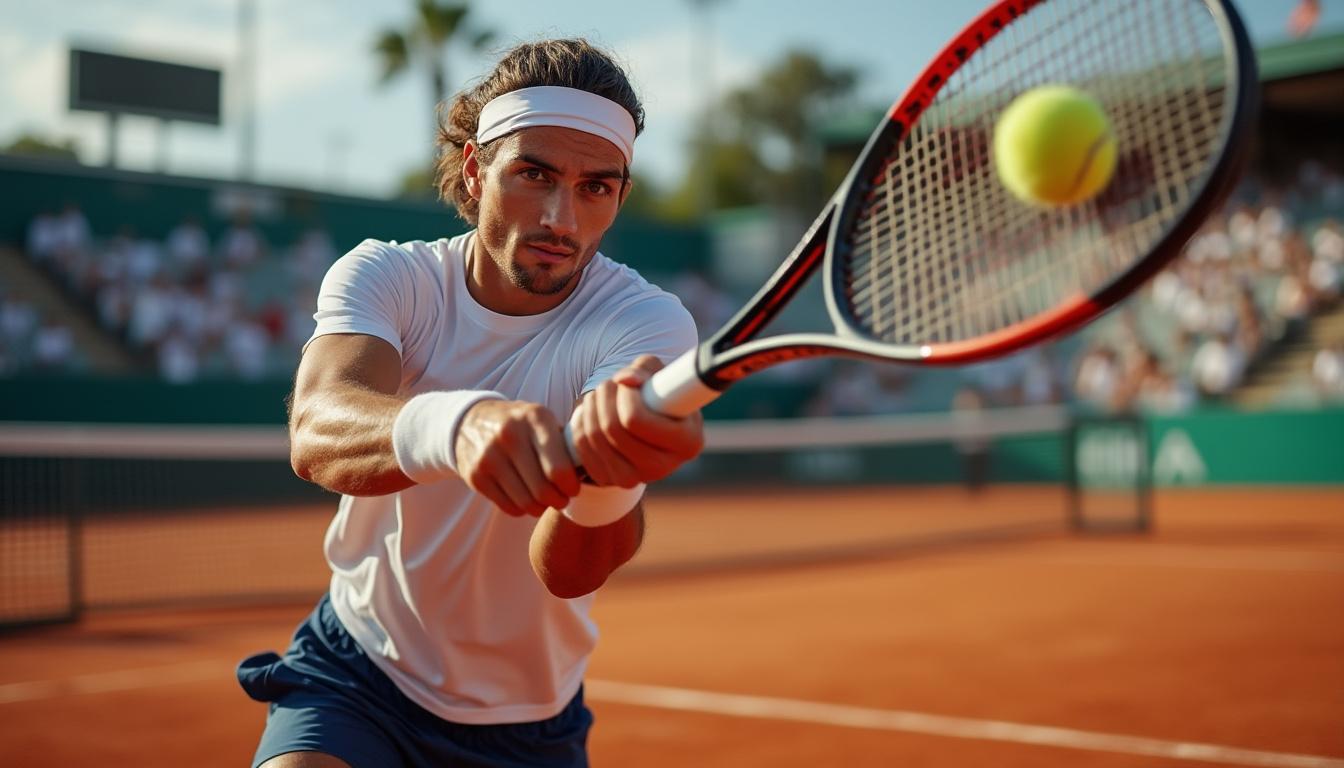
The use of heavy balls—denser, slightly larger than conventional tennis balls—is a defining feature at Colina’s red clay courts. These balls affect many facets of play, demanding adjustments in both technique and gear. Heavy balls travel slower and bounce higher, which combined with altitude’s effect, create a unique challenge, balancing faster trajectory but heavier feel upon contact.
Players benefit from choosing rackets that emphasize control and stability, often preferring models with a balanced or slightly head-light swing weight. The ball’s increased mass also demands greater physical effort and precise timing to optimize stroke execution. This situation tests not only muscle endurance but also the player’s ability to anticipate ball behavior.
The heavier balls at Colina necessitate strategic recalibrations, including reduced swing speed to maintain consistency and increased emphasis on topspin to exploit clay court characteristics. Footwork and positioning become crucial as players adjust to longer rallies and higher ball response.
Takeaways for Club Players
Many club players encounter diverse ball types and varying court surfaces; Colina’s conditions teach critical lessons:
- Racquet selection tuned to ball behavior: Lightweight and maneuverable rackets improve handling heavy balls without sacrificing power—some options reviewed at best tennis rackets for doubles players also suit clay-court singles play.
- String tension balance: Slightly lower tension can absorb impact from heavier balls, improving feel and reducing arm strain.
- Footwear designed for clay: Enhanced traction and lateral support critical for managing variable ball bounces and shifting pace.
- Stroke modification: Slowing swing speeds and increasing spin help counteract the ball’s weight and preserve consistency over longer rallies.
| Heavy Ball Trait | Player Impact | Recommended Adaptation |
|---|---|---|
| Slower travel speed | Adjust swing timing; focus on spin | Control-oriented racket, spin-friendly strings |
| Higher bounce on clay | Alter footwork, prepare for variable ball height | Clay court shoes with enhanced traction |
| Greater mass | Increased muscular effort | Lightweight racquets, moderate string tension |
Learning from Pro Players’ Gear Choices: Insights from Colina’s Competitive Landscape
Looking beyond physical conditions, the choice of tennis equipment among professionals at Colina offers invaluable insights for players at every level. In the 2025 Colina WTA 125 event, competitors including Léolia Jeanjean and Oleksandra Oliynykova displayed distinct preferences shaped by the tournament’s demands. Oleksandra Oliynykova’s success in the finals, for example, was complemented by equipment calibrated for heavy balls and dynamic altitude conditions—a reflection of an adaptation process grounded in detailed knowledge of gear performance.
Professional players carefully consider aspects such as racquet weight, balance, string type, and tension to match their style to the environment. For example, in Colina’s demanding conditions, pros often selected rackets offering a blend of power and control while favoring durable strings able to withstand heavy ball impacts on clay.
Moreover, footwear choices leaned towards models with maximal grip and cushioning to endure the physical stress of altitude and clay slide. These attributes reflect a comprehensive approach to equipment, where each element addresses the unique challenges posed by Colina.
What Club Players Should Note
- Personalize gear to local conditions: Just as pros adjust string tension or shoe type for tournaments, club players benefit from equipment tailored to their court environment and playing style.
- Prioritize comfort and injury prevention: Footwear and racquet modifications can mitigate physical strain, an approach echoed in injury prevention training.
- Monitor ball types: Recognizing different ball brands and their characteristics, described in comparisons of tennis balls, guides better play and gear decisions.
- Leverage technology: Tools like advanced tennis sensors referenced in sensor reviews help players analyze stroke mechanics and optimize equipment setups.
| Equipment Aspect | Pro Adaptation at Colina | Club Player Application |
|---|---|---|
| Racquet Weight & Balance | Balanced or head-light for control | Select based on playing style and local court |
| String Type & Tension | Durable, spin-friendly; adjusted tension | Customize tension for ball behavior and arm comfort |
| Footwear | Max grip, cushioning, stability | Choose shoes designed for court surface & fit |
| Ball Selection | Heavy clay courts balls | Experience with different brands improves adaptability |
Chile’s Clay Courts & Tournament Atmosphere: A Unique Tennis Environment
The outdoor clay courts at Hacienda Chicureo Club in Colina craft the distinctive atmosphere of this WTA 125 tournament, blending natural beauty with competitive rigor. The red clay creates slower ball speeds and higher bounces relative to hard or grass courts, adding strategic depth to matches. Combined with Chile’s November climate—mild but sometimes windy—the conditions require adaptive play and specialized gear.
Chile’s clay surface accentuates baseline rallies, demanding consistent endurance and patience from players. For club athletes, understanding how varied court speeds influence ball spin and bounce empowers better tactical decisions and gear adjustments. For instance, shoes with specific sole patterns optimize traction on soft clay to prevent slipping and enhance directional changes.
Players and fans alike benefit from this unique blend of environmental and cultural elements, as seen in the passionate local support and immersive tournament vibe. This synergy enhances competitive intensity and provides a rich learning ground for players who aspire to adapt their game to diverse settings.
Key Adaptations for Club-Level Enthusiasts
- Choose clay court shoes: Prioritize shoes with optimal grip and durability for soft surfaces, as detailed in shoe guides.
- Adjust string tension for slower court: Slightly looser strings help maintain ball control on slow clay.
- Master topspin strokes: Clay rewards heavy topspin; training on this surface can improve overall stroke mechanics, linked to youth technique skills strategies.
- Prepare for weather variations: Layering and hydration strategies are critical, aligning with advice on playing tennis in variable conditions.
| Surface | Effect on Play | Recommended Gear |
|---|---|---|
| Red clay courts | Slower ball speed; longer rallies | Clay-specific shoes; looser string tension |
| Outdoor, mild November climate | Variable wind; moderate temperatures | Layered attire; hydration gear |
| Altitude effect combined | Mixed influence on ball trajectory | Adapted racquets and balls |
Performance Strategies from Colina’s WTA 125 for Club Players
The synthesis of altitude, heavy ball use, and clay court nuances in Colina provides a masterclass in performance strategy. Pro players’ approaches to conditioning, gear customization, and tactical adaptation outline a roadmap valuable to club players seeking to elevate their games. Understanding the synergy between environment and equipment becomes a defining factor.
Successful competitors adjust by managing energy efficiently, emphasizing recovery and mobility workouts specific to the demands of endurance on clay at altitude. Incorporating these elements into training helps club athletes mimic professional resilience. Alongside fitness, gear choices such as racquet grip size, string tension, and shoe type further refine performance.
Club players should consider a holistic approach that blends equipment savvy with physical and technical training. For detailed insights into fitness and injury prevention, guide resources offer targeted advice. Meanwhile, tracking match data via apps like those described in live tennis score apps supports ongoing progress and tactical refinement.
Actionable Performance Tips
- Endurance training: Prioritize interval workouts and mobility routines designed for clay conditions and altitude, building stamina and agility.
- Equipment trial: Regularly test different racquet setups and shoe models to find the best match for your style and environment.
- Technical adjustments: Embrace topspin-heavy strokes and varied shot pacing to control heavy balls and longer rallies.
- Data-driven improvement: Use technology and apps to monitor performance, adjust tactics, and prevent injury.
| Strategy | Pro Practice at Colina | Club Player Recommendation |
|---|---|---|
| Endurance & Recovery | Mobility and interval workouts for altitude | Incorporate targeted fitness routines |
| Gear Testing | Custom racquet/string setups for heavy balls | Trial multiple setups to find fit |
| Technical Play | Topspin and stroke control on clay | Focus on spin and timing adjustments |
| Performance Feedback | Match data analytics and sensor technology | Use apps for feedback and progress |
How does altitude at Colina affect tennis play?
Altitude around 770 meters results in faster ball speeds and higher bounces due to lower air density, demanding adjustments in string tension and playing technique.
What are the characteristics of the heavy balls used in the Colina WTA 125?
Heavy balls travel slower and bounce higher, requiring players to adjust swing speed and focus more on topspin to maintain control on the clay surface.
Which gear adaptations are recommended for club players playing at altitude on clay?
Players should consider increasing string tension slightly, using clay-specific shoes with high traction, and choosing racquets balanced for control and spin.
How can technology help club players improve based on professional insights from Colina?
Using tennis sensors and live score apps helps track stroke mechanics, analyze performance, and guide gear and technique adjustments effectively.
Why is footwear particularly important in tournaments like Colina?
Footwear with proper grip, cushioning, and stability supports players on slippery clay and mitigates physical stress heightened by altitude effects, enhancing endurance and injury prevention.