
As the tennis calendar transitions to its late November stretch in 2025, the spotlight shines on the heavy clay courts of Buenos Aires and Colina, hosting prestigious WTA 125 events that attract a diverse pool of competitive talent. Players navigating these challenging surfaces seek not only top-tier physical conditioning but also the perfect tennis racquets tailored to the nuances of heavy clay conditions. Unlike faster hard or grass courts, clay demands equipment that harmonizes with slower ball speeds, heavier bouncing, and relentless baseline rallies, dictating a strategic blend of control, spin, and power.
This period of the year invites an intricate analysis of the tennis setups showcased in these tournaments. WTA 125 events like Buenos Aires and Colina offer an insightful window into emerging trends and player preferences related to clay court racquets. Crafting the optimal setup involves an understanding of how strings, tension, racquet balance, and weight distribution influence shot precision and stamina under the physical demands of heavy clay.
Understanding the unique environmental conditions encountered – often humid, unpredictable late-November weather – is crucial. This adds layers of complexity to choosing tennis equipment, as racquets must maintain consistency despite moisture affecting court softness and ball behavior. Players seen on the courts of Buenos Aires and Colina provide practical examples of how the right racquet choices can elevate performance and wield a competitive edge in heavy clay fighting contexts.
Below, the focus turns to dissecting the best tennis racquets engineered for these conditions, inspired by real setups from the WTA 125 action late in 2025. This analysis draws from player insights and technical innovations, guiding enthusiasts and pros alike toward smarter gear investments aligned with clay court excellence.
In brief:
- Heavy clay courts require racquets emphasizing spin, stability, and comfort due to slower surface speed and longer rallies.
- Tournaments like Buenos Aires and Colina WTA 125 events reveal the latest effective tennis setups adapted for late November clay conditions.
- Top racquets in 2025 offer versatility across play styles, with innovations centered around arm-friendly tech and enhanced control.
- Proper string tension, balance, and frame weight are decisive factors in managing the rigors of competitive tennis on heavy clay.
- Choosing a racquet suited for clay ensures improved shot execution, endurance, and adaptability amid fluctuating court conditions.
Optimizing Tennis Racquets for Heavy Clay Conditions in Late November 2025
Heavy clay courts uniquely challenge players due to their slow, high-bounce characteristics that demand an intricate balance in tennis racquets. Rackets must enable precise spin generation to exploit the surface’s grip while maintaining sufficient power to control long rallies and execute aggressive plays. Late November in 2025 further intensifies this scenario with cooler temperatures that slightly alter ball behavior and court resilience.
One fundamental adjustment for heavy clay conditions is opting for racquets that emphasize a larger sweet spot and enhanced vibration dampening. Such features cushion the arm from fatigue during extended points and allow confident shot placement, even on less than perfect contact. The specific tactics for clay court play highlight that topspin-heavy shots remain dominant, pushing manufacturers to offer tennis racquets with open string patterns (such as 16×19) for increased bite and spin potential.
Players often select tennis racquets with a slightly heavier frame to stabilize against the clay’s resistance and reactive bounces. A racket weighing between 300g to 320g strung tends to provide the durability and power transfer essential for sustained competitive tennis on clay. At the same time, balancing weight towards the racquet head can amplify power for deep baseline penetration, crucial for controlling points in the grueling rallies typical of clay court events like the Buenos Aires WTA 125.
Important aspects to consider include:
- Weight and Balance: Heavier, head-light frames enable strong, precise swings with a faster racquet head speed.
- String Pattern: Open patterns prefer spin, key for controlling ball trajectory on clay, but must strike a balance to reduce string wear from abrasive surface contact.
- Dampening Technology: Vital for reducing arm shock and maintaining comfort during extended rallies in clay events that often last over an hour per point.
- Grip Customization: Players customize grips extensively at tournaments like Colina, adjusting for moisture and to preserve control under physically demanding matches, as detailed in expert grip guides.
| Racquet Feature | Ideal Specification for Heavy Clay | Benefit on Clay |
|---|---|---|
| Weight | 300-320 grams (strung) | Increases swing stability and power delivery |
| Balance | Head-light to even | Enhances maneuverability and control during baseline rallies |
| String Pattern | 16×19 or 18×20 | Optimizes spin without compromising durability |
| Dampening | Advanced vibration filtering systems | Protects arm and helps maintain consistency in long matches |
Equipping yourself with the right tennis racquets for heavy clay conditions in late November 2025 often means selecting technology refined through player feedback and tailored for WTA 125 challenges encountered in Buenos Aires and Colina. Such attention to detail pays dividends in power, control, and injury prevention, shaping success on the demanding clay courts.
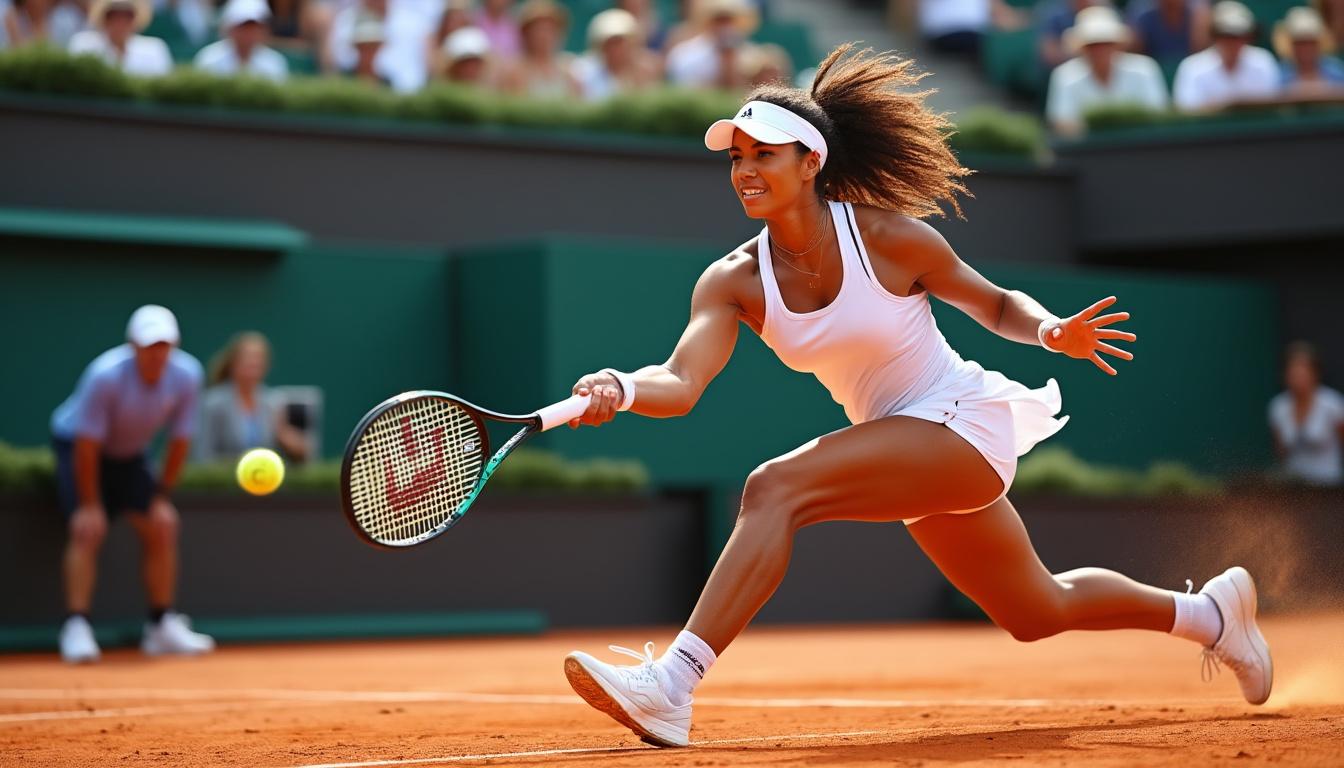
Insights from the Buenos Aires and Colina WTA 125 Events: Tennis Setups Sculpted by Competition
The WTA 125 events in Buenos Aires and Colina are renowned for revealing pioneering tennis setups perfectly attuned to heavy clay conditions in late November. Players at these tournaments blend personal preferences with environmental demands, creating racquet profiles that push the bounds of performance on slower surfaces.
Observations from these tournaments in 2025 confirm an increased preference for racquets like the Yonex EZONE 100 and Babolat Pure Drive. Both models have been upgraded recently to offer enhanced blend of spin, power, and comfort. Yonex’s adaptive dampening technology facilitates long rallies by reducing unwanted vibrations, allowing players to initiate aggressive topspin tactics crucial on clay, as seen repeatedly during the final rounds in Buenos Aires.
Meanwhile, Babolat’s refined Pure Drive editions provide the injection of pop required to strike penetrating serves and forehands amidst the slower pace and higher resistance posed by clay courts. The proximity of players to the baseline rallies during the Colina WTA 125 underscores the importance of maneuverability with spin-friendly tennis equipment designed for this unique surface. Manufacturers have responded by optimizing racquet frames with balanced weight distributions for reliable volley-to-groundstroke transitions.
Key trends emerging from these events:
- Increased use of customized string tensions tailored to weather and surface conditions, enhancing spin control and ball depth, as detailed in string tension trends.
- Preference for versatile racquets that can deliver all-court capabilities, especially relevant given players’ tactical adjustments documented through shot selection analyses at clay finals.
- Integration of tech innovations allowing better dampening and lower risk of arm fatigue during extended exchanges typical in clay tournaments.
- Ongoing experimentation with racquet customization and grip balance to adjust to moisture and temperature variability common in late November.
| Player Setup Feature | Observed Preference – Buenos Aires | Observed Preference – Colina | Performance Outcome |
|---|---|---|---|
| Racquet Model | Yonex EZONE 100 (2025) | Babolat Pure Drive (2025) | Durable comfort and spin-heavy baseline dominance |
| String Tension | 50-53 lbs | 48-52 lbs | Optimal balance of power and control for clay |
| Grip Type | Custom moisture-absorbing synthetic | Traditional leather with overgrip | Enhanced racket handling and stroke fluidity |
| Vibration Dampening | Progressive polymer inserts | Integrated frame damping systems | Reduces arm fatigue and heightens shot precision |
These setups emphasize the importance of pairing the right tennis racquets with expert customization, helping players tackle the unique demands of heavy clay competition throughout the season. For those seeking to emulate success seen in WTA 125 events, paying close attention to racquet features and string setups can offer a tangible performance boost on clay courts.
Leading Tennis Racquets for Clay Courts: 2025 Innovations and Player Preferences
The year 2025 stands out as a period where tennis racquet engineering focused on refinement rather than radical reinvention. Innovations have concentrated on texture, balance, feel, and arm protection — factors critical for demanding surfaces like heavy clay.
Foremost among current favorites is the Yonex EZONE 100, renowned for its isometric head shape that enhances the sweet spot size and offers an impressive blend of comfort and power. The dampening system incorporated reduces vibrations harsh on the arm while keeping stroke feedback vibrant. This makes it highly adaptable for diverse clay court playing styles, from heavy topspin baseliners to tacticians weaving touch shots.
Another leading contender, the Wilson Clash 100 V3 Roland-Garros Edition, embraces a flexible yet stable frame designed to absorb impact and translate energy efficiently. Its lightweight composite allows quick swings and sharp angles—imperative for reactive clay court play observed in tournaments like Buenos Aires. The aesthetic also draws inspiration from clay itself, marrying function with form.
Players favoring aggressive baseline play may gravitate towards the Babolat Pure Drive (2025), which combines explosive power with moderated stiffness for arm friendliness. The racquet’s refined stringbed offers exceptional dwell time, allowing players to generate heavy topspins critical on clay. Advanced recreational and professional players find this choice balances aggression and control effectively.
Key innovations and features across top models:
- Isometric Head Shapes: Expanded sweet areas reduce off-center penalties on clay’s unpredictable bounces.
- Flexible Frames: Enhanced comfort and energy return to prevent arm strain during marathon rallies.
- String Bed Design: Optimized for spin and durability against abrasive clay court friction.
- Refined Weight Distribution: Balances stability with maneuverability for seamless net approaches and baseline power.
| Racquet | Weight (Strung) | Balance | String Pattern | Ideal Player Type | Clay Suitability |
|---|---|---|---|---|---|
| Yonex EZONE 100 (2025) | 305g | Even balance | 16×19 | All-court versatile players | Excellent—comfort & control on clay |
| Wilson Clash 100 V3 Roland-Garros Edition | 295g | Head-light | 16×19 | Intermediate to advanced with arm concerns | Very good—enhanced feel ideal for clay |
| Babolat Pure Drive (2025) | 310g | Even | 16×19 | Aggressive baseliners | Great—balance power and spin for clay |
| HEAD Gravity Tour 98 | 315g | Head-light | 16×19 | Experienced control players | Highly suitable for precision clay play |
These racquets underscore the importance of matching equipment with your style and the gritty demands of clay landings. Exploring options such as adjustments in string tension aligned with playing style can further maximize your clay court effectiveness.
The Role of String Tension and Grip in Tailoring Tennis Equipment for Clay
The intricate relationship between string tension and grip cannot be overstated when aiming for optimal tennis setups on heavy clay courts. These elements directly influence spin control, comfort, and shot precision—key pillars of competitive tennis on challenging surfaces like those seen in November tournaments at Buenos Aires and Colina.
Lower string tensions typically favor power and increased dwell time, giving clay court players the ability to brush up the ball and generate heavy topspin. Yet, excessively low tension risks sacrificing control, a delicate balance confirmed by professional stringers and players alike in recent tension trend reports. For late November heavy clay conditions, a mid-range tension often becomes the norm, offering control without diminishing spin capacity.
Equally crucial is grip customization. Moist clay and cooler weather mean players must adjust grips to maintain secure handling and confidence during lengthy exchanges. Synthetic grips with moisture-wicking properties or layered overgrips with textured surfaces help prevent slippage and allow more aggressive stroke execution even in varying climate conditions. Such details were widely observed deployed during the Colina WTA 125, where grip adjustments were a tactical part of race-day preparation.
- String tension range: Typically 50-54 lbs provides a balance between control and spin on clay.
- Grip materials: Moisture absorbing synthetic grips or leather alternatives with overgrips for enhanced feel.
- String types: Polyester strings remain prevalent for spin, combined with softer synthetic or natural gut mains for comfort.
- Customization: Tailoring grip size and racquet balance to personal style and conditions is essential.
| Equipment Feature | Recommended Spec for Heavy Clay | Impact on Play |
|---|---|---|
| String Tension | 50 – 54 lbs | Enhanced spin with consistent control during long rallies |
| Grip Type | Moisture-wicking synthetic or leather with overgrip | Improved racket handling and confidence in humid conditions |
| String Composition | Polyester blends or multifilament gut hybrids | Balances spin potential and arm comfort |
Optimizing these aspects is a cornerstone of smart tennis equipment choices and is essential knowledge for players serious about competing in late November heavy clay tournaments. Fans and aspiring players can learn more about these vital equipment considerations in the comprehensive tennis equipment guide, enriching their understanding of how the smallest details can impact overall performance.
Adapting Your Tennis Setup for Clay Court Success: Lessons from Competitive Tennis
Competition on heavy clay forces players to rethink strategies and equipment selection. Thanks to insights from Buenos Aires and Colina WTA 125 events, modern players now recognize the power of a tailored tennis setup in securing match-winning performances. Trials at these tournaments exemplify continuous innovation and adaptation in tennis racquets and gear to meet the grueling demands of clay.
One vital adaptation is balancing power with precision through equipment that supports both aggressive baseline strikes and deft drop shots designed to disrupt opponents on slow surfaces. Players who master this dynamic often excel, as discussed in detailed analyses of drop shot execution techniques applied at competitive levels.
Some players prefer heavier racquets with open string patterns to generate maximal spin and ball control. Others favor lighter, more maneuverable frames for quick net approaches and volley exchanges. The key takeaway from late November 2025 WTA 125 clay court contests is that no one-size-fits-all solution exists; adaptability and informed customization remain paramount.
- Hybrid string setups to merge power and comfort during extended rallies.
- Racquet weight fine-tuning to balance endurance with shot firmness on clay.
- Grip adjustments tailored to moisture and tactile feedback in clay conditions.
- Selection of tennis racquets prioritizing spin capacity without sacrificing stability or arm health.
| Adaptation Strategy | Implementation in Late November 2025 | Impact on Competitive Performance |
|---|---|---|
| Hybrid String Patterns | Use of polyester mains with softer crosses for spin and comfort | Improved rally durability and shot variety on heavy clay |
| Weight Tuning | Adding lead tape to reach optimal swing weight | Greater racquet head stability and penetration through clay resistance |
| Grip Modifications | Applying moisture-absorbent overgrip layers | Prevented slippage, increased control, confident strokes |
| Racquet Selection | Preference for models excelling in spin and vibration reduction | Reduced fatigue, sharper shot execution under competitive pressure |
Players and coaches keen on mastering clay competitions in late 2025 would do well to explore the connection between equipment and strategic shot-making, as showcased in recent professional matches and documented in resources specialized on tennis playing surfaces and clay adaptations. Continual learning and experimentation with tennis racquets and setups enable lasting success and enjoyment on the clay circuit.
What racquet features are best for heavy clay conditions?
For heavy clay courts, racquets with a balance of moderate weight (300-320g), open string patterns (such as 16×19), and advanced vibration dampening systems provide optimal spin, control, and comfort essential to withstand long rallies.
Why is string tension important for clay court play?
String tension affects power and spin; moderate tension levels around 50-54 lbs are preferred to balance control and maximize topspin, crucial for managing heavy clay conditions in tournaments like Buenos Aires WTA 125.
How do players adjust their grip for late November clay tournaments?
Players use moisture-absorbing synthetic grips or layered overgrips that provide secure handling in humid or damp conditions typical of late November, ensuring stable and confident strokes.
Are there specific racquets favored at Buenos Aires and Colina WTA 125 events?
Yes, models like the Yonex EZONE 100 and Babolat Pure Drive are favored for their adaptability, comfort, and ability to facilitate heavy topspin and stable power, aligning with the demands of clay court tennis.
How can amateur players improve their tennis setups for clay?
Amateurs can benefit by focusing on tennis racquets with open string patterns, moderate weight, and experimenting with string tension to find balance, while also customizing grips for weather conditions to enhance control and comfort.