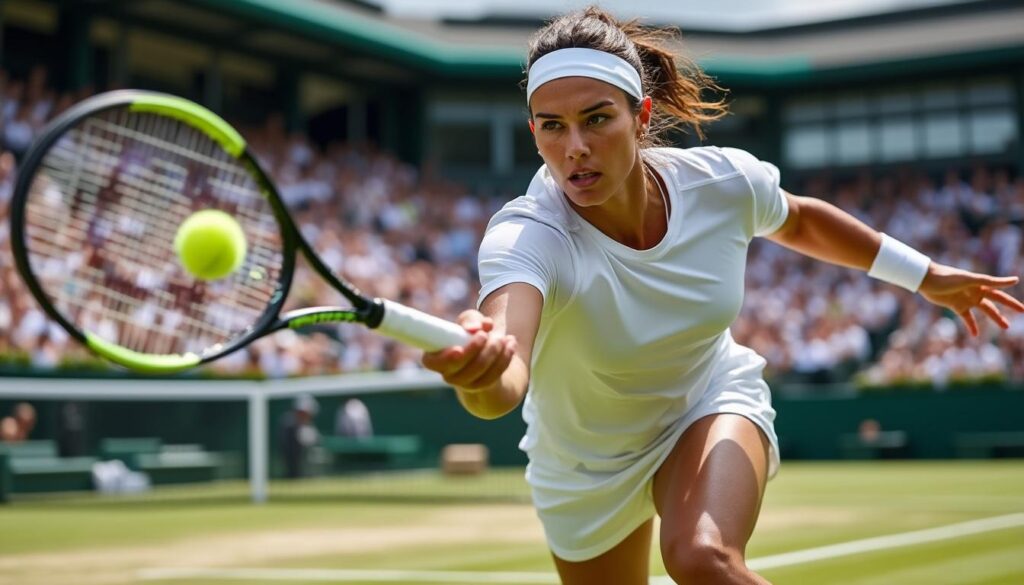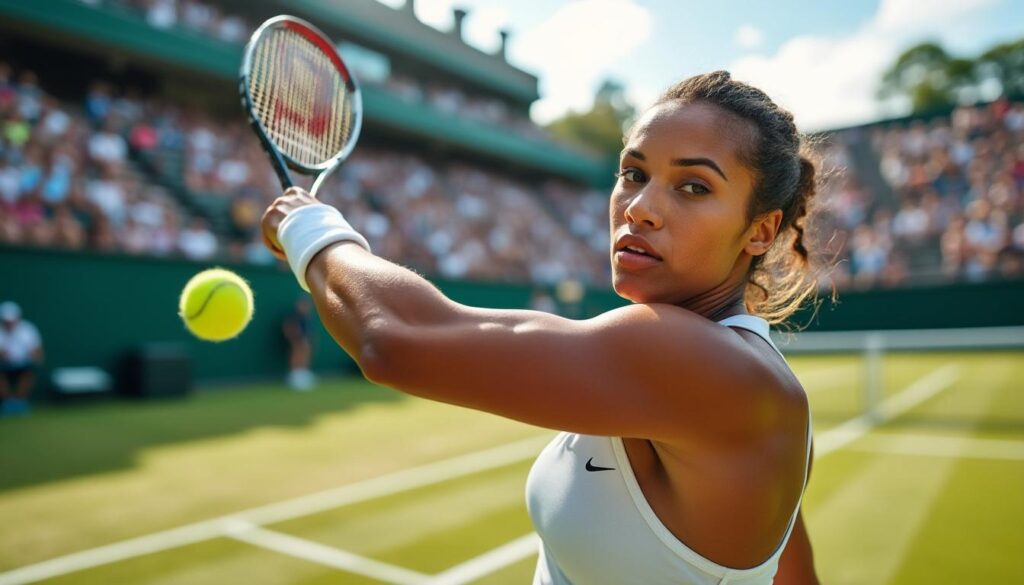
As the tennis season approaches, players across the globe ramp up their training to sharpen every edge—none more crucial than the serve. The serve stands as the game’s opening salvo, a weapon wielded to seize immediate advantage or wrest freedom from an opponent’s grip. In today’s fiercely competitive tennis landscape, the necessity to boost serve speed and precision cannot be overstated. This preparation phase isn’t merely about power; it’s a strategic elevation of athletic performance, where speed enhancement unlocks new realms of possibility. Serve-focused practice routines have become the cornerstone for players striving to explode onto the court with fire and finesse, enhancing player speed like never before.
Player speed is no longer confined to footwork and court coverage alone; the velocity and accuracy of each serve dictate momentum and pressure in every match. Speed training tailored around the serve taps into biomechanics, muscle conditioning, and mental sharpness, preparing athletes to deliver those signature shots with explosive force while maintaining pinpoint control. These serve improvement drills and training regimens encompass everything from resistance training to technique refinement, each contributing to a player’s arsenal for the upcoming battles. The power of these routines lies in their ability to convert raw speed into match-winning strategy—fueling confidence before the first ball flies.
Behind this surge is a combination of scientific insight and tried-and-true tennis drills that focus on optimizing every fraction of the serve motion. Athletes commit to these drills with relentless passion, weaving them into their pre-season training schedule to not only boost serve velocity but also to build endurance, coordination, and mental readiness. This intense focus on serve dynamics reflects a broader trend in tennis increasingly favoring aggressive baseline strategies paired with serves that intimidate and dominate, setting the tone right from the first stroke.
- Targeted biomechanical training that sharpens delivery efficiency.
- Resistance and plyometric exercises for explosive arm and core strength.
- Dynamic practice drills simulating game pressure to build nerve and precision.
- Endurance conditioning ensuring players sustain serve speed deep into matches.
- Mental conditioning techniques to maintain focus during rapid decision-making.
These components combine to form a comprehensive approach to serve acceleration, with measurable results evident in the rising serve speeds witnessed on grass and hard courts alike. The ever-evolving training regimens now embrace technological advances such as motion capture and biomechanical analysis, allowing coaches and players to fine-tune every micro-movement. The payoff is clear: faster serves create more direct points, which swing matches and seasons. Let’s explore how these serve-focused practice routines drive speed gains, boost player readiness, and transform approaches to pre-season training.
Building Explosive Power: The Core of Serve-Focused Practice Routines
Explosive power begins from within: the core—the engine behind every potent serve. The kinetic chain from legs through hips and torso to the arm unleashes velocity that can outpace the opponent’s anticipation. Players incorporate focused core workouts to generate torque and leverage, which are instrumental in maximizing serve speed.
Core conditioning is far more than crunches or static planks. It encompasses rotational medicine ball throws, cable woodchoppers, and dynamic balance exercises that mimic the serve motion. Combining these with plyometric drills enhances the fast-twitch muscle fibers responsible for rapid, forceful contractions. For example, explosive lateral jumps and medicine ball overhead throws prime the body to transmit power efficiently, translating the energy directly into the serve’s acceleration phase.
This physical foundation complements technical drills that improve serve mechanics, including optimizing stance, racquet acceleration, and follow-through efficiency. Recent studies emphasize that subtle improvements in racquet head speed contribute disproportionately to serve speed. Programs such as the tennis serve speed routine combine strength training with technical repetition to build muscle memory and natural power.
Additionally, speed training goes hand-in-hand with endurance work, as players must maintain high serve velocity throughout lengthy matches. Strength without stamina risks fading serves in crucial moments. Cross-training with marathon-inspired endurance programs can surprisingly complement serve speed by bolstering cardiovascular health, enabling players to sustain explosiveness without burnout. Resources such as endurance training for marathon athletes showcase transferable methods beneficial for tennis athletes.
The holistic approach ensures athletes develop balanced strength and athletic performance, minimizing injury risk while maximizing power output. Incorporating these elements into a structured training regimen before the season turns raw athletic promise into match-winning serves.

Serve Improvement Through Precision and Consistency Drills
Velocity alone won’t dominate—a fast serve without accuracy is a double-edged sword inviting mistakes and free points for the opponent. Hence, serve-focused routines emphasize precision to complement speed gains. Players engage in serve improvement drills to develop an ironclad serve that balances pace with control.
One such drill focuses on serve consistency, where repetition at various target zones on the service box cultivates muscle memory and target control. This simulates the mental and physical demands of a match, where pressure can undermine technique. Regular sessions employing serve consistency drills help players maintain form and avoid costly errors.
Another drill designed to sharpen tactical serving involves aim and placement training with progressive difficulty. It challenges players to hit precise spots with increasing ball speed, reinforcing the ability to place serves effectively under match pressure. Such practice routines forge a serve that is not only fast but strategically potent.
Other elements include drills that mix serve patterns — alternating between wide, body, and T serves — to enhance unpredictability and player speed in transitioning from serve to next shot. The court movement and shot drills linked to serving underscore the importance of fluid transitions and adaptability, crucial for gaining the upper hand in fast-paced rally exchanges post-serve.
Integrating mental training sessions focused on decision-making under pressure—like those outlined in top level mental training checklists—boosts a player’s ability to execute precise serves even in high-stakes moments. Speed enhancement on the serve thus becomes a cohesive blend of physical mastery and sharp mental acuity.
Dynamic Serve-Focused Practice Routines and Game Simulation
True serve speed breakthroughs unfold when practice drills mirror real-match intensity. Dynamic serve-focused routines introduce elements of unpredictability, rapid target switching, and pressured serving to mimic tournament scenarios. The drills push players beyond routine, cultivating athletic performance that thrives under the spotlight.
For example, rapid target serving exercises where players respond instantly to shouted locations simulate the chaotic demands of competitive play. This hones split-second decision-making, fortifies accuracy, and accelerates player speed in execution. Such drills echo principles found in elite training programs highlighted on serve improvement drills compilations, which pair physical speed work with cognitive training.
Scenario-based drills also involve competitive set-ups — points scored for hitting designated zones or aces earned under time constraints—generating real competitive adrenaline. These environments sharpen nerves and simulate the tension of match play before the season starts, allowing players to acclimate and perfect serve control under realistic conditions.
Complementing the physical drills, coaching focuses on biomechanical feedback utilizing video analysis and wearable tech to correct serve flaws instantly. Resources like the killer serve biomechanics guides help players understand optimized serve motions that conserve energy while maximizing racquet head speed.
Pre-Season Training Regimens: From Fundamentals to Advanced Serve Drills
Pre-season training phases are pivotal, where foundational serve techniques meet advanced speed and power work. Starting with basic warm-ups through core stability, stretching, and light resistance training conditions muscles without fatigue, setting a stage for rapid progression.
Practical serve-focused practice routines then layer in specialized speed drills: medicine ball exercises to develop arm thrust, sprint intervals to boost explosive lower body power, and precision serve placement drills. Top athletes model their programs on the frameworks seen in elite training case studies such as the Alcaraz power training drills that elevate raw talent to match-winning serve weapons.
Players pacing their progress through measurable metrics—serve speed radar readings and accuracy percentages—gain immediate feedback to tune efforts effectively. Regular integration of these elements helps avoid plateaus and keeps the serve developing in strength and speed.
Strength and speed must be interwoven with mental focus, whereby visualization and routine-building ensure players approach each serve with confidence and clarity. The emotional charge and readiness cultivated during pre-season training manifest in serve execution during high-pressure match moments.
| Training Component | Focus | Example Drill |
|---|---|---|
| Core & Explosive Power | Rotational strength, plyometrics | Medicine ball throws, cable woodchoppers |
| Serve Technique | Consistency, placement | Target serving, serve pattern drills |
| Mental Conditioning | Decision-making, pressure handling | Mental focus routines, simulated match serving |
| Endurance & Athleticism | Sustainability of speed and power | Interval sprints, cross-training endurance |
Integrating Serve-Focused Speed Training into Daily Practice
Daily integration of serve-focused practice routines is the key to converting training gains into tangible competitive advantages. Consistency in training not only enhances player speed but also engrains serve confidence that reflects in match play.
Players are encouraged to dedicate specific blocks for serve speed training—combining biomechanical drills with power exercises and mental rehearsal. Techniques like weighted racquet swings and resistance band workouts promote muscular adaptation while maintaining technique integrity. Detailed strategies for serve speed training and power enhancement can be explored in depth at serve speed training power resources.
Advanced practice regimens increasingly emphasize recovery protocols and injury prevention to sustain the intensity of serve speed drills. Integrating dynamic stretching, mobility work, and muscle release techniques ensures players enter each session primed and minimize downtime. Guidance on tennis training injury prevention sheds light on safeguarding athletic longevity at this high level of training.
Serving games that introduce competitive elements encourage players to push boundaries while enjoying the process. For instance, using match-simulated drills mimicking pressure serve situations builds resilience and timing. When married with technology-driven feedback tools, these routines propel player speed gains beyond traditional boundaries.
Transforming serve power and speed from training drills into match-winning weapons demands persistence, precision, and passion. Serve-focused practice routines are the bridge that connects potential with performance on the tennis stage.
How do serve-focused practice routines improve player speed?
These routines target the biomechanical efficiency and physical power required for faster serve execution, combining strength, endurance, and refined technique to increase overall player speed on the court.
What are key drills to enhance serve speed before the season?
Core rotational exercises, medicine ball plyometrics, target serving for accuracy, and pressure simulation drills are critical to enhancing serve speed and control in pre-season training.
How does mental training contribute to serve improvement?
Mental training boosts decision-making, focus, and pressure management, enabling players to consistently execute fast and accurate serves, especially in high-stress match conditions.
Can endurance training help with maintaining serve speed?
Absolutely; endurance training supports sustained athletic performance during long matches, allowing players to maintain serve speed and power deep into competitive play.
What role does technology play in serve-focused training routines?
Technology such as biomechanical analysis and speed radar systems provides detailed feedback, helping players optimize their serve mechanics and monitor progress in serve speed enhancement.