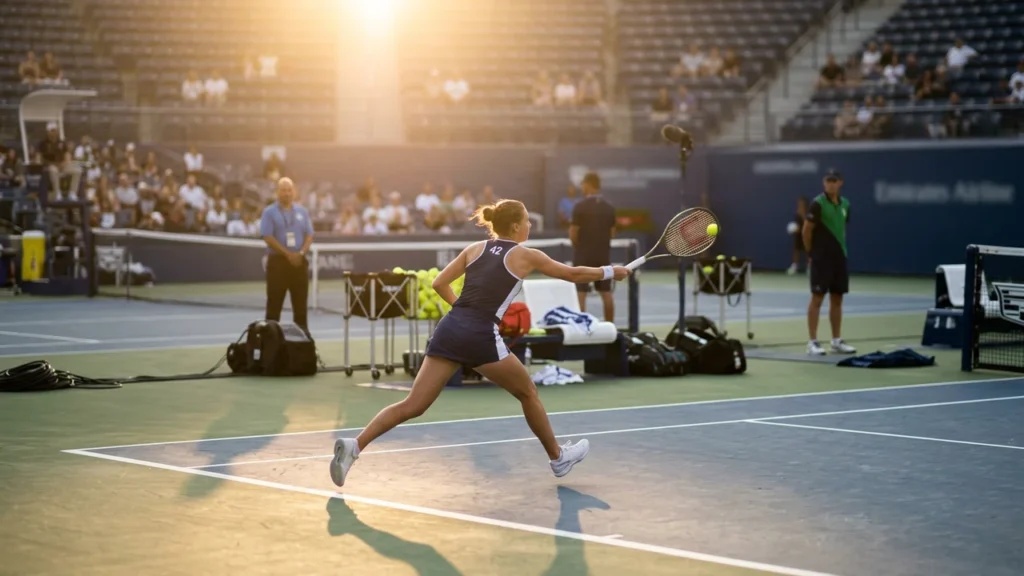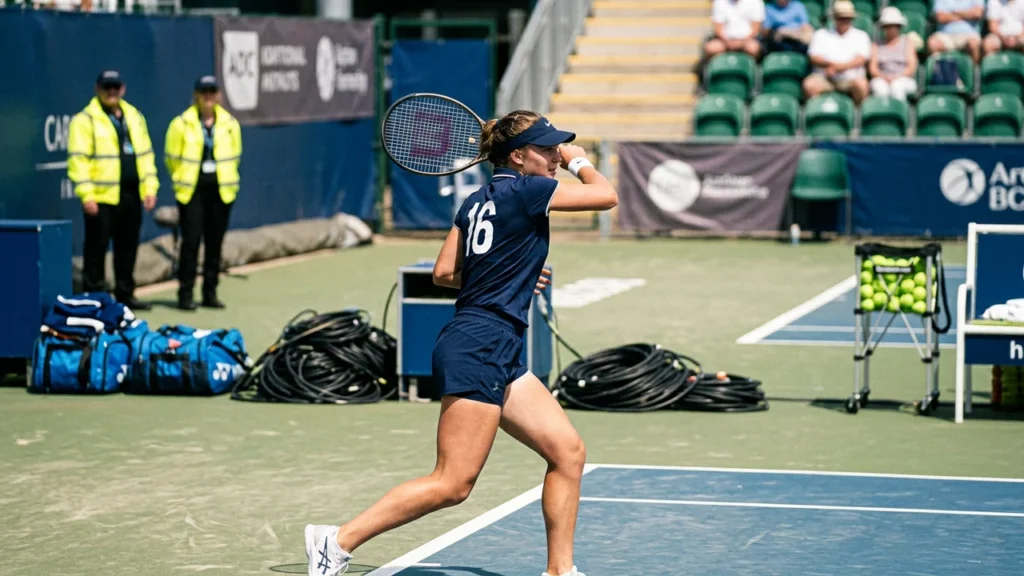
In the vibrant world of tennis tournaments, a fresh controversy is brewing, ignited by none other than world No. 3, Alexander Zverev. During the 2025 Shanghai Masters, Zverev leveled serious accusations at tournament directors, claiming they are deliberately slowing down court speeds to favor rising stars Carlos Alcaraz and Jannik Sinner. This charge highlights an intensifying debate about player favoritism and the homogenization of the game’s playing surfaces, igniting discussions about the very fabric of tennis strategy across clay courts, hard courts, and beyond.
These allegations come at a pivotal moment on the ATP tour, where the game’s traditional diversity faces challenges from increasingly uniform conditions. Veterans and enthusiasts alike wonder if the push for superstar matchups is impacting the sport’s integrity, or if it’s merely the evolution of modern tennis. Layered with expert viewpoints, player reactions, and detailed insights into court speeds and surface types, this controversy is shaking up tennis norms heading into the remainder of the 2025 season.
- The evolving landscape of court speeds and player advantage accusations
- How hard courts, clay courts, and surface velocity influence tennis gameplay
- Alexander Zverev’s bold statements against tournament practices
- Roger Federer’s perspective and support adding weight to the debate
- Player responses emphasizing both agreement and diplomacy around surface conditions
How Court Speed Manipulation Could Impact Player Performance in Tennis Tournaments
Tennis tournaments live and breathe on the delicate balance of court speeds, where surfaces transform every point into a strategic masterpiece or a test of raw power. The claim from Alexander Zverev that courts are deliberately slowed to favor Carlos Alcaraz and Jannik Sinner sheds a spotlight on a nuanced but crucial aspect of tennis gameplay: court speed. This factor can alter rally lengths, ball bounce, reaction times, and ultimately a player’s winning chances.
Historically, tennis thrived on distinct playing surfaces — clay courts, grass courts, and hard courts — each contributing unique challenges. For example, clay courts are known for slower ball speeds and higher bounce, favoring baseline players with endurance and tactical patience, while grass courts promote faster-paced volleys and serve-and-volley tactics. Hard courts fall somewhere in between and traditionally offer a more neutral pace, allowing a blend of styles to flourish.
Zverev’s concern is that this variety is vanishing. By reducing court speeds, tournament directors might be skewing the playing field in favor of players like Alcaraz and Sinner, whose games prosper under such conditions. This homogenization challenges the versatility tennis once demanded, limiting opportunities for diverse strategies and favoring a style that may not represent the full spectrum of tennis skill.
- Slower courts lengthen rallies and reward players with exceptional stamina and shot-making precision.
- Faster courts favor aggressive tactics, quick reflexes, and players with powerful serves aiming for quick points.
- Altering court speed impacts player preparation, conditioning, and overall tournament outcomes.
| Surface | Typical Speed | Player Advantage | Common Playing Style |
|---|---|---|---|
| Clay Courts | Slow | Baseline players & retrievers | Long rallies, topspin heavy groundstrokes |
| Hard Courts | Medium to Slow (depending on speed adjustments) | Balanced style players | All-round, blend of power and strategy |
| Grass Courts | Fast | Serve-and-volley players, aggressive players | Short points, fast serves & volleys |
For avid followers keen to deepen their understanding of tennis court surfaces and their effects on performance, the detailed guide on tennis playing surfaces offers a valuable resource covering the variety and evolution of court types in the game today.

Alexander Zverev’s Perspective and Its Ripple Effects on the ATP Tour Controversy
Alexander Zverev’s candid remarks at the Shanghai Masters did not just express frustration; they ignited a vital conversation about how court speeds are allegedly being manipulated to shape tournament trajectories. His assertion that tournament directors prefer conditions that favor Carlos Alcaraz and Jannik Sinner hits at the core of player favoritism accusations on the ATP tour.
Zverev highlighted a critical shift from the past: “I hate when it’s the same, to be honest. And I think that the tournament directors are going towards that direction because, obviously, they want Jannik and Carlos to do well every tournament, and that’s what they prefer.” His experience throughout the 2025 season, with a commendable 48-20 win-loss record, including a title in Munich and runner-up finishes at the Australian Open and Stuttgart, gives gravity to his opinion.
The homogenization of surface speed challenges the traditional dynamic that made tennis thrilling — the unpredictability of how different courts impact player performance and match outcomes. It calls into question whether tennis tournaments are striving merely for blockbuster showdowns at the expense of surface authenticity and competitive diversity. This debate touches on tennis’ intrinsic values and raises an important question: should tournaments prioritize marquee players over varied and strategic gameplay?
- Zverev’s contention suggests court speed manipulation limits the impact of playing style diversity.
- Favoring certain players may impact fan engagement and the integrity of competition.
- A move toward uniformity might streamline tournament operations but diminish tennis’ rich cultural tapestry.
| Player | 2025 Win-Loss Record | Titles Won in 2025 | Surface Preference | Notable Achievement |
|---|---|---|---|---|
| Alexander Zverev | 48-20 | Munich (1) | Hard, Clay, Indoor | Finalist Australian Open |
| Jannik Sinner | 42-5 | 3 (Australian Open, Wimbledon, Beijing) | All surfaces, with a focus on hard courts | Consistent Grand Slam finals appearances |
| Carlos Alcaraz | Data not provided | Data not provided | Data not provided | Top ranked player, key figure in court speed debate |
Fans intrigued by Zverev’s claims and the broader discourse around player favoritism can explore modern tennis techniques and court adaptations at this in-depth site on tennis game surface adaptations.
Roger Federer and Other Players Add Validation to the Tennis Court Speed Debate
Adding significant perspective to Zverev’s claims is Roger Federer, the Swiss great who lent his voice to the debate during an episode of the Served podcast with Andy Roddick. Federer’s insight painted a picture of tournament directors potentially shaping the game “for the weaker player” by deliberately slowing the courts, ostensibly to protect stars like Alcaraz and Sinner and guarantee enthralling finals.
Federer explained, “Obviously, I understand the safety net that the tournament directors see in making the surface slower. It’s for the weaker player — he has to hit extra amazing shots to beat Sinner, whereas if it’s quick, he can only maybe blast a few and, at the right time… and he gets past.” His commentary reflects a delicate tension between entertainment value and competitive fairness.
The former world No. 1 also reminisced about a time when surface variety was intrinsic to tennis. Earlier in his career, the highlight was how specialists on grass, clay courts, and hard courts clashed, creating unpredictable and exciting matchups. “Back in the day, only 12 tournaments counted, so everybody would play on their favorite surface. And then they would sometimes meet, and those were the best matches when you had the attacker against a retriever,” Federer recalled.
- Federer’s perspective confirms concerns about loss of surface variety impacting playing styles.
- Slower courts might level the playing field but also limit tactical diversity.
- Player favoritism debates raise questions about the balance between spectacle and sport sanctity.
| Aspect | Federer’s Commentary | Implication |
|---|---|---|
| Slowing Courts | Used as a safety net for weaker players | Protects top players, influences match outcomes |
| Surface Variety | Essential for contrasting styles and unpredictable outcomes | Loss diminishes excitement and strategic diversity |
| Player Matchups | Showcased attacker vs. retriever dynamics | Defined tennis narratives historically |
For those fascinated by serve speeds and how certain courts influence them, including grass courts, the extensive review at off-court coaching tennis and resources on rising serve speeds on grass offer detailed explanations and training insights.
Federer discusses the impact of court speed on player advantage and tournament outcomes.
Players’ Reactions to Court Speed Claims and Their Impact on Tennis Strategy
While Alexander Zverev and Roger Federer’s views elevate the controversy around tennis court speeds, reactions from players like Jannik Sinner offer a more measured perspective. Sinner acknowledged similarities across hard courts but pointed to subtle variations affecting gameplay. “The hard courts, they are at times very similar. At times there are some small changes, couple of changes. One tournament that comes up a bit is Indian Wells because the ball bounces very high,” he said during the China Open.
Other competitors expressed their frustrations with the Shanghai Masters conditions, with Taylor Fritz labeling the slow court pace a “very bad” change and Alex de Minaur describing it as a “shock to the system.” Such dissatisfaction reveals a growing divide among players about the fairness and consistency of conditions across the ATP tour.
The homogenization of courts also has a tactical ripple effect for players. Training and preparation now lean towards a more standardized approach, focusing less on adapting techniques to diverse surfaces and more on mastering a single style effective on slower surfaces. This shift affects everything from serve placement to rally construction, diminishing the rich variety tennis has traditionally boasted.
- Players must adjust strategies for increasingly uniform court speeds.
- Surface similarities may reduce the advantage of specialists on specific courts.
- Player conditioning and preparation evolve to prioritize a generalized style.
| Player | Reaction to Slow Courts | Impact on Style | Example Tournament |
|---|---|---|---|
| Jannik Sinner | Diplomatic, acknowledges small surface differences | Adapts to uniform hard court conditions | Indian Wells (high bounce) |
| Taylor Fritz | Critical, describes changes as negative | Difficulty adapting to slower surface | Shanghai Masters |
| Alex de Minaur | Surprised, calls it a shock | Adjusting to unexpected conditions | Shanghai Masters |
Those intrigued by player shot selection and the impact of court conditions on match strategy can deepen their understanding through expert analyses like the shot selection heatmaps for tennis finals and comprehensive guides on tennis court positioning.
Jannik Sinner talks about his approach to adapting to court conditions and maintaining competitive edge.
The Broader Debate: Can Player Favoritism and Court Homogenization Shape Tennis’ Future?
The accusations from Alexander Zverev and reactions from the tennis community unveil a broader debate on the sport’s direction. Is the ATP tour prioritizing the spectacle of star players and predictable marquee finals at the cost of traditional surface diversity and the complex interplay of styles? The verdict is far from unanimous.
Critics argue that surface homogenization diminishes the game’s tactical richness and limits opportunities for emerging players who excel on particular courts. It risks turning tennis into a battle of limited styles, eroding the excitement fostered by the contrast between clay, grass, and hard courts. Meanwhile, supporters believe the approach guarantees thrilling, high-profile matchups, boosting audience engagement and commercial appeal.
- Player favoritism concerns raise ethical issues about tournament fairness.
- Homogeneous court speeds impact training regimes, player development, and fan experience.
- Balancing tradition with modern entertainment demands is a delicate dance for tennis governing bodies.
| Argument | Pros | Cons |
|---|---|---|
| Slowing courts for star players | Ensures exciting finals, attracts viewers | Limits diversity, favors few, risks fairness |
| Maintaining surface variety | Preserves strategy diversity, nurtures different styles | Potential unpredictability in viewer interest |
| Uniform court speed | Streamlines scheduling and preparation | Diminishes traditional tennis character |
For tennis fans and aspiring players looking to navigate this evolving landscape, understanding equipment impact is vital. Resources such as the tennis equipment guide and advice on choosing the right tennis shoes offer practical support for adapting to changing court conditions and styles.