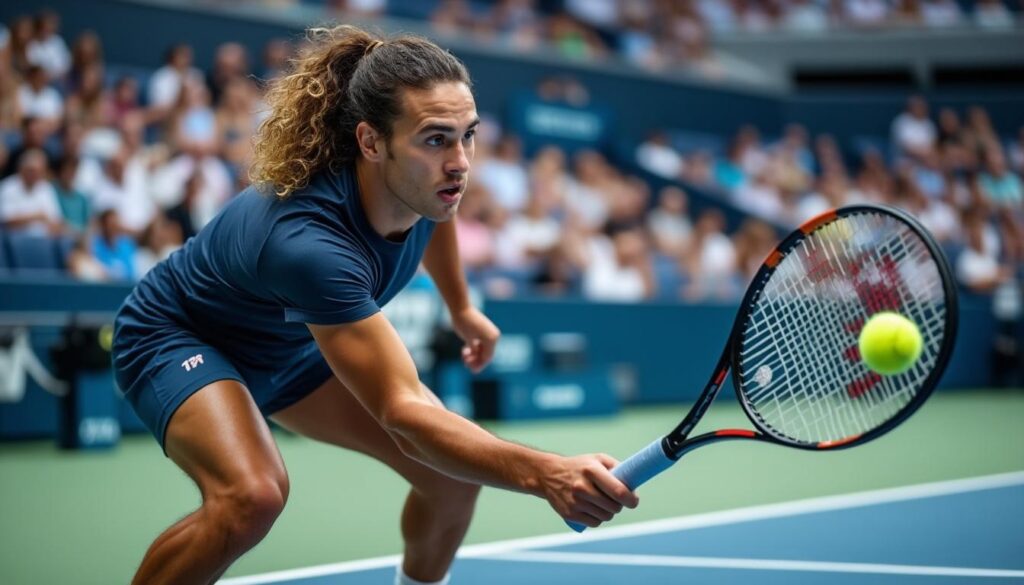
In the realm of professional tennis, preparation never pauses—not even in the off season. For the elite athletes who made it to the Davis Cup Final 8, conditioning isn’t just a routine; it’s a finely tuned, relentless process that fuels explosive sprinting, razor-sharp reflexes, and endurance that outlasts the fiercest rallies. As 2025 draws closer to winter, this three-week conditioning program delivers a blueprint inspired by these pros’ rigorous regimens, offering players and enthusiasts a chance to elevate their tennis fitness to match the elite.
This off season fitness plan zeroes in on how conditioning breathes life into every stroke, every run, and every match. It’s not simply about working hard; it’s about working smart, crafting endurance and strength with precision like the Davis Cup contenders who never allow fatigue to rob their power or decision-making prowess on court. Whether it’s mastering the balance of strength training with endurance building or fine-tuning recovery techniques, this approach mirrors the relentless spirit and tactical intelligence that define professional tennis today.
For tennis players and fans hungry for peak performance, this conditioning program embodies the intersection of science and grit. Dive into a fitness plan designed not just to maintain but amplify athleticism, so you can dominate your next season with the confidence and capability of the sport’s finest athletes.
Highlights of the Three-Week Conditioning Program:
- Modelled directly on the conditioning routines of Davis Cup Final 8 pros.
- Focus on maximizing endurance without sacrificing strength.
- Sessions twice per week, easily upscaled for ambitious players.
- Incorporation of cutting-edge recovery methods adapted for 2025’s tennis demands.
- Emphasis on skill maintenance under fatigue for tactical sharpness.
Crafting Elite Tennis Conditioning: Off-Season Fitness Essentials Inspired by Davis Cup Pros
In tennis, conditioning is the secret sauce that separates the weekend warrior from the professional athlete who commands the Davis Cup stage. The off season is the battlefield where physical resilience, endurance, and strength are honed to perfection. The pros competing in the 2025 Davis Cup Final 8 have embraced conditioning programs that go beyond basic fitness—this is about cultivating a body that recovers swiftly, powers through fatigue, and sustains tactical decisions at lightning speed.
The foundation lies in balancing strength training with endurance building. Tennis demands quick bursts of explosive power intertwined with prolonged rallies that sap energy over time. Achieving this requires programming that trains both the anaerobic (quick, intense efforts) and aerobic systems (long-lasting stamina). For that reason, the typical Davis Cup pro conditioning plan includes:
- Aerobic capacity workouts: Long-distance tempo runs and careful interval training to boost VO2 max, allowing continuous high-level play without fading.
- Anaerobic power sessions: High-Intensity Interval Training (HIIT) to replicate the unpredictable pace of tennis points, sharp sprints, and recovery bursts.
- Functional strength training: Targeted exercises that fortify the core, hips, and legs to support rigid movement, balance, and injury prevention during aggressive court coverage.
Off season conditioning is about resilience under duress. For example, maintaining your skillset when your legs are burning is the benchmark of a champion. To address this, players incorporate repeated running drills moving in multiple directions, simulating intense match scenarios. Without this gritty conditioning, players risk losing tactical sharpness late in matches, when it matters most.
| Component | Purpose | Example Exercise |
|---|---|---|
| Aerobic Endurance | Sustain prolonged rallies and rapid recovery | Tempo runs at 60-70% max pace |
| Anaerobic Power | Explosive sprinting and rapid direction changes | HIIT intervals at 90%+ Max Aerobic Speed |
| Strength Training | Injury prevention and stroke power | Core stability planks and weighted lunges |
| Recovery | Muscle repair and performance longevity | Mobility workouts and cold water immersion |
Tennis followers can learn much from this structured off season approach. Conditioning programs crafted with these professional insights bridge the gap between raw athletic potential and true competitive readiness. For a detailed conditioning plan tailored to tennis players navigating hard courts, see conditioning plans for hard courts, where endurance meets explosive movement.
Week-by-Week Breakdown of the Davis Cup Inspired Three-Week Conditioning Plan
Executing a conditioning regimen akin to the Davis Cup Final 8 contenders demands structure, progression, and specificity. This program spans three weeks of carefully sequenced sessions, each emphasizing distinct aspects of fitness essential for elite tennis performance. The intensity and volume gradually increase, forging resilience and stamina without overwhelming the athlete.
Below is the authoritative outline for each week, complete with session objectives and examples:
Week 1: Establishing Baselines and Building Aerobic Foundations
- Session 1: Bronco Test – Sprint intervals between 20m, 40m, and 60m markers with rapid repetitions. This sets a benchmark for maximal aerobic speed (MAS), the cornerstone of conditioning metrics.
- Session 2: MAS Long HIIT Intervals – 3 rounds of 4-minute sprints at approximately 92.5% of MAS, interspersed with two-minute passive recovery periods to mimic real match fatigue patterns.
Week 2: Enhancing Endurance with Tempo Runs and Extended Intervals
- Session 1: Tempo runs at 60-70% max speed, emphasizing technique and maintaining a relaxed flow through multiple reps across various pitch segments. Includes opportunities for light upper-body exercises between running bouts to simulate on-court physicality.
- Session 2: Extended MAS HIIT – Increasing interval reps to 4 x 4 minutes at 92.5% MAS plus standard recovery, pushing aerobic capacity further.
Week 3: Multidirectional Conditioning and High-Intensity Interval Completion
- Session 1: Multidirectional tempos incorporating lateral shuffles, backpedals, and weaving movements at 70% max pace. This develops sport-specific movement efficiency, enhancing court coverage.
- Session 2: Long aerobic intervals sustained at 100% MAS with shortened rest periods, simulating continuous pressure and challenging cardiovascular adaptability.
| Week | Focus | Sample Session |
|---|---|---|
| 1 | Baseline & Aerobic Capacity | Bronco Test & MAS Long HIIT Intervals |
| 2 | Endurance & Recovery Integration | Tempo Runs & Extended HIIT |
| 3 | Agility & High-Intensity Sustainment | Multidirectional Tempos & 100% MAS Intervals |
Sticking to this schedule not only sharpens cardiovascular thresholds but also ingrains the nuanced footwork and agility demanded at the tennis elite level. For additional conditioning tactics aligned with indoor game preparation, consider exploring indoor conditioning at the Moselle Open for off-season inspiration.
Strength Training and Injury Prevention: Complementing the Conditioning Core
While endurance is the engine driving on-court success, strength training acts as the protective chassis and power source. For Davis Cup level athletes, strength programs transcend traditional gym routines—they are tailored with specificity for tennis demands, emphasizing injury prevention, stroke power, and explosiveness.
Key strength components in this three-week off season fitness plan include:
- Core Stability: Planks, dynamic holds, and anti-rotation exercises to reinforce balance during rotational strokes and rapid directional changes.
- Lower Body Power: Weighted lunges, squats, and plyometric drills to generate ground reaction forces accelerating players to the ball.
- Upper Body Endurance: Controlled push-up variants and resistance band work to maintain racquet control and prevent shoulder injuries.
Research affirms that integrating these exercises reduces risk factors associated with tennis injuries, especially in seasons where match intensity pushes the boundaries of physical limits. Modern recovery protocols are also part of this fitness recipe. Techniques such as mobility workouts and progressive recovery methods ensure that athletes don’t just work hard but rebound faster.
| Strength Focus | Purpose | Example Exercise |
|---|---|---|
| Core Stability | Balance and stroke efficiency | Planks with arm reach |
| Lower Body Power | Explosive court movement | Weighted lunges and box jumps |
| Upper Body Endurance | Racquet control and injury prevention | Resistance band rows |
| Recovery | Performance longevity | Mobility drills and cold immersion |
For those seeking to mesh strength with conditioning specifically tuned to tennis, see the off season fitness and strength tennis guide to sharpen your regimen.
Recovery and Mobility: The Unsung Heroes of Off Season Fitness Planning
Within this fiercely competitive three-week conditioning blueprint, recovery protocols stand as crucial pillars. Elite athletes understand that pushing beyond limits only yields gains when balanced by restorative practices. As such, the Davis Cup pros incorporate focused mobility work and innovative recovery strategies aligned with 2025’s sports science breakthroughs.
This aspect emphasizes:
- Mobility Sessions: Dynamic stretching and movement drills preserving joint range of motion, essential for tennis’s quick directional shifts and reach.
- Recovery Modalities: Methods like cold water immersion, compression therapy, and active recovery to accelerate muscle repair.
- Load Management: Tracking and adjusting training volume to prevent overtraining and chronic fatigue injury risks.
Integrating these practices not only reduces injury risk but also enhances daily energy levels, ensuring athletes maintain tactical and physical sharpness throughout their training cycles. It’s an often-overlooked masterpiece of off season fitness planning that professional players swear by.
| Recovery Element | Benefit | Application |
|---|---|---|
| Mobility Workouts | Maintains joint function and reduces injury | Dynamic stretching sequences pre- and post-training |
| Cold Water Immersion | Reduces inflammation and muscle soreness | Post-session immersion for 10-15 minutes |
| Load Management | Prevents burnout and chronic fatigue | Use of wellness tracking apps and subjective scales |
For practical recovery guides tailored to tennis’s seasonal rhythm, the program recommends checking out resources like November 2025 recovery methods and tennis recovery and mobility workouts. These materials complement the program and ensure preparedness for the grueling months ahead.
Mastering On-Court Conditioning with Tactical Precision: Lessons from Davis Cup Stars
Conditioning isn’t just physical; it’s tactical artistry underpinned by stamina. The Davis Cup Final 8 players exemplify how maintaining peak fitness preserves mental acuity, allowing split-second tactical decisions regardless of exhaustion. This three-week plan embeds on-court sport-specific conditioning that enhances cognitive endurance, ensuring players execute strategy even as muscles fatigue.
Players engage in drills combining cardiovascular load with situational pattern work, such as:
- Simulated point play during short high-intensity intervals.
- Footwork circuits integrating lateral shuffles and explosive starts.
- Tactical doubles sessions reinforcing real-time decision-making under physical stress.
Such conditioning nuances sharpen reaction speed and situational awareness—defining the razor edge between winning and losing on the professional stage. The same dedication can be adapted for aspiring players by referencing detailed session plans like the tactical session in doubles from November 7, which focuses on endurance and positioning under pressure.
| On-Court Conditioning Aspect | Objective | Example Drill |
|---|---|---|
| Point Simulation | Mental and physical stamina | Short high-intensity rallies |
| Footwork Circuits | Agility and explosive court coverage | Lateral shuffle to sprint starts |
| Tactical Drills | Decision-making under fatigue | Doubles positioning drills |
Combining these elements crafts not just fit athletes but on-court tacticians prepared for the season demands. Sports conditioning for tennis in 2025 demands this intersection of body, mind, and competitive fire.
How important is conditioning compared to strength training for tennis?
Conditioning often takes priority over pure strength training, as endurance and the ability to maintain skill execution under fatigue are crucial in tennis performance.
Can this three-week plan be adapted for amateur players?
Yes, the plan is scalable, and athletes can adjust session frequency and intensity to match their fitness level, making it suitable for amateurs aiming to improve their tennis fitness.
Why is recovery emphasized so much in this program?
Recovery is essential to prevent injury and ensure sustained performance, especially when training at the intensity required for professional-level conditioning.
What makes this conditioning program unique to the Davis Cup Final 8 pros?
The program mirrors the high-level specificity, intensity, and tactical integration experienced by the Davis Cup Final 8 players, focusing on real-match simulation and multi-directional agility.