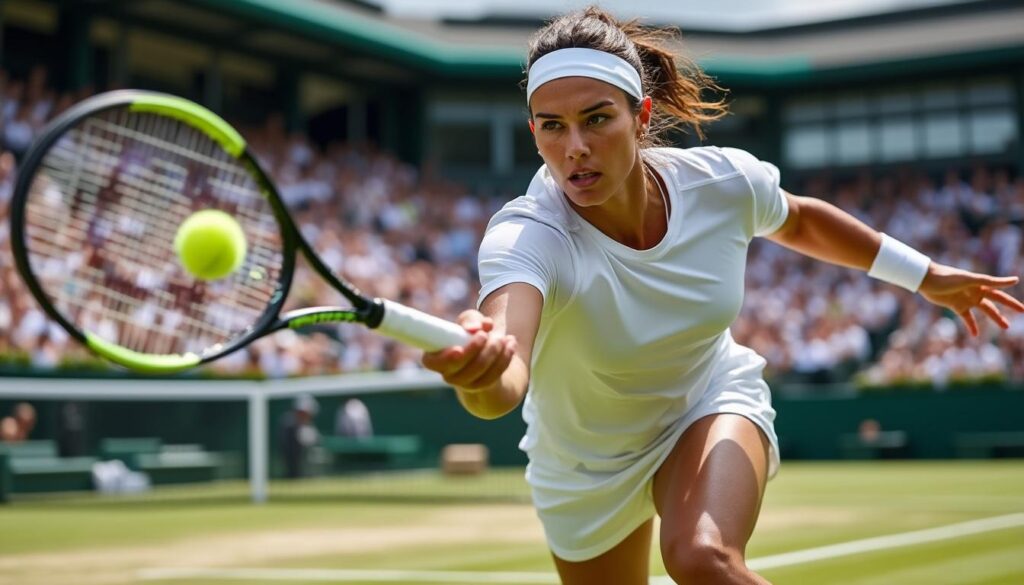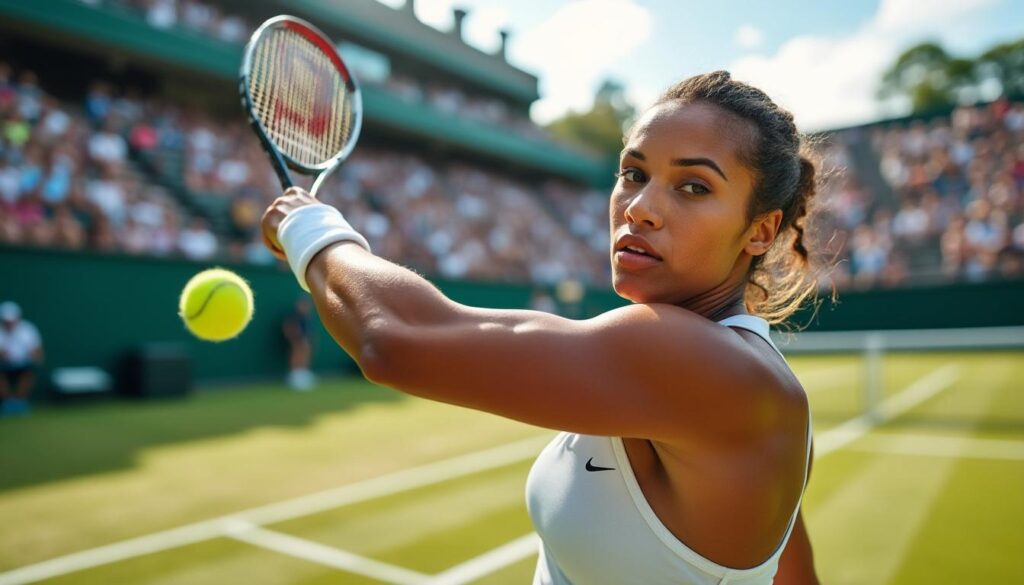
In the relentless race to dominate the tennis court, footwork stands as the powerhouse behind every stunning rally and game-changing point. As of December 24, 2025, the evolution of footwork development reveals a fusion of science, athleticism, and innovative training patterns that are defining the modern tennis landscape. Gone are the days when raw power alone dictated success; today’s champions sculpt their skill enhancement through meticulously crafted movement drills, laser-focused training, and biomechanical breakthroughs. The court is not just a battleground—it’s a stage where footwork choreographs every explosive acceleration, every lightning-quick recovery, and every artful angle crafted to perfection.
Modern tennis players and coaches recognize that footwork development is more than just quick feet—it’s the foundation that amplifies stamina, shot precision, and mental sharpness during grueling matches. December 2025 marks a watershed moment as training patterns incorporate advanced analytics and targeted drills designed to boost agility and energy management like never before. This dynamic shift underscores how movement mastery interweaves with athleticism, making the difference between simply playing the game and owning the match. This article delves into the multifaceted approach shaping how players condition their bodies, anticipate their opponents, and conquer the court through strategic footwork innovations.
From the baseline to the net, footwork is the language that unlocks tennis’s full potential. Discover how the latest training paradigms transform traditional drills into comprehensive routines fueling speed, balance, and resilience. These methods echo through elite academies like the Mouratoglou Tennis Academy, where every step and stride is calibrated for maximal efficiency and impact. Aspiring athletes and seasoned competitors alike can tap into this evolving world of footwork development to elevate their game and command every point with precision and power.
Understanding the Crucial Role of Footwork in Modern Tennis Performance
Footwork is the heartbeat of tennis, a non-negotiable skill that dictates everything from your shot quality to your endurance on court. By December 2025, it’s evident that superior footwork development remains the linchpin of elite performance, controlling how quickly and effectively a player positions themselves to strike. Anticipation, balance, and rapid response are all powered by the hustle behind the scenes—the nuanced foot movements that separate contenders from champions.
At its core, footwork optimizes every movement on the court. It is the difference between a rushed, off-balance stroke and a calculated, powerful return. Players who master this craft enjoy steadfast consistency during rallies, lower unforced errors, and greater shot control, which are critical in today’s high-speed game. For instance, advanced training at renowned facilities integrates footwork drills with tactical shot-making, enabling athletes to precisely shape time and space for better shot execution.
Footwork also plays a pivotal role in managing fatigue and energy endurance throughout demanding matches. Instead of expending unnecessary effort, skilled players conserve energy by mastering efficient foot patterns and leveraging biomechanics. This strategic conservation of resources results in sustained agility, enabling long baseline exchanges without premature exhaustion. As tennis matches stretch longer, this advantage propels athletes through tough encounters with fresh legs and sharp reflexes. Learn more about endurance strategies in tennis during the winter season through resources like tennis endurance winter.
Rich in history yet constantly evolving, the relationship between footwork and performance remains a testament to tennis’s complexity. Every step forward or sideways means adapting to faster serves, deeper shots, and smarter court positioning. These elements, intertwined with the latest training patterns, define the modern tennis player’s blueprint. Without a doubt, the groundwork laid in footwork development continues to reverberate through every facet of competitive tennis.

Fundamental Footwork Patterns: The Backbone of Skill Enhancement in Tennis
Mastering the fundamental footwork patterns remains essential in crafting a tennis player who is both agile and resilient. December 2025 training methodologies emphasize precise movements that anchor every stroke, including the waiting stance, adjustment step, and weight transfer mechanics. These three pillars create a symphony of motion that enhances balance, power, and recovery speed on the court.
The waiting position primes a player for explosive action. With feet shoulder-width apart, knees flexed, and poised on the balls of the feet, players maximize their readiness to react in milliseconds. This ready stance eliminates wasted energy and sharpens response time, something all top-tier players hone relentlessly. From this posture, even the slightest shift can translate into accelerated lateral movement or a sudden dash to cover a baseline lob.
The adjustment step is an art in itself—small, fast, and intentional foot shifts that fine-tune positioning before ball contact. Think of it as the silent preparation for a stroke, allowing for a solid base and enabling optimal power transfer. Rather than lunging awkwardly, the adjustment step smooths the transition from stance to strike, ensuring consistent shot execution and stroke balance.
Weight transfer remains the engine behind stroke power. As a player steps into the ball, shifting weight from the rear foot to the front unleashes kinetic energy. Proper weight transfer not only boosts shot force and control but also facilitates swift recovery by maintaining post-strike stability. Top coaches often integrate video analysis and biomechanical sensors in training to perfect these movements, trimming milliseconds off reaction times and boosting shot precision.
The integration of these foundational patterns with increasingly nuanced routines is reshaping footwork development. Drill programs now blend these components in intensive sessions that meld speed, coordination, and shot awareness—all designed for real-match scenarios. The journey from basic footwork to game-ready athleticism is marked by relentless focus and innovative training aids that sharpen every move.
Core footwork drills enhancing modern tennis skill sets include:
- Shadow tennis: Simulating shots without a ball to focus purely on foot placement and body positioning.
- Speed ladder drills: Quick, coordinated foot movements within ladder rungs developing agility and reflexes.
- Chassé steps: Sideways gliding movements enhancing lateral court coverage and recovery speed.
These drills, widely adopted by academies, nurture the athleticism underlying superior footwork, enabling players to conquer physical challenges with fluid grace. For those curious about tailored baseline footwork techniques, exploring training insights shared by leading coaches offers a rich vein of expertise, such as those found in tennis footwork drills resources.
Innovative Training Patterns Transforming Footwork Development in December 2025
Emerging training regimens for footwork in tennis harness technology, biomechanical analysis, and artificial intelligence to produce unmatched precision and efficiency. December 2025 marks the widespread adoption of these tools, revolutionizing how players build movement skills and physical conditioning. The result? Training patterns that go beyond traditional running or agility exercises, targeting sport-specific stamina and reaction speed critical for elite competition.
AI-driven platforms now analyze real-time player movement, providing instant feedback on positioning errors, balance issues, and suboptimal step patterns. This detailed biomechanical data empowers players and coaches to tailor footwork workouts uniquely suited to individual strengths and weaknesses. Combined with live data from match play, this predictive training approach accelerates improvement and reduces injury risks over time.
Technique refinement blends with athleticism, focusing on smooth transitions between different footwork styles like cross-steps, split-step explosiveness, and recovery jogs. Enhanced court coverage is achieved by consciously training both linear and multi-directional movement patterns, recognizing that modern tennis rarely operates in straight lines. Workouts like these—which integrate high-speed video analysis and controlled drills—optimize heart rate zones to build endurance, echoing advice found in footwork workouts baseline.
At the forefront of this revolution are elite academies, taking cues from champions’ training. Insights gleaned from players like Iga Swiatek showcase how revolutionary footwork patterns can fuel both offense and defense from the baseline. The combined input of elite coaches and sport scientists is creating a blueprint for player development that embraces both physical prowess and tactical intelligence.
Unlocking streamlined movement also involves innovative recovery protocols and conditioning sequences integrating plyometrics and reactive drills. These training patterns enhance explosiveness while maintaining fine motor control—critical when shifting direction rapidly or recovering from difficult shots near the net. For a deeper dive into the mechanics of court movement tied closely with shot drills, consult resources like court movement shot drills, which align perfectly with modern athletic demands.
Strategic Tips for Elevating Footwork and Court Coverage in Competitive Tennis
Understanding and implementing superior footwork is just the first step—fine-tuning it for competitive play demands strategic awareness and mental acuity. By December 2025, the best players have integrated anticipation, lateral movement efficiency, and rapid repositioning into their core tennis arsenal, pushing them ahead in tight matches.
Anticipation is a secret weapon on the court. Skilled athletes train themselves to read subtle cues like opponent’s shoulder angle, racquet position, and foot placement to predict shot direction. This preemptive recognition saves precious fractions of seconds, allowing lightning-fast responses. Players focusing on this vital skill gain a clear edge in positioning before the ball leaves their adversary’s racquet. Check out detailed insights on serve anticipation in high-stakes settings at return serve Davis Cup.
Lateral movement management is critical at the back lines. Maintaining a low athletic posture during side-to-side runs stabilizes balance and burst speed. The cross-step, combined with chassé movements, empowers players to close down angles swiftly and prepare for potent counterpunches. Modern athletes also emphasize minimizing unnecessary hops, focusing instead on smooth, controlled weight shifts for sustained energy conservation during rallies.
Equally essential is repositioning swiftly after each shot. The ability to reset quickly into the center of the court allows for comprehensive coverage of the opposing player’s next strike. Controlled, small adjustment steps preserve balance and set the stage for explosive movements. Emerging training regimes highlight this skill by scripting movement drills that simulate unpredictable match scenarios, further sharpening court readiness.
Key strategic footwork tips at a glance:
| Aspect | Focus | Benefit |
|---|---|---|
| Anticipation | Reading opponent’s body language before shot | Saves reaction time, positions for better returns |
| Lateral Movement | Staying low with effective cross-step mechanics | Improved stability and speed during side-to-side runs |
| Repositioning | Quick return to center court using small steps | Maintains court balance, prepares for incoming shots |
| Energy Management | Minimizing jumps and unnecessary hops | Reduces fatigue, preserves stamina for long rallies |
Alongside movement, integrating mental preparation and consistent practice routines further boosts footwork efficiency. The interplay between mind and body shapes seamless court transitions and sharpens overall match control. For those looking to enhance their baseline game during offseason, drilling with targeted programs like those outlined in offseason baseline drills can provide structured improvement.
Overcoming Common Footwork Pitfalls to Maximize Tennis Training Results
No athlete’s path to tennis excellence is free from mistakes, but recognizing common footwork errors early can spell the difference between stagnation and breakthrough. December 2025 training wisdom emphasizes troubleshooting issues like poor anticipation, inefficient movement, and sluggish repositioning.
A frequent pitfall is the lack of foresight, where players hesitate or start moving too late after the opponent’s stroke. This reactive style leaves players off-balance and scrambling, often resulting in forced errors. The antidote lies in cultivating an eagle eye for court positioning and opponent tendencies to begin movement before the ball lands. This anticipatory mindset forms a crucial edge in high-level competition.
Another challenge is hopping unnecessarily instead of employing controlled, small steps for position adjustment. Jumping may feel instinctive but wastes energy and destabilizes rhythm. Instead, smooth, grounded strides create a balanced framework to sustain speed and control throughout extended rallies. Emphasizing such controlled foot movements enhances both endurance and accuracy.
Finally, many players falter by failing to regain position swiftly after striking the ball. Pausing or lingering exposes vulnerabilities to quick returns and traps the player out of optimal court coverage. Drills focused on instant repositioning instill the habit of consistently resetting to the center with stability and readiness. Insights into improving consistency and mental toughness complement these physical adjustments, as detailed in sources like mental training consistency.
Fixing these foundational missteps unlocks rapid progress in footwork development and overall match performance. Combining focused training patterns with practical court application builds the muscle memory and mental resilience needed to traverse the modern tennis battleground with confidence and skill.
Common Footwork Errors and Corrective Tips
- Delayed movement: Initiate shift toward anticipated ball direction early by studying opponent cues.
- Excessive jumping: Replace hops with fast, low adjustment steps to enhance stability.
- Poor post-shot recovery: Train rapid return to neutral stance to maintain pressure and court coverage.
- Overreliance on linear movement: Incorporate multi-directional drills to reflect actual match dynamics.
Why is footwork called the backbone of tennis?
Footwork underpins every aspect of tennis, enabling players to position themselves optimally for shots, maintain balance, and conserve energy. It’s essential for consistent and powerful play.
What are the best drills for improving tennis footwork?
Effective drills include shadow tennis, speed ladder exercises, and chassé steps, all designed to enhance agility, coordination, and quickness.
How does anticipation improve footwork on court?
Anticipation allows players to predict shot direction based on opponent cues, reducing reaction time and improving positioning for better returns.
Can technology aid footwork development in tennis?
Yes, AI and biomechanical analysis provide real-time feedback, helping players fine-tune movements and avoid injury through targeted training patterns.
What are common mistakes to avoid in tennis footwork?
Avoid late movement initiation, excessive jumping, poor recovery after shots, and relying only on linear footwork. Balance and multi-directional agility are key.